US court dismisses federal case against New Jersey synagogue protesters
Judge grants dismissal for anti-Zionist protesters in case that had sought to make novel use of an abortion clinic law to protect houses of worship
A US judge last week dismissed a federal lawsuit against anti-Zionist protesters who targeted a New Jersey synagogue in 2024, in a case that had sought to make novel use of a law traditionally used to protect abortion clinics.
The US Department of Justice sued the anti-Zionist organizations last year after a protest against an event billed as a spiritual service and Israel real estate fair at a synagogue in West Orange, New Jersey.
During the November 2024 protest, demonstrators physically assaulted some worshipers, one of whom was thrown to the ground, put in a chokehold and dragged down a hill, the complaint said.
The protesters chanted and blew plastic trumpets to drown out the event, which included a Torah sermon and memorial service, according to the complaint.
The civil lawsuit sought to use the Freedom of Access to Clinic Entrances Act, or FACE Act. Lawmakers enacted the measure in 1994 to protect the entrances to abortion clinics, but the text of the law also applies to “a place of religious worship.”
The law makes it illegal to injure or interfere with people who are seeking to exercise their First Amendment right to religious freedom at a place of worship. Interference includes deploying force, threats of force, or physical obstruction, the law says.
The New Jersey lawsuit named the Party for Socialism and Liberation in New Jersey, American Muslims for Palestine New Jersey, and several individual protesters as defendants.
The defendants said they did not trespass on the synagogue’s property or block its access points, that the physical altercations were not connected to religious worship, and that the protest was protected First Amendment expression.
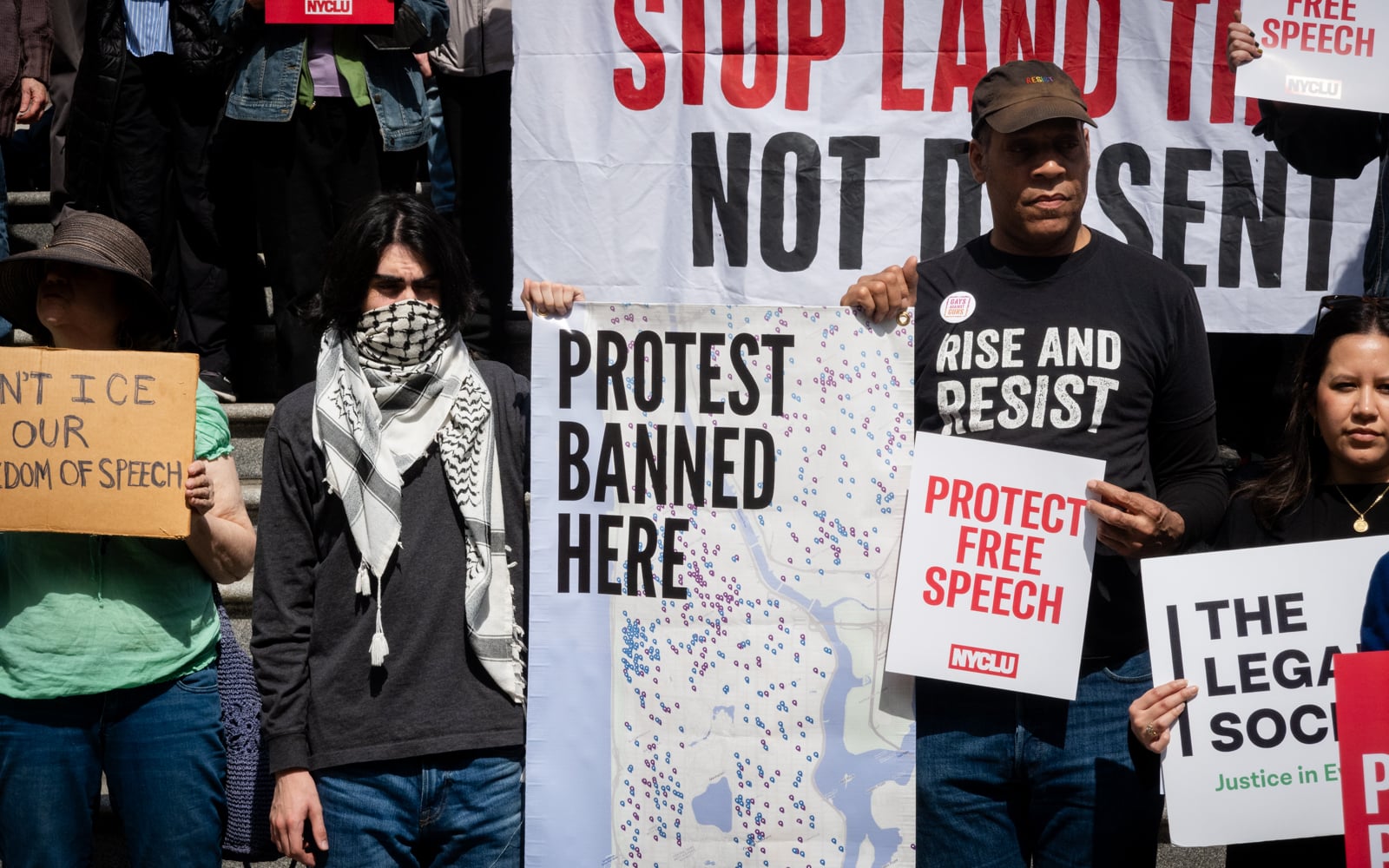
Last week, the federal judge overseeing the case, Katharine S. Hayden, granted the defendants’ motion to dismiss the case for all defendants, while allowing for potential further litigation.
The judge said the “brawl” outside the synagogue was an escalating altercation between the two sides and the defendants’ use of force was not directed at religious worship. A fight during a protest, or near a place of worship but not at its entrance, does not constitute a FACE Act violation, she said.
To apply the FACE Act to such an altercation “would mean every push, shove, brawl, or forceful conduct occurring during a protest like the one alleged here automatically becomes a FACE Act violation,” the judge wrote.
“It would demonize protesters who exercise their own First Amendment rights as being part of a mob,” she said.
The plaintiffs had also argued that a protester who shouted, “The Jew is here,” at one of the synagogue attendees had incited violence.
The court said the charge lacked necessary context to prove that the statement was a “trigger for violence.”
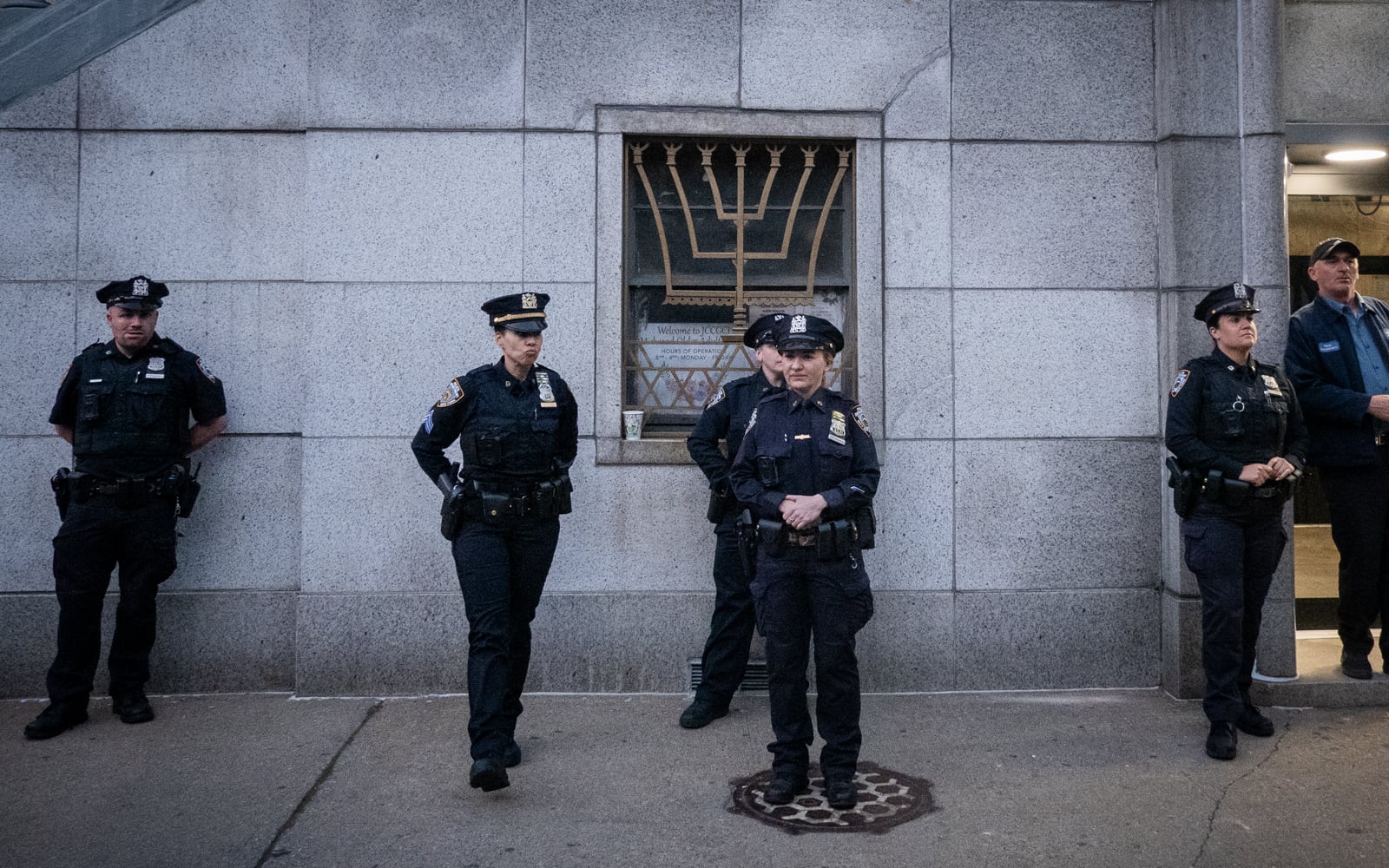
The court also said that a letter, delivered to an organizer’s home, that had demanded the event’s cancellation and threatened legal action, did not constitute a threat under the FACE Act.
Legal threats under the act must communicate a serious intent to inflict bodily harm or commit unlawful violence, the court said.
Free speech advocates have previously said that extremist and violent chants outside synagogues were unlikely to meet the legal bar for “true threats.”
“Political hyperbole does not qualify,” the court said.
Individual defendants also cannot be liable if they are part of a group that blocks access to a house of worship, but are only liable for their own conduct, the court said.
The court agreed that social media posts by American Muslims for Palestine and the Party for Socialism and Liberation advertising the protest did not violate the FACE Act because the posts did not constitute threats of force, and social media posts are not themselves physical obstruction.
“Such speech is protected, even when its viewpoint is sharply contested or its subject matter deeply divisive,” the court said.
The dismissal highlighted the legal difficulties involved in limiting disruptive protests at synagogues in the US.
The legality of protests at synagogues is a thorny issue due to conflicts between protections for freedom of speech and assembly, and religious freedoms.
The US provides expansive protections for free speech, making limits on protests difficult.
Jewish legal groups had hoped that the FACE Act could protect synagogues from anti-Zionist protesters, so the dismissal marked a setback.
The issue has come to the fore due to vitriolic, and sometimes violent, protests outside synagogues in several US states.
The demonstrations have also led to conflicts over local and federal laws meant to distance protests from synagogue entrances.
The New Jersey case was dismissed without prejudice, meaning the plaintiffs can file the case again with corrections. Hayden said the Department of Justice can file an amended complaint within 30 days.