US: EU labeling on settlement goods is no Israel boycott
Meretz chief Zehava Galon agrees with State Department assessment that tagging products doesn't constitute anti-Semitism
The Obama administration said Thursday it doesn’t consider a new European Union rule outlawing “Made in Israel” tags on goods from settlements in the West Bank as a boycott of the Jewish state, only a technical guideline for consumers.
The long-awaited EU rule has triggered a fierce backlash from the Israeli government as well as opposition leaders.
The US clarified its position a day after the decision by the EU, which applies to goods produced in Israeli settlements on the West Bank. Prime Minister Benjamin Netanyahu blasted the 28-nation bloc as “hypocritical” and accused the EU of double standards. One of his Cabinet members called the rule “disguised anti-Semitism.”
“We do not believe that labeling the origin of products is equivalent to a boycott,” State Department spokesman Mark Toner said. “And as you know, we do not consider settlements to be part of Israel. We do not view labeling the origin of products as being from the settlements as a boycott of Israel.”
Meretz chairwoman Zahava Galon said Thursday that the measure did not amount to anti-Semitism. Speaking at a Haaretz newspaper conference in Tel Aviv, the left-wing MK said the guidelines were “an attempt to separate the legitimate State of Israel and the occupied territories,” according to the NRG website. “This is not anti-Semitic nor is it hatred of Israel,” she said, adding that Israel was facing the consequences of its occupation of the West Bank.
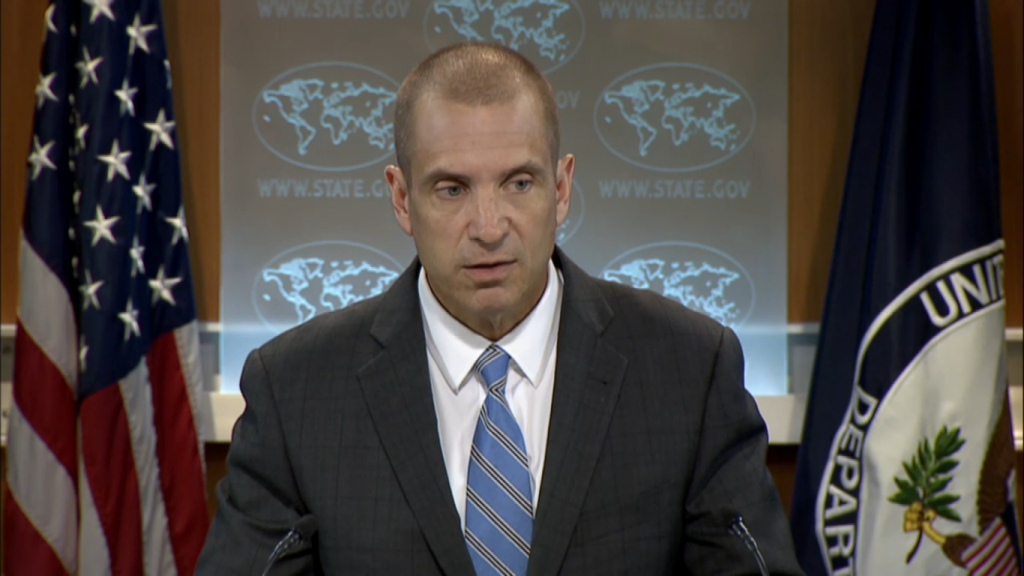
Before the EU acted, the US had struck a more ambiguous note on the issue. Toner and other officials stressed only that Washington opposed any boycotting of Israel, while saying the EU’s response “shouldn’t come as a surprise” given Israel’s continued construction of settlements on land the Palestinians seek for their future state.
Israel captured the West Bank and East Jerusalem in the 1967 Six Day War and has settled those areas, despite widespread international opposition.
US support for the EU was stronger Thursday, after the labeling regulation came into effect.
“We understand the objective is to provide EU consumers correct information on the origin of products, as required by EU law,” Toner said. “The EU has made clear that measures are not a boycott, and the EU has also made very clear that they oppose boycotts against Israel. EU guidelines for products that are sold in EU countries are for the EU to determine.”
Toner said the labeling rule only clarifies existing European regulations and wasn’t a “new measure.”
“These are technical guidelines delineating the origin of products. Consumers will then be aware of the origin of a product when purchasing it, as they are made aware for products across the globe,” he said.
American laws for Israeli settlement exports are somewhat similar, Toner said. They must be marked as “products of the West Bank,” though the US does not differentiate between goods from settlements and those coming from elsewhere in the territory.
The economic impact of the EU’s step is likely to be minimal. While the EU is Israel’s largest trade partner, settlement products account for less than 2 percent of Israel’s 13 billion euro ($14 billion) exports to Europe each year.
Once implemented, European consumers will be able to read on the label of most products — including agricultural goods, olive oil, cosmetics and wines — if they were produced in Israeli settlements.
Copyright 2015 The Associated Press.