US House speaker backs additional Iran sanctions
After Trump puts Islamic Republic 'on notice,' Paul Ryan says Washington must adopt a 'tough-on-Iran' policy, stop 'appeasing' Tehran
US House Speaker Paul Ryan on Thursday said he would support the imposition of additional sanctions on Iran, days after it tested a ballistic missile capable of carrying a nuclear warhead, sparking outrage and prompting an emergency UN Security Council session.
“I would be in favor of additional sanctions on Iran,” Ryan said at a weekly press conference. “We need to have a tough-on-Iran policy…We should stop appeasing Iran.”
“I think the last administration appeased Iran far too much. I think they went too far with Iran and I think as a result Iran is far more activist than it otherwise would be,” said Ryan.
“Iran, don’t forget … is the biggest state sponsor of terrorism in the world. Iran writes on their missiles in Farsi, Hebrew and English ‘Death to America’, ‘Death to Israel’ and then tests them. So this is not a friendly country that has global peace or national security interests in their minds,” the US House speaker added.
His comments came shortly after US President Donald Trump on Thursday tweeted that “Iran has been formally PUT ON NOTICE for firing a ballistic missile. Should have been thankful for the terrible deal the US made with them!”
Trump echoed remarks made Wednesday by National Security Adviser Michael Flynn, who issued a stern yet ambiguous warning to Iran for the launch. Taking the podium at a White House press briefing, Flynn read a statement that declared the United States was “officially putting Iran on notice.”
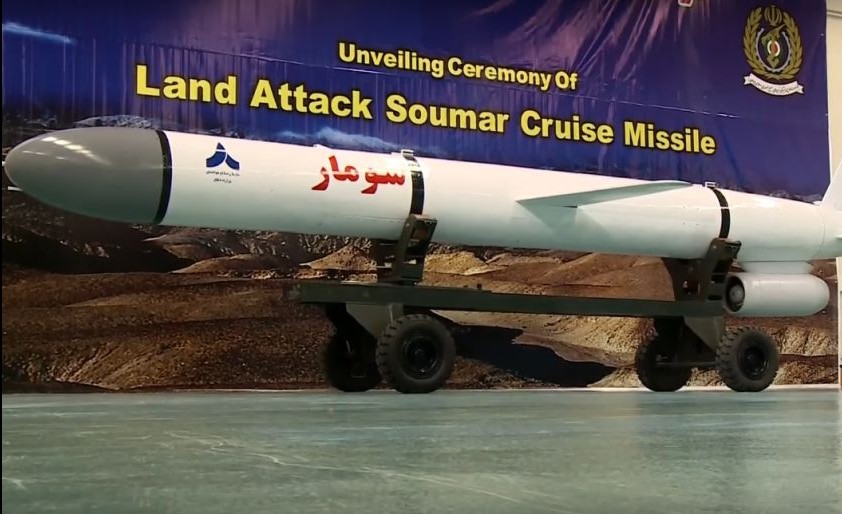
On January 29, Iran is said to have tested a 4,000-kilometer (2,500-mile) ballistic missile capable of carrying a nuclear warhead. On Thursday, the German newspaper Die Welt reported that Iran also tested a home-made cruise missile with the same capabilities: the Soumar, with a range of up to 3,000 kilometers (1,864 miles), flew 600 kilometers (373 miles) on its maiden voyage, according to the German report.
The rocket is reportedly a re-engineered Russian KH-55 cruise missile, which is capable of reaching Israel from Iran, and has the advantage that it can be launched from ships, aircraft and submarines.
The missiles are not covered by UN Resolution 2231, which was passed shortly after the nuclear deal with Iran was signed in July 2015 and calls on Tehran “not to undertake any activity related to ballistic missiles designed to be capable of delivering nuclear weapons, including launches using such ballistic missile technology.” Iran argues that its ballistic missile program is also not covered by the resolution because it does not have a nuclear weapons program.
During his campaign, Trump promised both to “dismantle the disastrous deal” and to “force the Iranians back to the bargaining table to make a much better deal, but in a call to the Saudi king on Sunday promised to “vigorously enforce” the controversial agreement.
Prime Minister Benjamin Netanyahu on Monday demanded the reimposition of sanctions against Iran, terming the test a “flagrant breach” of UN Security Council resolutions, and said he would discuss with Trump a reevaluation of the “entire failed nuclear accord” during their February 15 meeting in Washington.