US military says strike disabled ship trying to run blockade on Iran
Iranian media reports explosions on Qeshm Island in and port of Jask, US military did not respond to comments on matter; Iran says two tankers hit mines in Hormuz
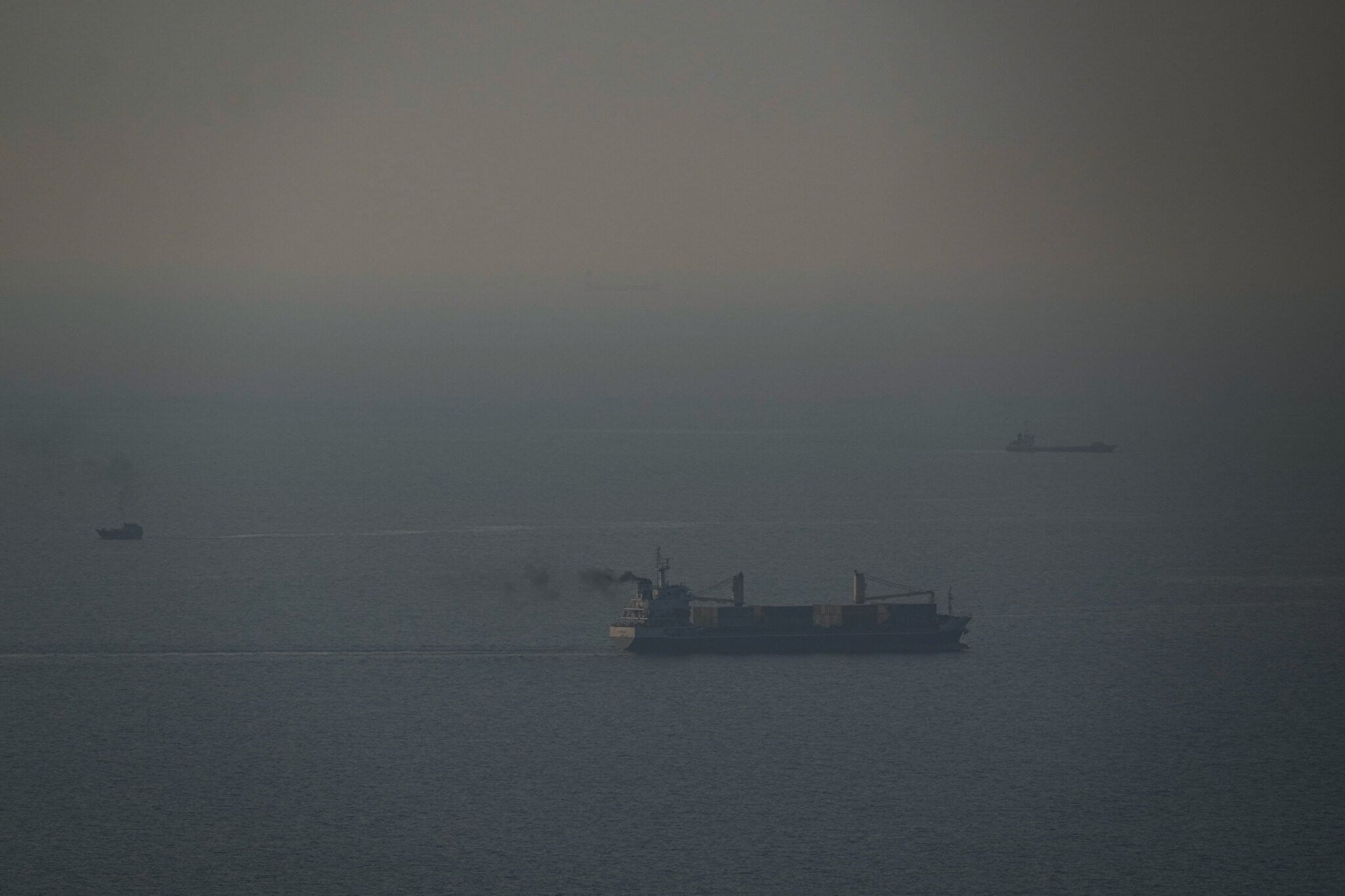
The US military said late Saturday it disabled a St. Kitts-flagged ship after it ignored multiple warnings and attempted to leave the region after visiting an Iranian port, amid efforts by mediators to bring the conflict between the United States and Iran to an end.
US forces have been enforcing a naval blockade on Iran for months in and around the Strait of Hormuz, a crucial strategic waterway for global shipping, including oil. The last confirmed US strike on a cargo vessel was nearly a month ago in the Gulf of Oman.
Saturday’s disclosure comes in the wake of at least two instances in which US Central Command did not announce military strikes it has carried out in the region, and officials at the command declined to confirm strikes when asked about local reports of explosions.
Iran state media also reported on Saturday evening the sound of explosions on Qeshm Island in the Strait of Hormuz, as well as several explosions in the port of Jask. It wasn’t immediately clear what the cause of the explosions was, and the US military didn’t immediately respond to an Associated Press request for comment.
The Iranian military said late Saturday that two tankers had hit mines in the Hormuz area and caught fire. It did not identify the tankers’ flags or destinations.
US President Donald Trump said Friday that the US military had carried out new limited strikes against Iran, targeting an Iranian air defense system. Trump described the military action to reporters as “minor.” US Central Command ultimately didn’t comment on the action even after the strikes were confirmed by Trump.
CENTCOM forces disabled a commercial vessel in the Gulf of Oman, Nov. 7, after the ship’s civilian crew ignored repeated warnings and attempted to violate the naval blockade against Iran multiple times. A U.S. military aircraft fired precision munitions at the stern of St.… pic.twitter.com/NS5PzRmYkS
— U.S. Central Command (@CENTCOM) November 7, 2026
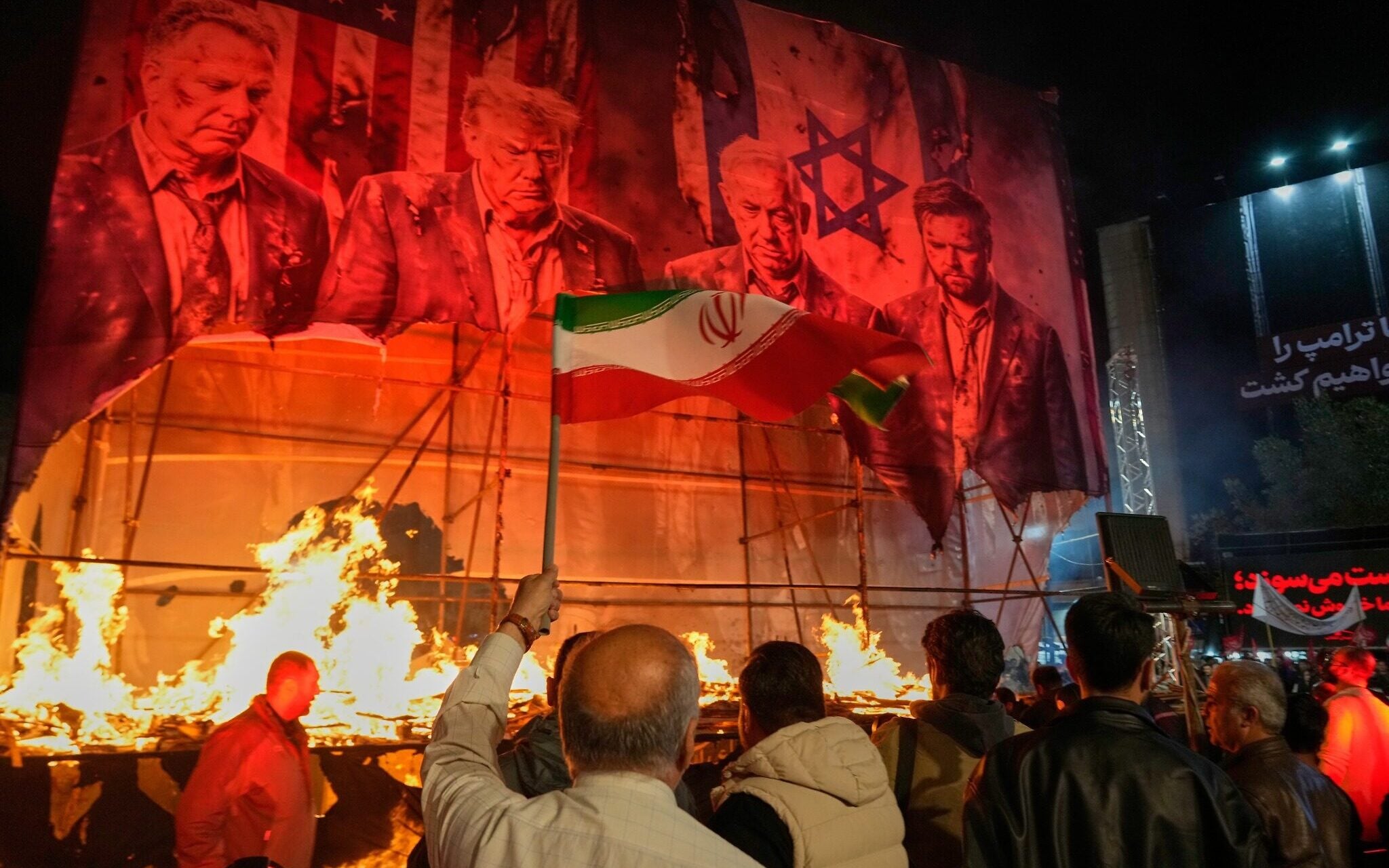
For weeks now, Trump has said he was considering launching a new wave of strikes on Iran after the US midterm elections, which were held on November 3. The Middle East and beyond have been on edge about the prospects of the US resuming full-scale operations against Iran for the first time in almost two months.
Amid the US strikes and saber-rattling from Tehran, two Middle East government officials said Friday that Iran was reviewing proposals presented by chief mediator Qatar aimed at addressing differences with the United States about Tehran’s nuclear program.
But one of the officials stressed that the Iranians, at least at the moment, remain unwilling to engage in negotiations with the Trump administration over their atomic activities until the US agrees to several core conditions that Iran has been demanding be part of any ceasefire agreement.
Differences with Iran over its nuclear program remain the thorniest issue, and one that Trump insists must be resolved as part of any deal meant to end the more than 8-month-old war.
Both officials were not authorized to comment publicly on the delicate negotiations and spoke on the condition of anonymity.
Tehran insists on several concessions from the US, which Trump has declined in the past. Among the core demands Iran says must be met before engaging in nuclear talks: ending the US blockade on Iran’s ports, lifting sanctions, unfreezing its assets, issuing compensation for war damage and ending hostilities throughout the region, including Israeli operations in Lebanon.
Mediators and Iran have discussed a potential bridge deal aimed at helping pave the way for further talks on Tehran’s nuclear program, according to regional officials.
They said the proposal, which was recently presented to the two sides by Qatari mediators, called for implementing trust-building measures over the course of two days.
These measures include lifting the US blockade and releasing some of the billions of dollars in Iranian frozen funds seized over the years as part of a US campaign to isolate Iran over its nuclear program. In return, Tehran would allow International Atomic Energy Agency inspectors at its sites bombed by the US and Israel, the officials said.
On the second day, Iran would reopen the Strait of Hormuz in line with a modified agreement that Iran and Oman have reached on the waterway but has not been approved by the United States, the officials said. That mechanism would be temporary until a permanent deal is reached on the strait in cooperation with other Gulf countries, they said.
Following the implementation of the measures, the US and Iran would embark on extensive talks addressing Iran’s stockpile of highly enriched uranium as well as other aspects of its program, the officials said.
Iran has long maintained that its nuclear program is peaceful, but according to the IAEA, Iran has 440.9 kilograms (972 pounds) of uranium that is enriched up to 60 percent purity, a short, technical step from weapons-grade levels of 90 percent. There is no civilian energy application for uranium enriched to those levels.
The more than 8-month-old war was launched by the US and Israel on February 28 in a bid to destabilize Iran’s regime and destroy its ballistic missile and nuclear programs.
In June, Iran agreed with the United States to a memorandum of understanding laying out a pathway to a permanent settlement of the conflict, only for the deal to quickly unravel as each side accused the other of violating it.
The sides have traded intermittent blows and been locked in a stalemate ever since.
October saw the most attacks on commercial ships in the Strait of Hormuz since March, as Iran has tried to ramp up economic pressure on the US to get it to lift its blockade.