US, Britain shutter embassies in Yemen amid rebel takeover
Moves come as political crisis deepens following gains by Shiite Houthis; US counterterror efforts to continue
WASHINGTON — The United States and Britain closed their embassies in Yemen and evacuated staff late Tuesday and early Wednesday, officials said, amid security concerns following the takeover of much of the country by Shiite rebels.
The State Department confirmed late Tuesday that it has closed the US Embassy in Yemen and evacuated its staff.
Washington announced it had suspended operations at the embassy in Sanaa and relocated its remaining diplomatic personnel “due to the ongoing political instability and the uncertain security situation.” The embassy had been operating with only a skeleton staff for some weeks amid deteriorating conditions.
Yemen has been in crisis for months, with Iran-linked Shiite Houthi rebels besieging the capital and then taking control. Earlier Tuesday, US officials said the embassy closure would not affect counterterrorism operations against al-Qaeda’s Yemen branch.
“The United States remains firmly committed to supporting all Yemenis who continue to work toward a peaceful, prosperous and unified Yemen,” State Department spokeswoman Jen Psaki said. “We will explore options for a return to Sanaa when the situation on the ground improves.”
The move was quickly followed by the British Embassy in Yemen’s capital also closing and evacuating its staff early Wednesday, authorities said.
“The security situation in Yemen has continued to deteriorate over recent days,” UK Minister for the Middle East Tobias Ellwood said in a statement. “Regrettably we now judge that our embassy staff and premises are at increased risk.”
The State Department issued a travel warning advising US citizens to defer travel to Yemen and urging US citizens currently living in Yemen to depart.
Ellwood also urged British citizens still in Yemen to “leave immediately.”
Two US officials said Marines providing the security at the embassy will also likely leave, but American forces conducting counterterrorism missions against al-Qaeda’s Yemen affiliate in other parts of the country would not be affected. The US officials spoke on condition of anonymity because they were not authorized to discuss the closure publicly on the record.
Abdel-Malek al-Houthi, who leads the Shiite rebels, warned his enemies Tuesday not to stand in his hard-line movement’s way and denounced foreign governments for removing their diplomats.
“We will not accept pressures. They are of no use,” al-Houthi said in speech broadcast on the rebel group’s own al-Masirah satellite television network. “Whoever harms the interest of this country could see that their interests in this country are also harmed.”
Al-Houthi made a series of similarly threatening but vague remarks, and offered no explanation for what specific retaliatory action he might have in mind.
The United Nations has been trying to broker talks between the Houthis and others in Yemen since the Shiite rebels dissolved parliament after earlier besieging the country’s president, who later resigned while armed militants surrounded his home.
The Houthis, who are traditionally based in northern Yemen bordering Saudi Arabia, swept into Sanaa in September and have seized other territory since. Many link the Houthis to regional Shiite power Iran, though the rebels deny they are backed by the Islamic Republic.
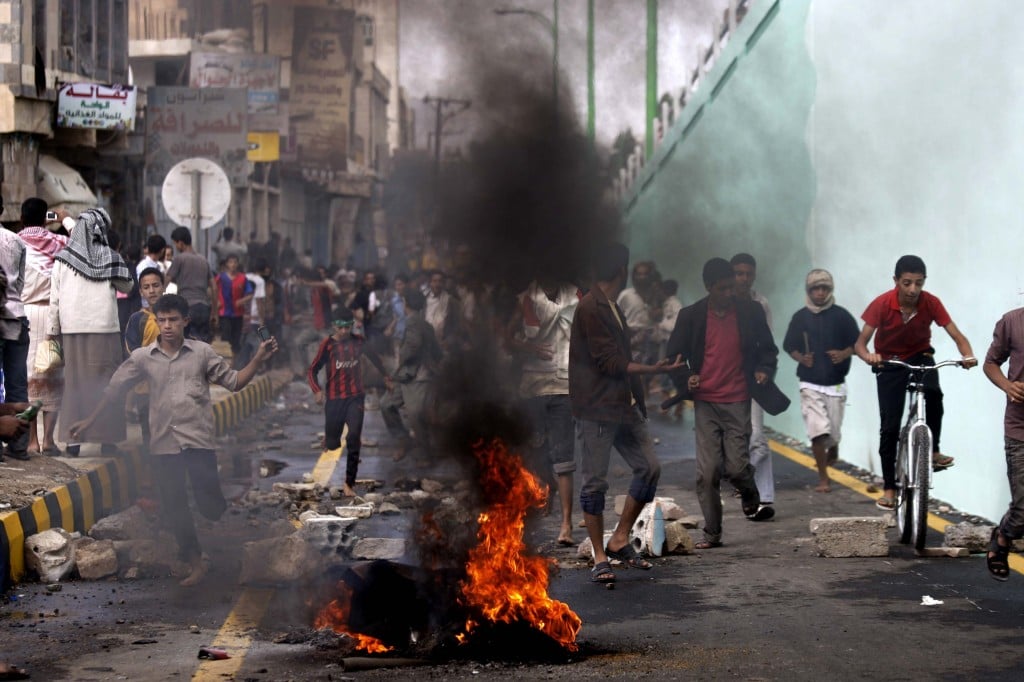
Although operations against al-Qaeda’s Yemen affiliate will continue, the closure of the embassy will be seen as a blow to the Obama administration, which has held up its partnership with ousted Yemeni President Abed Rabbo Mansour Hadi’s government as a model for his strategy in combatting terrorism, particularly in unstable countries.
“Yemen has never been a perfect democracy or an island of stability,” President Barack Obama said late last month as conditions in the capital of Sanaa became worse. “What I’ve said is, is that our efforts to go after terrorist networks inside of Yemen without an occupying US army, but rather by partnering and intelligence-sharing with that local government, is the approach that we’re going to need to take.”
The embassy closure will also complicate the CIA’s operations in Yemen, US intelligence officials acknowledge. Although CIA officers could continue to work out of US military installations, many intelligence operations are run from embassies, and the CIA lost visibility on Syria when that embassy was evacuated in 2012.
The CIA’s main role in Yemen is to gather intelligence about members of al-Qaeda in the Arabian Peninsula and occasionally kill them with drone strikes. Both the CIA and the military’s Joint Special Operations Command run separate drone killing programs in Yemen, though the CIA has conducted the majority of the strikes, US officials have said.
There were 23 US drone strikes reported in Yemen last year, 26 in 2013 and 41 in 2012, according to Long War Journal, a website that tracks them through media reports.
The Houthis last week dissolved parliament and formally took over after months of clashes. They then placed President Hadi and his Cabinet ministers under house arrest. Hadi and the ministers later resigned in protest.
Earlier Tuesday, Yemeni military officials said the Houthis, aided by troops loyal to Hadi’s predecessor, former President Ali Abdullah Saleh, took full control of the key central province of Bayda province.
Bayda is the gateway to the country’s south, which remains in the hands of pro-independence southerners and to the strategic oil-rich Maarib province, to the east, also still not in rebel hands.
The US Embassy in Yemen is the third in an Arab country that has closed since the turmoil of the Arab Spring began in December 2010. The other two were embassies in Damascus, Syria, and Tripoli, Libya. The embassy in Damascus was closed in February 2012 and the embassy in Tripoli was closed in July 2014.
The embassy in Yemen was operating with only a small portion of its usual diplomatic staff and had closed to the public for all but emergency services in January. It had been operating with reduced manpower since September 2014, when the State Department ordered all non-essential personnel to leave the country.
In May, 2014 the embassy in Sanaa was closed for several weeks due to heightened security threats.
Copyright 2015 The Associated Press.