Vance says US ‘feeling pretty good about prospects’ of a deal with Iran; Trump: ‘It could happen!’
Diplomat tells ToI that agreement under discussion would see Tehran swiftly reopen Strait of Hormuz in exchange for US sanctions relief, which would be followed by comprehensive nuclear talks
The Trump administration on Monday signaled a negotiated deal with Iran was possible after Tehran offered to reopen the Strait of Hormuz, albeit under strict conditions, while Prime Minister Benjamin Netanyahu was said to still be lobbying for a resumption of attacks.
“Oil Prices are DROPPING LIKE A ROCK, down almost $10 a Barrel, A RECORD, because people feel that there will not be a War with Iran. Iran wants a settlement, as soon as possible. It could happen!” US President Donald Trump posted on Truth Social a day before the midterm elections, in which a top issue has been the rise in energy prices since fighting began earlier this year with joint US-Israeli strikes on Iran.
Trump in recent weeks had hinted about renewing attacks on Iran when voting ends Tuesday in the United States. But while speaking at the Washington Reflecting Pool on Monday, he indicated he might be thinking otherwise, resuming a pattern of alternating between threatening major strikes and pushing for a deal.
Asked by reporters if he was considering striking Iran after the midterms, Trump replied “no,” though he has also previously played down the prospect of attacks before ordering them.
Vice President JD Vance meanwhile reported that there had been “a number of good conversations with the Iranians.”
“The president and I both feel pretty good about the prospects for potentially coming to a negotiated settlement,” Vance told reporters, adding that he discussed the issue with Trump an hour earlier. “We’ve certainly made some progress. We’ll see if we can make some more.”
“We’re going to keep on working at it… The Iranians are always a little unpredictable,” he said.
Trump “retains kinetic options, he retains non-kinetic options, but we certainly made some progress. We’ll see if we can make some more,” Vance continued.
Asked whether the US has given Iran a deadline before Trump makes due on threats to resume strikes, Vance said that the US has not given such constraints.
The vice president went on to claim that the US has already destroyed Iran’s nuclear program — even though Trump still talks about the possible need to bomb a number of other nuclear enrichment sites and even though Iran still maintains a stockpile of highly-enriched uranium.
“Having destroyed their nuclear program, we want to make sure they don’t rebuild it or try to rebuild it. That’s what matters most to the United States,” Vance said. In the past, he has said Washington’s main priority is restoring the flow of traffic through the Strait of Hormuz, whose effective closure by Iran has led global gas prices to spike.
“They care a lot about their sovereignty. They care a lot about economically rebuilding. We do think that there is a pathway there, but it really does require a firm and verifiable commitment that they don’t rebuild that nuclear program,” Vance said.
Trump stressed in his remarks Monday that his bottom-line demand that Iran not possess a nuclear weapon.
“We’re not going to allow Iran ever to have a nuclear weapon, and they understand that. They’ve understood that and they’ve said it even recently,” Trump said.
“If we allowed Iran to have a nuclear weapon, this country could never function in the same way. The whole world would be a different place,” he said.
He insisted that the operation was not actually a war because “we’ve done very little fighting” recently, after the sweeping US and Israeli strikes that began in late February wrapped up months ago.
“We wiped out their leaders — first level of leaders, the second level of leaders, and they’ve asked us, please stop doing that, and we will,” Trump further claimed.
‘Very intensive’ negotiations
Echoing Vance, two regional officials who spoke to the Associated Press said diplomatic efforts have made progress, with Qatari mediators holding two rounds of talks last week with Iranian officials.
The two officials spoke on condition of anonymity because they were discussing what they said were classified briefings they had received from American, and in one case Israeli, officials.
A diplomat familiar with the negotiations told The Times of Israel that a delegation of Qatari mediators arrived in Tehran during the evening to resume talks with Iranian officials about a potential agreement. The deal under discussion would see the swift reopening of the Strait of Hormuz by Iran in exchange for sanctions relief from the US, followed by comprehensive talks on Tehran’s nuclear program, the diplomat said.
Iran’s Foreign Minister Abbas Araghchi confirmed that “intensive” talks with Washington were taking place via mediators.
“Consultations through mediators are very intensive. We have presented our conditions and proposals, and everything depends on the political rationality of Washington,” Araghchi said in comments carried by state media outlet IRNA.
Quoting Iranian President Masoud Pezeshkian, state media in Iran reported that supreme leader Mojtaba Khamenei gave “certain authorities” to the elected government in talks with the US and mediators.
Iran seeks “to solve the problem with dialogue,” Pezeshkian said, according to the IRNA news agency.
Iran’s foreign ministry said it was considering a two-day plan to reopen the Strait of Hormuz if the US agrees to its conditions, having previously proposed a one-week timeline.
“The possibility of implementing this plan in two days is another indication of Iran’s good-faith approach. We have stated that, if Iran’s demands are met, it would be possible to restore security to the Strait of Hormuz and resume the negotiating process within a short period,” said foreign ministry spokesman Esmaeil Baghaei, adding that the “exchange of messages is still ongoing” via mediators.
Baghaei said the plan Iran had submitted in September to end the war remained the focus of discussions, but he confirmed comments attributed to Araghchi on Saturday that the proposal could be shortened.
“The basis of dialogue and talks between Iran and the US via mediators is still Iran’s seven-step proposal, which is now condensed, making it possible to implement it within two days,” he said.
Trump in September rejected the seven-step proposal, which called for the US to end its blockade on Iranian ports, Iran to reopen the Strait of Hormuz waterway, a US waiver on Iranian oil sales, the cancellation of new sanctions on Iran and then talks on other issues.
Baghaei reiterated that condensing the plan would not change Iran’s underlying stance that a return to talks on the country’s nuclear program could only happen after it verified that all its conditions were met.
Asked whether the possibility of transferring Iran’s highly enriched uranium stockpile to another country was raised in the talks, and whether Iran might agree to that, he said no.
Netanyahu said pushing for renewed strikes
Amid the diplomatic efforts, two regional officials and a third person familiar with the matter told the Associated Press that Netanyahu was pushing for another wave of strikes on Iran after the US elections on Tuesday.
Netanyahu pressed for strikes during a call over the weekend with Trump, who would not commit to taking military action, according to a person who was briefed on it.
Other US allies in the Middle East are warning against more strikes, saying it would destabilize the region and could lead Iran-allied Houthi rebels in Yemen to step up their attacks on Saudi Arabia and Red Sea shipping, a third regional official said. Iran-backed militias in Iraq could also get involved.
That official, and the person familiar with the Netanyahu-Trump call, were not authorized to speak publicly and spoke on condition of anonymity.
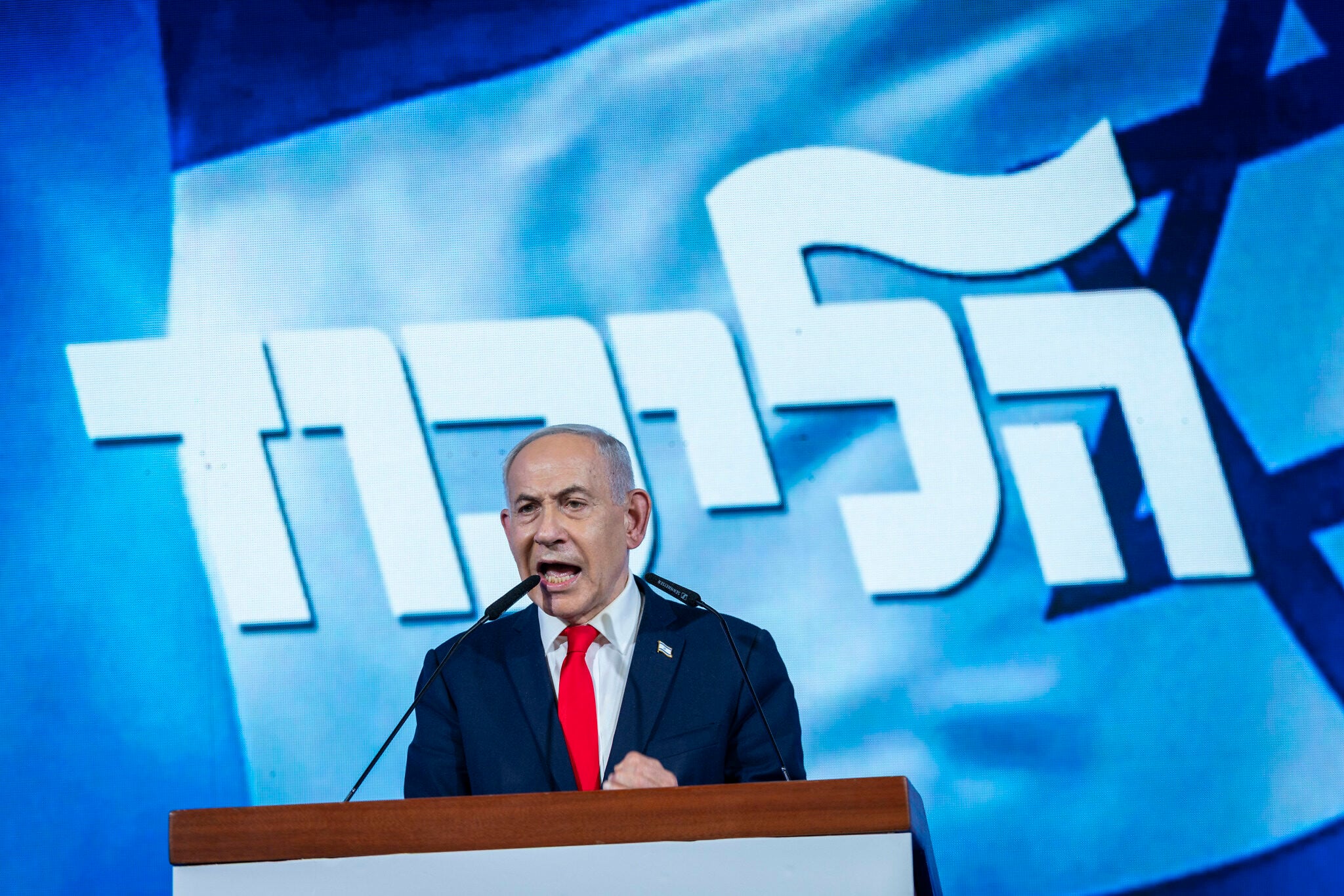
A resumption of the conflict with Iran could potentially help Netanyahu form an emergency government after he and his allies lost their Knesset majority in last week’s elections. Netanyahu also pushed for renewed strikes before the vote as he sought to highlight his security credentials to a public deeply scarred by Hamas’s October 7, 2023, terror onslaught.
The Israeli government did not immediately comment. The White House did not directly respond to questions about Netanyahu and Trump’s discussion of potential new strikes during the weekend call, which the premier’s office also not has commented on.