Assad and allies commit war crimes in Aleppo, while US stands idly by
The Obama administration is watching as the Russian-Syrian-Iranian axis commits an unprecedented massacre, even by Mideast standards
On Tuesday morning, Syrian pro-government forces, accompanied by thousands of Shiite militias, began another ground operation in eastern Aleppo.
As of Tuesday evening, the operation hadn’t finished, but it was clear that the Syrian rebel forces were on the brink of defeat, and the citizens of eastern Aleppo were facing a massacre, at least according to reports emerging from the area.
Testimonies emerging from the city since Monday detail brutal atrocities being committed by pro-government Syrian forces. Arabic news outlets such as Al-Jazeera are broadcasting desperate calls from citizens who are trapped and crying out for help.
The UN on Tuesday warned of systemic murder being perpetrated by Syrian soldiers against citizens in neighborhoods that have been taken from rebel forces. According to UN reports, hundreds of people have been executed, and surviving civilians are being prevented from leaving Aleppo.
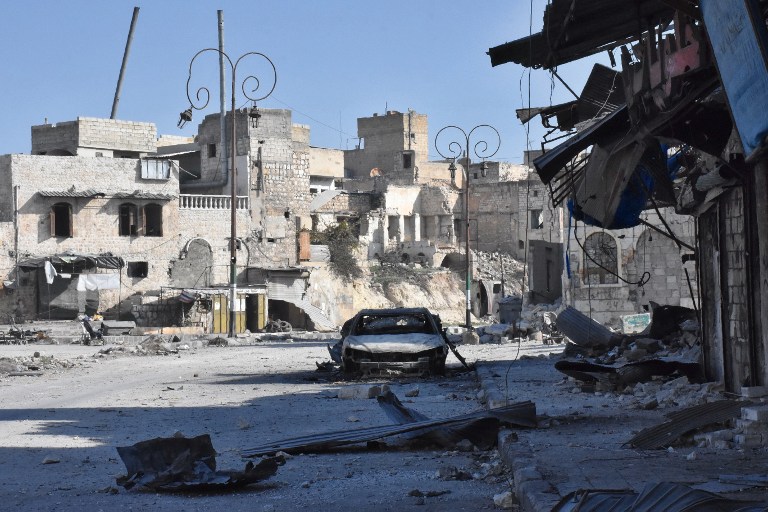
Pictures emerging from the area show the results of Iranian and Russian involvement in the war. The eastern part of the city is in ruins. Aleppo will not be restored as the economic engine of Syria, at least not within the next decade.
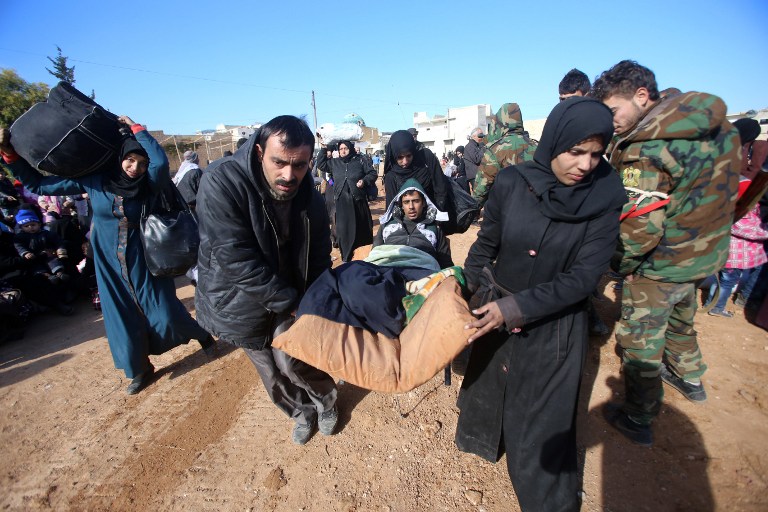
Civilians on the city’s eastern side are trapped and facing destruction by the relentless airstrikes and bombings from the pro-Assad forces. For these civilians in areas still under rebel control — anywhere from tens of thousands to 100,000 of them — there is no food, water or supplies.
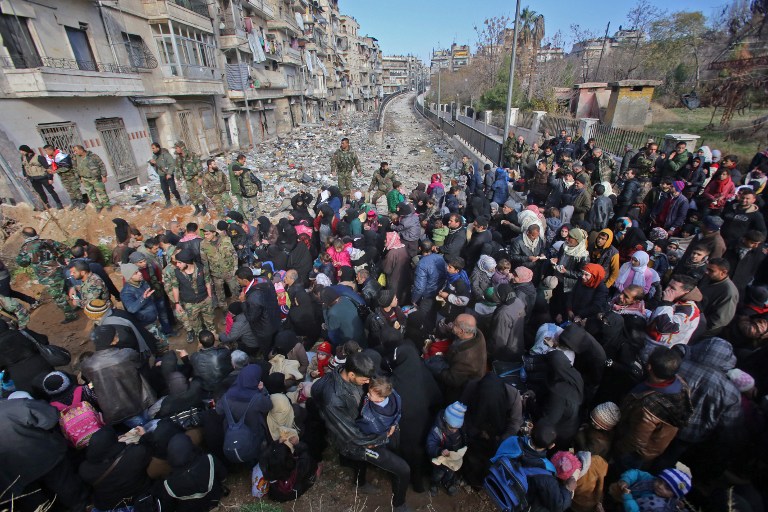
The brutalities being committed by the Shiite militias, the Syrian Army, Hezbollah and the Russian air force can only be described as war crimes. But such Western rhetoric isn’t particularly threatening to Damascus or Moscow, given Washington’s ongoing impotence. The Shiites, Syrian Army and Russia are the ones carrying out the massacres, but responsibility also lies partially with the American administration, which failed to provide effective military support to the less extreme opposition forces. Now the Obama administration is watching the unfolding of an unprecedented massacre, even by Middle East standards, committed on the basis of religious origin, and still stands idly by, doing nothing.
Damascus will benefit most from the reconquest of Aleppo, but Moscow and Tehran will also be greatly boosted. President Bashar Assad will hail his grand victory, but he knows that without Russian and Iranian support, he and his supporters would have been forced to seek refuge in Russia or Iran long ago. For Tehran, Aleppo constitutes a dramatic victory, in contrast to its failure to achieve decisive success in other parts of Syria.
Hundreds of Iranian soldiers have died in this ongoing war. Hezbollah has lost some 1,600 fighters. But the decision by the Shiite axis fighting in Syria remains to sacrifice whatever is necessary in order to keep Assad in power. The Iranians sent three divisions to Syria: two of them came from Afghanistan and Pakistan, made up of mercenaries, and a third manned by fighters of Iraqi origin. These forces banded together for the war against the Sunni opposition; several thousand of them fought in Aleppo, making the conquest of the city a huge achievement for Iran.
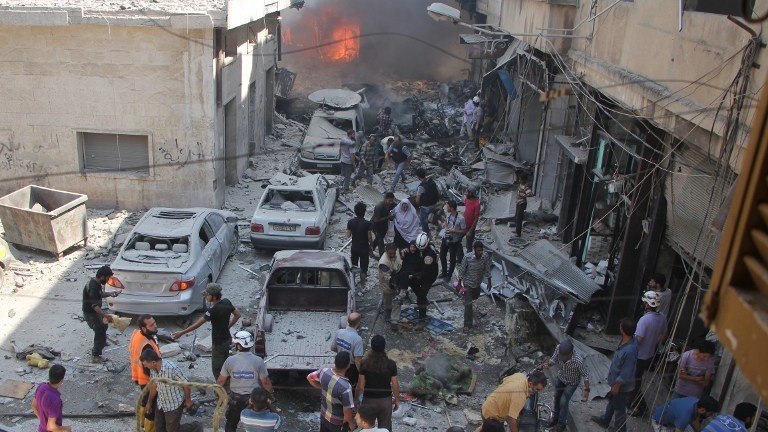
For the Russian-Syrian-Iranian axis, the central mission now is to completely destroy the opposition in Aleppo — which, notably, does not identify with the Islamic State. Once that is done, the next goal will be to continue the military campaign to the northwestern city of Idlib, and take that back from opposition forces. The aim will then be to take control of the entire northwestern region of Syria, and over the strip of land that runs south to Damascus, in order to establish a degree of stability for Assad’s force and the Russian army.
The western part of Syria is less important strategically to Assad. IS has reconquered Palmyra in the past two days, in western Syria, and it doesn’t look like anyone in Damascus is much bothered by that. For pro-government Syrian forces, apparently, it’s easier to deal with the less extremist opposition first and then, afterwards, to deal with IS and its supporters.