War-weary Ukrainian students learn Yiddish to reclaim a Jewish past nearly erased at home
Non-Jews learn about region's history through language study with New York's YIVO Institute, while connecting with US Jews over national heritage decimated with help of some local collaborators
Several years ago, Daryna Kahaniuk, a Ukrainian college student, visited a history museum in the western Ukrainian city of Volodymyr with her mother.
Although Kahaniuk’s family is not Jewish, she described her mother as “very obsessed” with Jewish history and culture. The family jokes that she might have an unknown Jewish ancestor and should get a DNA test.
That interest led the pair to question museum staff about Jewish history in their region. They were surprised to learn about how significant the Jewish presence had been in the city; around half of the population was Jewish before the Holocaust.
“There was even an area of Volodymyr where they all lived and, unfortunately, nothing is left of them,” Kahaniuk said in an interview. “How could it be that so many people lived there, and now there’s nothing that can [tell] us they were there?”
Kahaniuk went on to connect with that Jewish history by studying Yiddish in a class at The Ivan Franko National University of Lviv, part of a new program between the university and the YIVO Institute for Jewish Research in New York City.
The non-Jewish students, while contending with the Russian invasion of Ukraine, have taken up Yiddish, despite the language’s virtual disappearance in the country. They said the course has helped them connect with Jewish history in their region and sparked an interest in contemporary Jewish life.
“Jewish people have been an important part of Ukraine’s history and population and I wanted to get closer to their culture,” Kahaniuk said. “And, to be honest, it just made my mom happy because she was very interested.”
Songs explain forgotten history
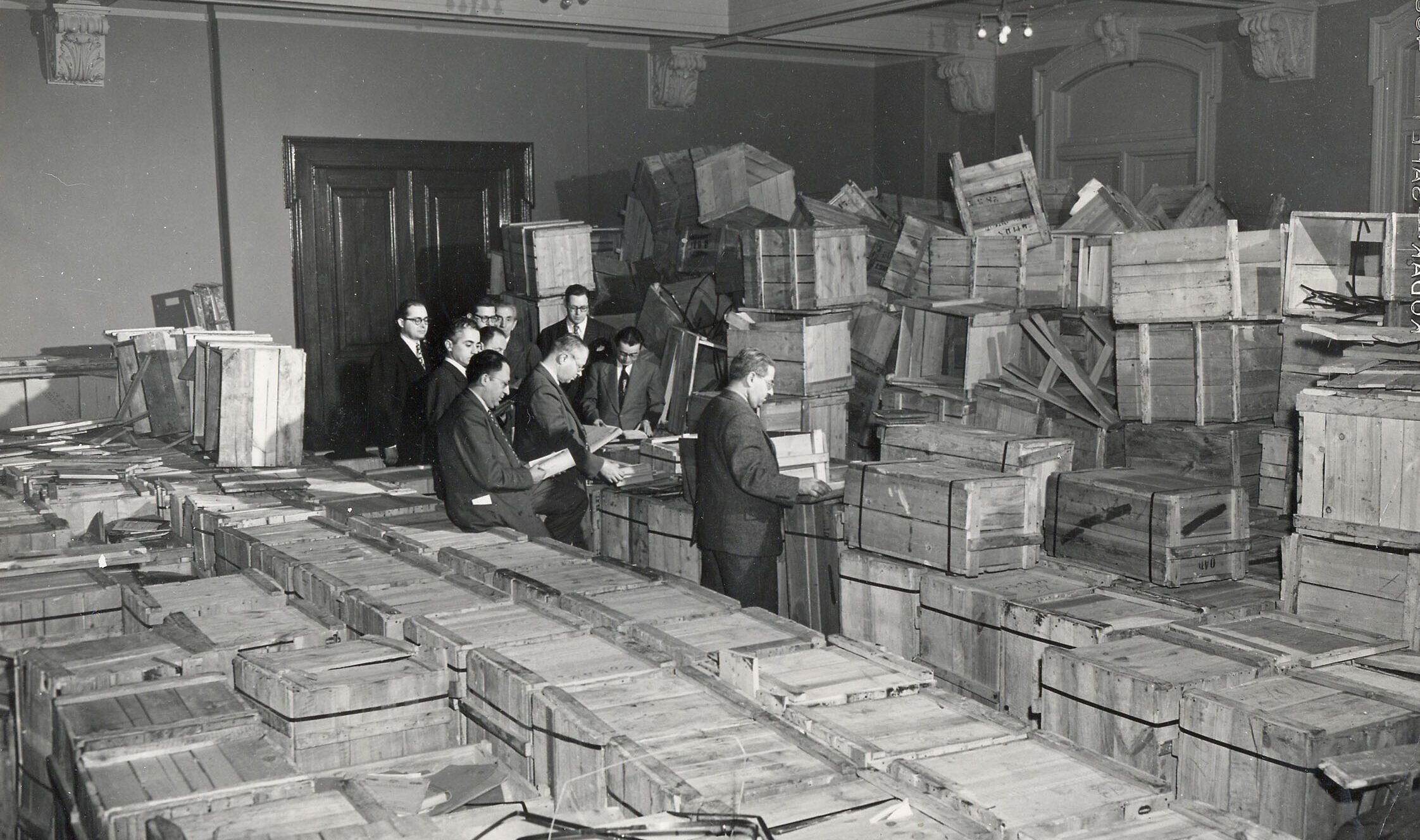
The Soviet Union crushed Jewish communal life in Ukraine in the 1930s. Nazi occupiers then exterminated most of the area’s Jewish population, killing more than 1 million Jews, often with the help of local collaborators. After the war, Soviet authorities further suppressed Jewish life and restricted the study of Jewish history, leading to the continued erasure of Ukraine’s Jewish past.
Prof. Yohanan Petrovsky-Shtern, an expert in Ukrainian Jewish history at Northwestern University who is not affiliated with the YIVO program, said Ukrainian students today are several generations removed from the Holocaust and do not feel complicity in the genocide.
Instead, they are taking an interest, reclaiming the region’s Jewish history after Ukraine’s independence, said Petrovsky-Shtern, who has written a series of books about Jewish history in Ukraine and Eastern Europe and taught at Ukrainian universities.
“It’s a brand new generation that is interested in multicultural studies, that does understand that there is kind of a lacuna in their knowledge of East European history if they do not include the Jews,” he said. “Their interest toward Judaism or toward Jewish studies or toward Jewish history or toward Yiddish is generated by the same curiosity toward the other.”
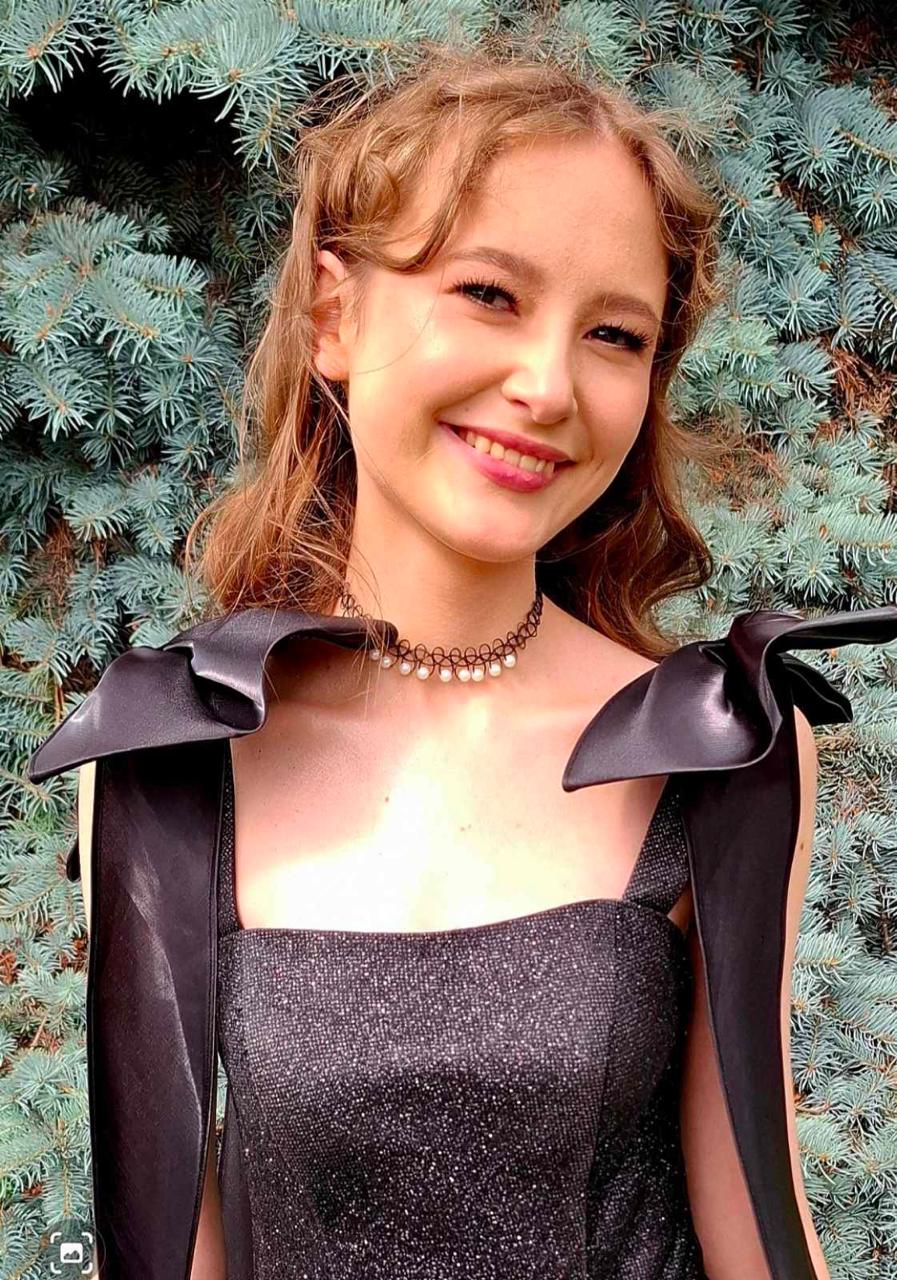
Kahaniuk, 19, studies English philology at the university, including English language and German literature.
When one of her professors invited her to take the Yiddish course, she agreed.
Some of the course material was eye-opening. Their textbook provided insight into Jewish culture, such as through traditional Yiddish songs that “explain what life was like for Jewish people,” she said.
Her favorite class covered a satirical Yiddish folk song about eating potatoes every day due to poverty.
“On the one hand, it was so funny and cheerful, but on the other hand, the meaning of the song, it was about how hard life was for Jewish people,” she said. “We have stereotypes that Jewish people are very wealthy and they could afford anything, and in real life, it wasn’t like that.”
‘Everybody should study Yiddish’
The program offers YIVO’s academic Yiddish courses to students at The Ivan Franko National University of Lviv for university credit. YIVO provided scholarships to the Ukrainian students with support from the Kronhill Pletka Foundation.
The 12-week course, with one class per week, takes place in English via Zoom. For the pilot program, 15 Ukrainian students took the course during the spring semester, with more expected to enroll in fall 2026.
The instructors are from YIVO’s faculty at the Max Weinreich Center for Advanced Jewish Studies.
“I think everybody should study Yiddish, and this is not just because I’m a Yiddish teacher,” said one of the YIVO instructors, Vera Szabo. “People should know the history of where they live.”
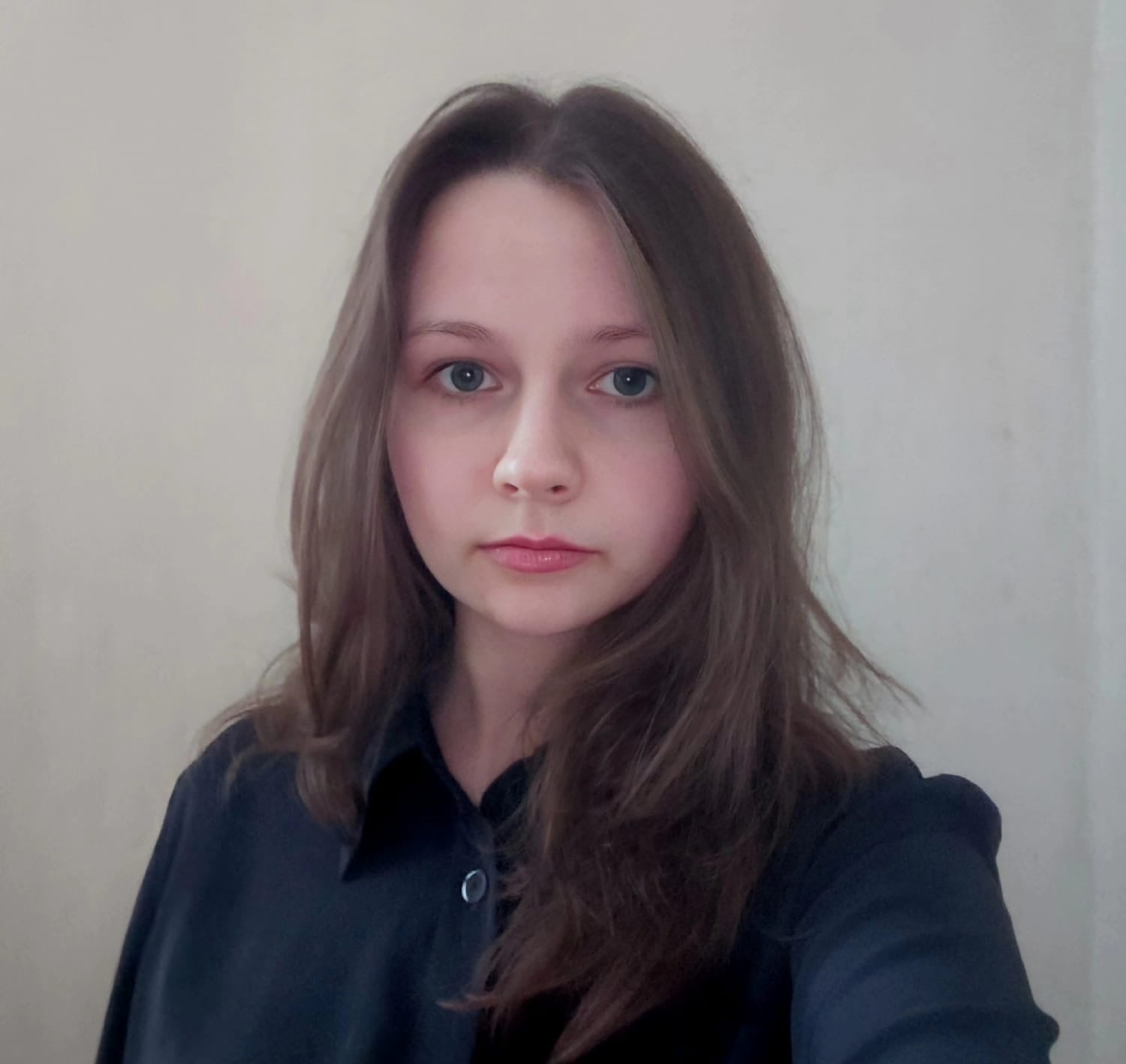
Diana Blaha, 19, another student in the program, was surprised to learn that the Zidichov Hasidic dynasty originated in her city, Zhydachiv.
“Even though I knew that there is a Jewish cemetery, a graveyard, in my hometown, I never thought about that,” said Blaha, who studies English language and literature. “There were many more Jewish people in Europe than I thought.”
She added that learning about Yiddish dialects from around the continent illustrated how widespread the Jewish community was.
Blaha also noticed similarities between Yiddish and Slavic languages such as Ukrainian. The grammar was easy to learn and she noticed some loanwords. Zhaba means “frog” in both Yiddish and Ukrainian, she pointed out.
“People who spoke Yiddish in those areas, they borrowed a lot of vocabulary, similar to how English obtained a lot of words hundreds of years ago,” she said.
The Ukrainians studied alongside other students, mainly North American Jews.
While the Jewish students had background knowledge of Judaism and Jewish history, and some knew the Hebrew alphabet, the Ukrainians did not. Blaha and Kahaniuk both said learning the alphabet was a challenge.
“All those symbols look very different from the Latin and Cyrillic alphabet, as well as reading from right to left. It’s very unusual, ” Kahaniuk said.
Szabo said that, despite those obstacles, her Ukrainian students “worked really, really hard,” and by several weeks into the course, had closed the gap and “were able to read and write quite well.”
Connecting with American Jews
The two groups also connected through the course.
“The American students were just looking up to these Ukrainian girls and admiring them that they’re sitting in the middle of a war and yet they’re putting so much energy into studying,” Szabo said. “The Ukrainian students very much enjoyed the fact that they’re talking to real Americans because they’re very young. They’re 18, 19 years old. They’ve never been abroad. They really enjoyed the international atmosphere.”
Lviv is in Western Ukraine, away from the war’s frontlines, but the students are still affected by the conflict. Russian airstrikes sometimes hit the region, causing damage and taking lives.
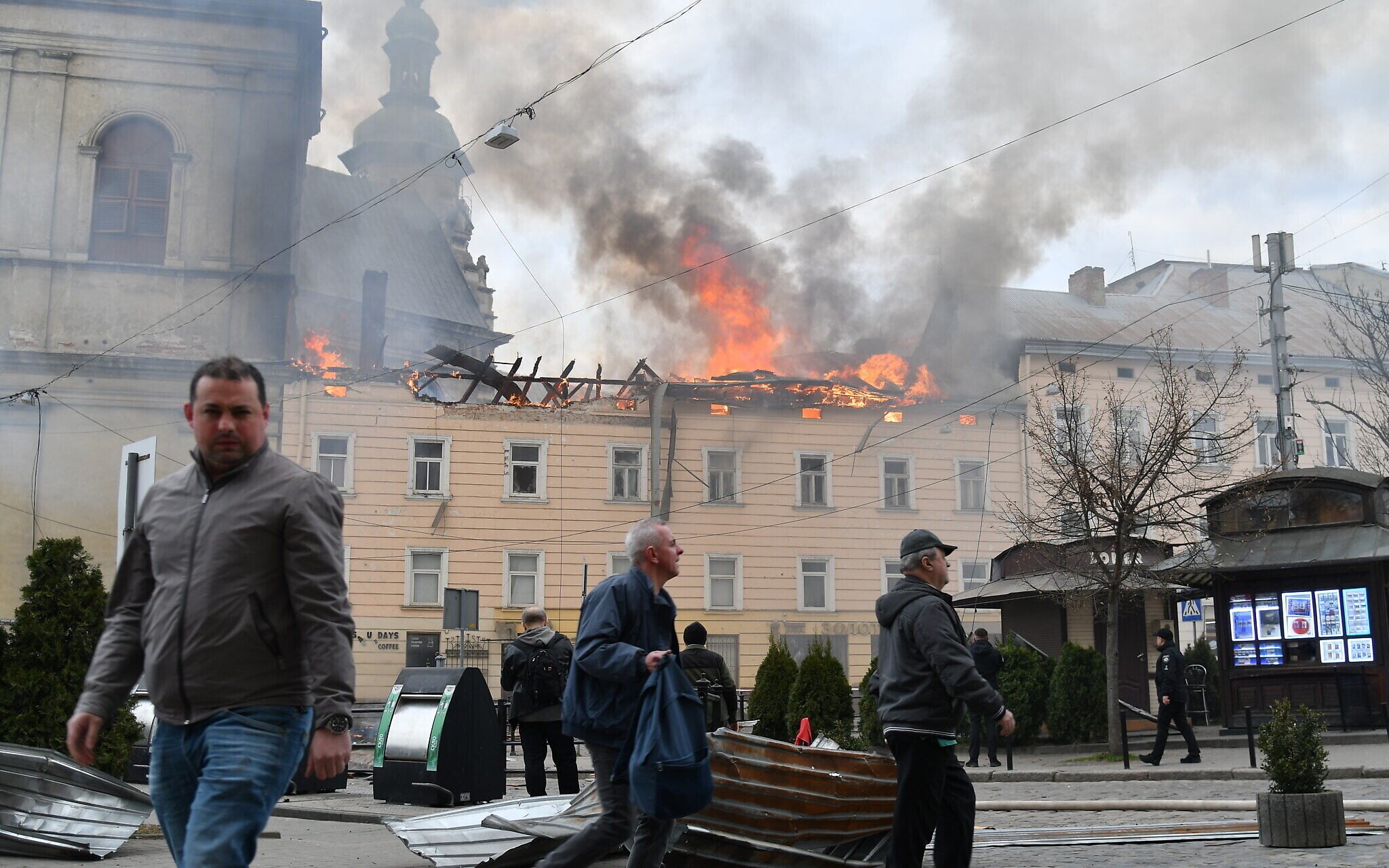
“You are always in stress and worried about your life and the life of people close to you,” Kahaniuk said.
The realities of war made themselves apparent during the course due to electricity blackouts that sporadically cut off the Ukrainian students.
“Sometimes they disappeared from the Zoom and I didn’t know where they were, and then they came back and said, ‘Oh, they cut the power,'” Szabo said.
Szabo, who lives in Jerusalem, added that she felt she was “really bonding” with the Ukrainians because both live in war zones.
Blaha said she felt an affinity for Yiddish because, like Ukrainian, the Jewish language has a history of oppression. Soviet authorities suppressed both languages, starting in the 1930s.
“My language was forbidden a lot of times as well, and I feel like this part resonates with me,” she said.
Everyday use of Yiddish in Ukraine has disappeared. Petrovsky-Shtern said that when he traveled in Ukraine with rabbis in the 1990s, elderly people would approach the rabbis on public transportation and speak to them in Yiddish.
“This has been absolutely gone today, so these people are no more to be seen. There is nobody who speaks Yiddish outside academia,” he said.
Despite that absence, Kahaniuk and Blaha have taken up an interest in Yiddish culture and Jewish history outside of the class.
Blaha said she has been listening to a band that performs in Yiddish and Ukrainian, the Alibi Sisters. She plans to visit a Jewish cemetery in her hometown and to read Yiddish authors such as Sholem Aleichem.
Kahaniuk wants to translate Yiddish literature to Ukrainian, saying there was a paucity of Yiddish prose available in her language.
She and her mother are also planning a trip to a historical synagogue and are seeking out places to try Jewish food.
“Their life was connected also to Ukrainian history and life,” she said about Ukraine’s former Jews. “All peoples affect each other in some way.”