Warsaw works to recognize its Jewish heritage
The ghetto may now be full of ultra-modern buildings, but the city is making efforts to preserve and honor Jews' contributions to its history
WARSAW, Poland — Friday evenings at the Charlotte Menorah Restaurant are redolent with the fragrance and the sounds of Jewish cooking. Baking on Friday evening – on the Sabbath – doesn’t that sound just a little bit strange?
But Charlotte Menorah is not just any restaurant. It is located in what was, in the early 1940s, the largest ghetto of all the Jewish ghettos in Nazi Europe. And the aspiring bakers — learning Jewish stories along with traditional Jewish dishes – are Catholic.
With anti-Semites popping out of the woodwork all over Europe, we were more than a little concerned about what we would encounter in Poland. Our trip, planned after a semester of study on the development of Yiddish culture, called for three days in Warsaw. Many of our friends warned us that we would be enveloped in gloom and doom – and how could it be otherwise, after what we knew of the Holocaust?
So it was with a sigh of relief that we found the people we met in Warsaw not only anxious to preserve the memory of the not too ancient past, but working hard and with immense enthusiasm to create a future that embraces Jewish culture. Indeed, these days, in Warsaw and many other parts of Poland, it is “trendy” to discover that someone in your family was Jewish.
We spent one wintry April day touring the ghetto with a marvelous Polish guide from the Sparks Incoming Travel Agency — Kuba Wesolowski. Catholic, like almost everyone in Poland, he is fascinated by the Jewish contribution to Polish culture over the centuries. It was with pride that he told us that in 1939 Poland had the second largest Jewish population in the world. In fact, he said, fully one-third of Warsaw’s population was Jewish before the Holocaust, second only to the Jewish population of New York City.
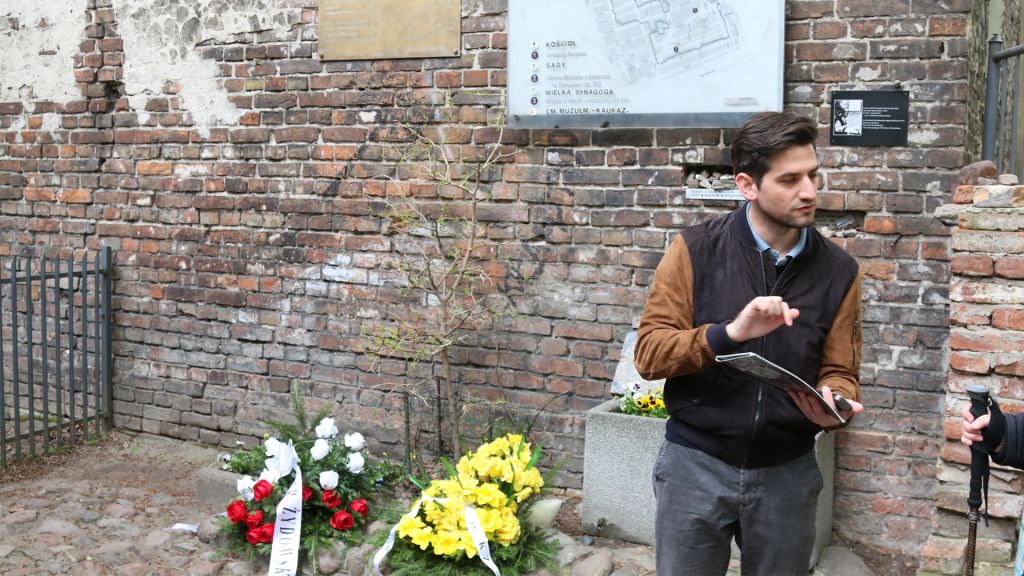
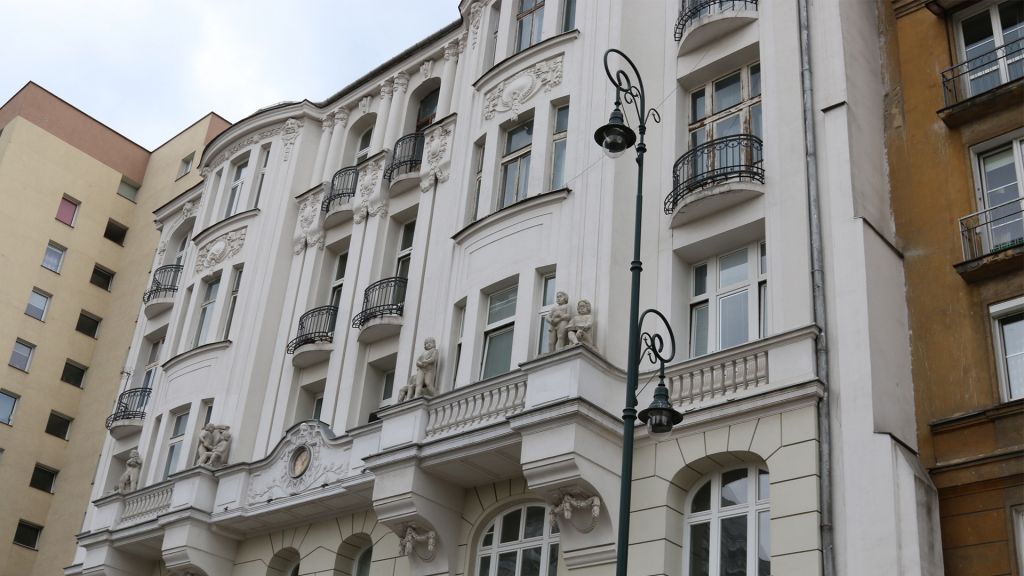
Knowing that the ghetto we were touring was completely demolished by the Nazis during the Jewish uprising in April of 1943, it was a shock to find ultra-modern structures everywhere we went. A massive wave of development in the ghetto included a tower designed by German-born American architect Helmut Jahn, competing fiercely for wealthy buyers with the strange “Sailboat Tower”. Located on the border of the ghetto, the “Sailboat Tower” was created by architect Daniel Libeskind, a Polish-born American Jew who is slated to erect a pyramid-shaped tower in Jerusalem over the next few years.
Since its inception in 2004, the city’s annual Jewish festival (called Singers’ Festival) has taken place on both sides of Prozna Street inside burnt-out buildings that opened their doors to workshops, theater performances and musicians. One side of the street was recently restored, and we could see how beautiful it must have been in the past.
The Nazis divided the Warsaw Ghetto into two parts, and built a footbridge for getting from one to the other. Near the memorial site where the bridge once stood, we viewed the stunningly restored building which had held the apartment of Adam Czerniakow. A Polish-Jewish senator whom the Nazis put in charge of implementing their orders, Czerniakow committed suicide rather than order the deportation of orphans, including those in the orphanage headed by Righteous Gentile Janusz Korczak.
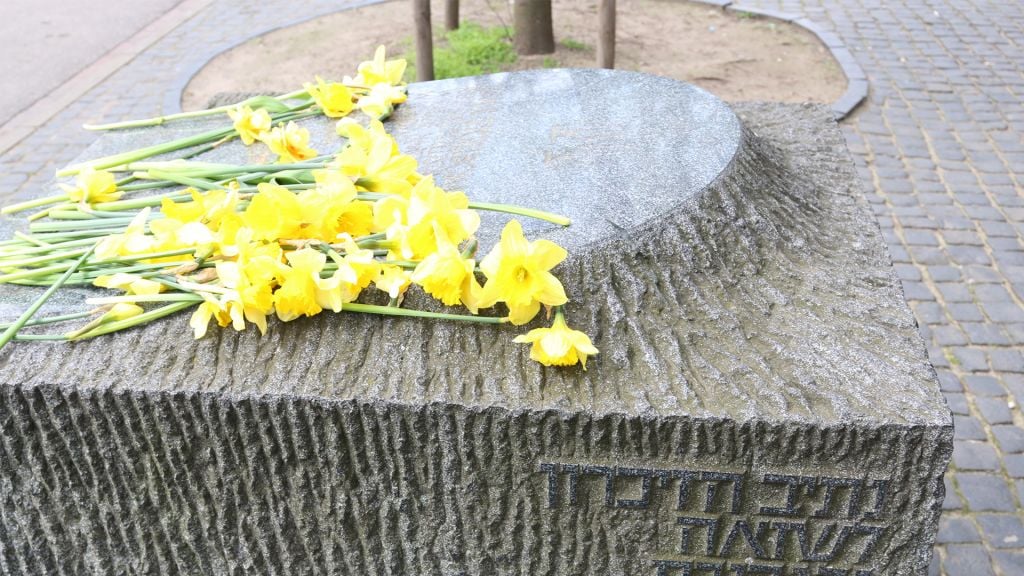
We had arrived in Warsaw on April 19, the anniversary of the 1943 Ghetto Uprising. So it was no surprise to find the ghetto full of both Israelis and Poles. What was unusual, however, were bright yellow daffodils lying atop dozens of monuments, big and small. Everywhere we went people were handing out paper daffodils for sticking on your coat.
According to Wesolowski, this all began with Marek Edelman. The last commander of the Warsaw Ghetto Uprising, he was one of the very few who escaped. Every year on the anniversary of the uprising, an anonymous well-wisher sent Edelman daffodils; he, himself, would lay bouquets of yellow flowers at the Ghetto Heroes Monument.
Soon after its inauguration in 2013, the Polin Museum of the History of Polish Jews initiated a campaign to present paper daffodils to passersby all over Warsaw. In the beginning there were 500 volunteers, while this year 1,000 volunteers and hundreds of schools participated in the campaign. Today, yellow daffodils are the symbol of the Ghetto Uprising (mine is still pinned to my winter coat).
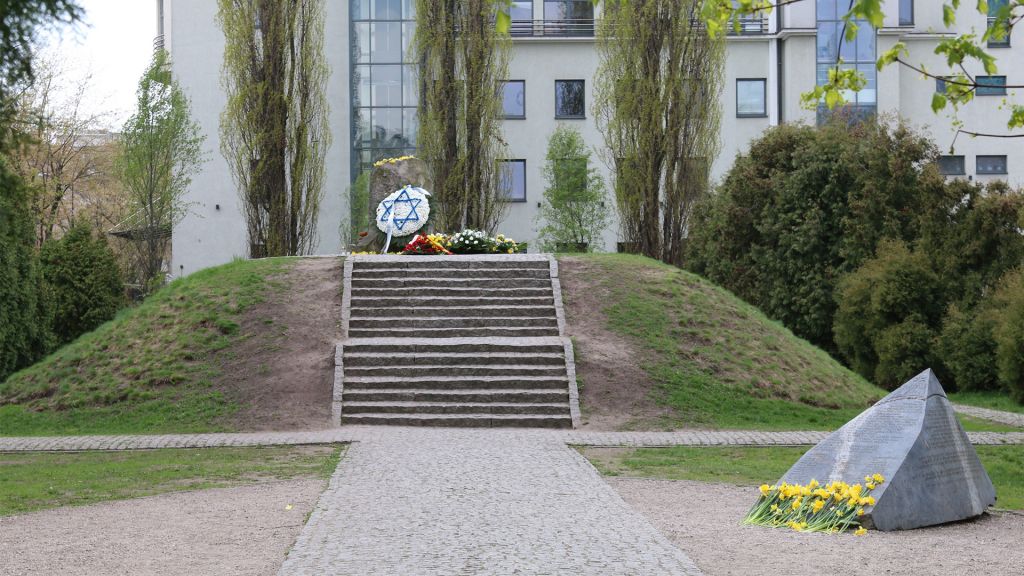
Located in the heart of the ghetto, the impressive Ghetto Heroes Monument is the site of a touching annual ceremony. We reached the site just in time to watch the German foreign minister present a wreath – and bow his head.
The Polin Museum is just across the plaza. On our second day in Warsaw we spent hours at the museum, thoroughly enjoying its 60 diverse, unique and immensely exciting galleries. Indeed, this is undoubtedly one of the world’s premium museums, both because of its solid, absorbing content and its effective use of multi-media, art and reconstructions to present it.
Although visitors come from all over the world, the vast majority are Poles – adults and youngsters alike. For many, this is their first encounter with the indisputable fact that Poland’s turbulent history is inseparable from that of the country’s Jews. And how wonderful it was to watch Polish schoolchildren absorbed in what they were seeing. One group was actively engrossed in learning the Hebrew alphabet.
Sadly, we only had one day for a museum that should be visited several times. Among the highlights were a multi-colored display of Krakow’s Jewish Quarter, animated figures walking through a typical Polish village, and a Jewish street filled with shops bearing Jewish names.
The most poignant moment came after a series of diverse displays illustrating the Jews’ successful integration into Polish society. That’s when the audio guide we were using insisted we return to the lively Jewish Street and take a last look – for it would soon disappear.
There are no parks to speak of in the ghetto. And although the museum and our ghetto tour had made a lasting impression on our Israeli hearts, we were anxious to discover why people consider Warsaw such a beautiful city.” We found out on our third day, as we explored just a few of Warsaw’s stunning sites with a second wonderful tour guide from Sparks – Agata Kabza.
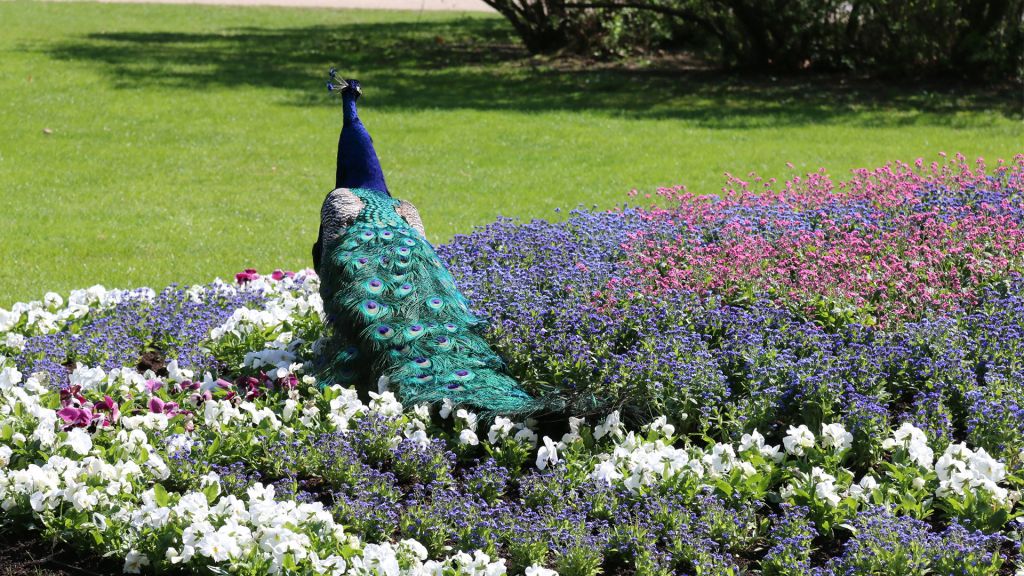
Warsaw is considered one of the greenest capitals in Europe, easy to believe after visiting Łazienki Park. Developed in the 17th century by a Dutch-Polish architect and spanning 77 hectares (190 acres), it boasts a small botanical garden, a man-made lake, a “theater on the water” and a splendid 18th-century palace that incorporates the old Łazienki – bathhouse in Polish — that gave the park its name.
Many a magnificent building survived the Nazis along the boulevard (called the Royal Route) between the early kings’ palaces to their summer residences. Outside the President’s Palace, a remodeled version of a sumptuous 17th-century villa, stands a statue of an 18th-century Polish prince in ancient Roman battledress and with a Julius Caesar-like haircut. Kabza told us that in the heart of winter, Warsaw residents cover him with scarves, hats and coats, so he won’t get cold!
Nineteenth-century composer Frederic Chopin’s favorite restaurant lay along this Royal Route. Because Chopin had breathing issues, this eatery became the first in the world to ban smoking! Chopin died in France, but his heart will forever belong to Warsaw. That, of course, is because it is lodged nearby, in the Church of the Holy Cross.
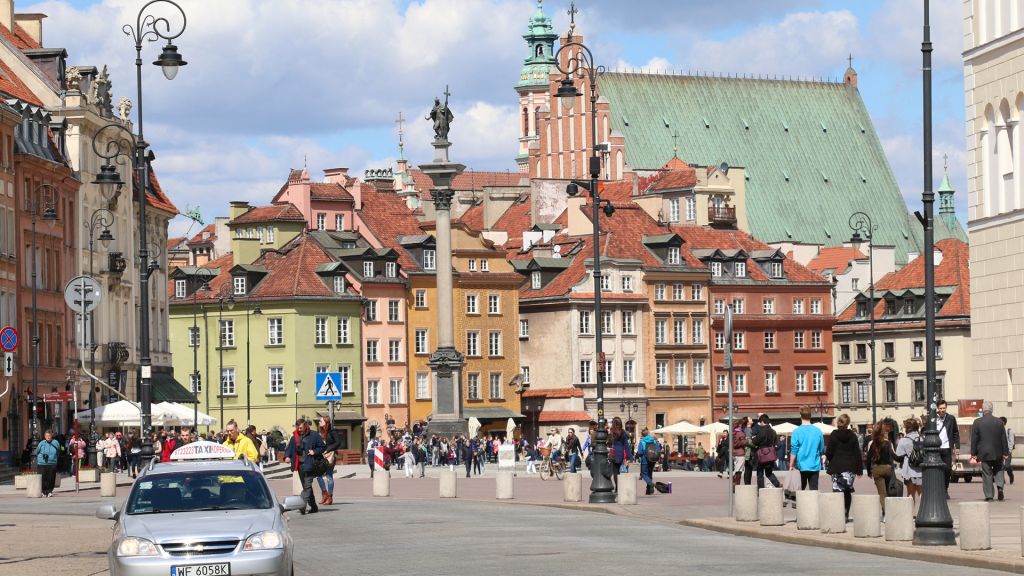
Warsaw’s superbly picturesque Old Town dates back to the 13th century. Unique as the only UNESCO Heritage site in the world that was completely destroyed and later rebuilt exactly as it had been, down to the last brick.
More than a year after the final liquidation of the Warsaw Ghetto, as the Allies seemed to be winning the war and the Russians were close, the Polish Resistance bravely rebelled against the Germans. Wrongly assuming that the Russians would lend a hand, they held out for 63 days. During that time, nearly 200,000 Polish civilians and 16,000 soldiers were killed by the Germans, who systematically destroyed almost the entire city.
Just outside the Old Town, and across the street from the dazzling Field Cathedral of the Polish Army, an impressive monument to the Warsaw Uprising is divided into two parts. In one, resistance fighters are engaged in combat while in the second, insurgents descend into the sewers as they attempt to escape from the Germans.
On our Old Town tour, Kabza took us to taste the country’s national food: pierogi (actually kreplach, or dumplings stuffed with all kinds of tasty fillings). But that evening, after hearing that the Charlotte Menorah Restaurant offered a number of Polish Jewish dishes, we headed for the ghetto. On our way we passed the Jewish theater, where the best in Jewish drama is presented in Polish and Yiddish to jam-packed Polish audiences. Then on to dinner, for stuffed goose neck and a glorified chopped liver that reminded us of holiday dinners with the Polish side of our extended families.
—-
Aviva Bar-Am is the author of seven English-language guides to Israel.
Shmuel Bar-Am is a photographer and licensed tour guide who provides private, customized tours in Israel for individuals, families and small groups.