‘We cannot be defeated’: Hezbollah chief rallies supporters 2 years after Nasrallah killing
Tens of thousands gather near slain leader’s tomb as Naim Qassem tells Beirut gathering that Israel failed to destroy group; demands withdrawal from south before disarmament talks
BEIRUT, Lebanon — Hezbollah leader Naim Qassem told supporters gathered in Lebanon on Sunday to mark two years since the killing of his predecessor, Hassan Nasrallah, that Israel had been unable to break his Iran-backed terror group.
The terrorist organization was weakened after all-out war with Israel in 2024, but regrouped and drew Lebanon into the Middle East conflict in March this year by attacking Israel, which responded with airstrikes and a ground invasion that Lebanon says have killed more than 4,300 people. Lebanon’s figures do not differentiate between civilians and Hezbollah fighters.
Hezbollah has demonstrated that Israel and its soldiers “were unable to achieve their goals to break the resistance, end its existence, consolidate the Israeli occupation and establish settlements in Lebanon,” Qassem said in a televised speech broadcast at the gathering.
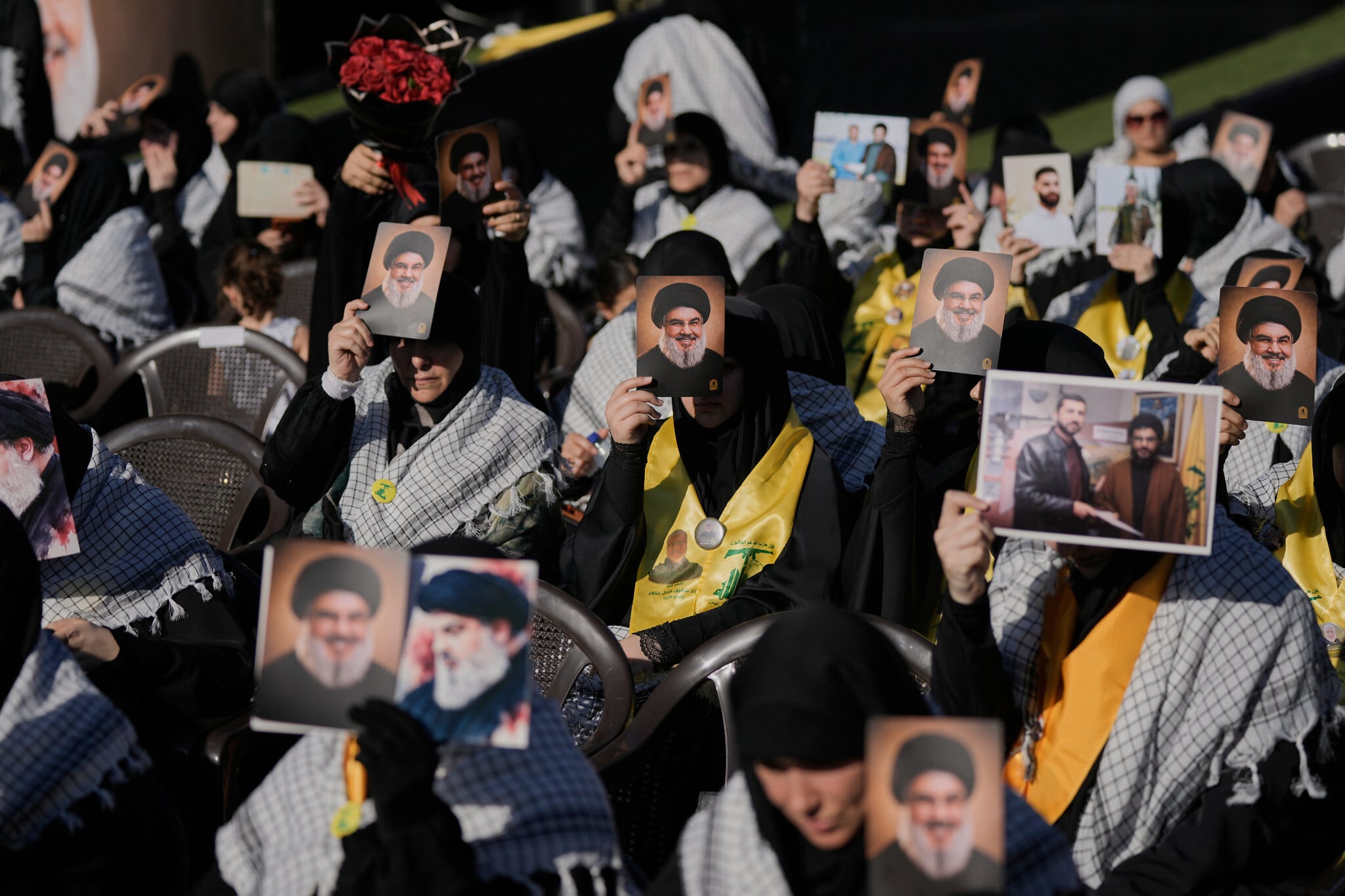
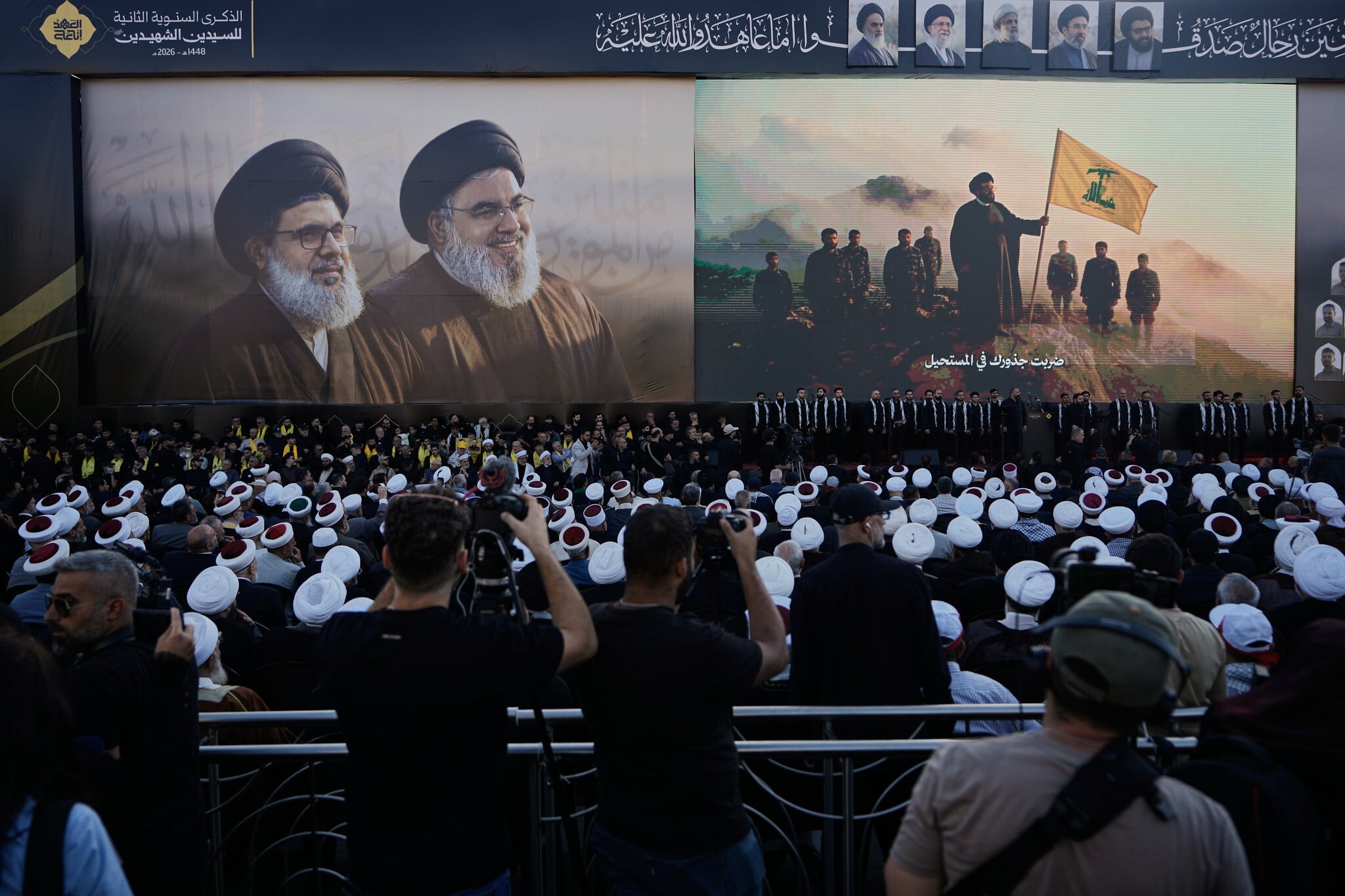
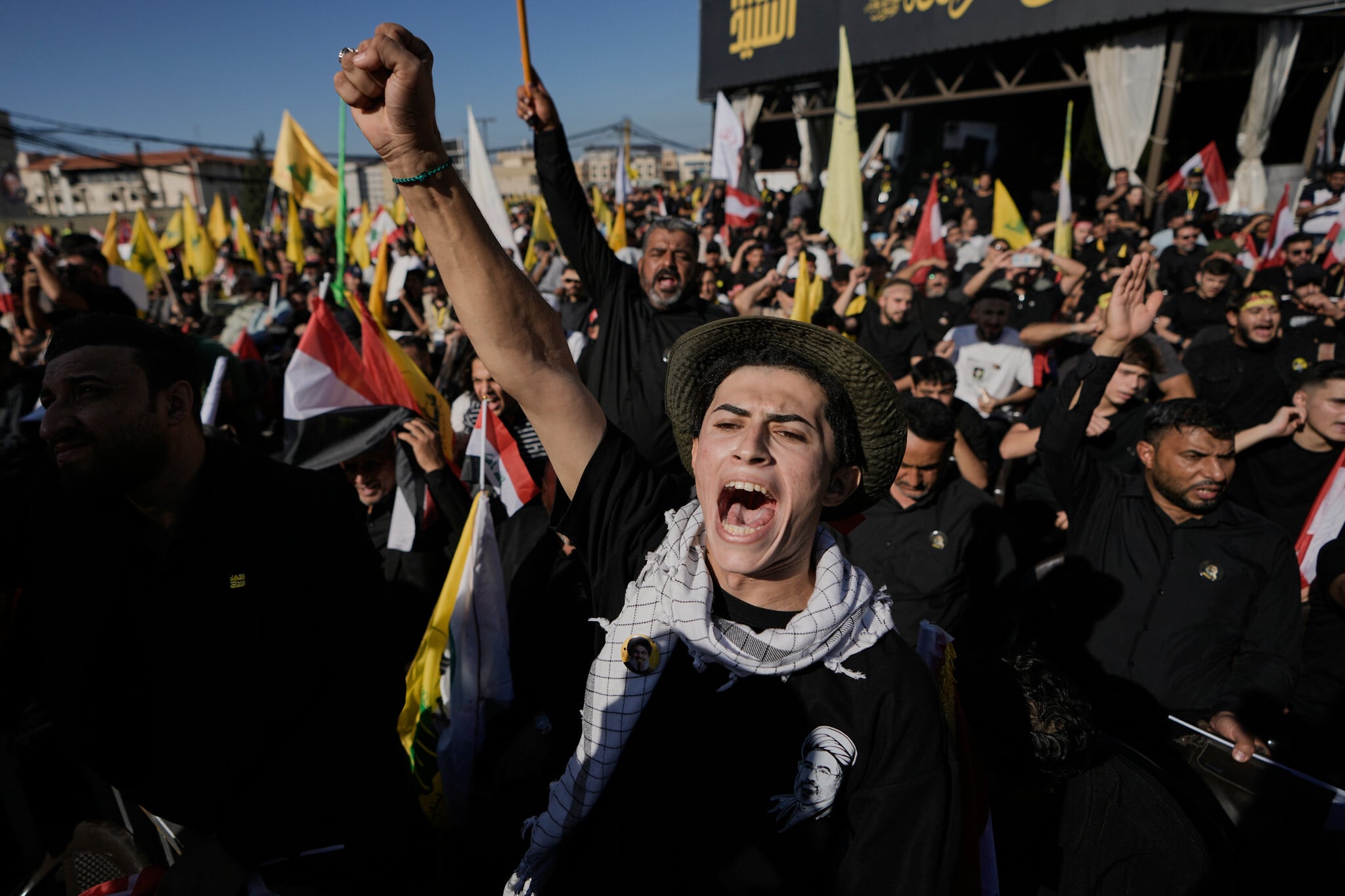
Tens of thousands of people, some carrying Hezbollah, Lebanese and Iranian flags or pictures of Nasrallah, rallied at the commemorative event near the slain leader’s tomb in Beirut’s southern suburbs, a Hezbollah stronghold that Israel bombed during conflicts this year and in 2024.
Some in the crowd chanted “Death to America, death to Israel.”
Nasrallah was revered by his supporters, but headed a terror group whose armed wing is blacklisted by many Western capitals. He was killed in a massive Israeli airstrike on Beirut’s southern suburbs on September 27, 2024.
The main ceremony marking two years since the elimination of Hezbollah leader Hassan Nasrallah and Hashem Safieddine has begun at Nasrallah's tomb complex in Beirut's southern suburbs. pic.twitter.com/ngvuvf94YT
— Ariel Oseran أريئل أوسيران (@ariel_oseran) September 27, 2026
The assassination came during more than two months of all-out war that pummeled Hezbollah and decimated its top leadership.
Nasrallah’s chosen successor, Hashem Safieddine, who was also being commemorated on Sunday, was killed in another strike days after his predecessor.
The latest hostilities have further weakened the group.
Ali Nasser, 30, from Haddatha in south Lebanon, said, “This is a historic day. Every year we commemorate it to renew our pledge” to Nasrallah “that we are walking along his path.”
The former chief “illuminated the path for us and God willing, we’ll carry on… these crowds are proof of our continuation and our loyalty to this pledge,” he added.
After a November 2024 ceasefire, Lebanese authorities committed to disarming Hezbollah, and banned the group’s military activities after it drew Lebanon into this year’s Middle East war.
Violence in Lebanon has decreased since a fragile ceasefire was announced in June after the signing of a US-Iran understanding on the broader conflict.
Lebanon and Israel reached a framework agreement later that month, under which Hezbollah was supposed to disarm and the Lebanese military to deploy in pilot zones in south Lebanon as Israel withdraws.
But progress has largely stalled. Israel has said it will not fully withdraw as long as Hezbollah remains a threat.
“We are ready for dialogue and discussion, but first, liberate the south, and let the people return,” Qassem said.
He said that with the framework agreement, “the authorities are helping the Israeli-US project instead of confronting it.”
“All the pressure on Lebanon today aims to accomplish what Israel was unable to achieve over two years,” he said, adding that the Lebanese national army should not be used as “a tool” against the group.
Israel has continued carrying out strikes and maintains troops in what it describes as a security zone extending up to six miles (10 kilometers) inside southern Lebanon.
Israel says the zone is intended to prevent Hezbollah from reestablishing positions from which it could fire on or infiltrate northern Israeli communities.
Israel’s far-right finance minister Bezalel Smotrich called on Sunday for the annexation of areas of south Lebanon under Israeli military control “as far as the Litani River,” which runs about 20 miles (30 kilometers) from the Israeli border.

Qassem said holding onto positions “is not the main objective” for his group, after Israel carried out detonations this month to destroy Hezbollah infrastructure on the strategic Ali al-Taher ridge.
The IDF said the tunnel network served as the “nerve center” of Hezbollah’s Badr regional division and was intended to support surveillance and fire on northern Israel, as well as a potential ground assault into the Galilee.
“With the great sacrifices that we have made up until now, we can only keep going, and we cannot be defeated,” Qassem vowed.
At the event, Ibrahim Hijazi, 56, from Blida in south Lebanon, a border town currently occupied by Israel, said that “this is a sacred occasion for us.”
“We lost someone dear to us, but thank God, Sheikh Naim and others are here,” he said.
“We are continuing this path… we will carry on even if we all become martyrs.”
Times of Israel staff contributed to this report.