‘Investigate how it happened, don’t let time blur the truth’: Bereaved ex-hostage Sharabi closes Oct. 7 event with plea
Hosts highlight heroism of the fallen at Tel Aviv ceremony, attended by 50,000, organized by survivors of attack and bereaved families; opposition leaders seen in crowd; government ministers stay away
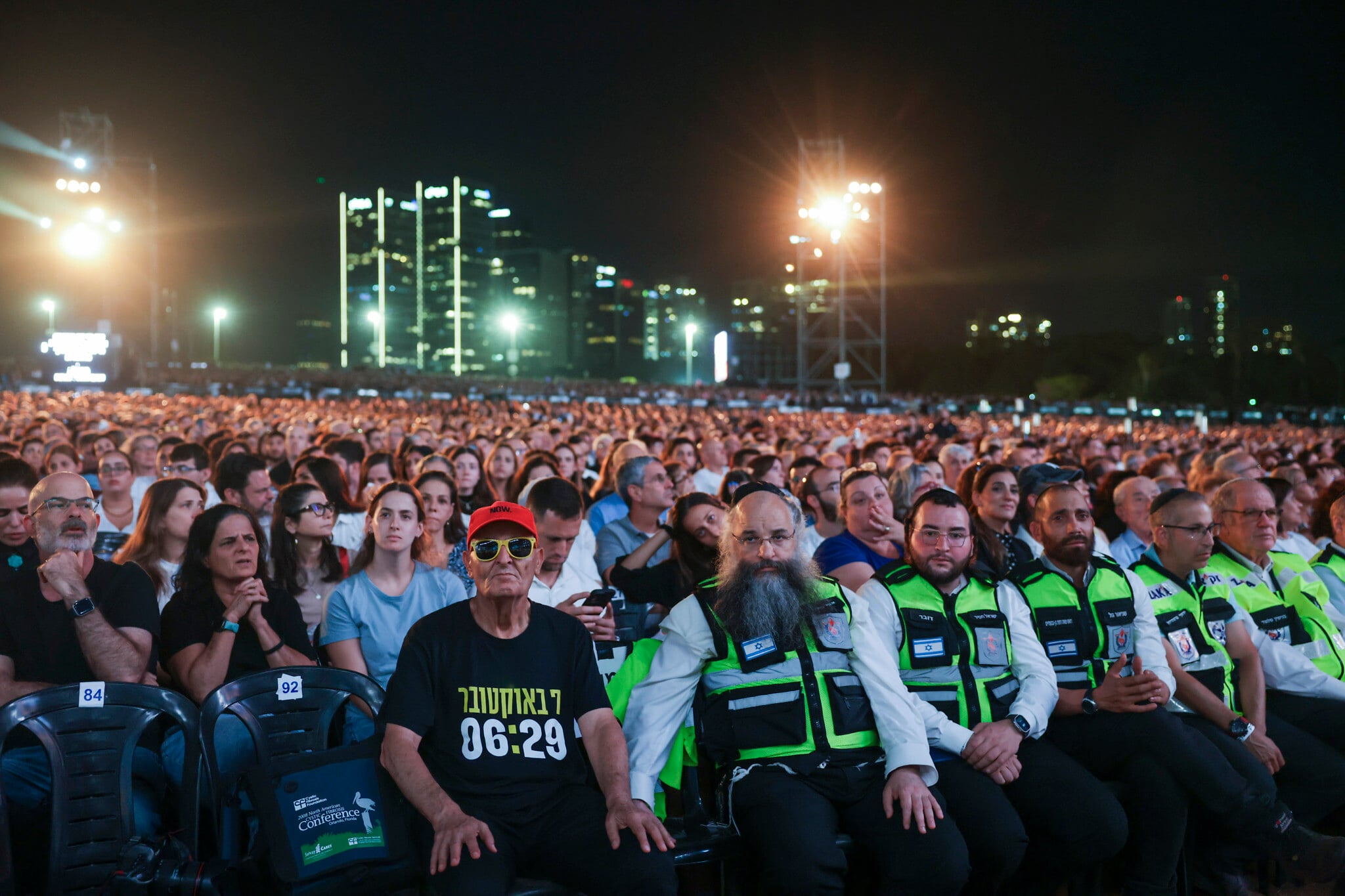
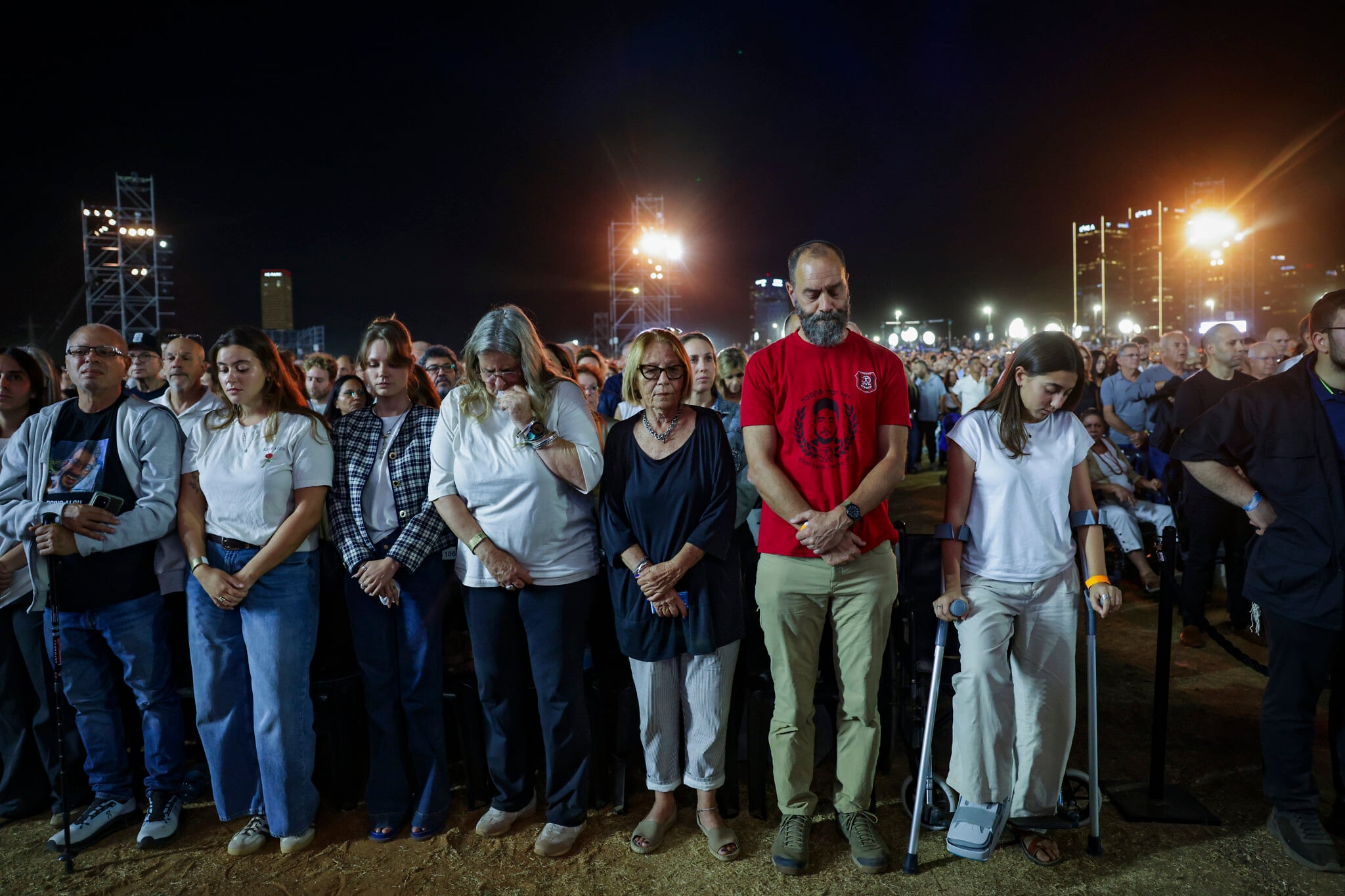
Some 50,000 people gathered at Tel Aviv’s Yarkon Park on Wednesday evening for the national memorial ceremony commemorating the third anniversary of the October 7, 2023, attack.
The ceremony was organized by survivors of the attack and the bereaved relatives of the victims, and is distinct from the official state ceremonies that were held on Monday, the Hebrew date chosen to mark the massacre.
The ceremony opened with a minute of silence at 9:15 p.m.
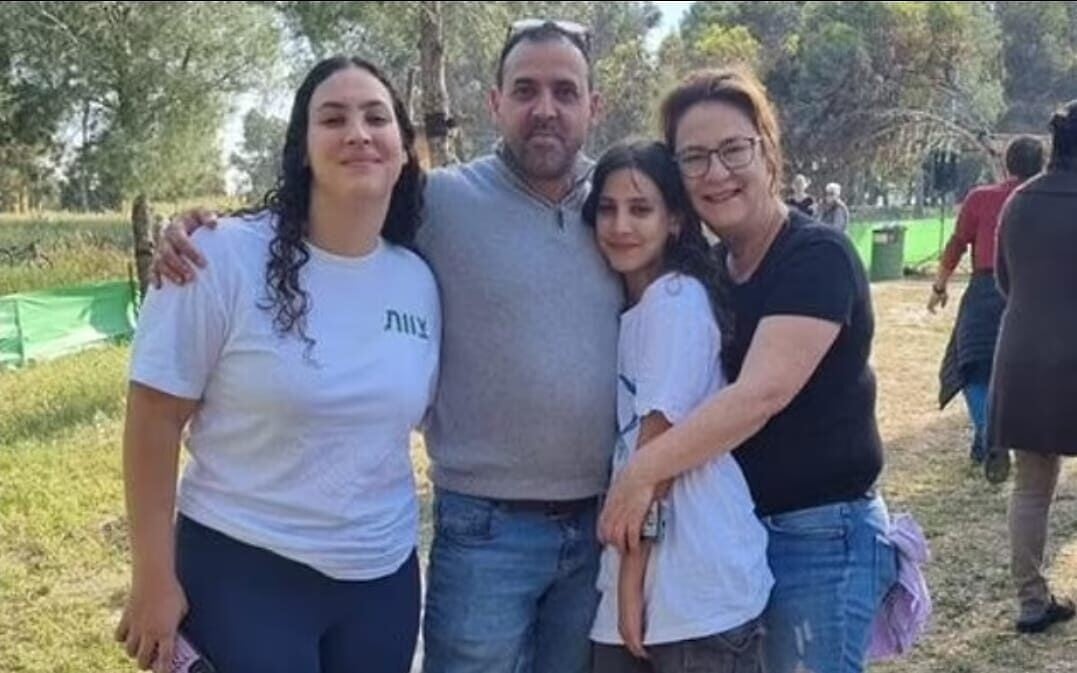
It was hosted by former hostage Eli Sharabi — whose wife and two daughters were killed in their home in Kibbutz Be’eri and whose brother was taken captive and died in Gaza — and actress Shani Cohen.
Sharabi closed the event with a plea to investigate how October 7 came to pass, declaring that “we owe ourselves the truth.”
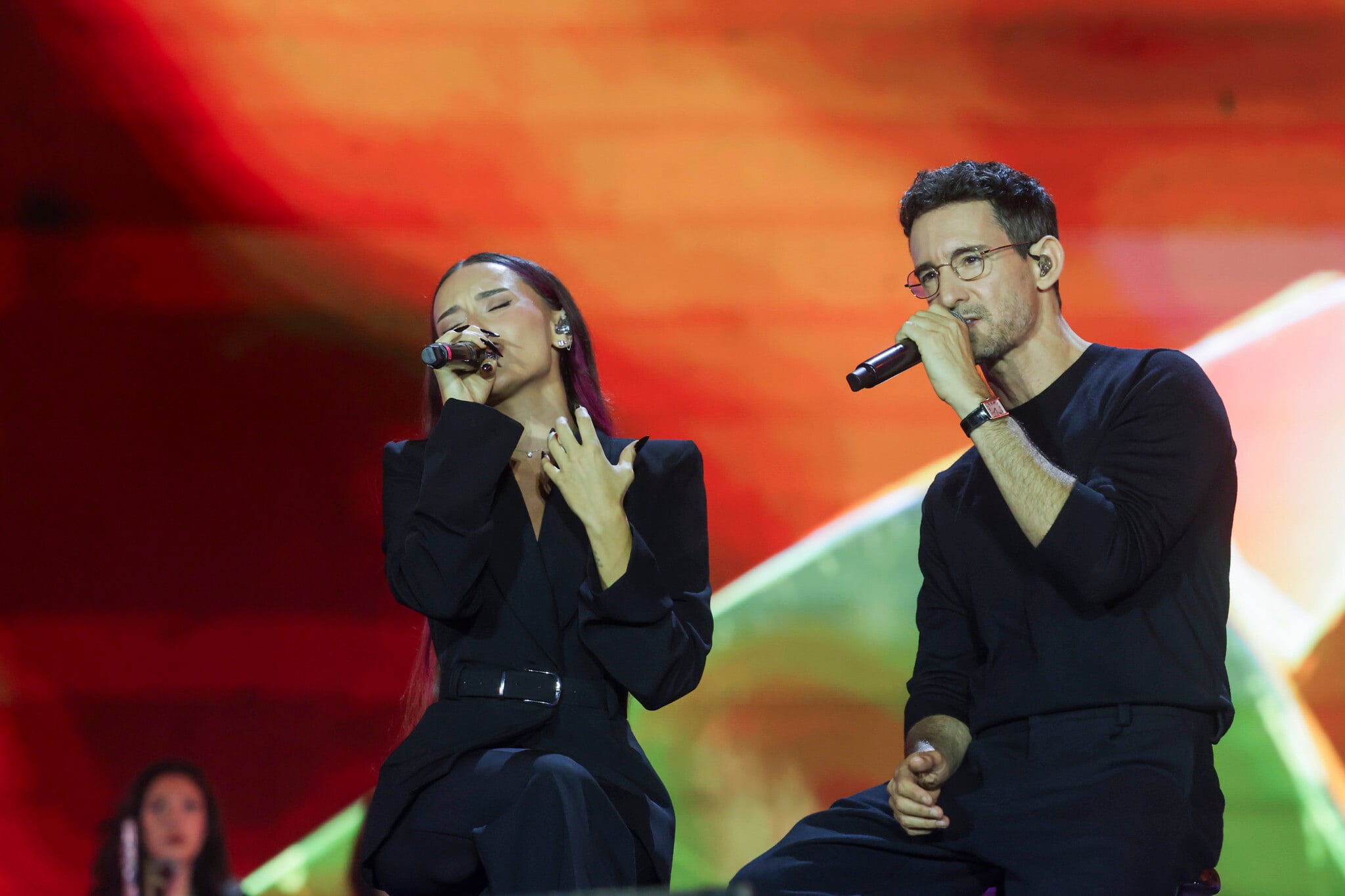
Tributes by bereaved families were interspersed with stripped-back musical performances by Israeli artists.
“On that Shabbat morning, we lost so much,” said Sharabi in his opening remarks. “We lost friends, families, homes and entire communities that were devastated. We lost the people we love most, we lost our sense of certainty, we lost a part of our innocence, and our hearts burned.”
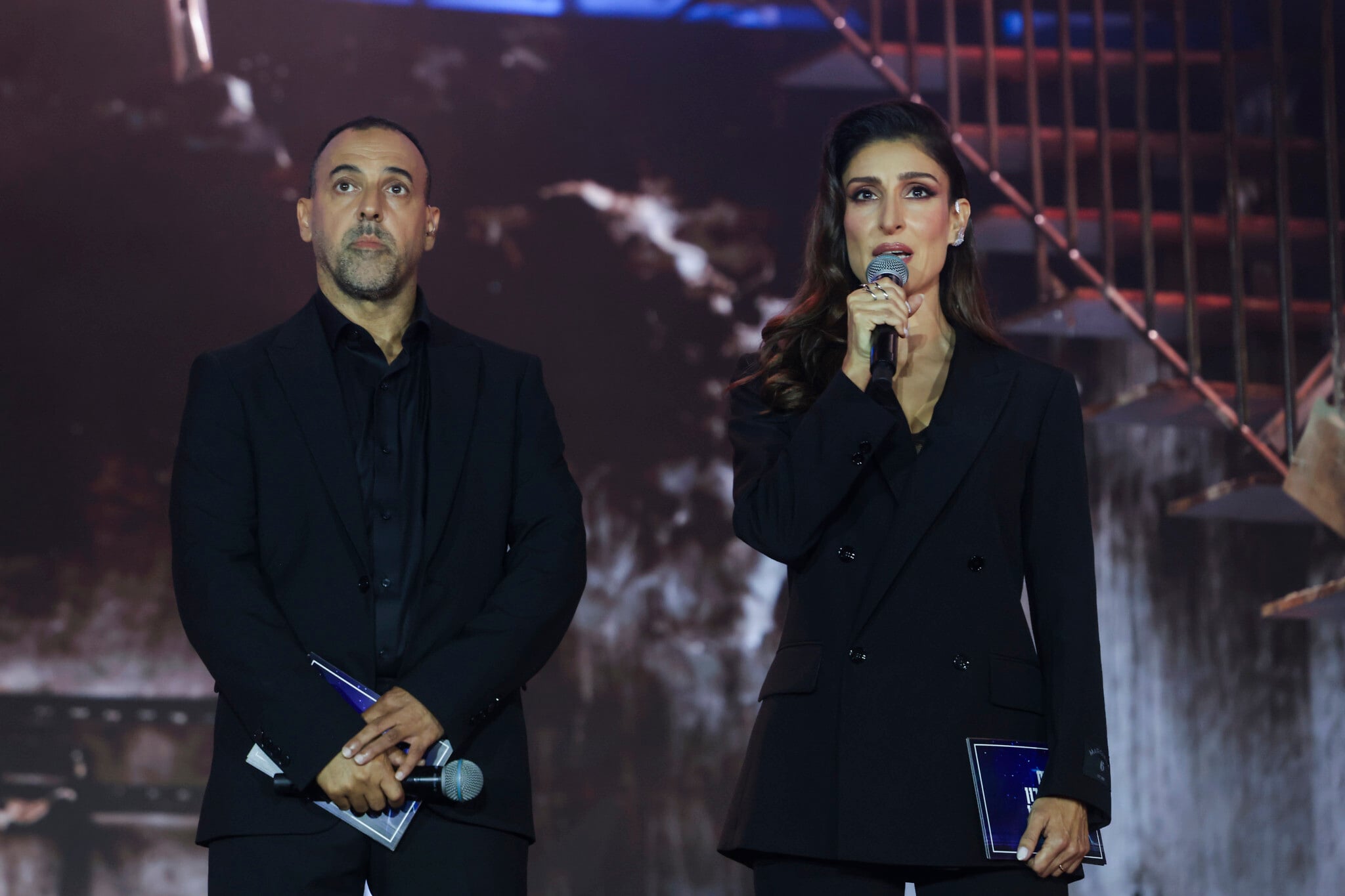
“And on that day, which plunged the entire state of Israel into a deep abyss of sorrow, it seemed we had also lost the country we once knew.”
“One thousand and ninety-six days of loss have passed. One thousand and ninety-six tormented nights of remembrance. Remembering those who begged for help from within safe rooms engulfed in flames, those who hid in dumpsters, in bullet-riddled restroom stalls, and in shelters packed with people,” Sharabi continued.
“In the name of the murdered and the fallen, and for the sake of future generations, we will bear witness and tell the story of the day the sky fell upon us. We will remember them all, and we will never forget.”
Ido Yakir, a member of the security team from Kibbutz Magen, which succeeded in preventing terrorists from infiltrating the kibbutz but lost two of its members, recited the Yizkor prayer, a Jewish memorial prayer, at the opening of the ceremony. The Mourner’s Kaddish prayer was recited by Rabbi Benny Kalmanson, whose son, reservist Capt. Elhanan Meir Kalmanson, fell in battle at Kibbutz Be’eri on October 7.
A portion of the Tel Aviv ceremony was dedicated to the heroism and sacrifice of those who fell in battle, including soldiers, reservists, members of local security teams and ordinary citizens.
Sharabi and Cohen paid tribute to those who “left their homes, leaving their families locked inside safe rooms, and sprang into action from operations rooms, police stations, and shelters.”
They highlighted the actions of Maj. Ido Shani, deputy commander of the Nahal Reconnaissance Unit, who went to assist his soldiers outside Kibbutz Sufa, but was killed in an ambush, and of Cpt. Sahar Saudyan, a commander of an Iron Dome team, who was “notified that one of the teams stationed at the border fence had run out of interceptors, and knew she must bring them ammunition.”
They also memorialized security guard Israel Chana of Ofakim, who left his family to fight off terrorists.
“Armed with a pistol and a single magazine, Israel fought a heroic battle alone against dozens of terrorists, until he was shot and fell. The battle he waged prevented the terrorists from entering homes and saved many residents of Ofakim. Israel was murdered on his 30th birthday,” Sharabi recounted.
The hosts also took time to highlight the work of Israel’s search and rescue services and the staff and volunteers who worked in casualty identification at the Shura military base.
Rescuers and first responders were seated at the front of the 50,000-strong audience in their customary neon-yellow vests.
The ceremony was somber, with the audience mostly quiet, until they broke into loud applause during a speech by Omer Shifroni, one of the founders of the Kumu movement that organized the event, as he called for a state commission of inquiry.
“To rebuild trust, we also need the truth. We must know what happened. Without investigating the truth, we cannot fix things, and we cannot make sure it never happens again,” he said.
Shifroni’s niece and nephew, Liel and Yanai, and aunt and uncle, Ayala and Aviya Hetzroni, were murdered at Kibbutz Be’eri.
“My beloved family, you should not have been murdered. Not one of you. You were alone, defenseless. And I, too, could not help,” he said tearfully.
“That morning, the systems collapsed, and the state failed to function. In the long hours in the safe room, the trust we had as an anchor shattered into pieces,” he continued.
Prime Minister Benjamin Netanyahu has resisted forming a state commission of inquiry, the highest investigative body in Israel, despite demands from bereaved families and survivors, and the majority of the country.
He did not attend any of the memorial ceremonies held on Wednesday, instead only taking part in the official state ceremonies on Monday.
Following Netanyahu’s lead, no members of the government could be seen at Yarkon Park on Wednesday night, although opposition leaders were in attendance.
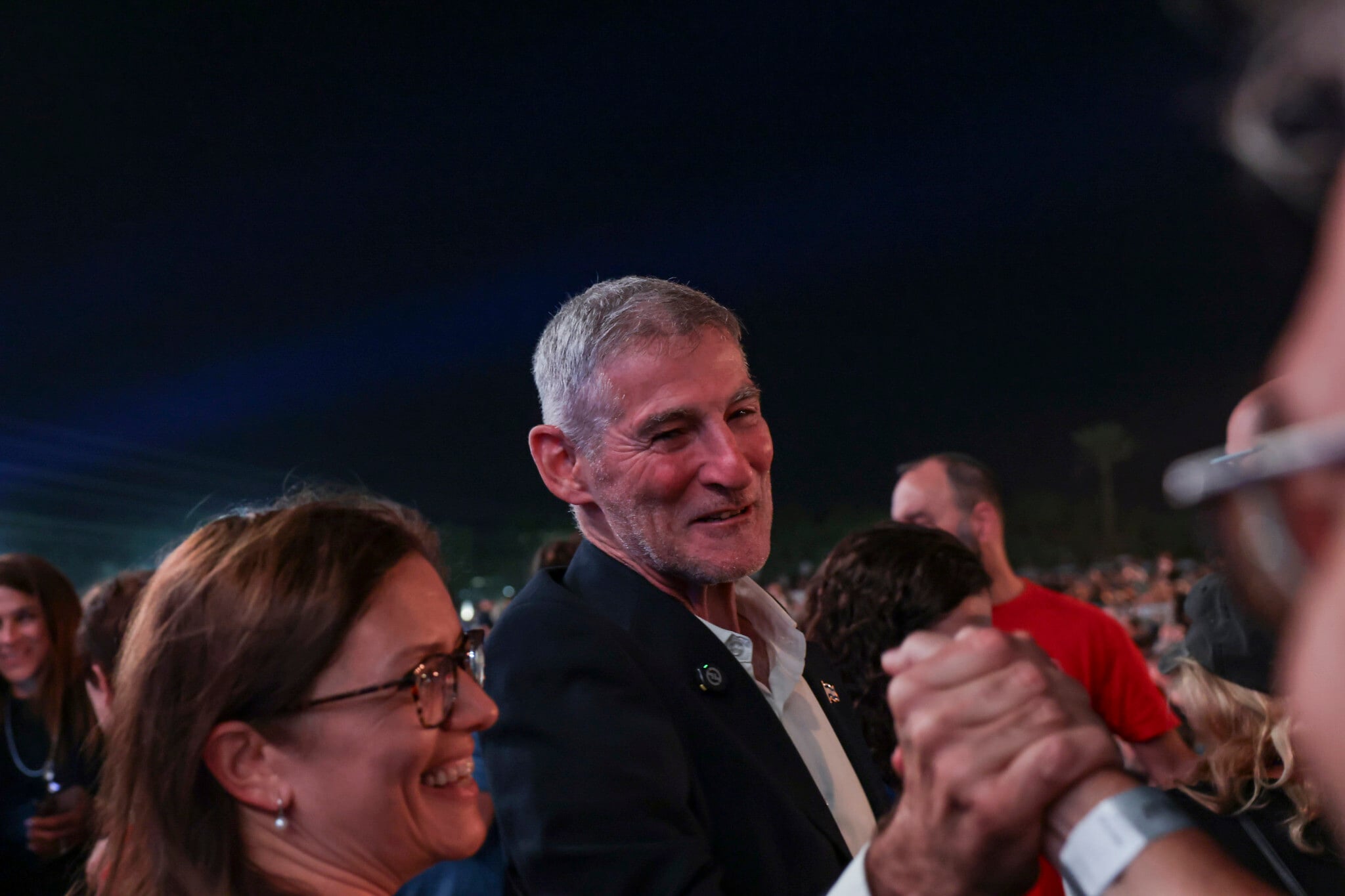
Yashar leader Gadi Eisenkot, B’Yachad leaders Naftali Bennett and Yair Lapid, The Democrats chair Yair Golan, and Blue and White chair Benny Gantz were photographed standing together during the ceremony.
Golan — who on the morning of October 7 drove to the site of the Nova music festival massacre and rescued multiple people — lamented the government’s absence, while praising the public, which he said has stepped up time and again to fill the gaps.
“The people have shown up. The government is absent,” he wrote in a lengthy statement on social media.
“For a long time now, the government has not been where the citizens of Israel are: With the bereaved families, with the wounded communities, with those who served, who fought, rescued, and were injured, and with those who volunteered and held the country together during its hardest moments,” wrote Golan.
“The government is not here — but the Zionist, democratic people of Israel are here,” he added.
In addition to focusing on the roughly 1,200 people killed on October 7 itself, the ceremony also paid tribute to the 46 hostages who were taken alive to Gaza only to die in captivity, mainly murdered by their captors but some inadvertently killed by IDF strikes.
“They held on for weeks and months in the darkness, in fear, clinging to life, waiting for someone to come and save them,” said Adi Marciano, whose daughter Noa was kidnapped alive from the Nahal Oz military outpost and killed in Gaza.
“We didn’t get our loved ones back; we received them for their final rest. And we gained a new family too — the family of the bereaved.”
Sharabi, in his closing remarks at the end of the ceremony, briefly addressed his wife, children and brother.
“You were with me, day in and day out, inside the tunnels. You were with me on the day of my release, and you are with me now,” he said. “I promised you I would do everything I could to ensure that we do not forget.”
“You give me the strength to go on living. And as I stand here, I am certain that you can hear me. So know this: I have not forgotten you, Israel has not forgotten you.”
Sharabi and Cohen also echoed Shifroni’s plea for an official investigation into the failures surrounding October 7.
“We must remember those who were murdered, those who fell, who left home and never returned,” Sharabi said.
“Not just because we owe them the memory. But rather because we owe ourselves the truth. To remember what happened. To investigate how it happened. Not to cut corners. Not to let time blur the truth, not to rewrite history, and not to let history repeat itself.”
“Only if we learn can we mend, and only if we mend, can we build a safer, more worthy, better place here. That is our hope, after everything, and despite everything, there will yet be a better life here,” Cohen added.