West Bank violence, fueled by Hamas, in decline, defense chief says
Moshe Ya'alon accuses terror group leaders in Gaza and Turkey of enflaming territories; says Israel drew 'red lines' with Syria, Hamas rearming
Defense Minister Moshe Ya’alon on Tuesday accused Hamas leaders in Gaza and Turkey of fueling West Bank violence, but said sky-high tensions in the territories have subsided in recent weeks thanks to the IDF.
Addressing the Knesset’s Foreign Affairs and Defense Committee ahead of the impending dissolution of the Knesset, the defense minister also leveled a warning against Syria, two days after Damascus accused Israel of carrying out airstrikes that reportedly targeted weapons slated for transfer to Hezbollah.
Laying out Israel’s security threats, Ya’alon warned that calm in the West Bank could easily dissipate. He was speaking less than an hour after security forces said they thwarted a planned terror attack in a settlement near Jerusalem.
“Right now there is a certain decrease in terror and escalation in the West Bank, but there’s no guarantee it will last. There is major pressure from outside, primarily from Hamas, to heat up Judea and Samaria,” he said, using the biblical name for the West Bank.
“We continue to operate there in order to thwart the terror infrastructure, which is mostly operated from the outside, whether from the Gaza Strip or Turkey.”
The defense minister said the Israeli security forces were also working to halt “lone wolf” attacks, which he said are born of incitement.
In addressing Syria, Ya’alon said Israel was tackling the threat “with the red lines that we have set with the various parties operating there.”
In a separate statement, the defense minister warned: “Those who try to arm our enemies should know that we will reach every place, anytime, by any means, to thwart their plans. We will not compromise on this, and we will not allow the crossing of red lines which endangers Israel’s security.”
The defense minister’s remarks came days after two separate airstrikes on Syrian soil, which Arabic media said had targeted advanced Russian-made air-defense missiles bound for the Hezbollah terror group in Lebanon.
The Syrian government and Iran have condemned Israel for the attacks, but Israel has not commented.
“The Middle East continues to suffer from chronic instability, for example in Lebanon with Hezbollah, which is armed but deterred,” Ya’alon continued. Israeli forces are manning the Sinai border carefully due to the radical Islamist groups there, he said, and “the Golan Heights is currently quiet, but that is not a given.”
Over in the Gaza Strip, in the aftermath of the summer’s 50-day conflict, the terror groups “are deterred but continue to arm in the face of the hardships in the Strip, as more than 100,000 people lost their homes,” Ya’alon said.
The head of the committee, MK Ze’ev Elkin, opened the meeting by expressing concern about the defense budget.
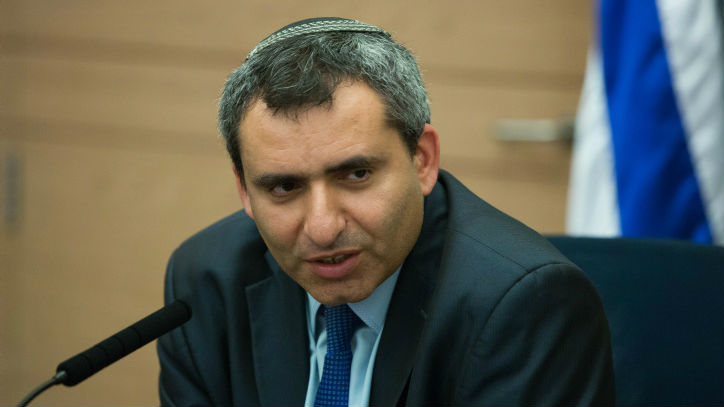
Elkin hailed the last-minute funneling of NIS 3.6 billion to the defense budget on Monday, but said that larger sums were needed to cover the costs of the summer war.
“It’s important to remember that in addition what was approved yesterday, the defense establishment requires at least another one billion shekels this year to return to its [financial] state before the launching of Operation Protective Edge,” he said. “In addition, we are very concerned about the defense budget for next year.”
Elkin said that the dissolution of the Knesset would stall the committee’s investigation of the summer conflict, and said that in the event it could not finish the report in time, “it’s important that those who come after us finish it so that we can learn the very important lessons of the operation.”