Why Aleppo is Syria’s fiercest battleground
With its heritage and economic potential, it is often said that whoever holds the largest Syrian city wins the war
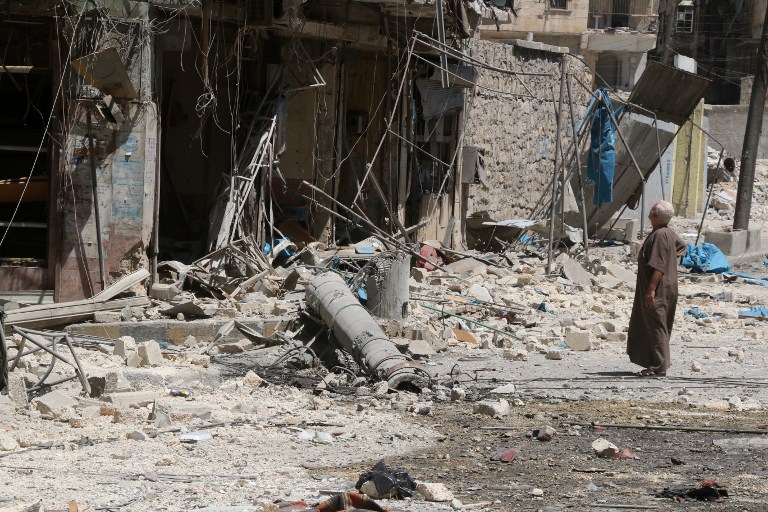
With rebels and government forces each promising to unite the divided city, Aleppo is once again a main battlefield in Syria’s devastating civil war. Relentless shelling and airstrikes have killed more than 300 civilians in the city since rebels broke through a government blockade of the opposition-held east on July 31.
A look at Aleppo:
Shattered historical treasure
Syria’s largest city and once its commercial center, Aleppo was a crossroads of civilization for millennia. It has been occupied by the Greeks, Byzantines and multiple Islamic dynasties.
As one of the world’s oldest continuously inhabited cities, Aleppo’s Old City was added in 1986 to UNESCO’s list of World Heritage sites.
But the civil war has damaged its landmarks, including the 11th century Umayyad Mosque, which had a minaret collapse during fighting in 2012, the 13th century citadel and the medieval marketplace, where fire damaged more than 500 shops in its narrow, vaulted passageways. Some historic sites have been used as bases for fighters.
Aleppo was one of the last cities in Syria to join the uprising against President Bashar Assad’s government.

Key to victory?
Because of its heritage and its economic potential, it is often said that whoever holds Aleppo wins the war. In fact, rebels hold other pockets around the country, but their defeat in Aleppo would mark a turning point in the conflict and deal a devastating blow to the movement to unseat Assad.
But Aleppo also sits just 50 kilometers (30 miles) from the Turkish border, making it the central theater to the Syrian-Turkish proxy war. Turkish President Recep Tayyip Erdogan is an open critic of Syria’s Assad and has shown strong support toward the rebels. Ankara enjoys wide influence in northern Syria, and most rebels’ supplies flow across the shared border. In a national address in June, Assad vowed Aleppo would be Erdogan’s “graveyard.”
Breaking the siege
In August, the International Committee for the Red Cross called the battle for Aleppo “one of the most devastating conflicts in modern times.”
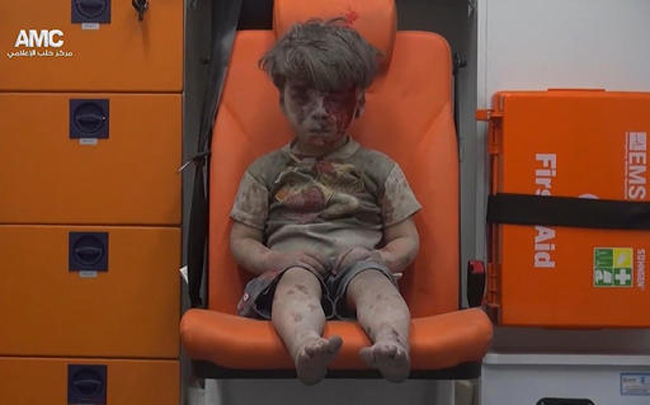
A photo of five-year-old Omran Daqneesh, who was rescued from the rubble of a missile-struck building, sitting alone in an ambulance, confused and covered in debris and blood, has become the haunting image of the unforgiving struggle.
Pro-government forces, supported by overwhelming Russian air power, had managed to encircle rebels and some 300,000 civilians in the city’s eastern quarters in July, leading the UN to raise the concerns of catastrophic suffering if a protracted siege ensued.
But a fierce offensive led by thousands of rebels from outside the city broke the blockade on July 31, and fighting has only intensified since then. Both sides are bombarding their opponents indiscriminately, at a tremendous cost to infrastructure and human life.
The main Kurdish militia, known as the People’s Protection Units, or YPG, controls several predominantly Kurdish northern neighborhoods.
The main insurgent groups in the city are the Nour el-Din Zenki brigade; the ultraconservative Ahrar al-Sham group; and the al-Qaeda linked Jabhat Fatah al-Sham, formerly known as the al-Nusra Front.
Copyright 2016 The Associated Press.