Will an anti-Mizrahi slur upend Israel’s election again? Don’t expect history to repeat itself
A pro-Netanyahu pundit called Gadi Eisenkot a 'monkey,' recalling when an entertainer derided 'hooligans' on the right and helped Menachem Begin in 1981. Nowadays, Israel's politics are far more fragmented, and news moves faster
Menachem Begin gave perhaps his most famous speech on the eve of an election that, both sides believed, could decide the country’s future.
In 1977, Begin’s right-wing Likud party had swept to victory over the left-wing, socialist establishment, in large part by mobilizing Israel’s underprivileged voters of Mizrahi, or Middle Eastern Jewish, origin.
Four years later, Israelis would find out whether Begin’s victory was a fluke. On the eve of the 1981 election, comedian Dudu Topaz ascended the stage at a left-wing rally — and remarked that, as opposed to Likud demonstrations, thankfully this one had no “chahchahim” in the crowd, using a derogatory slur for Mizrahi Jews that translates roughly as “hooligans.”
That word sparked a firestorm, and Begin seized the moment. At his own rally the next night, he decried anti-Mizrahi bigotry and uttered what became an immortal line: “Ashkenazi? Iraqi? Jews! Brothers! Fighters!”
Likud won the election — thanks, many say, to that scandal — and has ruled Israel for most of the time since, retaining its largely Mizrahi base.
On Saturday night, it felt like history was repeating itself. Israelis across the spectrum again feel the election will decide Israel’s fate. No one knows who’s going to win. And then, on Channel 14’s “The Patriots,” a popular pro-government talk show, panelist Yinon Magal called Gadi Eisenkot a “monkey.”
Eisenkot, the chief rival of Likud Prime Minister Benjamin Netanyahu, is of Moroccan heritage and would be the first Mizrahi prime minister if elected. While he hasn’t often spotlighted his ethnicity, it’s been a frequent topic of election discourse. The remark by Magal — a prominent pro-Netanyahu hype man — came during a discussion of Eisenkot’s background.
“He’s a monkey! He’s a monkey!” Magal shouted over the show’s constant din of crosstalk. “You’re getting drunk over his being Mizrahi? You take a monkey, and there are all of these Ashkenazi elitists managing him from behind.”
He continued, “He’s a monkey. They took a Mizrahi-Moroccan… It’s like we can’t see reality. The emperor has no clothes.”
The opposition treated it like a bombshell. Would this be the “chahchahim” speech all over again, but in reverse? Now, a pro-Likud pundit had seemingly uttered an anti-Mizrahi slur just days before the vote. Just as in 1981, would it alienate Mizrahi voters, give Eisenkot the high ground, and doom his opponent?

Less than two days after Magal’s initial remark — and more than a week before votes come in — it may be too soon to tell. But there are reasons to think that this time, the scandal and its fallout will be more muddled. This may benefit Eisenkot. Or Netanyahu’s diehard supporters may close ranks in the face of the attack. Or, more likely, this incident will get lost in the swamp of an acrimonious campaign and rapid-fire 24-hour news cycle, overtaken by the next scandal, insult, or crisis.
Circling the pro-Netanyahu wagons
Magal insists he wasn’t being racist. “Monkey,” he said, wasn’t an ethnic slur, it was a term from the criminal underworld for an unwitting frontman controlled by the mob. In the hours after the “monkey” clip went viral, he fired off more than a dozen posts on X, where he has nearly half a million followers, defending himself and savaging seemingly any news outlet that called his remark racist.
Topaz, for what it’s worth, also insisted his 1981 remark wasn’t racist, telling Israel’s public broadcaster that he “certainly wasn’t referring to” Mizrahim, but rather to disaffected youth as a whole. The difference is that back then, Topaz was shamed and suspended from his job for three years.
This time, Magal has an entire social media ecosystem backing him up, and if anything, this has boosted his public profile. As the controversy brewed, Magal’s own formidable social media presence was augmented by supportive posts from two of Israel’s leading pro-Netanyahu Mizrahi politicians: Shas chair Aryeh Deri, whose party has explicitly courted Mizrahi voters for decades, and National Security Minister Itamar Ben Gvir, along with other pro-Netanyahu personalities.
Deri called the criticism of Magal “cheap demagoguery.” Ben Gvir called it “laughable.” And their defense of Magal is amplified by Israeli media’s filter bubbles.

In other words, following the remark, viewers of Israel’s leading Channel 12 (as well as other outlets) would have seen several segments airing accusations of racism against Magal. But Channel 14’s largely pro-Netanyahu viewers, and followers of associated social media accounts, were exposed to a different reality — one in which Magal was the victim of a smear campaign.
Netanyahu, meanwhile, condemned the remark while also downplaying it. He said Magal’s words were “highly inappropriate,” then suggested his supporters had it worse: “I wish this were a one-time occurrence. It happens every day, and almost all of it is directed at Likud voters,” he said.
He then posted an ad on social media, recycled from seven years earlier, that played a highlight reel of derogatory comments toward Likud voters, including an infamous 2015 remark from an opposition rally saying that they “kissed amulets” — as well as Topaz’s 1981 speech.
A different political reality
Eisenkot, like Begin, sensed that he had the advantage after video of Magal’s remarks spread across the internet. But so far, it doesn’t look like he’s been able to leverage it in nearly the same way as the Likud titan did 45 years ago.
The first reason for this is a simple difference of personality. Begin was a natural orator, unwilling to pull punches, eager to yell into a mic, able to electrify a huge crowd.
Eisenkot has the opposite vibe. A decades-long veteran of the military, not the Knesset rostrum, he has run an understated race, hoping to appeal to Israelis’ desire for unity and healing, and campaigning with small groups. He too has given speeches and interviews following Magal’s comments, but it’s already clear that they won’t be as iconic as Begin’s 1981 riposte.
“The problem isn’t Yinon Magal, it’s the man who stands behind Yinon Magal,” Eisenkot said in a speech shortly after Magal’s statement aired, referring to Netanyahu. He was met with a smattering of applause from a largely silent crowd.
When Eisenkot posted video of that speech on X, it got 62,000 views. When he reposted a clip of Begin’s 1981 address, it got 101,000 views.

But the difference extends beyond Begin’s and Eisenkot’s personalities. In 1981, Israelis voted in what was essentially a two-party election. Begin ended up winning 48 seats to 47 for his rival, Shimon Peres — together comprising the vast majority of the 120-seat Knesset. If embittered voters were contemplating a switch following Topaz’s “hooligans” remark, it was most often from Peres’s party to Begin’s.
Now, the political map is much more fragmented. According to many polls, even if you add Netanyahu’s and Eisenkot’s seats together, they won’t reach the 48 Begin won on his own in 1981. Instead of two dominant parties, there are two leading parties, which are only polling slightly ahead of the rest of the pack.
That has two implications for the fallout from Magal’s remarks. First, if he turned voters off from supporting Likud, it doesn’t mean they’ll necessarily opt for Eisenkot. A Mizrahi voter turned off from supporting Netanyahu could easily decide to switch their vote to Shas, an explicitly Mizrahi party, or to Ben Gvir. That would allow them to back a Mizrahi candidate while still supporting many of the pro-Netanyahu policies they did before.
And even if voters do switch their ballots to Eisenkot, it won’t guarantee him the top job. While he’s been leading nearly every poll, he hasn’t even been able to convince the other opposition parties to commit to backing him for prime minister. And with polls indicating an inconclusive result to next week’s vote, those blocs could easily fracture as parties wheel and deal to cobble together a coalition. Or Israelis could head to repeat elections, putting this campaign, and its scandals, in the rearview mirror.
The unstoppable march of the news cycle
Perhaps the biggest difference between 1981 and today is illustrated by what happened less than a day after Magal’s remarks. In the early evening, while newscasters were still making hay over the “monkey” comment, US President Donald Trump broke precedent and endorsed Netanyahu for reelection on social media.
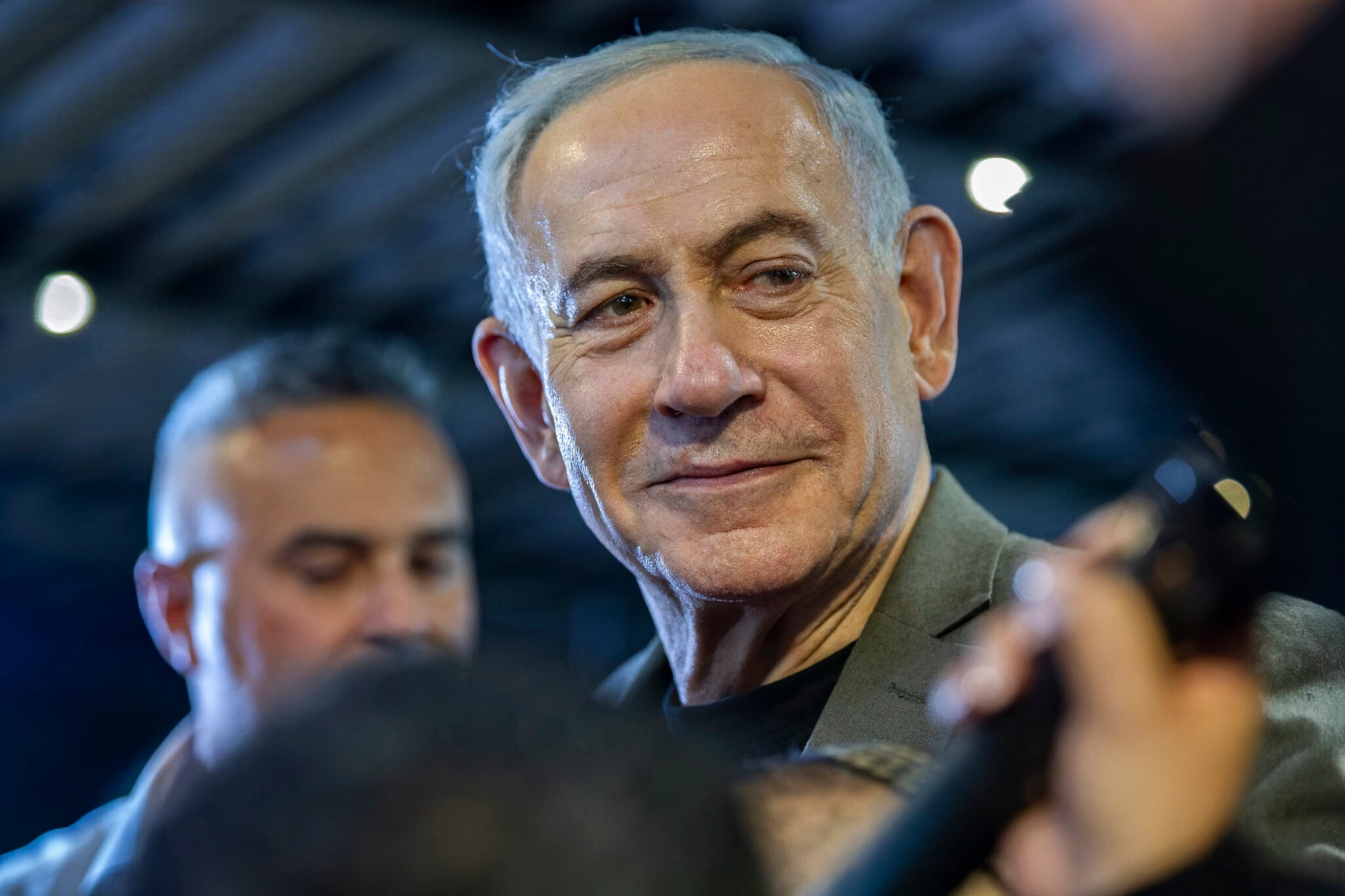
Instantly, there was a new top story. The evening news still covered the reaction to the “monkey” scandal, but the main item was Trump. That’s what the prime minister was posting about. That’s what his opponents were reacting to now. Even Eisenkot, who popped by Channel 12 for an interview, was asked about Trump first, and only later about Magal.
It’s possible that Trump gave Netanyahu a double gift — an endorsement, and a distraction from the Magal controversy. But in truth, if it wasn’t the Trump endorsement, sooner or later it would have been something else. Israelis are news-obsessed, especially this close to an election, and are tuned into nearly 24-hour news networks that need to fill their time slots.
There are eight days to go until Israelis vote, and even the Trump endorsement, as big a deal as it is, won’t stay at the top of the headlines until election day.
But 24 hours after Magal had made his comments, he and his fellow panelists seemed happy to have something else to talk about.
They also appeared to sense that they wouldn’t face consequences for the clip that, just a day earlier, had caused such an inferno. While one panelist was discussing what Trump wrote on social media, another pundit, Yotam Zimri, cut in.
“He also said, ‘Choose Bibi, not the monkey,’” Zimri said in English. The other panelists, Magal included, burst out laughing.