With Obama slow to act, Putin moves into Syria, upgrades Mideast influence
As Netanyahu heads to warn Moscow about weapons transfers, he knows the Russian leader will do whatever he likes in the region for one simple reason: because he can
Prime Minister Benjamin Netanyahu will meet next week with Vladimir Putin, president of the world’s only current superpower. A statement issued by Netanyahu’s office said, in part, that the prime minister would “present the threats posed to Israel as a result of the increased flow of advanced war materiél to the Syrian arena and the transfer of deadly weapons to Hezbollah and other terror organizations.”
We can guess that somebody at the Russian Embassy in Israel passed a translation of this statement along to Moscow, causing quite a few smiles there. Putin and even Netanyahu are well aware that his warnings will not change Moscow’s old-new policy in the region.
Vladimir Putin will do whatever he likes in the Middle East for one simple reason: because he can. At present there is no other superpower to challenge him or deter him from acting in any way he wishes.
Netanyahu can console himself with the fact that he is in good company. The urgings and warnings of American Secretary of State John Kerry or of Kerry’s own boss, President Barack Obama, of increasing Russian involvement in Syria will not change Putin’s plans either. Putin has decided to do something in Syria, actively, to prevent the complete collapse of what remains of Bashar Assad’s regime. When Putin saw the West’s fumbling in the face of the unending flow of refugees from Syria, he realized that the American administration could not be relied upon when it came to stopping the civil war, and decided to act.

This is not, at present, a Russian operation to reconquer Syria. Still, the report this week in The New York Times and the satellite images from Foreign Policy show clearly the extent to which Netanyahu’s visit or Washington’s hollow declarations are too little, too late. The Russians have begun building an airport fairly close to Latakia, and tanks of the most advanced sort have already been transported there. According to The New York Times report, T-90 tanks and APCs have been spotted, together with residential caravans and approximately 1,500 Russian troops in all.

These things are only the start of the aerial link. They will be reinforced by advanced fighter jets that may even be used to attack opposition targets. The purpose of all this is evidently to ensure the survival of “Alawistan,” the small stretch of coastline of Latakia and Tartus. This region, where Bashar Assad’s army is still in control, was in danger of falling to the opposition in light of the takeovers in the Idlib district. The groups that oppose Bashar Assad have garnered some significant achievements in Syria’s northern sector and pushed Assad’s army westward, toward the sea. We can guess that with significant Russian air cover, this progress will be stopped and the Syrian army will even be able to counterattack.
Another target of the Russian army’s actions in Syria seems to be the American-Turkish plan to establish a no-fly zone on Syria’s northern border. The stationing of Russian aircraft is a loud, clear message from Moscow that any such effort is bound to fail.
Strange bedfellows
Like always, the last ones to realize that the rules of the game have changed are the Americans, with the White House first among them.
With Washington deeply immersed in the fight for approval of its nuclear deal with Iran, Russia has been hatching plots with the various regional players to establish its influence in the Middle East.
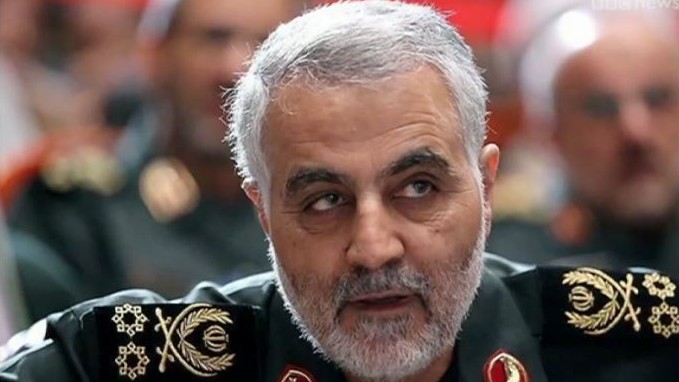
It is making arms deals with Egypt, holding meetings in Moscow with Qasem Soleimani — commander of the Quds Force of the Iranian Revolutionary Guard, who is in charge of the Shi’ite troops in Syria (as well as of Iranian activity in other locations, such as Yemen) — and it even mediated between Cairo and Bashar Assad’s people.
Just a week ago, Assad’s intelligence chief, Ali Mamlouk, met with Egyptian President Abdel Fattah el-Sissi, who is willing to do much to ensure the survival of Assad’s regime. Egypt fears that Syria’s collapse will create a butterfly effect in the region once again, causing an earthquake that will shake up the whole Middle East.
Connections are being created that seemed utterly impossible just a few months ago. The Egyptians, who were the Saudis’ allies until recently and are working shoulder to shoulder with Israel in the war against terrorism in Sinai, are trying to work with Moscow and Damascus (and, indirectly, with Iran) to assist Bashar Assad — who, in turn, is being threatened by opposition groups that are receiving massive aid from Saudi Arabia. The United States is reaching a deal with Iran and working alongside Turkey, which has become a major enemy of Egypt because of its support for the Muslim Brotherhood. Hamas, the Muslim Brotherhood’s Palestinian branch, has not succeeded in developing close ties with Iran, and was welcomed by the king in Riyadh. Egypt has kidnapped four members of Hamas’s military wing on its soil and is holding them incommunicado.
In the midst of all this commotion, Uri Ariel, Israel’s agriculture minister, decides to go up on the Temple Mount to pray on the eve of the Jewish New Year, causing just as much commotion on his own.
Boredom, it seems, is one thing we will never have around here.