With Syria focused on ending war, it’s unlikely downed jet was threat to Israel
Recent flareups along restive northern border are spillover from regime bombardment, as Damascus and Moscow seek to bring last rebel stronghold in south to heel
Shortly after its jet was downed Tuesday, Syria issued a statement blaming Israel. Damascus was also quick to explain that its plane was on a mission as part of its “offensive against terrorists” in the Yarmouk Basin.
Though it’s difficult to say for certain he did not enter Israeli airspace intentionally, a view of the Syrian conflict from above would seem to suggest pilot Col. Amran Mara’e simply strayed over Israeli airspace, making him the latest victim of spillover violence from the quickly fading Syrian civil war.
There is little to suggest the Syrian air force had any intention of striking Israeli targets; rather, the pilot was probably busy bombing rebel targets adjacent to the Syria-Jordan-Israel border triangle as part of a wide Syrian and Russian offensive.
This enclave, adjacent the southern Golan Heights, is under control of a jihadist group linked to the Islamic State. The affiliate is one of the last IS-linked groups controlling territory in Syria, and one of the last holdouts of any rebel group, with Bashar Assad’s forces now in control of some 70% of Syrian territory.
In recent weeks, regime forces have managed to purge southern Syria — most notably in the provinces of Daara and Quneitra — of rebel strongholds.
The regime’s strategy in these areas — bombing rebel targets and only afterwards extending offers for voluntary evacuation — is now playing out in this triangular region.
On Tuesday morning, the Syrians tried to persuade the rebels in the triangle to follow thousands of their counterparts in Quneitra, who have agreed to leave for rebel-held Idlib in recent days.
However, given the armed rebels’ refusal to lay down their arms, the regime walked back the offer and returned to its heavy bombardment of the area, including airstrikes.
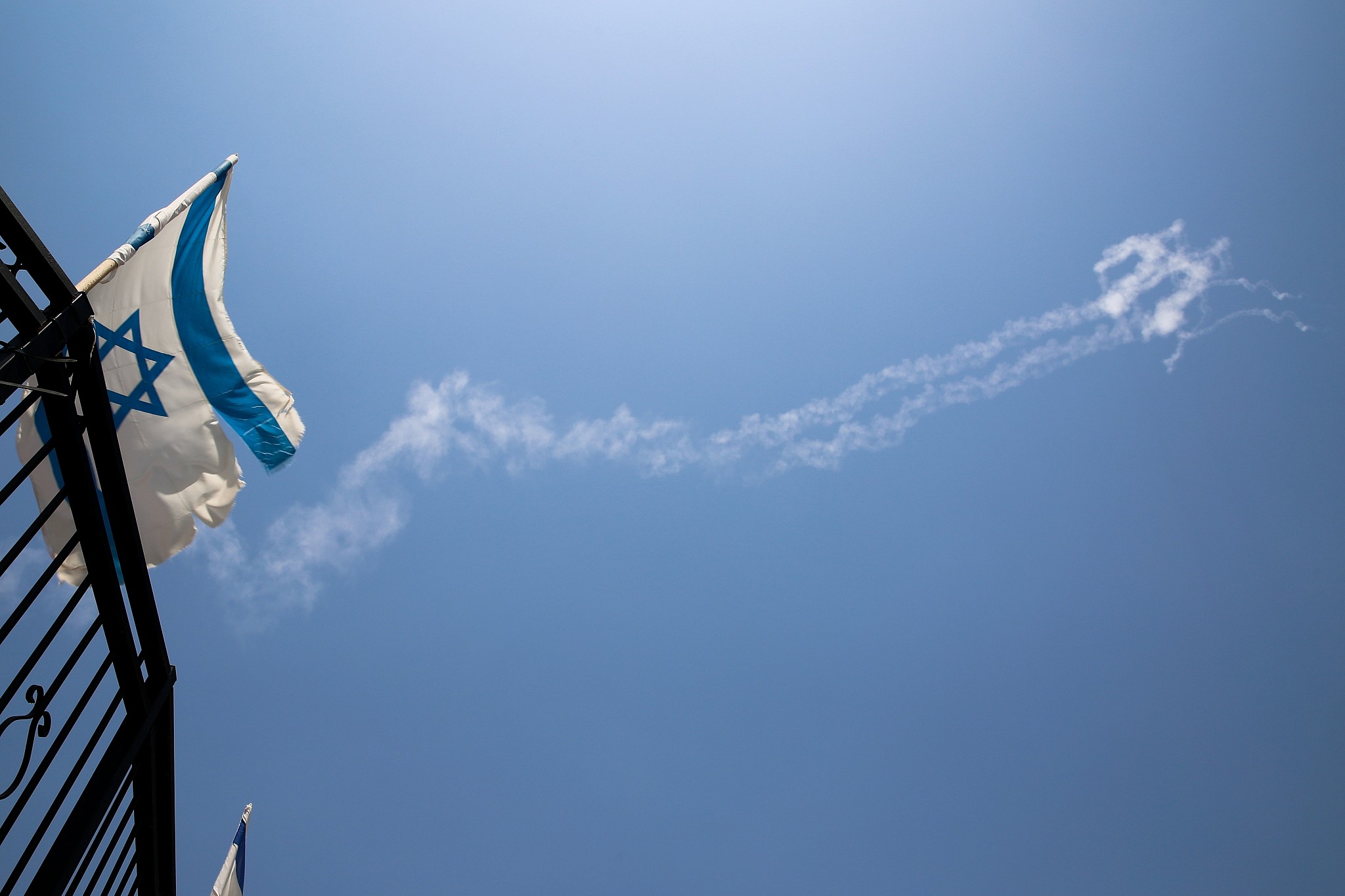
The consequence was evident in the launch of two SS-21 rockets near the Israeli border (triggering rocket sirens in Israel and the firing of two interceptor missiles) on Monday, and the downing of the Syrian jet on Tuesday.
If the pattern in other areas is any guide, soon enough this triangle region, too, will also be under Syrian control and quiet may return to Israel’s Golan frontier.
But with quiet come fears Iranian-backed forces may return as well.
On Monday, Russian Foreign Minister Sergey Lavrov and the Russian military chief of staff Gen. Valery Vasilyevich Gerasimov spoke to Prime Minister Benjamin Netanyahu about the future of Syria, and offered to keep Iranian troops and Iran-backed fighters in Syria at least 100 kilometers from Israel’s northern border.
Currently, there are about 20,000 Iranian soldiers and Iran-backed militants (including Hezbollah) fighting in Syria, and Tehran is heavily invested in establishing military bases for them throughout the country.
Moscow may able to distance them from the border, and could possibly even oust them from Syria completely. The critical question is whether Russia wants to do so.