Yashar, Likud remain split on key issues after latest unity talks address ‘the judicial issue’
Likud MK calls talks a 'sham' and nonstarter as 'you cannot form a government if Netanyahu doesn't start' as PM; protesters outside Eisenkot's home call for Jewish-Arab coalition
Representatives from Prime Minister Benjamin Netanyahu’s Likud party and MK Gadi Eisenkot’s Yashar met on Monday evening for the second time in two days, as the two men examine the possibility of forming a unity government.
The meeting lasted around two hours, and in a brief joint statement, the parties said it focused on “the judicial issue,” apparently meaning the outgoing government’s judicial overhaul, which Eisenkot’s bloc is working to repeal.
They added that another meeting between the teams was scheduled, but did not specify when.
Monday’s meeting was the third held by the two parties since Eisenkot was granted the mandate to form a government after last month’s election. Negotiating teams met for four hours on Sunday, and for about an hour the Sunday before. No significant progress has been reported in any of the three rounds.
Before the negotiations began, Eisenkot’s Yashar put out a statement clarifying that due to the “highly sensitive” nature of the negotiations, it would not comment on various reports about its talks with Likud and other parties.
Likud has been represented at negotiations by MK Ofir Katz, its Knesset faction leader, and by Michael Rabello, Netanyahu’s long-time attorney. Yashar has been represented by MK Chili Tropper, Tropper’s former chief of staff Guy Gutman, and Netanyahu’s former chief of staff, Yoav Horowitz, who helped found Eisenkot’s party.
Joining them on Monday were Likud MK David Peter and Yashar MK Orit Farkash-Hacohen, Ynet reported.
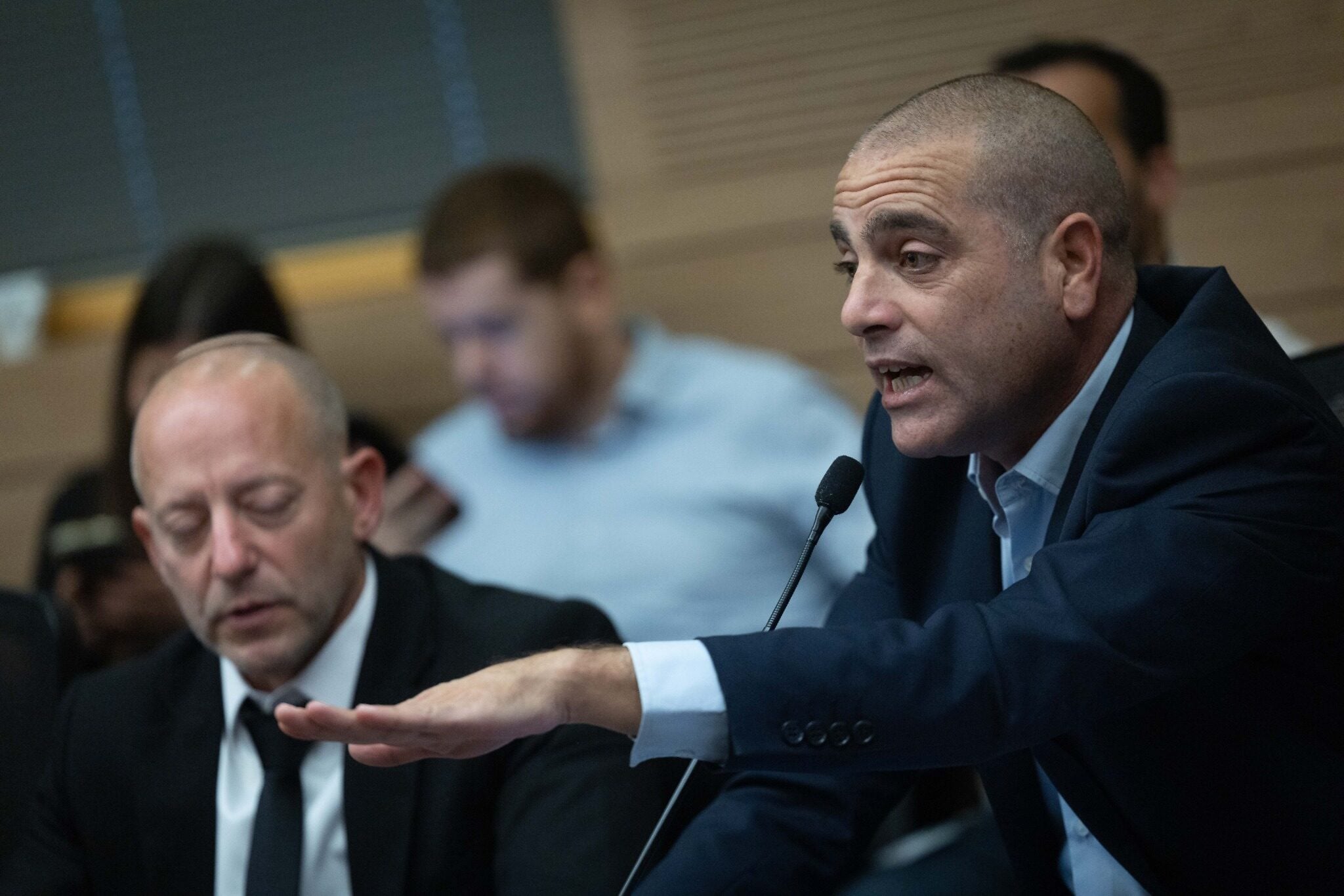
According to the Walla news site, Yashar’s negotiating team demanded during Monday’s talks that all the outgoing government’s judicial overhaul be repealed, in favor of passing less controversial judicial reform laws with broad consensus. The report said Likud’s team rejected this demand outright.
Channel 12 reported, meanwhile, that Likud asked Yashar to cease trying to repeal the judicial overhaul, and Yashar asked to discuss instituting term limits. Both of these requests were reportedly refused as well.
Other key areas of contention between Netanyahu and Eisenkot include universal military conscription and the matter of the premiership itself — whether Eisenkot or Netanyahu would be first in a potential rotation agreement.
Earlier on Monday, B’Yachad chair Naftali Bennett warned Netanyahu against pursuing anything other than unity “first under Eisenkot’s leadership” during the talks.
But minutes after the Monday evening meeting ended, Likud MK Miki Zohar dismissed the possibility of any government without Netanyahu as prime minister.
“This negotiation is a sham,” he declared from the Knesset plenum. “You cannot form a government if Netanyahu does not start [as prime minister].”
“We are the largest party, Trump has a special relationship with the prime minister, the prime minister has experience, Eisenkot needs to gain experience — to sit next to the prime minister and see how things work,” Zohar said.
As Yashar has ruled out allowing Netanyahu to remain in Office, Zohar said, “this is a futile negotiation.”
Eisenkot’s attempts to reach a unity government agreement with Likud were being championed primarily by Bennett, although Channel 13 reported on Monday night that the two men disagree over just how far the option should be pursued.
According to the outlet, Eisenkot favors setting a deadline for the talks, whereas Bennett would prefer to leave them open-ended.
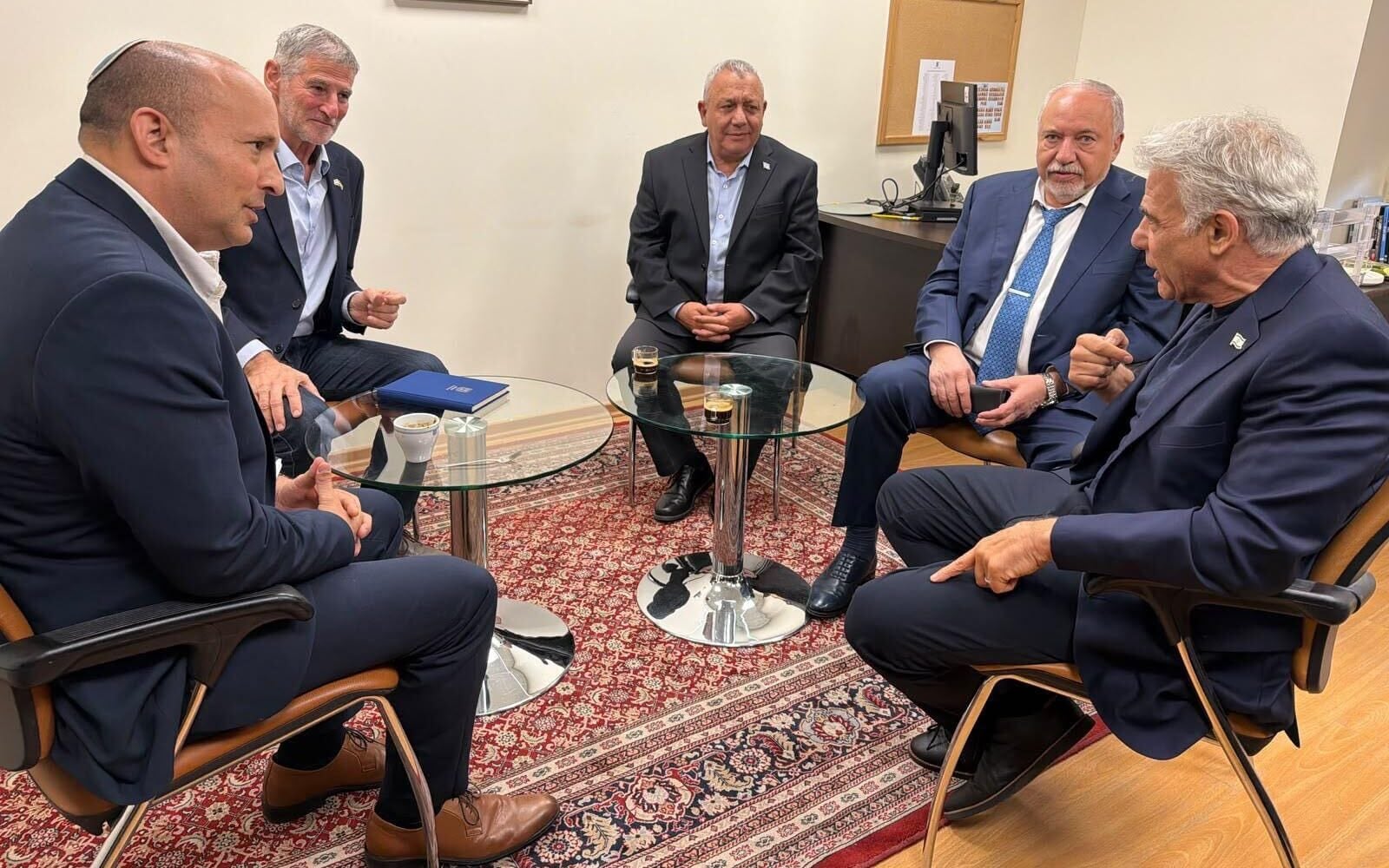
The report did not specify when the deadline would be; Eisenkot has until December 6 to form a government, though President Isaac Herzog could extend his mandate for another two weeks after that date.
In addition to pursuing negotiations with Likud, Eisenkot’s potential paths to governance include a coalition with the ultra-Orthodox parties or a minority government with the support of the majority-Arab Joint List and Ra’am.
Each potential path has been publicly ruled out by some members of his bloc, further complicating matters.
If he cannot unite all corners of his bloc, the Yashar chair has indicated he will instead swear in a government without the approval of all his partners, hoping that even if some of them won’t support it, they won’t vote against it.
The result would be a minority government with him as prime minister. If the government collapses and the country moves to repeat elections, he would remain in office in a caretaker capacity, as Netanyahu currently is.
Looking for a different solution, protesters gathered outside Eisenkot’s Herzliya home on Monday evening, calling for his bloc to replace Netanyahu’s government with a joint Jewish-Arab partnership government.
“Forming a Jewish-Arab government is not only a political possibility but a moral and social necessity,” one protester called over a megaphone.
מאות תומכים בהפגנת תמיכה אצל גדי איזנקוט בהרצליה, בקריאה: גדי, תממש את המנדט pic.twitter.com/ZlNekWhpQK
— לירי בורק שביט (@lirishavit) November 23, 2026
Demonstrators held signs reading “67 chose change,” in reference to the total seats won by Eisenkot’s four-party Jewish-led bloc and the two Arab-led parties.
“Who’s coming? The next prime minister!” protesters chanted, with drumbeats in the background accompanying the common election-year rally cry.