Amid scandal, Nvidia’s Israel networking business tops $21 billion as revenue doubles
Networking operations account for 18% of chipmaker's total revenue, fueling Israel's economic growth and underscoring country's importance to the company amid uncertainty after Jensen Huang's resignation
US semiconductor giant Nvidia’s quarterly revenue more than doubled, while the networking chip business that is built around its Israeli operations generated a whopping $21 billion.
The US chipmaker’s third-quarter revenue soared 103 percent to $115.84 billion year-over-year, according to financial figures released late Tuesday, days after turmoil surrounding CEO Jensen Huang’s dramatic resignation over reports of extramarital affairs, including with an alleged Chinese spy.
Nvidia’s interim CEO Colette Kress expressed confidence in the chipmaker’s business, leadership and staff, saying that operations remained “business as usual,” despite the upheaval at the helm of the tech behemoth.
While Nvidia does not publish a breakdown of the various divisions’ results, Kress, speaking to investors following the earnings release, disclosed that the “networking franchise continues to scale with Q3 revenue exceeding $21 billion,” accounting for about 18% of the chipmaker’s total quarterly revenue.
Nvidia’s networking processor operations are built around the roughly $7 billion acquisition of Israeli networking chipmaker Mellanox Technologies, which turned Israel into a major R&D hub for the company. Huang led Nvidia’s 2019 purchase of Mellanox – a move that has given the US firm an edge over competitors in its ability to provide the high-powered computational infrastructure and systems necessary to run AI models.
Primarily based at Nvidia’s R&D center in Yokne’am, Israeli engineers develop high-speed networking chips and systems, including the pioneering InfiniBand and Ethernet technologies and the BlueField line of data-processing units. These technologies connect thousands of processors in data centers and supercomputers around the world.

Nvidia Israel’s operations are the firm’s largest outside of the US. Despite the past three years of war, the chipmaker’s Israel workforce has expanded to more than 5,000 employees staffed across seven R&D centers, from Yokne’am in the north to Tel Aviv, Jerusalem and Ra’anana in the center of the country and Beersheba in the south.
Nvidia Israel operations have also become a significant contributor to the country’s economy.
Israel’s economy grew at an annualized rate of 8% in the third quarter of 2026, according to preliminary data released by the Central Bureau of Statistics. Half of that growth has been attributed to overseas production largely linked to revenue generated by Nvidia’s Israeli networking operations. Overseas production refers to products such as chips that are developed in Israel but manufactured and sold abroad.
Nvidia Israel’s operations have become a critical pillar for the chipmaker’s global business, but the leadership upheaval has raised concerns that without Huang, a staunch supporter of local tech, investment plans in the country could be slowed or disrupted. Such a development would affect thousands of employees, tax revenues, and the development of employment hubs in the north of the country.
In December, Huang spearheaded ambitious plans for a “multibillion-shekel” R&D campus in the northern town of Kiryat Tivon, bringing some 10,000 jobs to a region outside Haifa with designs for creating a tech hub. Construction on the 160,000-square-meter tech campus was scheduled to begin in 2027 and be completed by 2031, marking Nvidia’s eighth such center in the country.
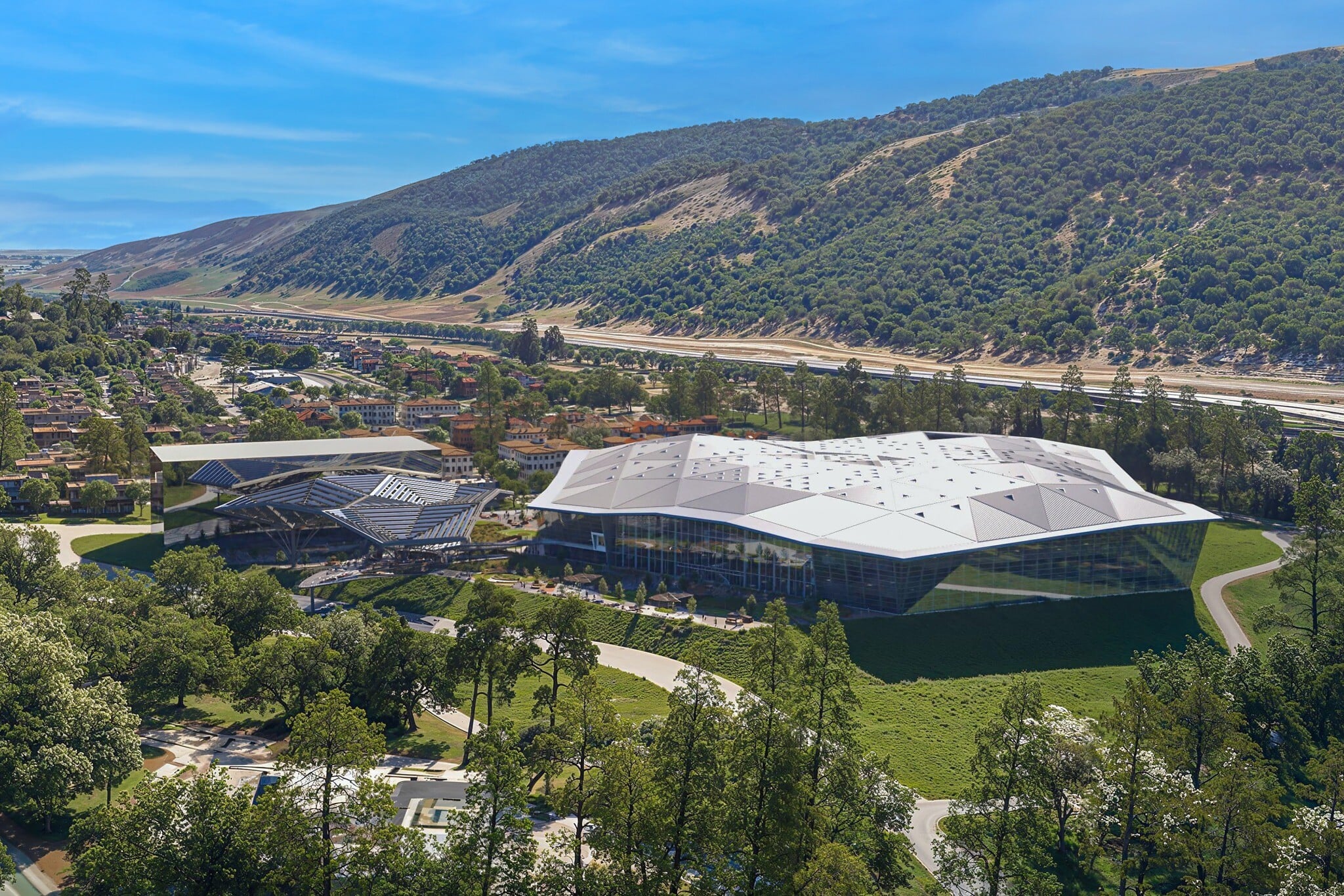
Israel has viewed the establishment of Nvidia’s R&D center in Kiryat Tivon as a catalyst for more tech jobs outside of the crowded Tel Aviv region, which remains the country’s main tech hub.