As post-election deadlock looms, could Trump whip sides into an unlikely unity deal?
Neither Eisenkot nor Netanyahu have an obvious avenue to a government, putting Israel on the path to a costly second vote, but there may be a way out that runs through the White House
With both Prime Minister Benjamin Netanyahu and his rivals lacking a clear path to power, Israel’s political parties face a stark choice: They can hold firm to their campaign promises, enduring months of gridlock until a fresh vote is called, or one or more of them can blink, compromising on key positions and forming a government with someone they swore not to join.
Not surprisingly, party leaders are not exactly lining up to make meaningful concessions.
Instead, they are vowing to keep to their commitments and withstand offers or entreaties that fall short of their demands.
Israel’s President Isaac Herzog, endowed with the power to nominate a candidate to form a government, seems ready to push the parties to avoid a second round of voting.
Herzog has said unequivocally that he would do everything in his power to avoid going back to elections. Besides the cost to the economy — estimated at over $1 billion — it would mean gridlock on addressing many policy issues and months more of charged campaign rhetoric.
He has implied support for a unity government with the anti- and pro-Netanyahu blocs if necessary.
But it’s a different president who is the one man with the ability to actually get everyone in the same room: US President Donald Trump.
No easy options
Netanyahu has some reason to be pleased with last week’s result. His Likud party will remain the largest in the Knesset, and his current bloc emerged as the largest.
But Likud and its allies no longer have a majority of the Knesset’s 120 seats between them, meaning he must widen the coalition if he wants to remain in power.
Picking off enough individual legislators from the other side to get him over the hump is unlikely. Getting an entire party to back him is even more so: All of the factions not already in his camp promised their voters they would not join a Netanyahu-led government.
Netanyahu’s most likely path back to power may be to sit on his hands until a fresh round of voting, leaving him in place as premier in the meantime.
By all indications, the governing coalition will only gain next time around. The tens of thousands of Israelis who flew in to vote against the government won’t spend thousands of dollars again to participate in an election they are unlikely to win. Small parties headed by Ofer Winter and Yoaz Hendel, which failed to cross the threshold and siphoned off right-wing votes, probably won’t run again, potentially releasing most of their voters back to the coalition.
And there is no guarantee that Arab Israelis will vote in a subsequent round in the same numbers they did this time around. Netanyahu and his partners are sure to do everything they can to suppress Arab turnout, and the campaign of delegitimizing their participation is already in full swing.
But while the anti-Netanyahu bloc has every reason to avoid more elections, it also faces an unlikely climb to power. Though Netanyahu’s coalition lost 15 seats, and the majority of the next Knesset will be opposed to the prime minister and his government, Yashar party chief Gadi Eisenkot and his allies don’t have a clear path to actually ousting him without someone reneging on their campaign promises or defecting to the other side.
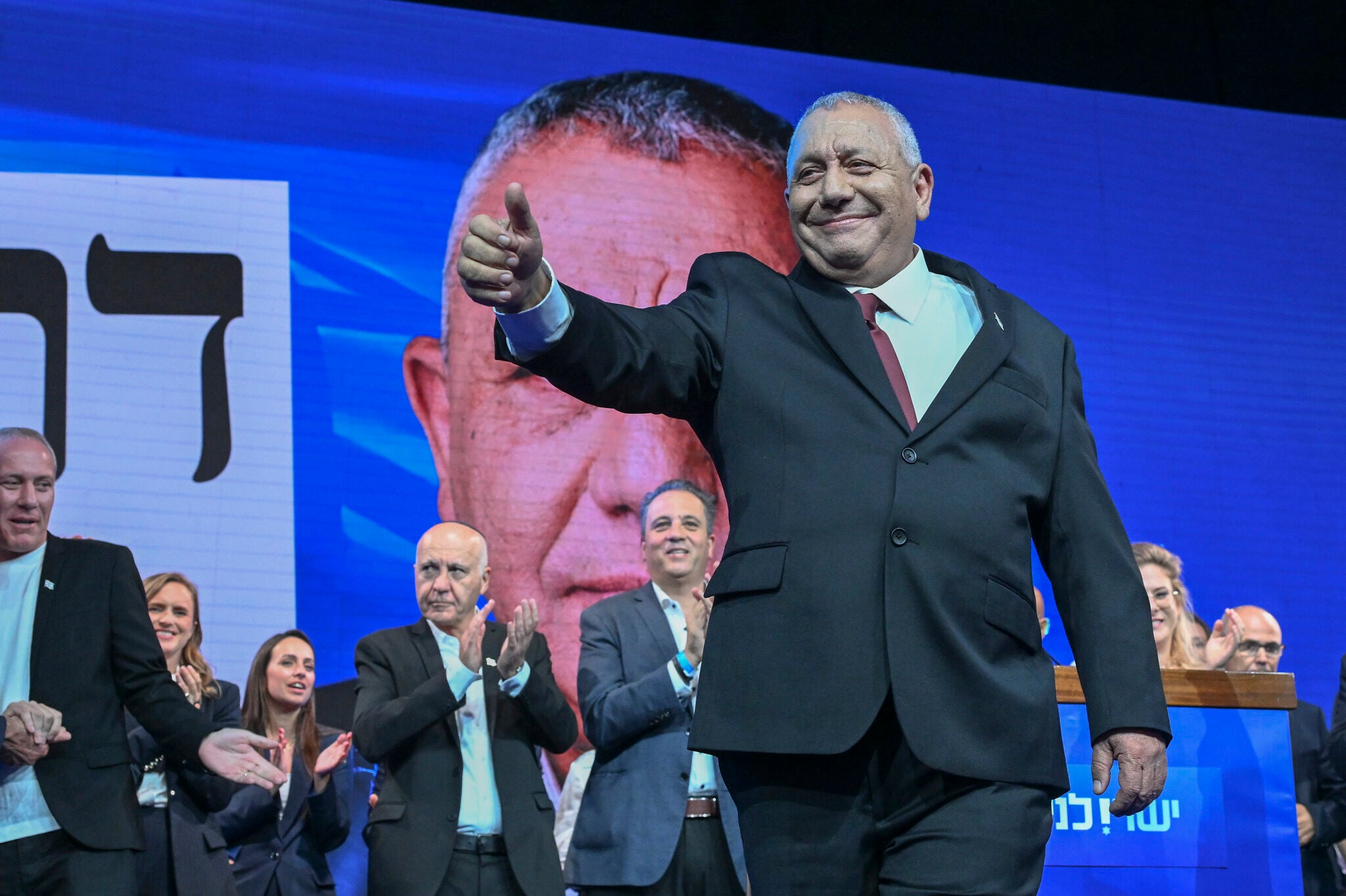
His easiest way forward would be to form a minority government supported by Arab parties Joint List and Ra’am, which performed historically well in the vote. Democrats chairman Yair Golan has already spoken with the leaders of both.
But even the tacit support of the Joint List from outside the coalition would likely cause the exodus of anti-Netanyahu politicians who have vowed to oppose any government propped up by the support of anti-Zionists.
While the Democrats openly support a government that includes Arab parties, and Yashar and B’Yachad are willing to entertain forming a minority government with their outside support, Yisrael Beytenu has explicitly said it will not sit in a minority government backed by the Arab parties.
Without the right-wing faction’s seven seats, Eisenkot is short of the 61 votes needed to make him prime minister.
A Hebrew University poll taken after the election showed that voters of Yashar, B’Yachad, the Democrats and Yisrael Beytenu definitively preferred an Eisenkot-led government with Ra’am and outside support from the Joint List over the formation of a rotation government with Netanyahu.
Unification dreams
Nonetheless, there has been ample public discussion calling for a unity government.
“I am saying this in total supplication,” Eyal Eshel — whose daughter Roni was killed by Hamas at Nachal Oz on October 7, 2023 — told Channel 12 news. “Leave the ego behind already. Everyone. All the candidates. All the party chiefs. Sit down together.”
Former defense minister Yoav Gallant also called for a broad unity government, as did some Netanyahu allies, like Dimona Mayor Benny Biton. Every major Israeli outlet, and many newspapers abroad, has run pieces discussing the possibility.
“Elections and history won’t forgive you for endangering the country’s future,” wrote Yoav Heller, founder of the Fourth Quarter organization, a social movement working to build consensus in Israeli politics. “A national unity government, which no one really wants but the country can’t manage without today, will put you in the same league as Shamir and Peres, the heroes of 1984 who saved Israel from economic collapse and the terrible Lebanese quagmire.”
In that election, neither Labor nor Likud could form a government, and Shimon Peres and Yitzhak Shamir hammered out a rotational agreement to enable the country to deal with runaway inflation, craft a new direction in southern Lebanon, and absorb Ethiopian immigrants.
Herzog, who began meeting with party heads on Wednesday, seems willing to try any possible coalition to form a government, presumably including a Likud-Yashar unity deal.
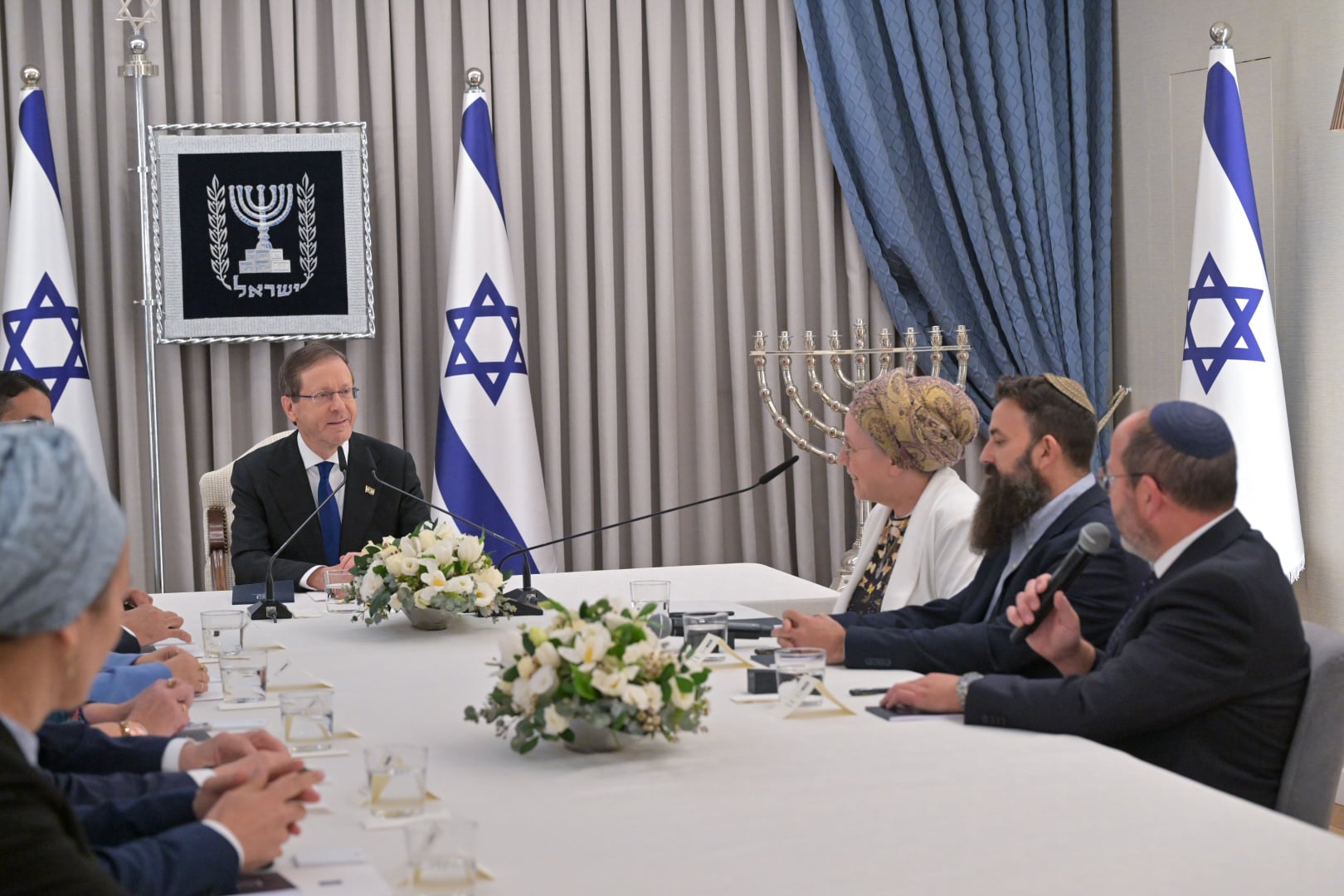
“The president seeks to hear the positions of all the factions and to examine whether there are additional directions or alternatives that could help build agreements and form a government,” his office said. “This reflects the view that, at this time, it is important to exhaust every option, broaden the dialogue, and explore every path that may advance the process.”
Ideologically, Likud, Yashar, B’Yachad and Yisrael Beytenu, comprising 67 seats, largely fill the same ideological space in the center-right of the political spectrum. Without needing to rely on parties further to the political fringes or anti-Zionist Arab or ultra-Orthodox factions, such a unity government could open the door to progress on issues that the country has failed to address, in no small part because of coalition politics.
Chief among them would be reforms extending the military draft to Haredim and the imposition of core requirements on ultra-Orthodox schools, moves which have been stymied until now by Netanyahu’s dependence on ultra-Orthodox parties.
But getting there will mean overcoming significant resistance to necessary compromises.
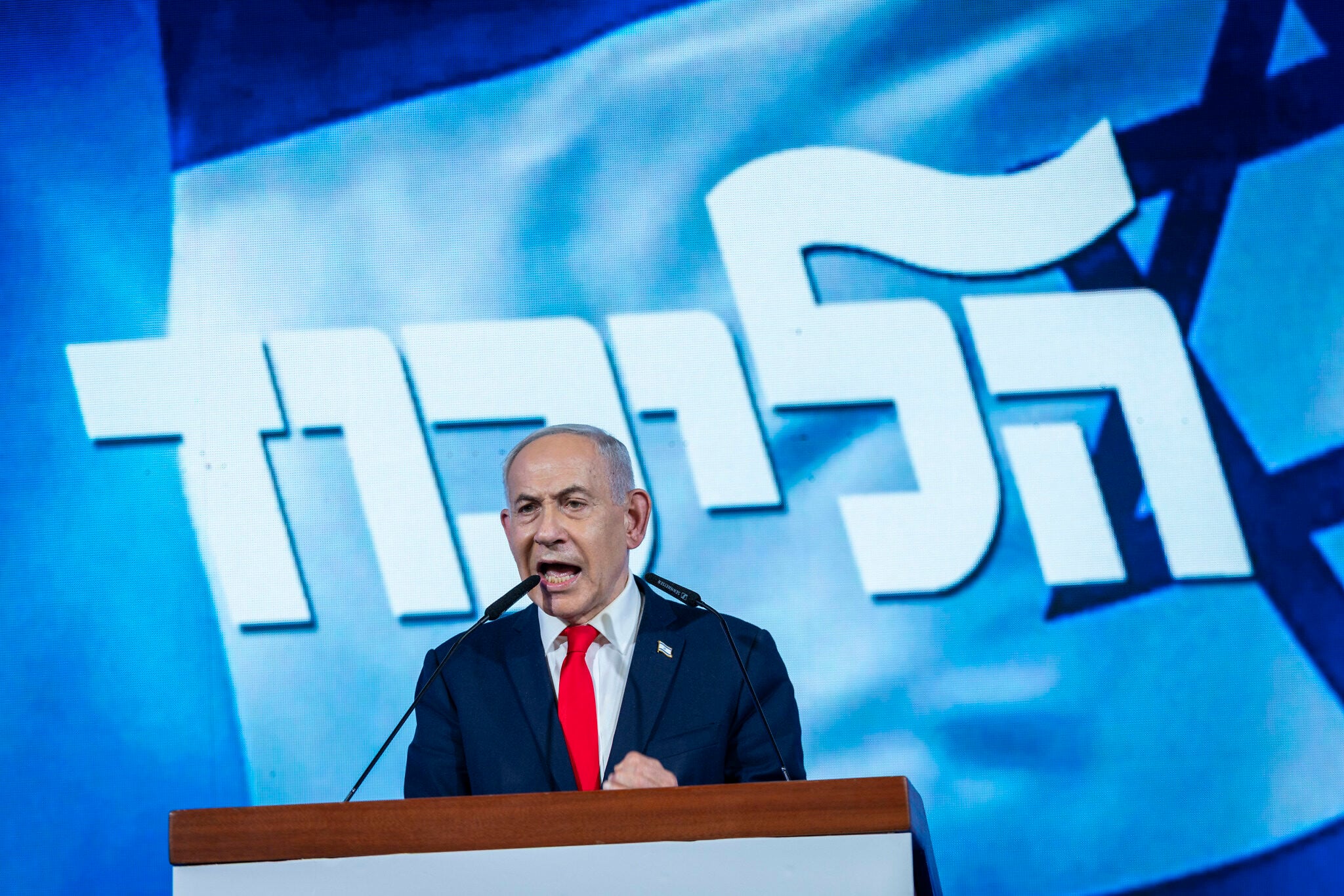
Netanyahu has said repeatedly that he wants to lead a broader coalition, implying that he wants to retain the support of the far-right and ultra-Orthodox, and will only consider joining a coalition that he leads.
Opposition parties that ran on ousting Netanyahu and vowed not to join a government under him are in no position to accept that, nor will they have much appetite for working with ultra-Orthodox parties UTJ and Shas or Itamar Ben-Gvir’s Otzma Yehudit.

Eisenkot himself promised over the weekend to form as broad a Zionist government as possible, based on four principles — recognition of Israel as a Jewish, democratic state; commitment to the values of the Declaration of Independence; mandatory service for all; and recognition of Hamas as a terrorist organization and the need to destroy it.
The Yashar leader didn’t rule out sitting with Likud in a government, so long as Netanyahu cedes his place to him, something the prime minister has shown no sign of budging on.
The Trump factor
That doesn’t mean unity is dead on arrival — but it would likely take a powerful outside force to make it happen.
Enter Trump, who has ample reason to push for that outcome. Progress on fighting with Iran and an expansion of the Abraham Accords are both dependent on Israel getting its internal political situation sorted out.
The US president is likely keen to get back to business against Iran, with talks going nowhere. Two joint military campaigns with Israel have badly weakened the regime’s military capabilities and flattened nuclear facilities, while an American blockade has wreaked havoc on Iran’s economy.
But Iran’s leaders have refused to budge from their maximalist demands.
Trump sounds like he still hasn’t made up his mind on whether to resume military strikes, but with the midterms behind him, he no longer has to worry about the political price of the campaign, which was paid in full and then some on Tuesday.
With Iran making impossible demands to simply start talks, no agreement is in the offing. Without movement from either side, the Strait of Hormuz will remain under threat, energy prices will be high, and multiple US aircraft carriers will be on long deployments in the Arabian Sea.
As questions of his legacy begin to loom large in his final two years in office, Trump is unlikely to be thrilled by the possibility that he will be the president who couldn’t beat Iran, despite his promises to “finish the job.”
In his endorsement of Netanyahu, Trump said explicitly that he wants to partner with an Israel led by Netanyahu in confronting Iran.
In addition, an Israel stuck in political limbo won’t be able to make progress on Trump’s other major Middle East policy objective — peace between Israel and Saudi Arabia.
Months of bickering and electioneering will result in irresponsible rhetoric and an unwillingness to make even a minimal nod toward a path to a Palestinian state that could open the door to Saudi-Israel normalization.
There is a way for him to have Netanyahu in office and political stability in Israel.

If Trump gets fed up with the deadlock in Israel, he could invite the party leaders to the White House and push them toward a power-sharing agreement.
To be sure, the president has given no indication that he will do so, and such a move would be unprecedented, though he is no stranger to using unorthodox means to get his way. The president, busy dealing with the US midterms, has not commented on Israel’s election and has made no signal to indicate that he views solving Israel’s political quagmire as a priority.
But there is reason to think Trump would be interested in forging a deal that keeps Netanyahu in office until the end of 2028, allowing the US president to enter his lame-duck era with the only Israeli leader he has ever worked with still in office.
That is also the year that Herzog’s term will end, giving Netanyahu a potential ramp away from elected government and into an elder statesman role.
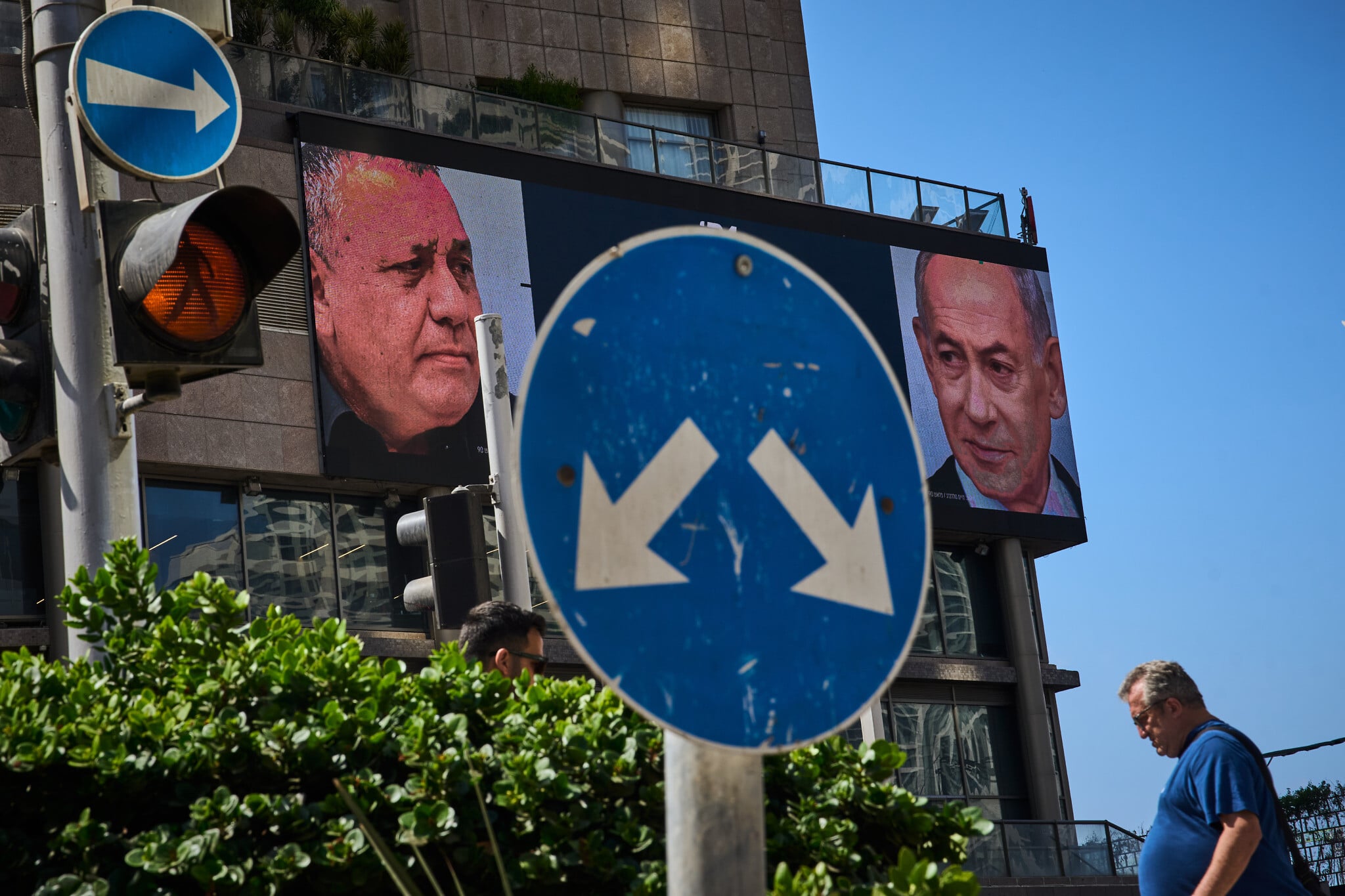
Eisenkot could then assume the premiership, which would make the relationship with Trump’s successor, who may be critical of Netanyahu, less contentious.
While both sides would have to break campaign promises, they will have a ready-made excuse to give voters — there is a two-year window in which to deal further blows to Iran, and besides, Trump asked us all to compromise.
Such a scenario wouldn’t do wonders for Israel’s image as an independent actor, nor would Herzog likely be thrilled to see a foreign counterpart meddling in a task that is supposed to be his.
Still, that might be a relatively small cost to pay for a way out of a political cul-de-sac that Israel may be unable to exit on its own.