Between Beaufort and Beirut, Israel faces narrowing options against Hezbollah
Renewed rocket and drone fire has exposed limits of Israel's battlefield gains -- but with Trump blocking escalation and Lebanon unable to disarm the terror group, there's no straightforward path ahead
On Monday evening, Prime Minister Benjamin Netanyahu once again halted imminent military attack plans following intervention by US President Donald Trump.
Earlier that day, the premier had issued orders for the IDF to strike key Hezbollah targets in Beirut’s southern suburbs in response to relentless rocket and drone attacks against Israeli soldiers and civilians, declaring: “There will be no situation in which Hezbollah attacks our cities and citizens while the terror headquarters in Dahiyeh remain off-limits.”
Hours later, after Tehran threatened to bolt ceasefire negotiations with Washington over the planned strikes, insisting that a truce with the US apply to Lebanon as well, Trump called Netanyahu and shortly after announced that both Israel and Hezbollah had agreed to roll back the fighting, apparently renewing their near-defunct April truce.
Israeli officials downplayed the severity of the exchange, but Trump confirmed Wednesday that he had called Netanyahu “fucking crazy” on the call, and US officials claimed he said, “Everybody hates you now. Everybody hates Israel because of this.”
The episode uncomfortably encapsulates Israel’s predicament on its northern border. While the IDF has achieved significant battlefield gains over Hezbollah in recent years, the past weeks have shown how far it is from a long-term solution and how hemmed-in it is by diplomatic constraints.
With a full invasion posing a great military and diplomatic risk, expanded ground operations in the south unable to reach Hezbollah’s core, Trump blocking strikes on Beirut, and the Lebanese government unwilling or unable to disarm the group, Israel is left with no easy options in Lebanon.
The Hezbollah rebound
For roughly 18 months following the ceasefire declared in November 2024, Israel operated in southern Lebanon with near-impunity. Hezbollah had been militarily devastated, with its leader assassinated, supply lines from Iran damaged by the collapse of Assad’s Syria, and its political standing significantly weakened. During that period — arguably the group’s lowest point in decades — the IDF killed hundreds of Hezbollah operatives with nary a response.
After Israel and the US launched their campaign against Iran in late February, however, it became brutally clear that Hezbollah had been down, but not out.
Since March 2, backing its patrons in Tehran, Hezbollah has fired some 5,500 rockets at IDF troops operating in southern Lebanon and around 2,500 at Israel, while launching around 300 drones at troops and civilians, according to the IDF. The early April ceasefire with Tehran appeared to embolden the group even further, producing the surge in drone attacks in recent weeks that led Netanyahu to vow a more aggressive offensive.
The attacks forced the head of the IDF Northern Command to acknowledge that the military overestimated the damage done to Hezbollah’s capabilities during the 2024 ground offensive. Israeli troops had thrust into southern Lebanon in order to push Hezbollah out of range for many of its projectiles to reach Israel, but the terror group has continued to harry the border area, just from deeper inside Lebanon
The military believes Hezbollah still possesses thousands of short-range rockets and hundreds of longer-range projectiles, launching them primarily from north of the Litani River.
The Iran dimension further compounds the problem. Tehran has insisted that a ceasefire with the US include a halt to attacks on Hezbollah and has threatened to bolt negotiations if Israel ramps up the campaign.
As long as Trump remains invested in the Iran talks, an Israeli strike deep into Beirut or the Beqaa Valley — where the vast majority of Hezbollah’s arsenal and fighters are concentrated — appears off the table.
If the preliminary deal being considered by Washington is signed, it would reportedly provide billions of dollars in economic relief to Iran in exchange for reopening the Strait of Hormuz and compliance with faith-building measures — money likely to flow to terror proxies like Hezbollah. Should talks collapse, Iran nonetheless has every incentive to keep Hezbollah active as leverage.
Despite Israel’s successes in containing Hezbollah, neither the campaign against Iran nor the ongoing operations in southern Lebanon — nor Jerusalem’s ongoing direct talks with Beirut since April — have offered a clear path to a quiet northern border.
Beaufort too close, Beirut too far
With thousands of northern residents facing frequent Hezbollah fire, official Israel continues to assert its military successes and vow greater action. But its latest strategies are either insufficient or have been effectively blocked by the White House.
Asked by The Times of Israel to explain Israel’s strategic thinking, a senior Israeli official on Monday pointed to military achievements in southern Lebanon, saying that since the April ceasefire, the IDF has eliminated 900 Hezbollah terrorists, destroyed weapons storage sites, headquarters, launchers, and underground infrastructure, and expanded operations across the Litani River into the Beaufort ridge and Saluki stream areas. “There will be no sanctuary for the terrorist proxies of the Iranian regime,” the official declared.
Netanyahu underscored that message on Sunday, standing before a picturesque IDF photograph of Beaufort Castle — the historic fortress overlooking southern Lebanon recently seized by the Givati Brigade — and declaring its capture “a dramatic shift in the policy we are leading” against Hezbollah.
The IDF’s return to the landmark, which it held from the 1982 First Lebanon War until its humiliating withdrawal from Lebanon in 2000, carried obvious symbolic weight.
But the iconic fortress is also for many a potent reminder of the quagmire that was Israel’s 18-year occupation of southern Lebanon, a past trauma that some fear the country is now repeating.
Netanyahu recalled that the landmark site “became a symbol of deep division within our society,” but promised things had changed.
“Today, we have returned to Beaufort differently,” he said. “We have returned united, determined, and stronger than ever.”
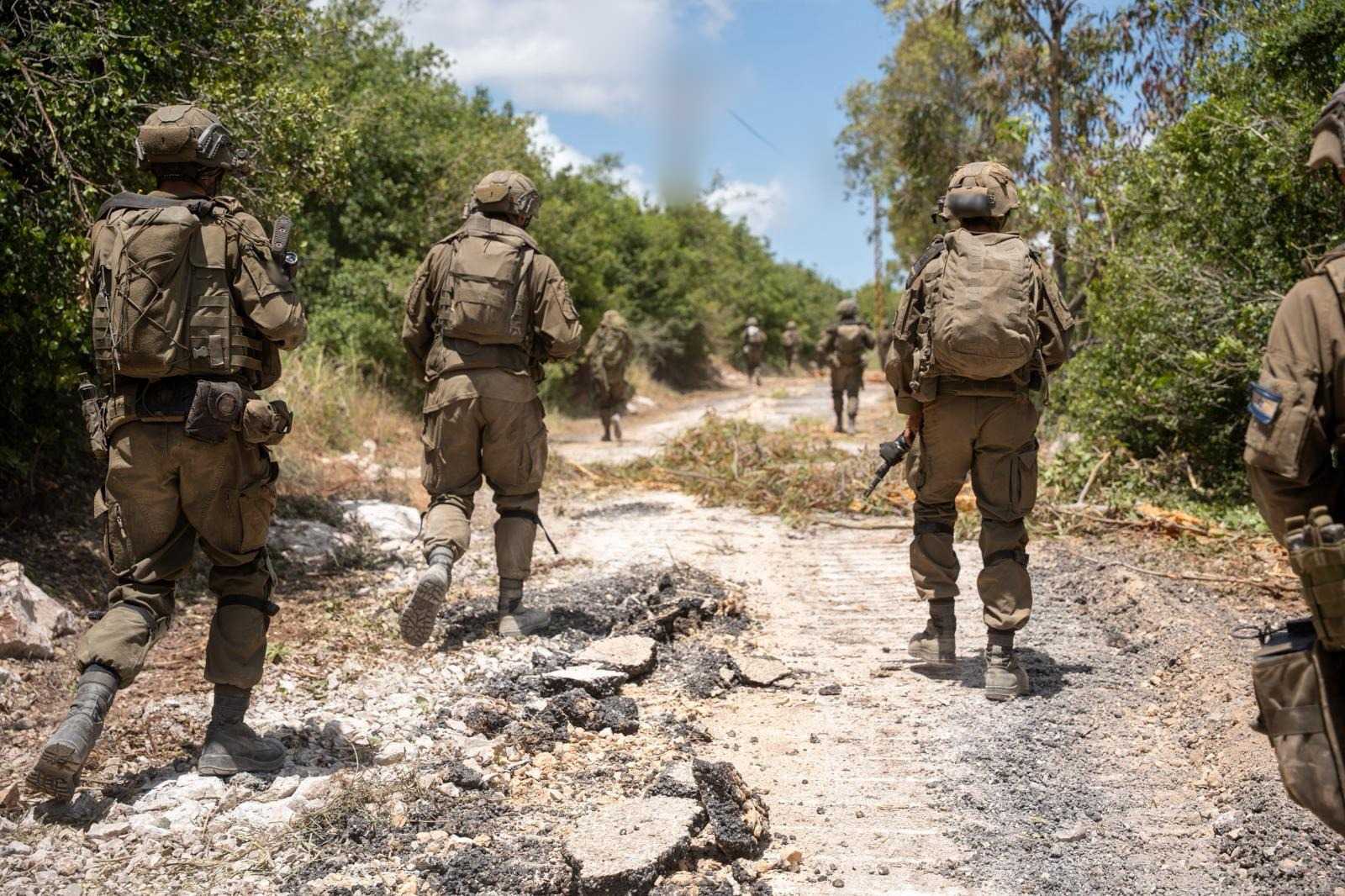
Indeed, 2026 is not 1982. While the 18-year security zone may have shielded the north from attack, at great human cost, experts note that today, controlling more of the south does not affect the ability of Israel’s enemies in Lebanon to fire on the country from beyond the buffer zone.
“Beyond the symbolic status of Beaufort, I don’t think it has enormous [strategic] significance,” said Moran Levanoni, a Lebanon expert at Israel’s Institute for National Security Studies.
A full-scale invasion targeting Hezbollah’s core in Beirut and the Beqaa is the only military option that could actually disarm the terror group, he said.
But Levanoni predicted that “Israel will not be able to withstand that,” both due to diplomatic tensions with Trump and public fears of repeating the previous prolonged occupation, which cost hundreds of soldiers’ lives and fueled the rise of Hezbollah.
Diplomatic difficulties
As narrow as the military options for confronting Hezbollah appear, there isn’t yet a strong diplomatic alternative either.
The senior Israeli official maintained that Jerusalem’s negotiations with Beirut, hosted by Washington, remain aimed at disarming Hezbollah and reaching a peace agreement, and were made possible by battlefield damage Israel has already inflicted: “Our accomplishments during the war, and the severe damage sustained by Hezbollah, have changed the balance of power in Lebanon and have created the conditions that made talks possible.”
Many analysts have read Israel’s push to expand its ground campaign as a means of pressuring the Lebanese government to follow through on its repeated, if so far hollow, commitment to disarm Hezbollah.
Such pressure may be more effective given that the current government in Lebanon has been the most outspoken against Hezbollah and Iranian influence in decades, but it’s unclear whether it or the Lebanese Armed Forces possesses the capabilities to act on its pledge.
“For the first time, Lebanon truly understands that Hezbollah’s weapons are what have brought it to the terrible situation it is currently in,” Levanoni said. He pointed to recent surveys — one aired on independent network Al Jadeed, another published by Janoubia, a Hezbollah-opposed outlet — showing broad Lebanese public support for reaching an agreement with Israel, not only among Christians but among Sunnis and Druze, and to a surprising degree even among Shiites.
But a European diplomat familiar with the Lebanese leadership’s thinking told The Times of Israel on Monday that it is unrealistic to expect Beirut to disarm Hezbollah by itself.
“Everybody knows it’s a joke, but keeps repeating it as if they have the capability,” they said.
“We see a lot of words and no action” from the Lebanese government, said Hanin Ghaddar, a senior fellow at The Washington Institute. She explained that this is due to concerns of civil unrest and national security, as well as a fear among Lebanon’s leadership of abandonment by international actors, as appeared to occur in 2008 when a US-supported coalition backed down after Hezbollah seized much of Beirut in response to efforts to curb its power.
No easy options
Neither a military nor a diplomatic solution to confronting Hezbollah appears imminent, though observers floated different models that could serve to eventually dismantle the group.
Ghaddar argued that what is needed is a structured US-led framework of “carrots and sticks,” such as increased military assistance, reconstruction support, and institutional backing if Lebanon acts, and tougher sanctions, reduced security assistance, and greater Israeli freedom of action if it does not. She compared the model to the Cedar Revolution of 2005, when mass Lebanese protests combined with coordinated US, French, and UN pressure forced Syria to withdraw its forces from Lebanon after nearly three decades.
The European diplomat pointed to former president Rafiq Hariri’s absorption of Lebanese militias in the 1990s and Algeria’s demobilization of Islamist fighters in the 2000s as positive models. In that view, the goal would be to separate Hezbollah’s hard-core loyalists from the larger mass of paid fighters by offering some alternative salaries, jobs, or roles in state structures, while isolating the group’s financing and supply routes.
As Israel and Lebanon held a fourth round of Washington talks on Tuesday, a senior Lebanese official told Reuters the discussions would explore “pilot zones” — specific geographic areas where hostilities would cease, Israeli troops would withdraw, and Lebanese soldiers would deploy, with the arrangement gradually extended across the country.
Such a mechanism may be enough to keep the ceasefire from fully collapsing. But whether it leads anywhere near Hezbollah’s disarmament is another question entirely, especially with the group vowing not to back any proposal that stops short of a formal declaration compelling Israel to halt all military activity across Lebanon.
If Israel remains set on a military track, it will likely need clear understandings with Trump on the scope of any major ground operation, how long it can last, what happens if Iran intervenes, and how the Lebanese and Iranian fronts can be decoupled.
Without those understandings, Israel risks advancing militarily while remaining stuck strategically, essentially running in place as it hits Hezbollah without fully dismantling it, and pressuring a Beirut that appears unable to act.