Captivity of Aviva and Keith Siegel told onstage with love, humor, fear
'Love at the Edge of the Tunnel' performed in Tel Aviv by veteran actors and real-life couple Moni Moshonov and Sandra Sade
Veteran actors Moni Moshonov and Sandra Sade played former hostages Keith and Aviva Siegel in “Love at the Edge of the Tunnel” at Habima National Theater, about the long-married couple who were taken captive on October 7, 2023, from their home in Kibbutz Kfar Aza.
The nearly hourlong reading on the eve of the third anniversary of October 7 was full of humor, fear, and grief, as Moshonov and Sade — married in real life — read playwright Michal Aharoni’s script that begins with the Siegels’ shopping trip at a supermarket on the evening of October 6, on their way home from a holiday visit with their children.
The play makes its way through the terrifying hours of October 7, when the Siegels were taken hostage in their own car to Gaza, through the first 51 days of their captivity.
After Aviva Siegel’s release on November 21, 2023, it jumps through parts of Keith’s solitary captivity until his release in February 2025.
The two actors, both in their mid-70s, captured the distinctive rhythms of the Siegels’ speech: Keith’s more laconic delivery and Aviva’s sometimes nervous, staccato cadence.
The play reviewed Aviva’s work as a kindergarten teacher, talked about Keith’s American Quaker schooling where he “learned to love people,” even poking fun at his “mindfulness,” his attempts to meditate and to stay healthy while held captive.
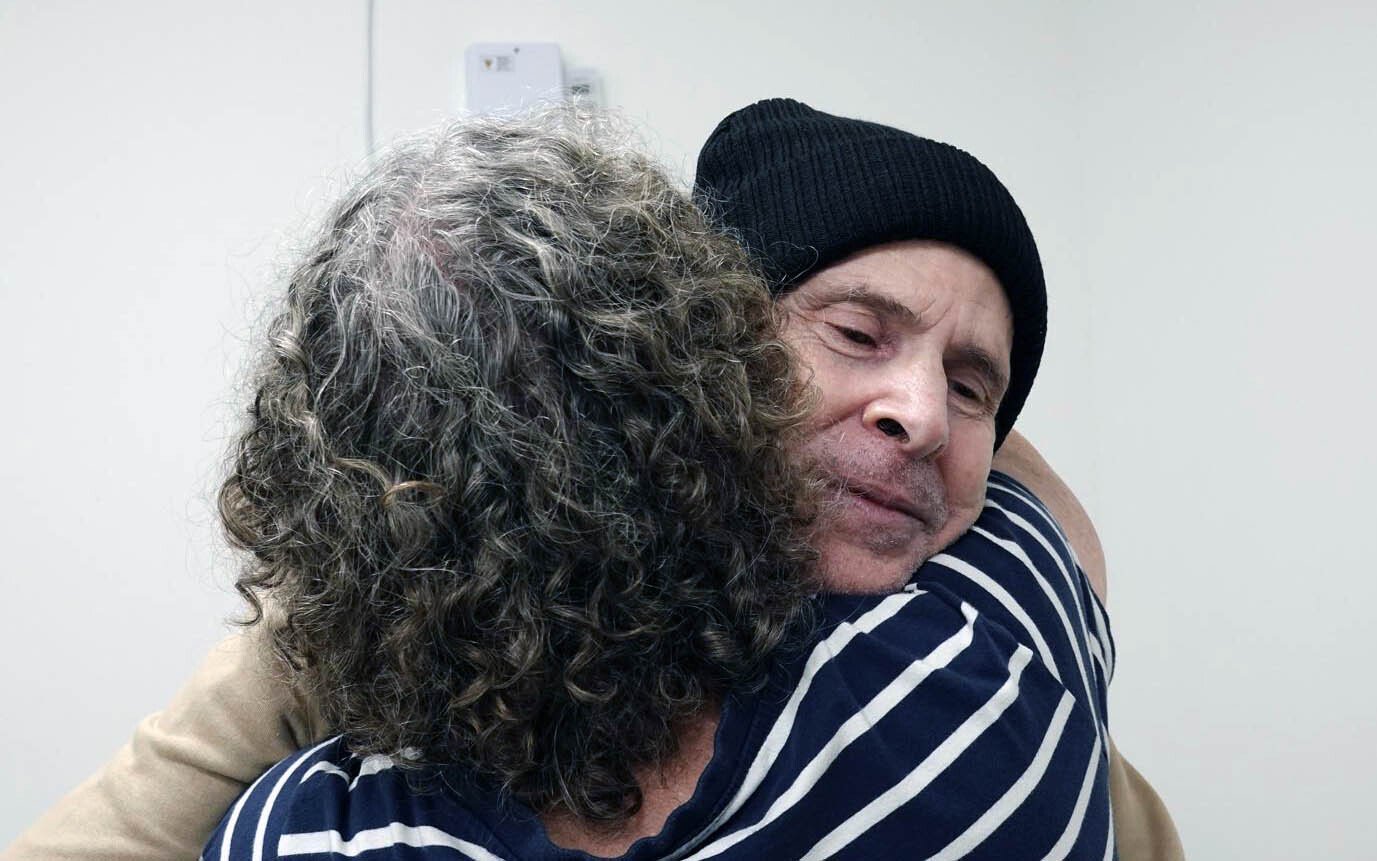
After Aviva’s release from Gaza, her character jokes about what to wear to meet US President Joe Biden in the White House, when she visits as part of her struggle to get Keith released, and the thick, quilted toilet paper in the residence’s bathroom.
The play, part of a memorial project to remember the October 7, 2023, Hamas terrorist attack, was staged on October 6 and 7 in front of a small, packed and appreciative audience.
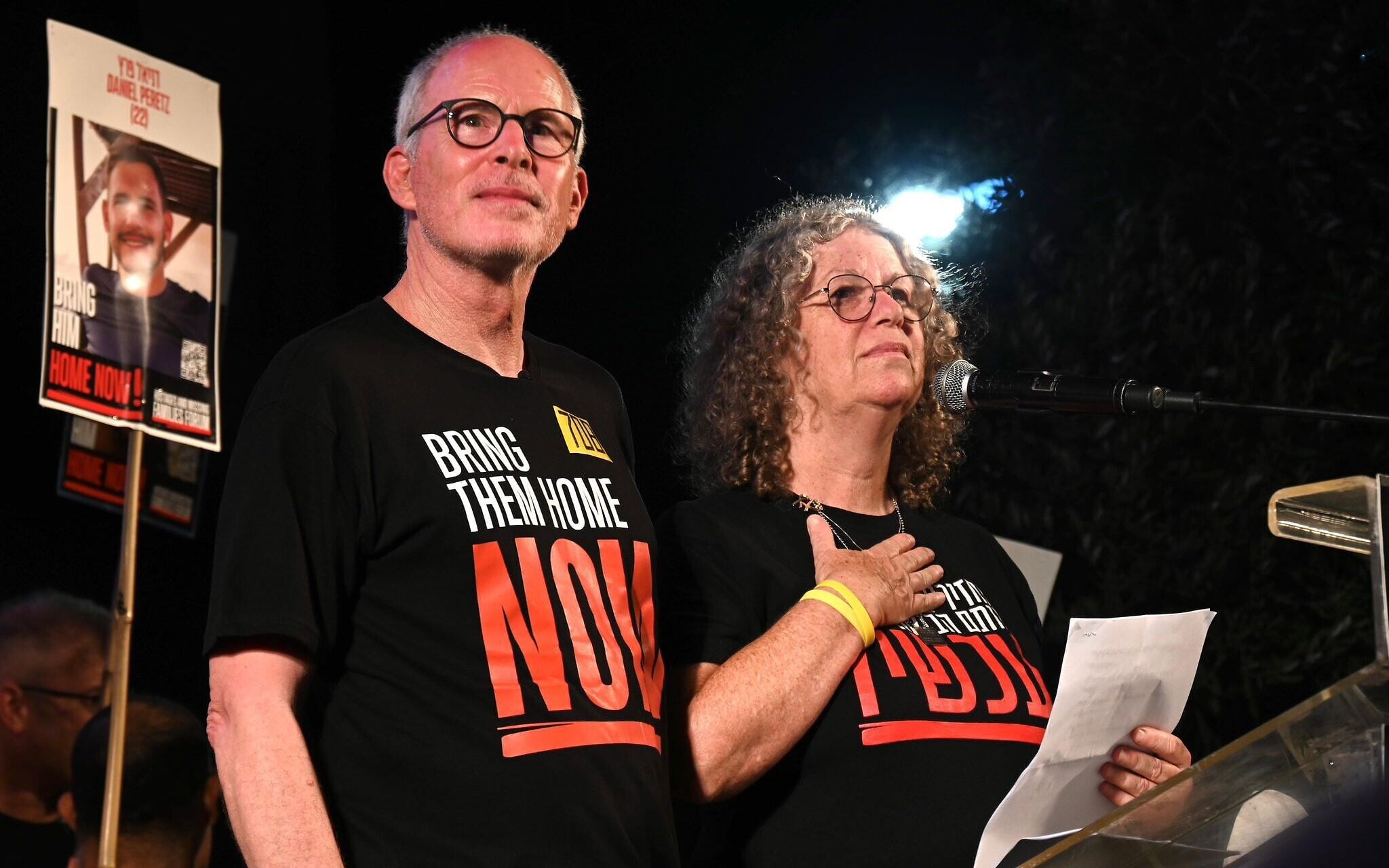
After the standing ovation on Tuesday night, the Siegels, Moshonov, Sade, Aharoni and project initiator Eytan Schwartz gathered onstage.
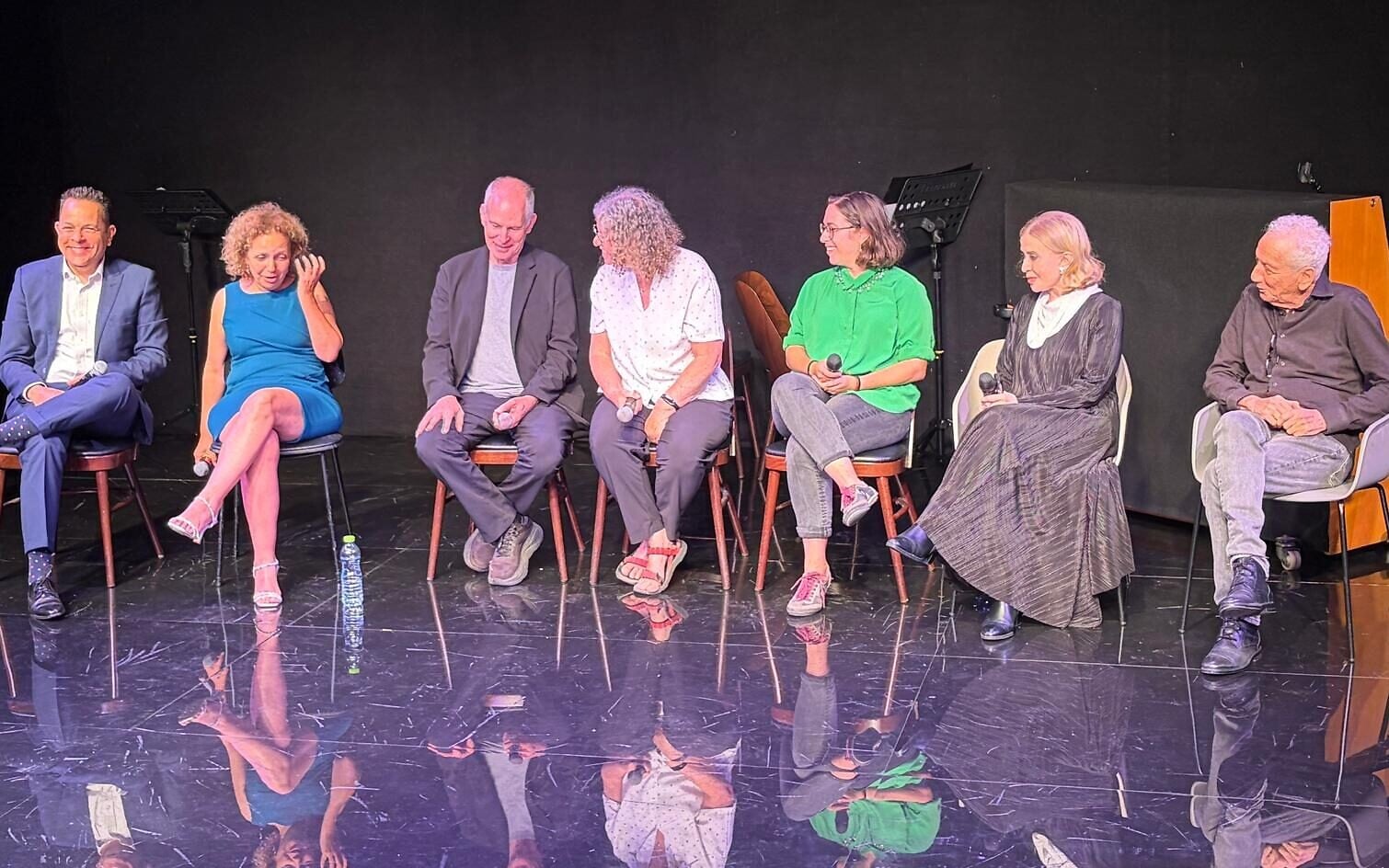
The onstage gathering was something of a who’s who in Israel’s theater world; Moshonov and Sade are prominent theater and screen actors, while director Ealeal Semel is the daughter of theater executive Noam Semel and the late playwright Nava Semel, who was the sister of singer-songwriter Shlomo Artzi.
Moshonov and Sade were also active in the struggle to bring the hostages home.
“When we met Aviva and Keith, we returned home on a cloud because we met people like this,” said Sade. “We live in a nation with these kinds of amazing people.”
Moshonov added: “You think about people who were there and aren’t here and it pains the heart. Every opportunity to remember is crucial.”
Schwartz said he hopes the successful performances will lead to a full production.
Schwartz, a public diplomacy expert who led the Tel Aviv-Jaffa Municipality’s international affairs division and is working on projects that document October 7, including the 2024 film “Screams Before Silence” about the sexual violence committed by Hamas and fronted by Sheryl Sandberg, had the idea of using theater for public diplomacy.
He contacted Aharoni, who’d written a one-man show about Shlomo Ron, an older man who saved his family on October 7 by sacrificing himself to the terrorists, and they met with the Siegels for hours in their Kibbutz Gazit home.
The reading then came together within several weeks, as Moshonov and Sade agreed to play the roles of the couple taken captive.
The play was performed for the public last week, and Schwartz hopes to launch a full production at Habima, and then show it to international audiences. He has another playwright working on a screenplay about former hostage Omer Wenkert.
Schwartz’s eventual hope is to make “Love at the Edge of the Tunnel” into a major feature film, using it as a vehicle to portray the October 7 Hamas attack.
“It would be a vehicle that would educate a generation of people,” said Schwartz, “much like [Steven Spielberg’s 1993 film] ‘Schindler’s List’ helped shape attitudes about the Holocaust.”