
|
|

|
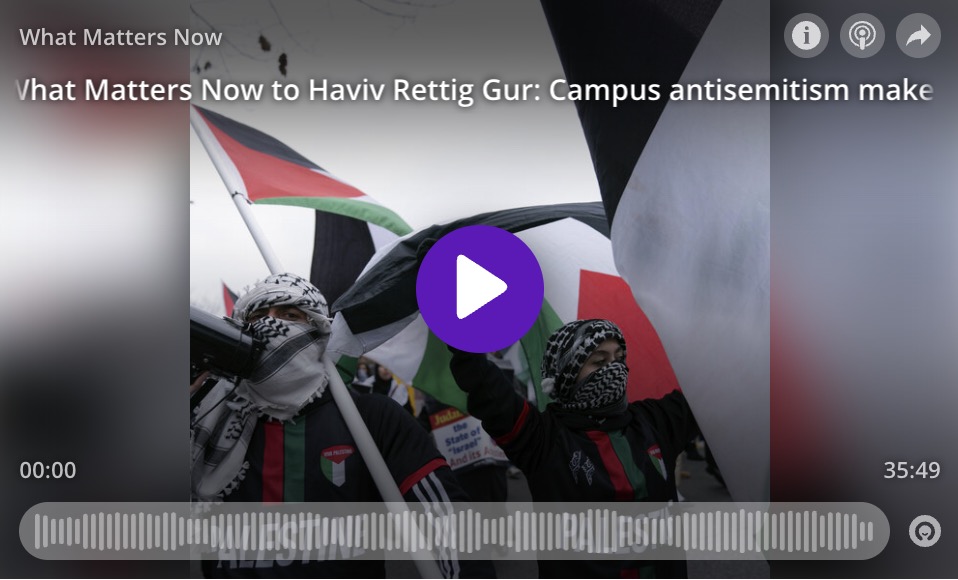
Dear Times of Israel Community, I don’t think I’ve ever met Jonathan Glazer, who went to the same Jewish high school as I did in London’s Camden Town, and visited Israel with the school, as I did — although he came on a five-month program while I did the shorter, three-week trip. I don’t know how much time he’s spent in Israel in the more than four decades since. Perhaps he has a deep knowledge of the modern history of the state, its challenges, its policies, and the neighborhood.  But I think his Oscar-accepting speech was not only simplistic and superficial — how could it be anything but, in the few seconds he had? — but also dangerously misconstructed. Hamas’s October 7 slaughter, mass sexual assault, and hostage-taking onslaught in southern Israel, and the consequent ongoing war, was the result of the terror group’s avowed antisemitic ideology and its implacable desire to kill Jews anywhere and everywhere and destroy the State of Israel. Not the consequence of an ostensible Israeli hijacking of Glazer’s and others’ Jewishness and the Holocaust in the cause of “occupation,” then, but the barbaric manifestation of a neighboring terrorist government’s absolute negation of Israel’s right to exist. Could Israel have found a way to fully relinquish control over and safely separate from the Palestinians since it captured the West Bank, East Jerusalem and Gaza Strip in an existential war in 1967? Well, maybe. And maybe not. The practice of expanding settlements in West Bank areas Israel would have to give up in the cause of a viable two-state solution certainly hasn’t helped advance a diplomatic horizon. And our current, worst-ever government is a committed advocate of such expansion. But relinquishing territory hasn’t enabled reconciliation either: Take the pullout to the international border with Lebanon in 2000, for example, or most relevantly, the complete withdrawal from Gaza in 2005. It just brought intransigent enemies to our doorstep. And then there’s the relatively more moderate West Bank Palestinian leadership’s relentless refusal to accept terms for Palestinian sovereignty without an influx of refugee descendants that would destroy Israel’s Jewish majority, and the refusal, too, to teach successive generations of Palestinian children that the Jewish nation has historical legitimacy in the Holy Land. The sorry and banal truth is that resolving the Israeli-Palestinian conflict is immensely complicated. Look how long I’ve spent just now scratching the surface, without beginning to invoke the arguments and counter-arguments invited by every single point I’ve made. 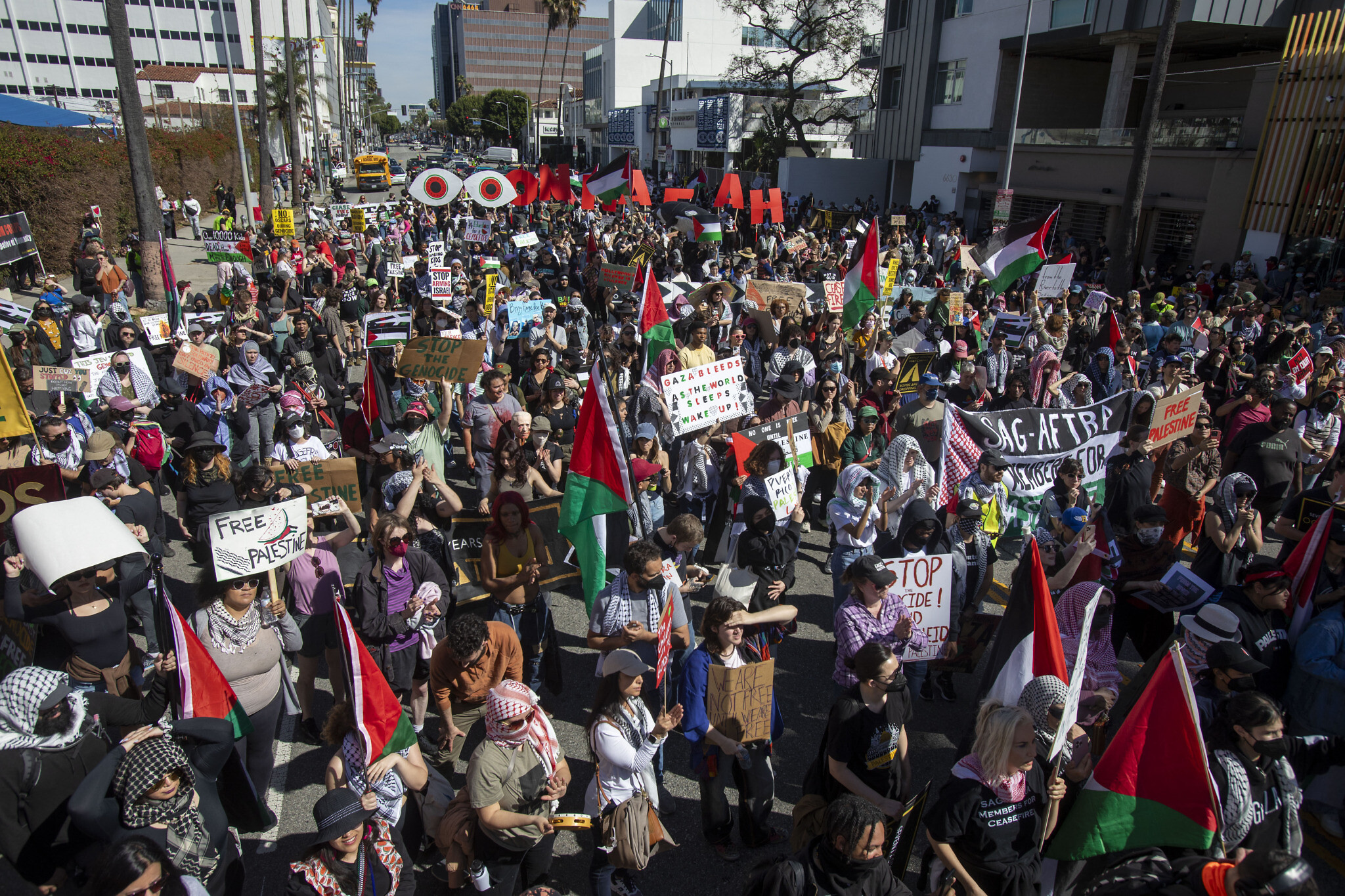 As “Free Palestine” protesters demanded an end to US aid for Israel outside, Glazer had a brief opportunity on a world stage to say something constructive during a particularly nightmarish period for humane, life-affirming people on both sides of the conflict. Instead, in a few brief words, he misidentified the root cause of the October 7 slaughter and the war, and brought succor to Hamas and those many others for whom Israel and its people have no right to exist in any borders. Allies openly at oddsAt a time when Israel utterly depends on the United States for the diplomatic and practical support to dismantle Hamas’s organized fighting forces, the partnership is spiraling ever deeper into crisis. US President Joe Biden bluntly declared over the weekend that Prime Minister Benjamin Netanyahu “is hurting Israel more than helping Israel.” Biden, a Zionist who declared in the same interview that he would “never leave Israel,” nonetheless also set out a “red line” regarding the looming IDF operation in Rafah, where Hamas’s last four battalions remain intact, albeit without specifying the consequences were Israel to cross it. And his ostensible pledge of ongoing, vital weapons supplies was less reassuring than it might at first have sounded: “There’s no red line [in which] I’m going to cut off all weapons so that they don’t have the Iron Dome [missile defense system] to protect them,” he said. But promising unending supplies of defensive arms is not the same as committing to keep Israel supplied with the offensive weapons it needs to complete the dismantling of the Hamas army. 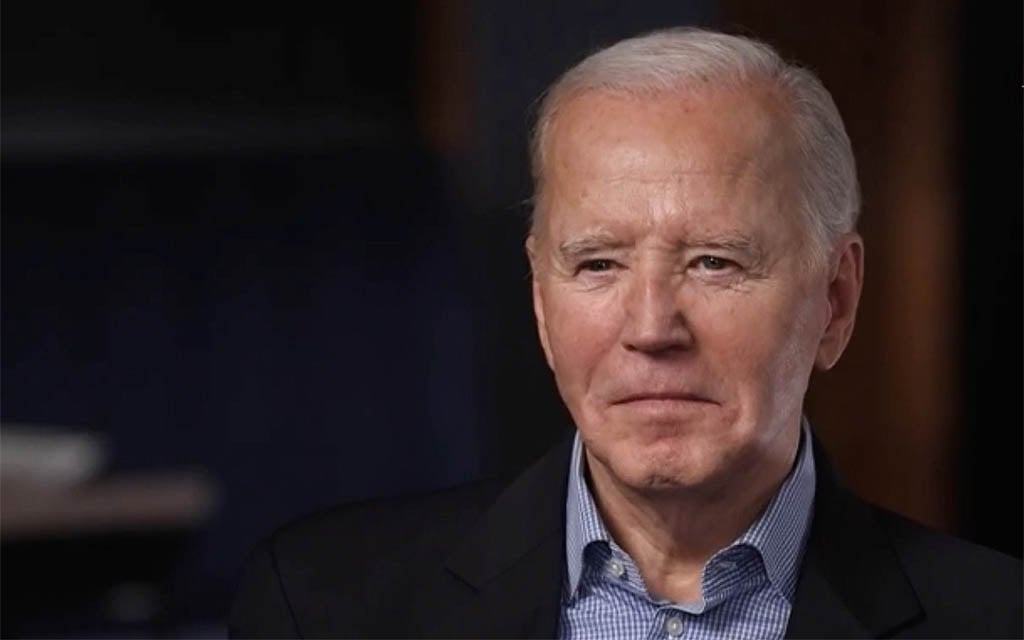 The president and his officials have also been relentlessly critical of the loss of life in Gaza, even while acknowledging that Hamas uses the noncombatant populace as human shields — with Biden this week going so far as to cite the unverified Hamas figure of 30,000 dead in Gaza, which he himself has previously acknowledged is unreliable, while failing to mention that Israel claims 13,000 of the dead are gunmen from Hamas and other terror groups. Netanyahu, for his part, has been deliberately hyping up disagreements with the administration to serve his short-term coalition needs. He’s been picking a fight for weeks over the administration’s long-term vision of a reformed Palestinian Authority ultimately taking charge in Gaza, and its contention that progress toward a two-state solution is essential to Israel’s survival. The Israeli mainstream has likely never been more mistrustful of the Palestinian leadership and more fearful of an ostensible two-state “solution” than in the wake of October 7, amid the horrific proof of Hamas’s barbarism and the widespread support for its actions among Palestinians in both Gaza and the West Bank. But rather than calmly acknowledging differences that will need to be handled down the road, and prioritizing the imperative for close ties as Israel battles to defeat Hamas, Netanyahu chose to place the argument front and center in a series of press conferences and US television interviews. 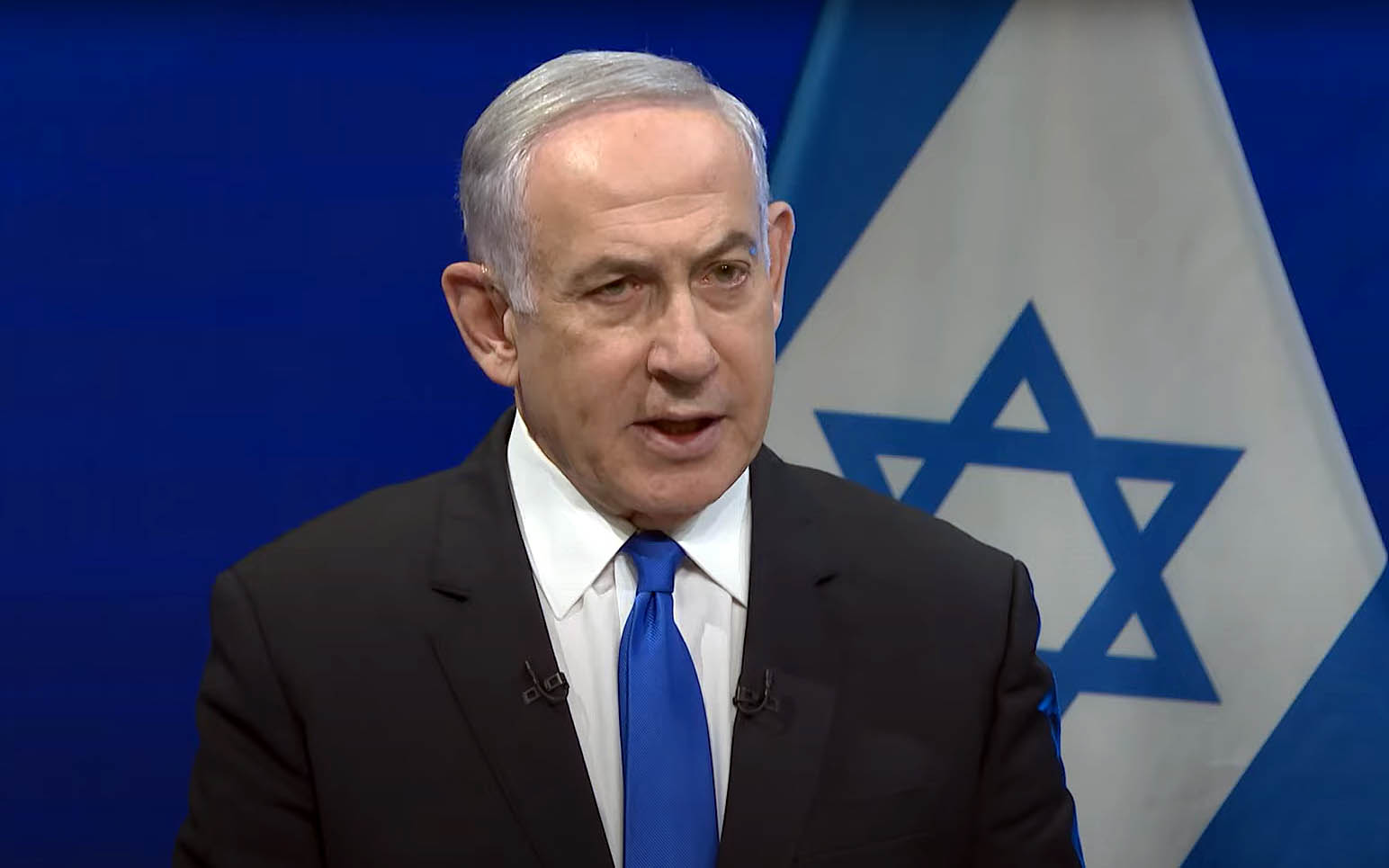 And then, last night, an unnamed official farcically identified by Channel 12 as “the most senior political source you can imagine,” saw fit to throw a headline-making hissy fit over a passage in the “Annual Threat Assessment of the US Intelligence Community” published this week, asserting that it constituted an attempt by the US government to oust the prime minister and his government. “Distrust of Netanyahu’s ability to rule has deepened and broadened across the public from its already high levels before the war, and we expect large protests demanding his resignation and new elections,” stated the authors of the assessment. “A different, more moderate government is a possibility.” With all due respect to the compilers of the annual report, this hardly amounts to groundbreaking intel. Israel was tearing itself apart before October 7 over the hard-right Netanyahu coalition’s efforts to destroy our independent judiciary. The failure of the Netanyahu government and the security establishment to recognize unmistakable evidence of Hamas’s imminent attack, and thus thwart it, has reduced confidence in the prime minister and his team considerably further. The abiding national strain of the war, the ongoing dysfunction of the government, the overt divisions at the helm as regards the direction of the campaign and the struggle to bring home the hostages, dismay in many quarters at the mounting Gaza civilian death toll and humanitarian crisis, the rising Israeli losses, the prime minister’s desperate appeasement of his far-right and ultra-Orthodox coalition partners — all these factors, and more, have produced months and months of surveys showing that, were elections held today, “a different, more moderate government is,” indeed, “a possibility.” And yet the unnamed very senior official saw fit to storm at the US for the crime of stating the obvious. “Those who elect the prime minister of Israel are the citizens of Israel and no one else,” raged the most senior source you can imagine. “Israel is not a protectorate of the US but an independent and democratic country whose citizens are the ones who elect the government. We expect our friends to act to overthrow the terror regime of Hamas and not the elected government in Israel.” The open hostility of each leadership for the other would be troubling in the best of times, considering that Israel’s alliance with the United States is flat-out essential to Israel’s survivability. To have the two leaderships bitching and sniping at each other in the middle of a war in which Israel simply must dismantle Hamas and get back the hostages in order to restore fundamental security and the tenability of ordinary life here is simply unconscionable. — What Matters Now to Haviv Rettig Gur: Campus antisemitism creating new ZionistsThis week on ToI’s podcast What Matters Now, we sit down with ToI’s Senior Analyst Haviv Rettig Gur to discuss antisemitism on college campuses. Just back from a speaking tour at US colleges, Haviv found that the increased ostracism of Jewish students has an unexpected rebound effect.
🔔 And be sure to subscribe to What Matters Now on Apple Podcasts, YouTube, Spotify, or wherever you listen to podcasts.
🙋 Have something to share?We’d love to hear it! Join the discussion on our active ToI Community Facebook group. Keep tabs on new content and events on our Community Page. And please don’t hesitate to write to us with any suggestions, issues or questions. Thank you for your continued support of our independent journalism. ~ The Times of Israel Team
|
|
You are receiving this email because you are a member of The Times of Israel Community. If you would like to stop receiving community updates, please click below to unsubscribe.
|