Dana Olmert, former prime minister’s daughter, says she was ‘violently arrested’
Left-wing activist says police beat her after she was detained helping a protester near her home on Friday; post draws attention to plight of detained Palestinian student
The daughter of former prime minister Ehud Olmert said on Monday that she was “violently arrested” and beaten by police officers over the weekend.
Dana Olmert, the daughter of Israel’s 12th prime minister and a left-wing activist, said in a post on Facebook that she was arrested on Friday afternoon while assisting a fellow activist who was being harassed by police when demonstrating against Likud MK Amir Ohana.
She said that she left her home to help the activist at around 4:30 p.m. and was arrested “in my own neighborhood, just a few meters from my home.”
“I didn’t think that I would only return home at around 11 p.m., after long hours in a detention cell, handcuffed and beaten,” Olmert wrote.
She said the police officers who arrested her were “exceptionally violent,” and noted that in her years of street activism, this was the first time she had been arrested.
“My greatest fear was having to spend the night in detention, but fortunately that didn’t happen,” she wrote. “I was released under restrictive conditions on bail of several thousand shekels.”
Olmert said she had filed a complaint with the Department of Internal Police Investigations “against the violent and disgusting officer who attacked me and arrested me without any reason.”
משטרת בן גביר מצאה לנכון לאזוק ולעצור באלימות את אחותי @dana_olmert , ד״ר לספרות בעשור השישי לחייה, בטענה שהיא מהווה איום על שוטרים. מוזמנים להציץ בפוסט שלה ולהחליט למי אתם מאמינים, ואם יש לנו את הפריבילגיה לשבת בשקט במקום לצאת החוצה ולהילחם. https://t.co/6qA4j1PgAv pic.twitter.com/yybSVIsuGM
— Shaul Olmert (@shaulmert) November 23, 2026
As of Monday night, there was no comment from the Israel Police about the reason for Olmert’s arrest or her account of police brutality.
However, her brother Shaul Olmert said in a post on X that she was arrested after police claimed she posed a threat to officers.
Olmert draws attention to detained Palestinian student
Olmert also dedicated a portion of her lengthy Facebook post to comparing her experience in detention to that of Palestinian Hebrew University student Mahdi Tunsi, saying that “throughout the experience, I was fully aware that I am, in every sense, a privileged person.”
“Those who lack such privilege include Palestinian activists such as Mahdi Tunsi, a criminology student from Jerusalem,” Olmert wrote.
Tunsi was arrested on November 8 at the university’s Mount Scopus dormitory complex over an alleged conspiracy to commit a terrorist act. He is due to be released from custody on Tuesday, after a Jerusalem court withheld approval last week for a Shin Bet motion to place him in detention for an additional six months.
Police have maintained the arrest was lawful, but his lawyer Nasser Odeh has disputed this. One of Tunsi’s friends told The Times of Israel that 10 days passed between his arrest and his first meeting with an attorney.
Tunsi, who does not hold Israeli citizenship, reportedly told Odeh that police officers beat him at the dormitories. Police claimed he had resisted arrest and fallen out of the vehicle, while the dormitories’ security officer reportedly said Tunsi had left quietly and had not resisted.
He attended a court hearing on Thursday via video link, with his usually long hair buzzed and without his eyeglasses, as police had reportedly refused to return them to him — a matter that the judge ordered the Israel Prison Service to rectify.
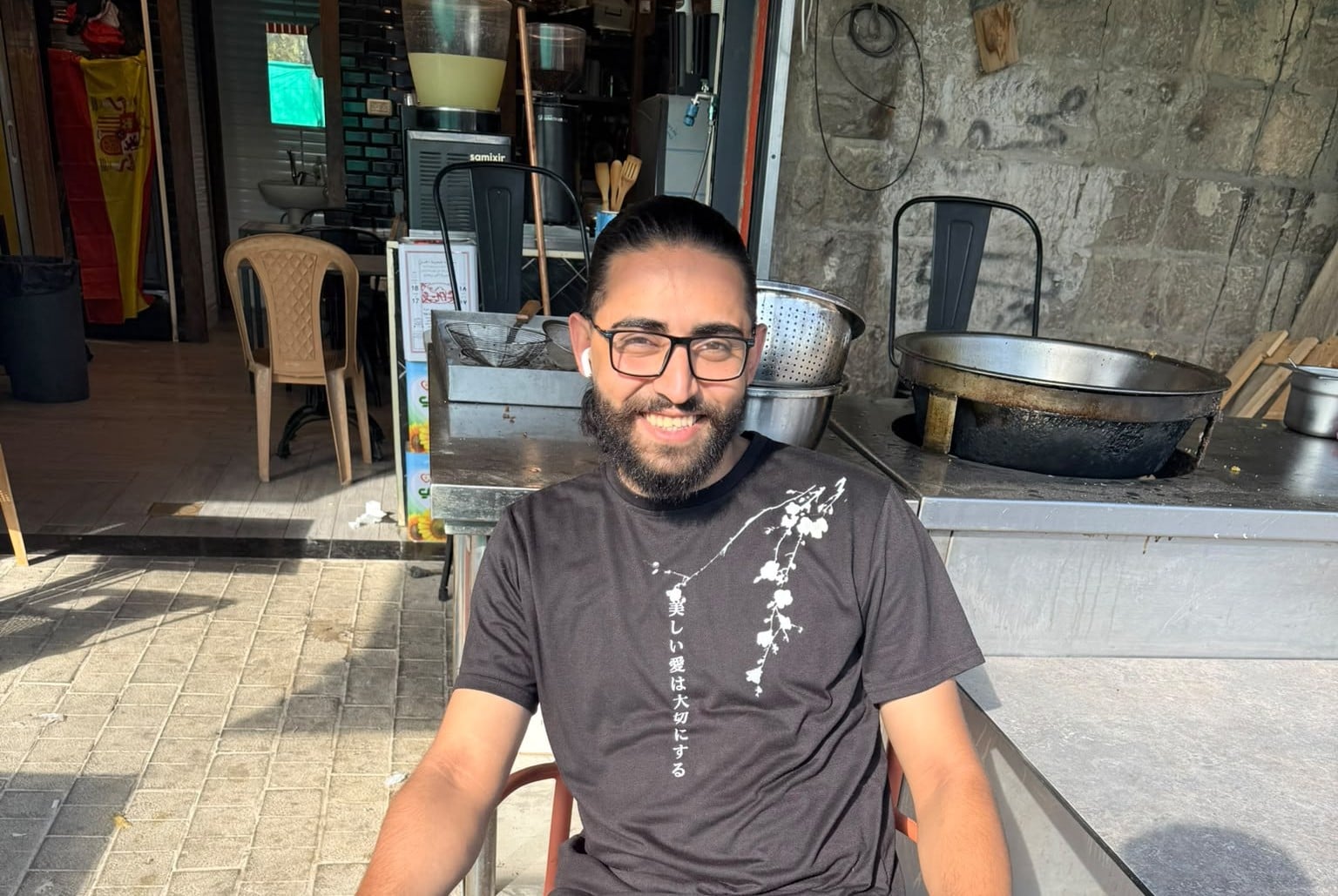
“It feels as though the current regime and its agents realize they are on the verge of losing their power,” wrote Olmert, reflecting on the reported treatment of Tunsi by law enforcement. “Consequently, the level of violence and cruelty they inflict on Palestinians is rising.”
“What I went through pales in comparison to what happens to Palestinians, whom the security agencies detain and disappear for months at a time, under the chilling term ‘administrative detention.'”
“We must not let this happen in silence,” she warned. “We must not cooperate with it.”