

Court extends detention of Palestinian Hebrew U student amid criticism of arrest
Shin Bet seeks to hold activist Mahdi Tunsi, accused of conspiracy to commit terrorist act, for 6 months without trial; lawyer says Tunsi interrogated over social activism
 Add ToI as a Preferred Source on Google
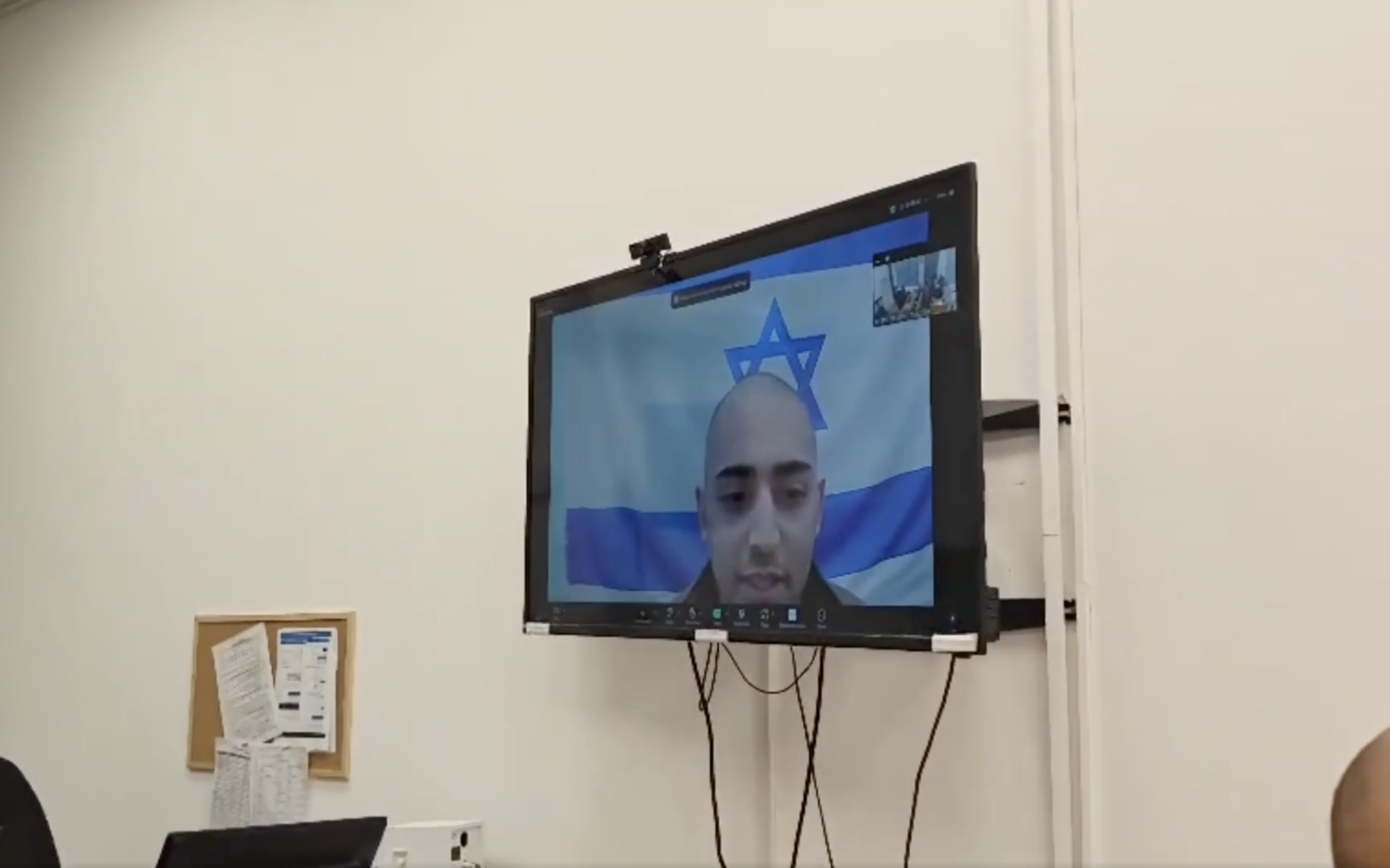
The Jerusalem District Court on Thursday extended the detention of a Palestinian student activist at Hebrew University who was detained on campus last week over an alleged conspiracy to commit a terrorist act.
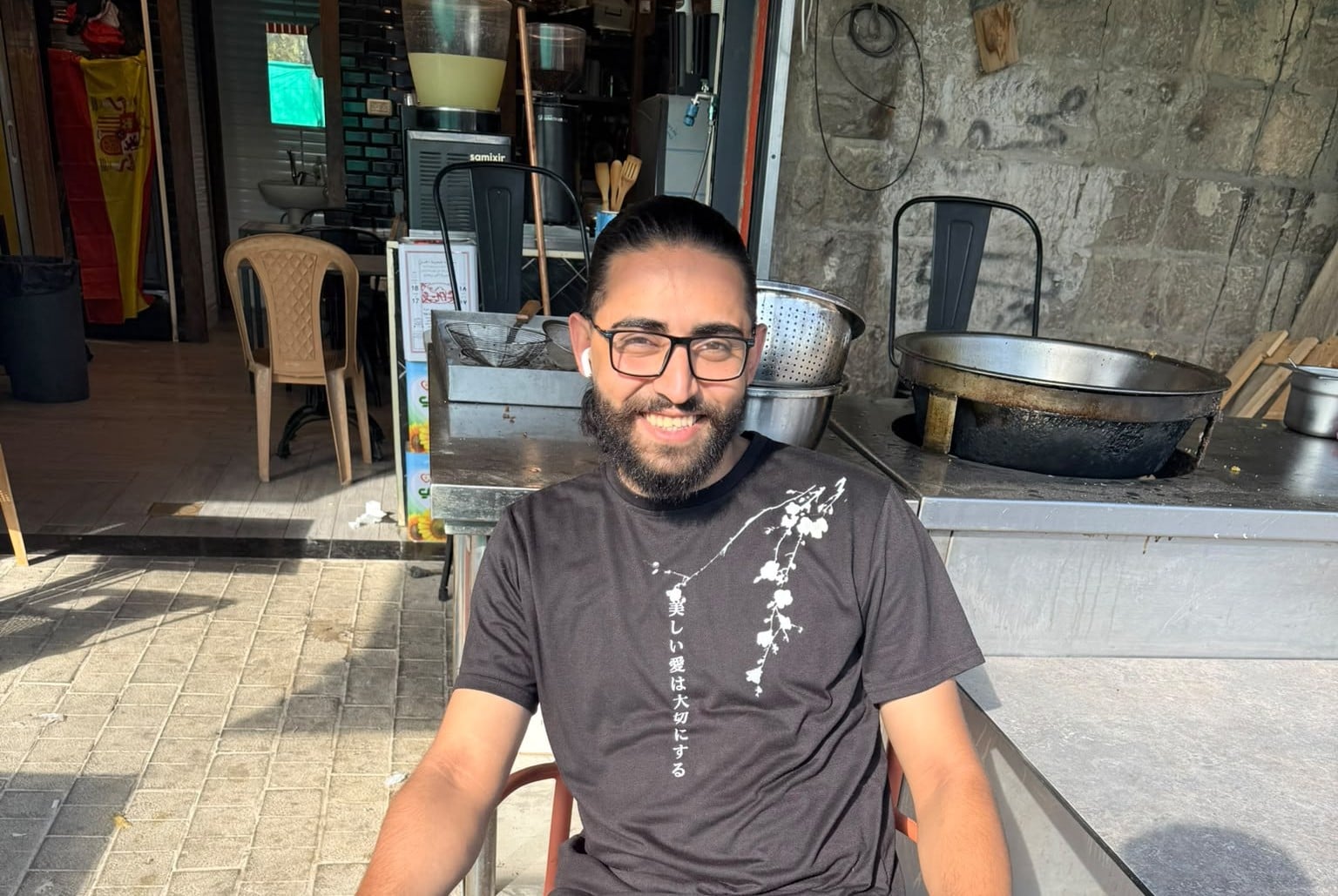
Mahdi Tunsi, a 26-year-old criminology and sociology undergraduate from East Jerusalem’s Silwan neighborhood, will remain in police custody until Tuesday.
The court withheld approval, however, for a Shin Bet motion to place Tunsi in detention for an additional six months, after the agency failed to send a representative to give evidence at a closed-door hearing, according to Rosa Media, an outlet affiliated with Standing Together, one of the Israeli-Palestinian organizations Tunsi is active in.
Attorney Nasser Odeh, representing Tunsi on behalf of the Human Rights Defenders Fund, told the Local Call news site that material from the police investigation indicated Tunsi was interrogated mainly about his political activism, specifically in Standing Together.
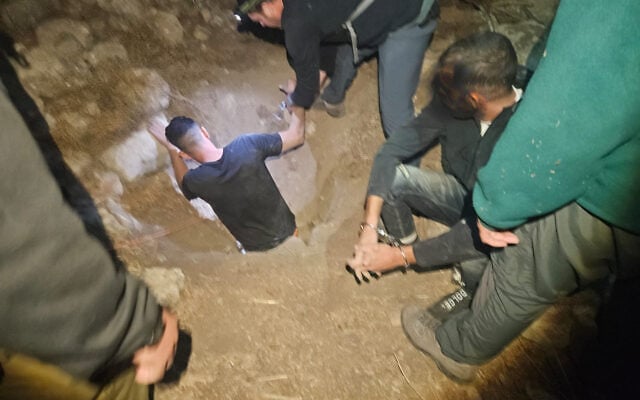
Police detained Tunsi on the morning of November 8 at the university’s Mount Scopus dormitory complex. His brother Muhammad has said the family did not learn about the arrest until the next day, when they inquired at a police station after Tunsi’s friends told them he was missing.
Odeh told Local Call that police had a warrant to arrest Tunsi at his home, rather than at the university dormitories, and argued that the arrest therefore exceeded the scope of the court order. Police maintained that the arrest was lawful.
The lawyer also criticized the university’s handling of the arrest, saying police had claimed it was coordinated with and approved by the institution. According to Odeh, the university initially said it had not known about the arrest, but later acknowledged receiving notification minutes before officers detained Tunsi. The university said police had neither sought nor required its approval.
Odeh said the discrepancy between the university’s accounts required clarification and questioned why the institution had not ensured that Tunsi’s family was notified. “How did the university allow this?” he asked.
Tunsi does not hold Israeli citizenship. Ruth Onik, a friend of Tunsi’s, told The Times of Israel that Tunsi had been denied a meeting with an attorney until Wednesday, 10 days after he was detained.
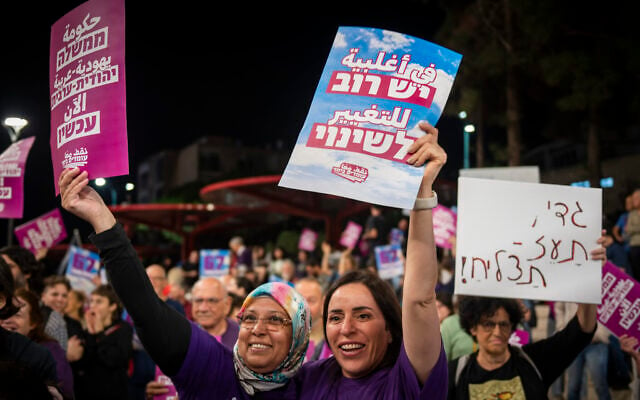
Tunsi, who usually sports long hair, a beard and glasses, appeared at Thursday’s hearing via video link shaved, with a buzzcut and without glasses, according to footage published by Rosa Media and by Joint List MK Ofer Cassif, who posted a video of himself inside the courthouse talking to Tunsi as a reported 200 supporters protested outside.
“Stay strong. There is a demonstration outside with lots of friends supporting you. Don’t feel alone for a moment. I know that’s easy to say, but you have a lot of supporters,” Cassif told Tunsi.
נפגשתי הבוקר, וירטואלית, עם הסטודנט מהדי תונסי באולם בית המשפט המחוזי בירושלים.
מהדי נחטף ממעונות האוניברסיטה העברית לפני כעשרה ימים. להוריו נודע על מעצרו רק לאחר כמה ימים.
מצאתי בשיחה הקצרה הזו אדם חזק, בטוח ושלם עם עשייתו הפוליטית והאנושית למען השלום והשותפות היהודית ערבית.… pic.twitter.com/5tbINQAhLR
— Ofer Cassif עופר כסיף عوفر كسيف (@ofercass) November 19, 2026
Rosa Media and Haaretz reported that the judge ordered the Israel Prison Service to give Tunsi his glasses, despite police objections. According to Haaretz, officers who arrested Tunsi at the Hebrew University campus refused to let him take his glasses. Onik said he “can’t really see” without them.
Haaretz also reported that Tunsi showed up with a bruised face at his remand hearing at the Jerusalem Magistrate’s Court on November 9, a day after he was detained.
According to Local Call, Tunsi told his lawyer that police officers beat him at the dormitories, inside a police vehicle and at the police station. Police claimed he had resisted arrest and fallen out of the vehicle, while the dormitories’ security officer reportedly said Tunsi had left quietly and had not resisted.
During the Magistrate’s Court hearing, a police representative said the suspect had not been informed up to that point of the substance of the allegations, and that arresting officers seized some books from Tunsi’s dorm but did not find any equipment for a terrorist act.

The court at the time agreed to keep Tunsi in custody until November 12, rather than the seven-day extension that police had requested based on confidential evidence.
But according to Odeh, when the time was up, police referred the case to the Shin Bet instead of releasing Tunsi.
The Shin Bet, in turn, recommended six months’ administrative detention — a legal practice that lets Israeli security forces hold Palestinian suspects without charge or trial where there is insufficient evidence to secure an arrest in court.
Odeh said the police investigation had effectively ended and Tunsi should have been released. “Instead of releasing him, they brought in the Shin Bet,” he told Local Call.
The lawyer said he had received the police investigation materials but not the classified evidence underlying the Shin Bet’s request for administrative detention, adding that he would appeal to the High Court of Justice if the detention order was approved.
“No one deserves administrative detention. It is a cowardly tool, a corrupt tool,” Haaretz quoted a Hebrew University professor as saying at the protest outside Thursday’s hearing. “If there is evidence, move it to the criminal justice system. Everyone here who knows Mahdi knows there is nothing.”
????Fellow students and other protesters near the Jerusalem District Court, demanding the release of @HebrewU_heb student Mehdi Tunsi, who was taken from campus last week and is being held without charges.
(Vered Vinitzky-Seroussi) https://t.co/tNfXYcYZae pic.twitter.com/QKO8FXwIed— Noga Tarnopolsky נגה טרנופולסקי نوغا ترنوبولسكي (@NTarnopolsky) November 19, 2026
The arrest has also drawn criticism from organizations and university faculty. Standing Together demanded that the university explain its role in the arrest and work with police and the Shin Bet to secure Tunsi’s release.
“The Shin Bet’s witch hunt against the Arab population in Israel continues,” the movement said, in apparent reference to the arrests of three Arab political activists on the day of Israel’s election, who were subsequently released without charge, as well as the agency’s probe into alleged foreign interference to support Arab parties in the election, which has hit a wall.
“Administrative detention is an undemocratic and inhumane tool. We strongly oppose the disappearance of people and their interrogation in basements without basic rights.”
The Israeli Sociological Society also condemned the request for administrative detention and urged university leaders to speak out. “The society opposes administrative detention as a dark and undemocratic method of governance. Protection against arbitrary detention is a basic human right,” it said.
A group of Hebrew University sociology and anthropology lecturers who taught Tunsi described him as “a curious, engaged student who is committed to his studies” and said they “fear his arrest is political in nature, in part because of his public and social activism.”

Hebrew University, meanwhile, said it was not a party to the legal proceedings and had no information about the circumstances surrounding them. It said it was concerned for Tunsi’s well-being, was in contact with his family and hoped the case would be resolved quickly while safeguarding his rights.
Following the referral of the case to the Shin Bet, Tunsi was moved from Jerusalem’s Russian Compound jail to the Megiddo Prison, which mostly holds Palestinian security detainees.
Odeh expressed concern about conditions at the prison, citing reports of inmates contracting skin diseases without receiving treatment and difficulties obtaining personal belongings.





The Times of Israel Community.