

Discarded despite show of electoral muscle, Arab voters seek way out of political exile
After Arab Israelis motivated to put end to previous government’s policies vote in record numbers, many fear their historic gains will be for naught as parties reject working with the politicians they voted for
 Add ToI as a Preferred Source on Google
Nurit Yohanan is The Times of Israel's Palestinian and Arab world correspondent

When it emerged that an estimated 77 percent of eligible voters in Israel’s Arab community cast their ballots in the October election, some in Israel were shocked by the turnout rate, having assumed that Arab participation would lag behind the rest of the country as it has in previous elections.
But Mazen Ghnayem, mayor of Sakhnin, was not surprised by the figures, which helped push the Arab-led Joint List and Ra’am parties to an unprecedented 19 seats between them.
“On Election Day, I saw a young boy bringing his 90-year-old grandfather to vote. I asked the grandfather why he had come, and he told me, ‘I want personal safety,'” Ghnayem recalled.
For nearly a decade, deadly crime has ravaged Arab communities in Israel, turning towns and villages into gangland battlefields and claiming mounting numbers of victims annually. With 252 murders, 2025 had been the deadliest year yet by far, and the pace of slayings had barely slackened in 2026, making the issue a major animating force for Arab voters, according to Ghnayem.
With its record number of seats, the Joint List and Ra’am should be poised as potential coalition kingmakers, with the leverage to enact policies that can finally stamp out the crime wave, along with pursuing other changes their constituents want to see.
Yet with the parties largely locked out of joining a government, Arab citizens of Israel say that while they were encouraged by the election results, they have serious doubts about whether their newfound political muscle will translate into the power to achieve results.
Prime Minister Benjamin Netanyahu and his allies portray Arab votes as illegitimate and demonize Arab politicians as terror supporters; his chief rival, Yashar leader Gadi Eisenkot, has also largely refused to entertain the idea of governing in cooperation with the Joint List or Ra’am or even relying on their tacit support.
Five years after Ra’am forged a new path of pragmatism and cooperation to a governing coalition, and with Arab politicians commanding a record number of seats and open to compromise, some in the community fear what it will mean if they nonetheless continue to be barred from accessing the levers of power and rejected as unfitting for a seat at the government’s table.
“If, after all that, other parties still say they won’t accept them, it will break something in Arab society,” said Lama Yassin, a resident of the northern town of Arraba. “We’ll realize that no matter how many aspects of our identity we’re willing to give up, [the Jewish public] will still say no to us.”
Voting against Netanyahu and Ben Gvir
Hours before voting booths opened on October 27, police carried out arrests of three southern men accused of involvement in a vote-buying scheme for Ra’am, a traditionalist party that draws much of its support from Negev Bedouin.
Throughout voting day, Netanyahu seized on claims that Arabs were attempting to steal the vote, and in the wake of the election, he and his party have made numerous claims casting doubt on the legitimacy of Arab votes, including allegations of fraud and foreign meddling.
A series of investigations into those claims have largely fizzled out and there are now suspicions that Netanyahu’s office may have had a hand in orchestrating the Ra’am arrests as part of an ongoing campaign to invalidate Arab political participation.
Sharif al-Assad, head of the local council in the Bedouin town of Lakiya in the Negev, told The Times of Israel the affair was reminiscent of countries in the region that lack democratic governments.

“It is deeply worrying, especially when it involves cooperation with the police and the Shin Bet. We’re not far from Syria and Jordan [in this kind of behavior],” he said.
Public figures and others who spoke to The Times of Israel said many of those flocking to polling stations were motivated by the chance to halt policies enacted by Netanyahu’s government.
In the southern city of Lakiya, whose population is overwhelmingly Muslim Bedouin, voter turnout surged from historical rates under 50% to 82% in the October election, with most of the votes going for Ra’am.
Al-Assad attributed the increase to opposition to policies pursued by National Security Minister Itamar Ben Gvir over the past four years. He cited in particular widespread demolitions of homes in unincorporated Bedouin communities that were built without permits, despite authorities refusing to provide residents with a path to legalize their homes or alternative housing.

“They left people without homes,” he said, accusing Ben Gvir of seeking to gain political capital from the demolitions.
Ben Gvir’s name came up repeatedly in conversations with Arab citizens. The minister, leader of the far-right Otzma Yehudit party, has been accused of largely failing to tackle crime in the north, where it is worst, while launching “law and order” campaigns in southern towns that targeted reckless drivers and permit violations.
Many of these operations involved sending large groups of heavily armed police into towns and imposing widespread restrictions on locals’ movement. Critics accused Ben Gvir of using the towns as the backdrop for his provocative visits under heavy guard, terrorizing locals while failing to actually combat crime.
Huda Obeid, a Lakiya resident and executive director of the Negev Coexistence Forum for Civil Equality, said the minister had visited her town three times over the past year in what she described as publicity stunts.
“He went around with hundreds of police officers and started saying, ‘I’m the boss here,'” she recalled.

Wafa Tiyara, a resident of Kafr Qara, pointed not only to the government’s policies but also to what she described as an atmosphere of incitement against Arab citizens that the government had helped foster.
Yassin said Netanyahu’s inclusion of Ben Gvir in the government had normalized hatred of Arabs as a legitimate political position.
She said she is afraid to speak Arabic outside her hometown or take her nieces to public parks in nearby Jewish towns.
Return of Ra’am
Given the mandate to form a government, Eisenkot is deep in negotiations with other parties as he seeks a Knesset majority.
Together with like-minded Zionist anti-Netanyahu parties, Eisenkot has the support of 48 Knesset members, but has largely refrained from turning to the Joint List and Ra’am to get him over the hump, instead holding negotiations with the ultra-Orthodox United Torah Judaism, though it alone does not have enough seats.
Several of Eisenkot’s allies have rejected allowing Arab parties into the coalition, though many of them were part of the 2021-2022 government that included Ra’am. Eisenkot himself has said he will only work with parties that recognize Israel’s Jewish character and commit to the destruction of the Hamas terror group, conditions that the Arab parties have yet to fully meet.
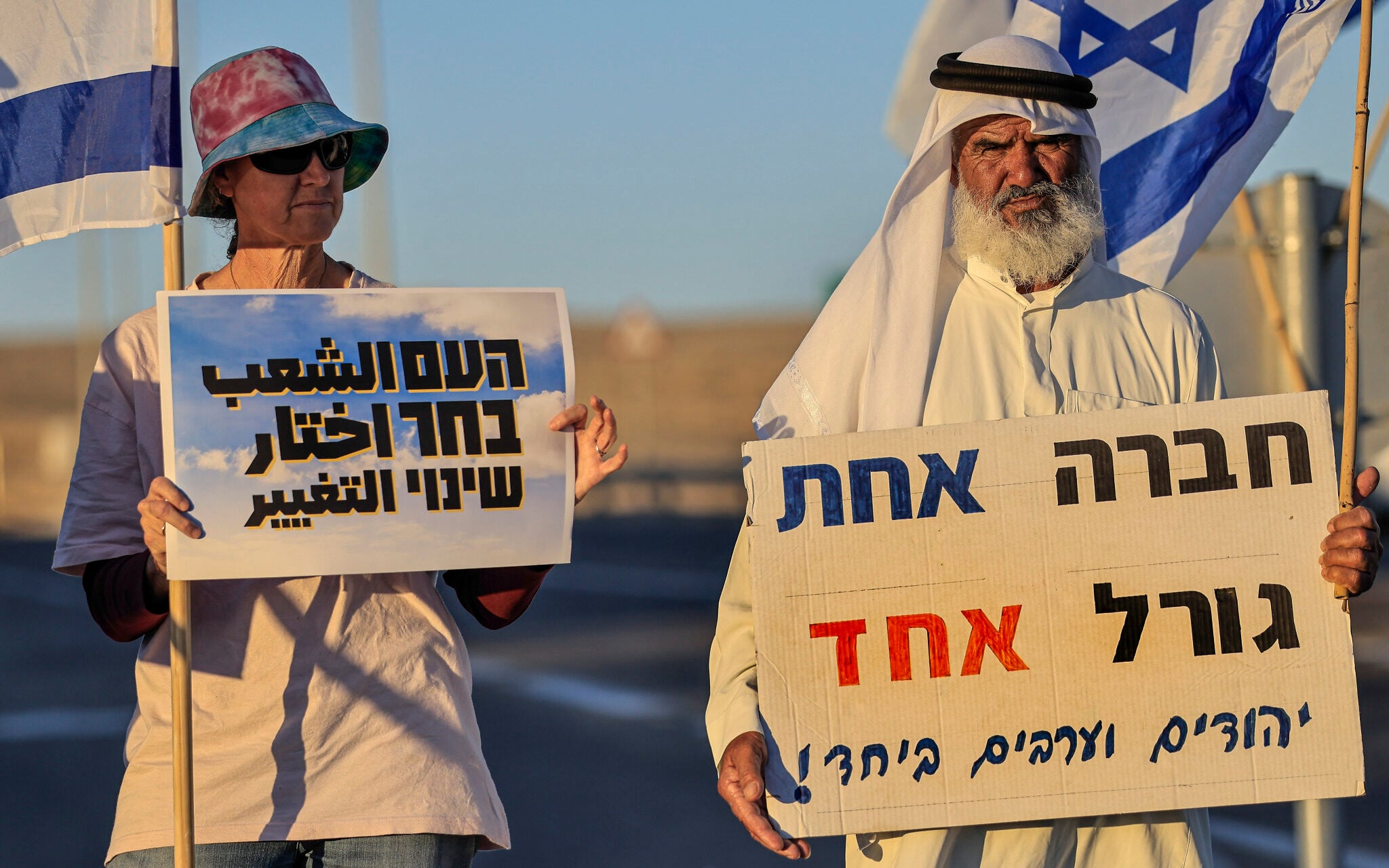
Once part of the Joint List, Ra’am has in recent years struck out on its own to seek a place within government and push for changes from the inside, ending decades in which Arab parties rejected cooperation with Zionist governments and vice versa.
“I hope Ra’am gets a chance,” Yassin said, “because in the eyes of the Arab public, they have shown flexibility.”
Al-Assad believes the party must join the next government to improve conditions for Bedouin residents, even if it means Arab lawmakers will need to make compromises.
He did not specify which issues he thought the party should be willing to concede.
Mayor Ghnayem, meanwhile, called on Eisenkot to “extend a hand” to the Arab parties.

Tiyara, whose job as head of the women’s division at the Ma’an labor organization puts her in contact with Arab women from many different walks of life, described widespread anger over claims that cooperation with Arab parties is illegitimate because they support terrorism. In her view, such accusations effectively delegitimize the votes of Arab citizens.
However, Obeid, who advocates Jewish-Arab partnership, argued that a shift in public discourse was already apparent. She pointed to several presenters on Israeli television channels who had been suspended or left their positions following racist remarks about Arabs, a sign that hateful rhetoric was no longer seen as legitimate.
“Suddenly, there are new people in the Knesset saying they’re not afraid of having an Arab party in the coalition,” she said. “That’s a very big change already.”








The Times of Israel Community.