

Leumi posts record profits for second time this year, fed by borrowing spike, high fees
One quarter after reporting highest earnings ever, lender beats its own record, hitting NIS 3 billion for the first time despite state regulators’ efforts to thin out bonanzas
 Add ToI as a Preferred Source on Google
Sharon Wrobel is a tech reporter for The Times of Israel
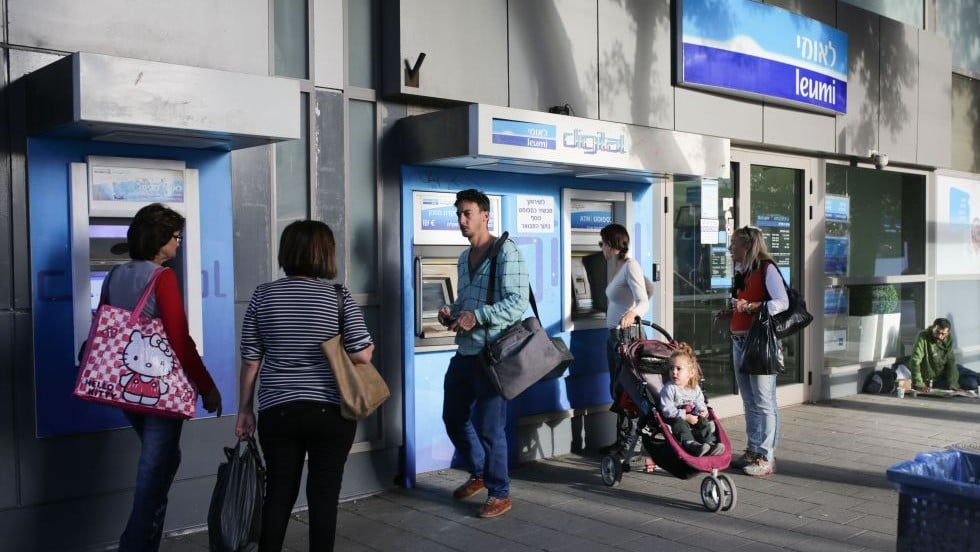
Bank Leumi saw record-setting profits in the third quarter of 2026, the lender said Tuesday, as borrowing by war-torn business owners and households padded the wallet of the country’s second-largest bank with inflated fees, defying efforts to rein in the windfalls.
Leumi’s NIS 3 billion ($979 million) in net income from July to September beat out the previous record of NIS 2.83 billion ($940 million), which was set a quarter earlier by the bank.
The bonanza marked a 10.6 percent rise over the bank’s earnings in same period last year, despite regulators slapping a special surtax on lenders this year and the central bank lowering interest rates in recent months.
Leumi said its profits would have totaled NIS 3.3 billion ($1 billion) had the special surtax not been imposed. Still, it outperformed its chief rival Bank Hapoalim, which posted a quarterly profit of NIS 2.36 billion on Monday, down 14.3% from the NIS 2.76 billion recorded a year earlier. Hapoalim attributed the decline to a one-time charge and lower interest rates.
Israeli banks were ordered to pay a combined NIS 3 billion in extra taxes in 2026 as a penalty for excessive profits the lenders posted after interest rates spiked in 2022. Meanwhile, interest rates on customers’ deposit accounts rose far slower than on mortgages and other loans.
Behind Leumi’s and other banks’ strong financials stand millions of Israelis squeezed by slower demand for business and scarce financing after more than three years of war, whose interest payments, credit fees, and other charges have fueled lenders’ paydays.
“The results prove once again that, in the absence of competition in the banking sector, no interest rate decline or special tax will stop the banks’ profit party,” said Ela Tamir Shlomo, head of financial regulation at grassroots advocacy group Lobby 99. “This reality is a direct result of a concentrated market that allows the banks to charge high interest rates on loans and inflated fees on banking services, while on the tens of billions of shekels the public keeps in current accounts they pay virtually zero interest.”

Israel’s banking system is controlled by the country’s five largest banks – Leumi, Bank Hapoalim, Israel Discount Bank, Mizrahi Tefahot Bank and First International Bank of Israel. The relative lack of competition has allowed the banks to rake in ever-growing profits in recent years and charge high fees with little fear of blowback.
“Israel needs to remove barriers for the entry of new players to drive real competition which will force the banks to change their operating model, and this will inevitably also translate into lower costs charged to the public for banking services, and better interest rates for the public on its money,” said Tamir Shlomo.
The country’s banks have long been accused of generating unseemly profits from loans, while continuing to charge account holders high fees, showering themselves with ever more money even as much of the rest of the country struggles to make ends meet amid the rising cost of living in an economy strained by war.
From mid-2022 to 2023, the Bank of Israel raised interest rates from 0.10% to 4.75%, allowing banks to sharply increase borrowing costs for mortgage and loan holders and boost income from net interest and credit fees. Since then, the central bank has gradually lowered rates to 3.25% to provide some financial relief for households and businesses.
In an apparent attempt to counter public distaste for the bank’s excessive profits, Leumi CEO Hanan Friedman posted a video statement posing the question why the bank “needs to make so much money,” and arguing that a large portion of the bank’s fat earnings also find their way to the Israeli public’s pockets.
“Leumi is a bank with no controlling shareholder, and its shares are held directly by the public or indirectly through pension funds, advanced training funds, and provident funds,” said Friedman, in comments that ignored the complexity of how bank profits are distributed. “In other words, when the bank makes a profit and distributes half of those earnings, the public’s savings benefit as well.”
Leumi said its third quarter profits were fueled by a sharp expansion in corporate lending, mortgages, and credit to businesses and households, alongside cost-cutting measures and AI adoption, which offset a lower interest-rate environment.
Net credit to the public as of September 30, 2026, amounted to NIS 586.1 billion ($180.1 billion), up 18.3% from the NIS 495.4 billion ($152.2 billion) recorded a year ago. Corporate credit totaled NIS 199.2 billion ($61.2 billion) at the end of September, up 25.4% from NIS 158.9 billion ($48.8 billion) during the same period a year ago.

Mortgage lending increased 8.5% to NIS 167.2 billion ($51.4 billion) as of the end of September, up from NIS 154.1 billion ($47.4 billion) year-on-year, Leumi said.
Net interest income, a main source of profit for banks, fell 4.5% to NIS 4.27 billion ($1.31 billion) in the reported quarter from NIS 4.47 billion ($1.37 billion) during the same period in 2025.
Leumi offset the shortfall with revenue generated from commissions and fees paid by customers, which jumped 10.3% to NIS 1.64 billion ($504 million) from NIS 1.49 billion ($458 million) a year earlier. The bank’s operating expenses fell by 4% to NIS 1.5 billion ($461 million) year-over-year.
Leumi also announced that it will pay a dividend of NIS 1.5 billion, out of which NIS 1.2 billion ($369 million) will be distributed to shareholders, and another NIS 300 million ($92 million) will be allocated to a share buyback program.










The Times of Israel Community.