

AG, state attorney to examine transfer of election fraud claims from PMO to police
Baharav-Miara, Aisman tell police to halt internal probe into the affair, after Yashar MK warns of conflict of interest; Likud asks for more time to appeal election results
 Add ToI as a Preferred Source on Google

Attorney General Gali Baharav-Miara and State Attorney Amit Aisman will hold discussions over the manner in which information regarding alleged election fraud was passed from the Prime Minister’s Office to the police on the eve of last month’s election.
Baharav-Miara and Aisman have also asked Israel Police Commissioner Daniel Levy to instruct the police to hold off on its own examination of the affair until it has fully coordinated with the Attorney General’s Office and State Attorney’s Office on the matter, and a decision is reached on the content of the probe.
“All relevant aspects of the issue will be examined,” a spokesperson for the Attorney General’s Office said.
The announcement came after Channel 12’s investigative program Uvda reported on Sunday that an initial complaint against activists for the Ra’am party on election day, October 27, was supplied to police by Prime Minister Benjamin Netanyahu’s chief of staff, Ido Norden, a day before the vote.
The complaint led to the arrest — without a warrant — of three southern Bedouin men over an alleged vote-buying scheme for traditionalist Arab party Ra’am, hours before the polls opened. After the arrests, police issued a statement to the effect that officers had recovered envelopes containing tens of thousands of shekels in cash, which Netanyahu quickly seized on, claiming the vote was being stolen by Arab parties and urging his supporters to go to the polls.
The report said Norden referred police to a source, a former employee in the Prime Minister’s Office, who was identified by the Kan public broadcaster on Monday as former Arab affairs adviser Daniel Greenberg, who Norden said could provide further intelligence to back up his complaint.
Levy announced earlier on Monday that he had ordered an internal review of the Israel Police’s conduct around the election, to be headed by his deputy, Yair Hezroni. The probe would review “all systemic, organizational and command-related aspects of the claims” about the election, Levy said, and Hezroni would present his findings within a week.
However, Yashar MK and former Shin Bet chief Yoram Cohen approached Baharav-Miara to request that she suspend the police investigation into the affair due to concerns over conflict of interest.
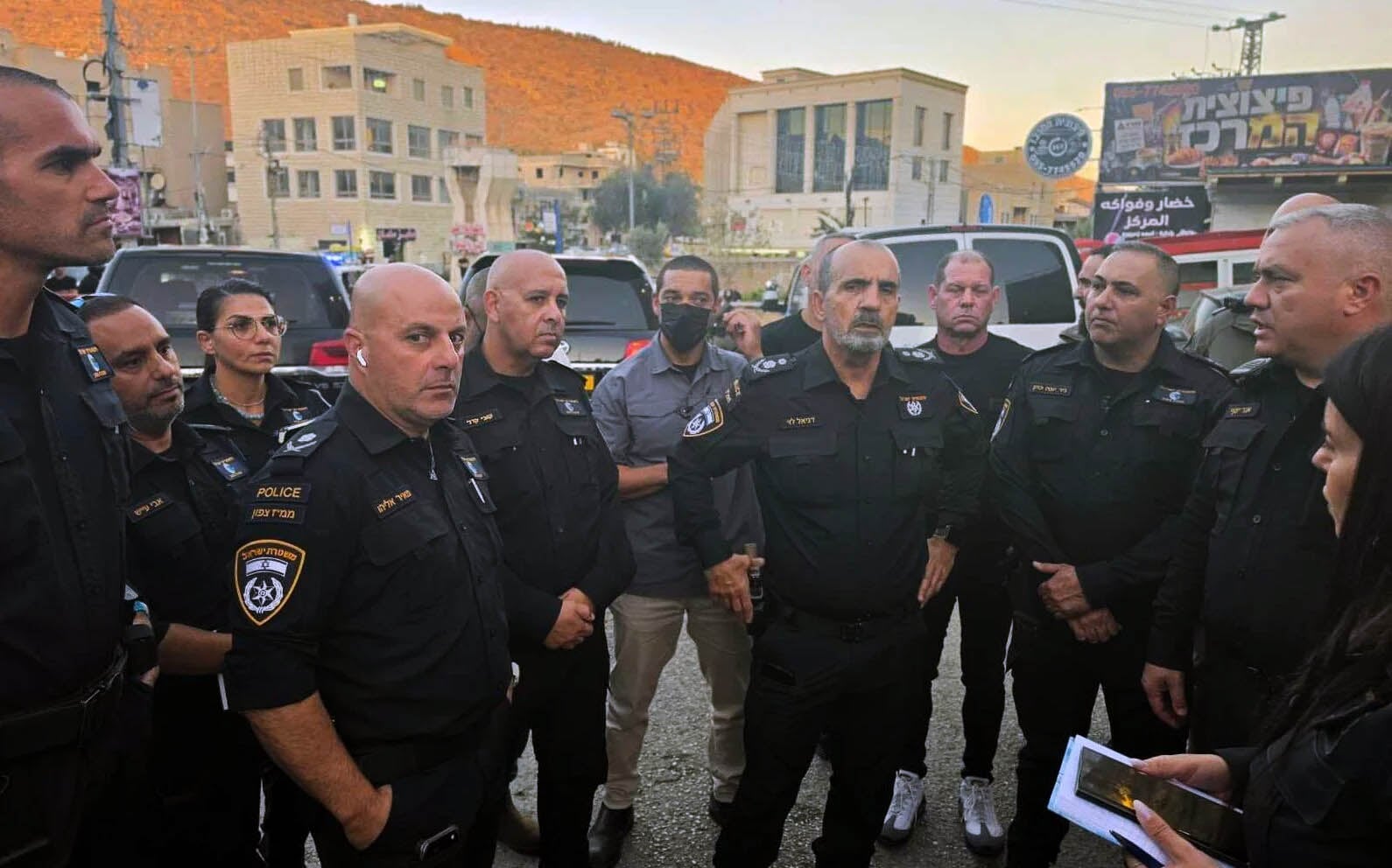
Cohen had originally demanded a police probe into the affair, but said he had changed his mind after Levy revealed that it would be conducted by his direct deputy.
In a letter to the attorney general, Cohen said that because the affair dealt with “suspicions regarding the conduct of senior police officials, including in the office of the commissioner and potentially even the commissioner himself,” a probe led by his office raised “the risk of an inherent conflict of interest.”
He said that such an investigation also had the potential to block a future probe if the affair is revisited, including through the destruction of evidence.
In light of the suggestion that the vote-buying scandal may have been orchestrated by PMO officials, police chief Levy has reportedly assessed that “it is possible the Prime Minister’s Office fooled us,” according to Channel 12 on Monday night.
The report said that Levy has criticized investigators for rushing to make arrests based on information received from Netanyahu’s office the day before the election, saying police should have exercised caution and considered surveillance instead.
Source of tip-off reportedly claimed info came from Arab MK
Even as officials assessed the correct steps to take in the affair, reports on Monday revealed what they said were new details regarding the passage of information from the Prime Minister’s Office to the police.
The Kan public broadcaster reported that former PMO adviser Greenberg claimed in the aftermath of the election that the information that led to the arrests of the three Ra’am activists was given to him by an Arab lawmaker.
He made the claim during a phone call with members of Likud’s election cabinet, according to the report, including Education Minister Yoav Kisch, Communications Minister Shlomo Karhi, and now ex-lawmaker Amit Halevi, several days after the election.
During the phone call, Greenberg updated them on developments in the case against the Ra’am activists, and told them that the purported intelligence that led to their arrests was given to him by a sitting Arab lawmaker, who was not named in the report.
Greenberg allegedly told those on the call that he had tried to tip off the Shin Bet about the intelligence he had received, but that the security agency had not been interested. Instead, he said, Norden had reached out to the police, who then contacted him.
Hours later, 14 police officers raided the homes of Dr. Saef Abu Reash, Hussein al-Masoudin and Ibrahim al-Garibi.
Abu Reash was held in detention for six days, despite the search of his home coming up empty, before the Beersheba Magistrate’s Court ordered his unconditional release, slamming investigators’ conduct.

Al-Masoudin and al-Garibi were released days later, also without any restrictive conditions or charges. Both men denied the bribery allegations and said that money police found during a dawn search was intended for charitable causes.
Greenberg being identified as the intelligence source behind the arrests contradicts Norden’s account of how the affair unfolded. On Sunday, Kan aired recordings of an interview with Norden after the election, in which he claimed that he contacted the police about the vote-buying allegations after “a citizen” whom he did not know “approached me with some information.”
A Monday Ynet report suggested that not all police officials went along willingly with the arrests of the three Ra’am activists.
According to the outlet, one intelligence officer within the Israel Police’s Southern District refused to carry out the arrests without first meeting the source behind the tip-off.
Citing sources familiar with the matter, the report said that the Southern District intelligence division received a summary of the intelligence and a request to carry out the arrests. The district’s intelligence officer resisted, saying he wished to confirm the reliability of the source.
He was overruled, however, and the order to arrest the men was given.
His push to first verify the intelligence himself was the standard expected procedure when it comes to tip-offs given to the police, a source told Ynet, raising questions about the police’s decision-making process and the manner in which the arrests were carried out.
Likud asks for more time to appeal election results
Separately on Monday, Netanyahu’s Likud party filed a request with the Jerusalem District Court to issue a seven-day extension for filing an appeal against the results of the October 27 election, claiming that the scope of the appeal is so large that more time is needed to review the information and present it in the appeal.
The Likud party has challenged the election results since election day itself, despite the Central Elections Committee certifying the results, and its chairman, Deputy Supreme Court President Noam Sohlberg, strongly criticizing those who have cast doubt on the results.
The request filed by Likud attorney Ilan Bombach alleged that there were “defects” at “hundreds” of polling stations around the country, citing 1,150 complaints received by the Likud party of “severe” election violations.

Bombach also complained that a review of voting materials from 190 polling stations conducted by the Central Elections Committee (CEC) at the request of the Likud party was only completed on Sunday, and that the Likud’s legal team had to go over large amounts of information resulting from that review in order to include it in its appeal.
By law, parties wishing to appeal the results of the election have until Wednesday, November 18, to do so.
The request also noted that an investigation into alleged foreign interference in the election by the Shin Bet and other agencies is yet to conclude, saying the results of the investigation, which has seemingly fizzled out, are relevant to the appeal.
Bombach therefore requested a seven-day extension, maintaining that “the unprecedented scope of the appeal, which is expected to include violations at hundreds of ballot boxes in dozens of towns and the ongoing Shin Bet investigation, justifies such a step.”
Sohlberg has stated repeatedly that even if the allegations of foreign influence on the election are proven correct, the extent of wrongdoing would not be enough to impact the results.
On Thursday, Sohlberg issued a statement saying that information from the foreign interference investigation had yet to yield evidence of wrongdoing, and that such evidence may never be found.
Baharav-Miara has said that that investigation, as well as the probe into alleged vote-buying, would “not even remotely” influence the outcome of last month’s vote.





The Times of Israel Community.