

No progress reported in Yashar-Likud unity talks; Netanyahu said open to excluding Ben Gvir
Parallel negotiations between Eisenkot-led bloc and UTJ said to advance significantly, though Haredi party chief denies this, and Shas remains loyal to PM; Liberman said opposed to talks with Likud
 Add ToI as a Preferred Source on Google
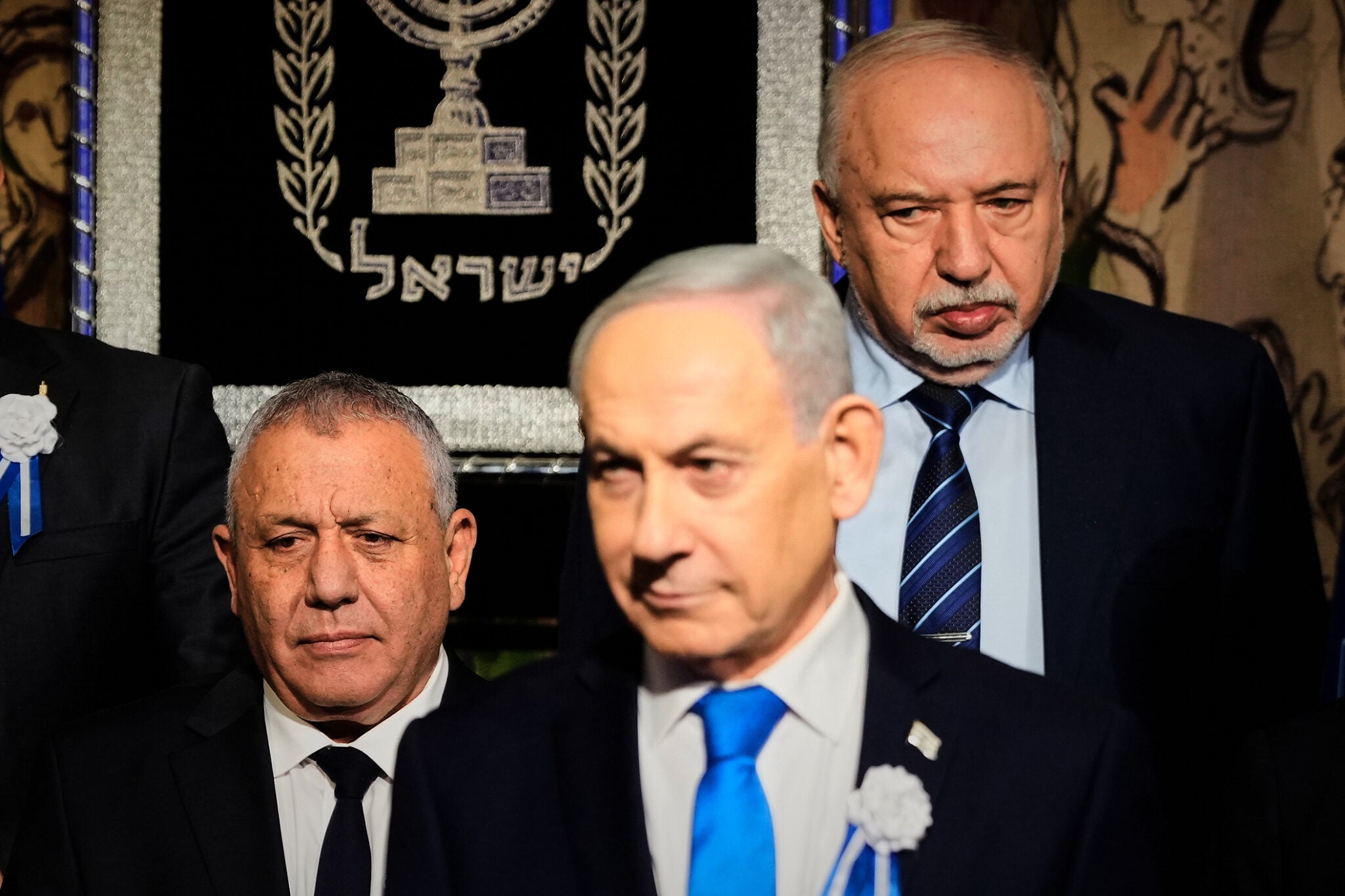
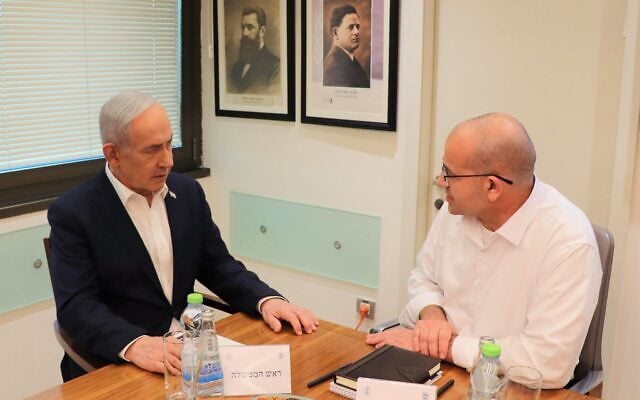
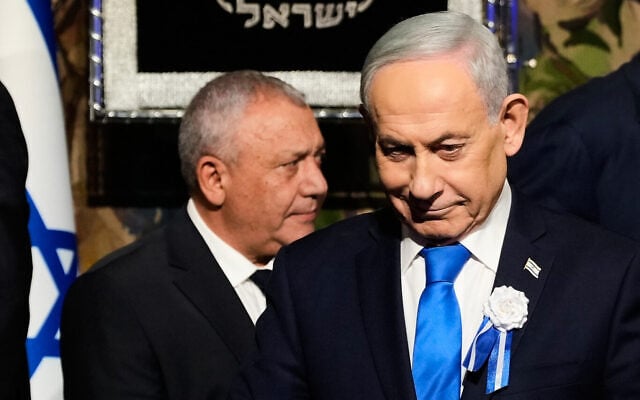
While the atmosphere was positive around Sunday’s meeting between representatives from Gadi Eisenkot’s Yashar party and Prime Minister Benjamin Netanyahu’s Likud party, no progress was made toward forming a unity government, according to Hebrew media, though one report said Netanyahu associates have voiced a willingness to exclude Itamar Ben Gvir’s far-right Otzma Yehudit from a prospective big-tent coalition.
While Naftali Bennett’s B’Yachad party took part in the meeting and was said to prefer a government with Likud over one with the ultra-Orthodox or Arab-led parties, other members of Eisenkot’s bloc are opposed to the negotiations, which are currently deadlocked over Likud’s and Yashar’s refusal to give the premiership to the other side.
Meanwhile, significant progress was reportedly made in parallel negotiations between Eisenkot’s bloc and the ultra-Orthodox United Torah Judaism (UTJ) party toward forming their own coalition alliance, though UTJ denied the reports, and fellow Haredi party Shas is signaling an unwillingness to part ways with Likud.
Negotiating teams from Yashar and Likud met for about an hour on Sunday and then issued a brief joint statement saying the meeting had been held in a “businesslike atmosphere,” and that talks between the sides would continue.
Reports said Likud representatives asked Yashar to hold off on tapping its MK Matan Kahana as Knesset speaker, but Yashar ruled that out and said the vote on replacing current speaker Amir Ohana would take place on Tuesday.
“Eisenkot is determined to create a government in any scenario. You ought to internalize this,” senior Yashar MK Chili Tropper told Likud representatives, according to Channel 12 news.
A Yashar source told the outlet that Likud does not seem to grasp that it “lost” the election.
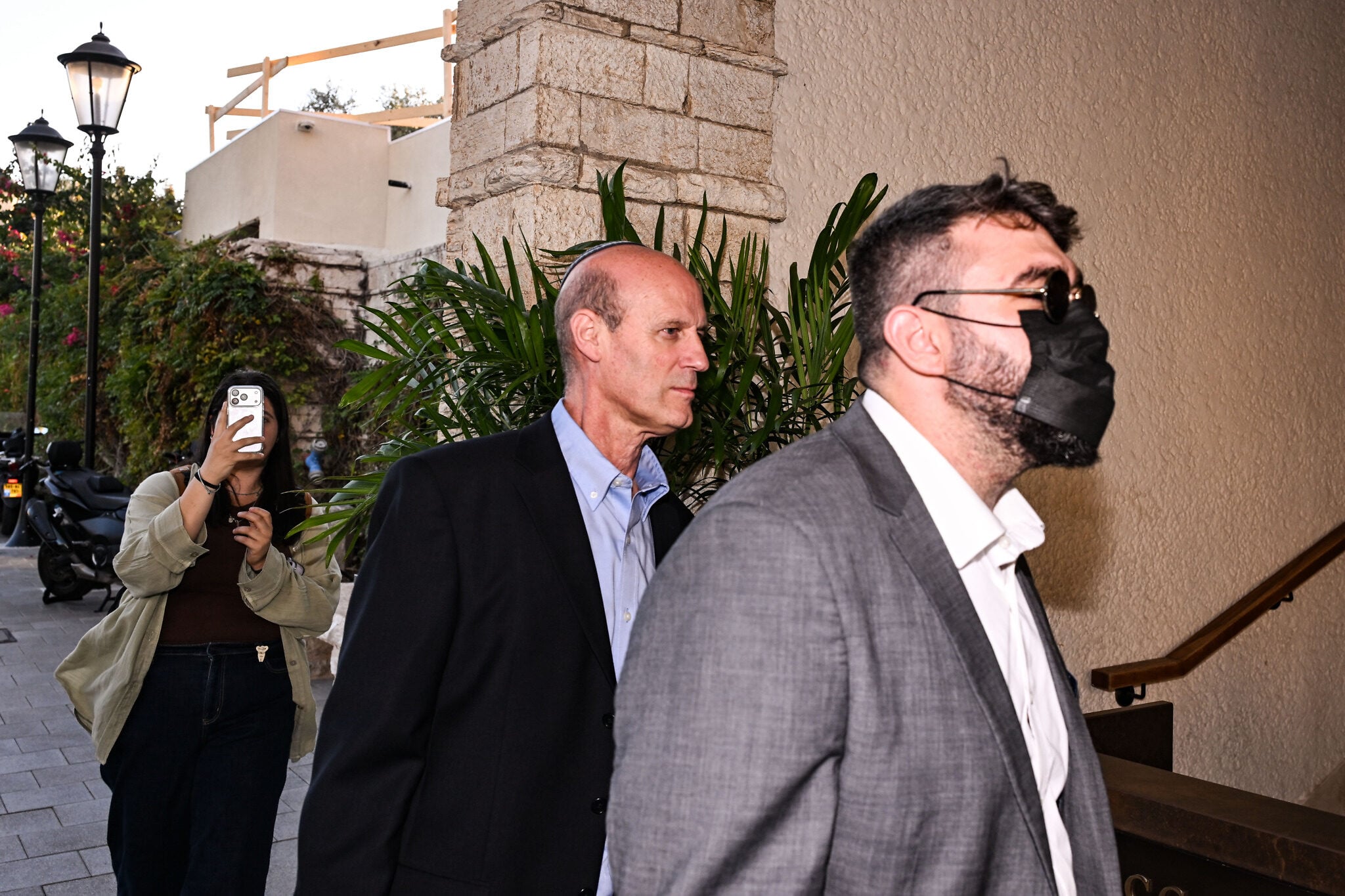
The Kan public broadcaster reported that Likud sources got the impression that the Yashar and B’Yachad representatives only attended the meeting to “check a box” and read out pre-prepared remarks “that don’t mean anything,” and are not genuinely interested in forming a unity government.
Likud told Yashar’s people that none of the parties from Netanyahu’s bloc should be left out of any unity coalition, with the Ynet news site reporting that Likud stressed that it was not ruling out the left-wing Democrats party, and that Ben Gvir’s Otzma Yehudit ought not to be excluded either.
But the Israel Hayom outlet reported that figures close to Netanyahu have nevertheless conveyed to Eisenkot that Likud will not insist on including Otzma Yehudit in a potential unity government, adding that the United States has demanded that it be left out. Publicly, Netanyahu has so far insisted on the inclusion of all his Haredi and ultranationalist allies in any future government.
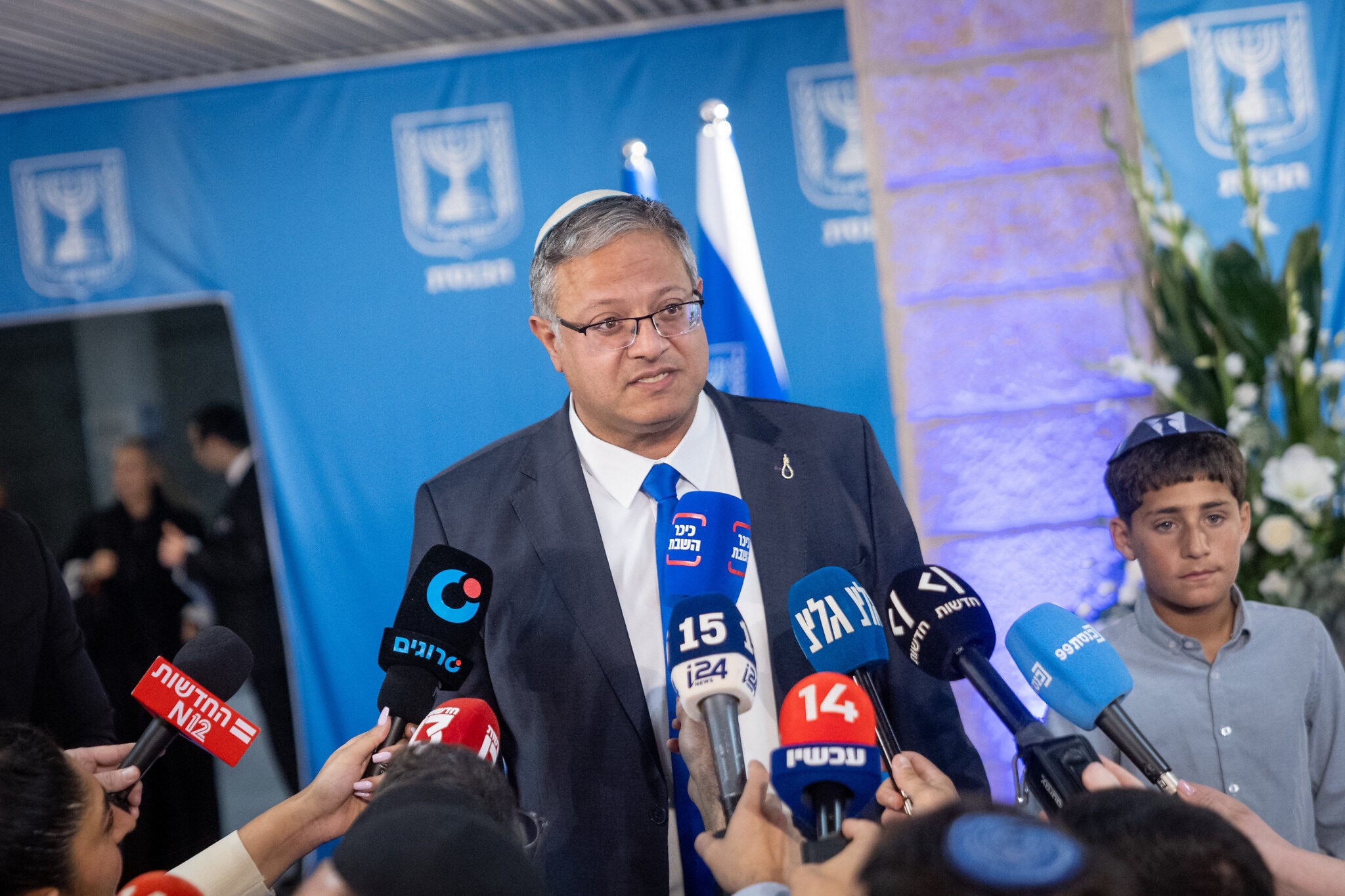
While The Democrats have openly opposed the unity talks with Likud, Channel 13 reported Sunday that Yisrael Beytenu chief Avigdor Liberman similarly opposed the meeting with Likud representatives, and told Eisenkot that it was a trap laid by Netanyahu.
“The most important goal is to put an end to the Netanyahu era,” Liberman reportedly said, “and we have no interest in giving him artificial respiration.”
“This isn’t a unity government; this is a trap for Eisenkot,” he continued. “We’d be happy to cooperate with Likud after the Netanyahu era.”
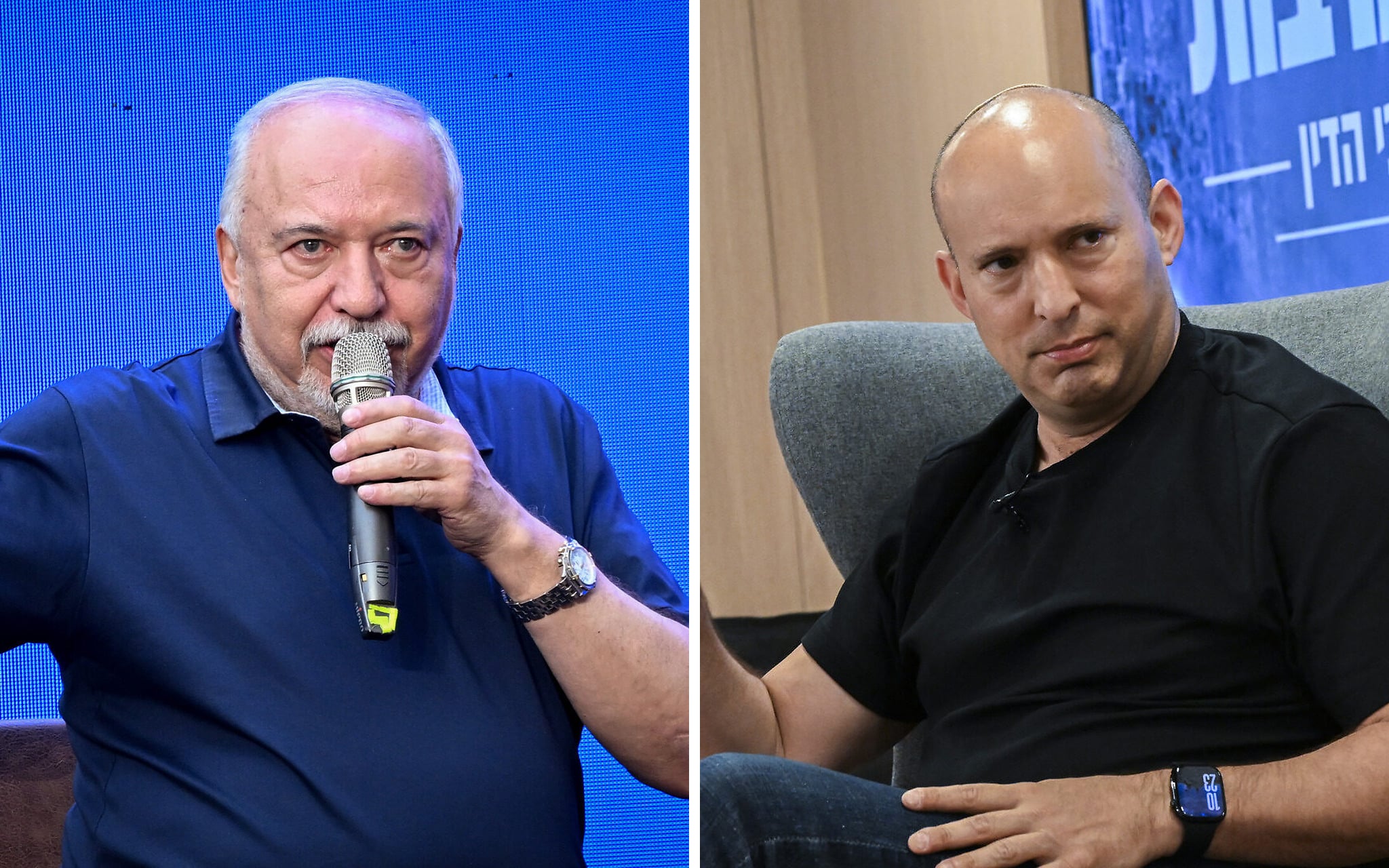
B’Yachad leader Bennett, on the other hand, wants the Eisenkot-led bloc to more seriously explore the possibility of a unity government with Netanyahu, though with the insistence that Eisenkot should go first as premier in any potential rotation agreement, Channel 12 reported.
According to the report, Bennett prefers that option over an alliance with Arab-majority or Haredi parties, but will not join Likud without his bloc partners.
Liberman has also publicly opposed the option of forming a government propped up by the Arab-led Ra’am and Joint List parties. He has backed the option of partnering with the ultra-Orthodox parties and compromising on his longstanding demand for a sweeping law mandating the enlistment of Haredi men.
Eisenkot has repeatedly insisted that Netanyahu is unfit for office, poses a danger to the country and must leave politics. Even the prospect of Netanyahu serving under Eisenkot as a minister would represent a dramatic departure from the latter’s previous position, though it is highly unlikely that Netanyahu would agree to serve in a government headed by anyone but himself.
The talks may therefore be aimed less at reaching an agreement with Netanyahu, who is unlikely to accept Eisenkot’s terms, than at demonstrating that Eisenkot has made a genuine effort to form a unity government before turning to other options, including a coalition with the ultra-Orthodox parties or a minority government supported by Arab-majority parties Ra’am and the Joint List.
Significant progress reported in talks with UTJ
Meanwhile, a senior source in the UTJ party was cited Sunday by Channel 12 as saying the party and Eisenkot’s bloc have been in daily contact and making significant progress in coalition-building negotiations, while Shas fears UTJ could help form a government without securing guarantees that a deal on ultra-Orthodox military service will be honored.
“Contacts are taking place beneath the surface on a daily basis. There is real progress in the talks, much more than it appears from the outside,” the UTJ official involved in the talks said. Similar details appeared in a Sunday report by Haaretz.
Meetings between UTJ chairman Yaakov Asher and Eisenkot, and another between Asher and Liberman, have also recently been reported.
Shas’s main concern, Channel 12 reported, is that UTJ could enable an Eisenkot-led government to form through its abstention or support, but then be unable to ensure the bloc honors an agreement on the Haredi draft law.
Behind closed doors, Shas chairman Aryeh Deri reportedly said UTJ has no guarantees that the legislation will pass.
“The Knesset’s legal adviser has already said that the draft law cannot be passed before a government is sworn in,” Deri was quoted as saying. “It’s a dangerous step to establish a government with the Haredi votes, only for us to ultimately be thrown out without the status of yeshiva students being settled.”

He stressed that Shas will not negotiate with Eisenkot’s bloc, citing a ruling by the party’s Council of Torah Sages: “We are going with Netanyahu, and that’s what will happen.”
UTJ chairman Asher later denied the details.
“Reports of ‘dramatic’ progress in the talks and of ‘exchanges of [agreement] drafts’ with us are entirely baseless,” Asher said in comments carried by Hebrew media. “Advice coming from other parties is also based on the same false and biased reports,” he added, seemingly in reference to Shas’s reported opposition to UTJ’s progress with Eisenkot’s bloc.
“Talks and meetings with figures in the political system are a natural part of this period, and we do not intend to confirm or deny the repeated questions every day about this or that meeting,” Asher said.
UTJ has reportedly formed a negotiating team representing both factions of the party to conduct talks with other parties and both blocs. Until it begins formal negotiations, “all the conversations are just feelers,” a party source said, adding that talks have covered “general principles” and “did not go into details.”




The Times of Israel Community.