

Alaska elects first Democrat governor since 1998, in another blue wave win
Former state lawmaker Jonathan Kreiss-Tomkins beats out 3 GOP candidates, flipping another state’s top office; Israel and Iran war were not key issues in race
 Add ToI as a Preferred Source on Google

JUNEAU, Alaska (AP) — Alaska voters have elected a Democrat for governor for the first time since 1998, part of a national midterm elections wave that gave the party sweeping wins in state governments across the country.
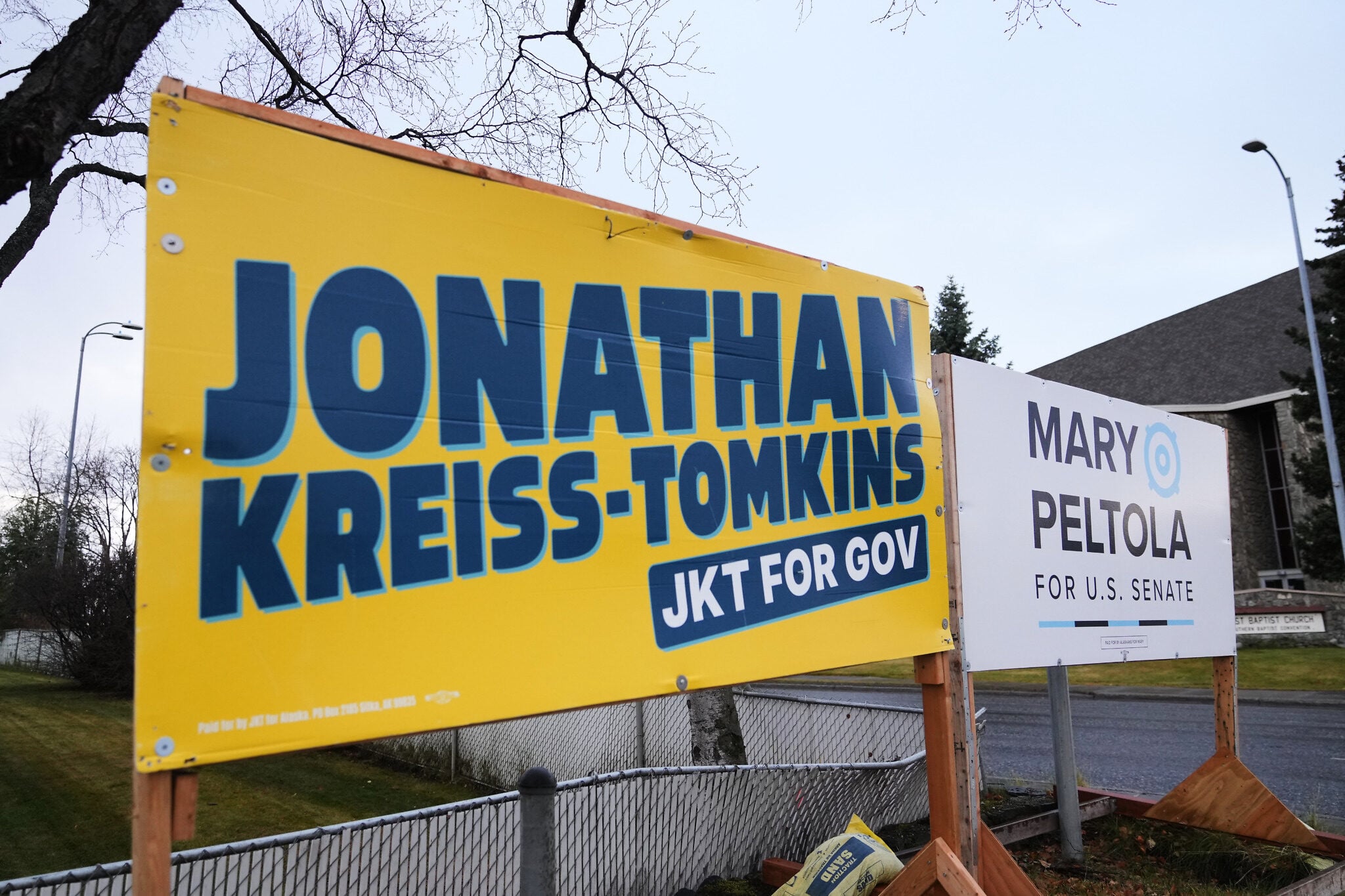
Former state lawmaker Jonathan Kreiss-Tomkins defeated three Republicans, including one endorsed by US President Donald Trump. His victory means Democrats will control the governor’s office in 30 states, including several they flipped after years of Republican control in places such as Iowa, Georgia, Ohio and Texas.
Kreiss-Tomkins, often referred to as JKT, completed a political comeback three years after leaving the state House. He traveled throughout Alaska to build his coalition and focused on affordability, advocated for full funding of public schools and called for all oil and gas producers to pay corporate income tax. He also sought a moratorium on new data centers until state lawmakers pass regulations for their development.
He said Alaska had become “broken” under eight years of outgoing Republican Gov. Mike Dunleavy and needed a change. He cited among other issues a state ferry system that he said has been left in shambles, with routes to many communities cut drastically.
The ferry is a key mode of transportation for southeast Alaska communities not connected by roads, some of which also have limited air service.
Kreiss-Tomkins, 37, emphasized a willingness to work across party lines and said he wanted a Cabinet with Republicans, Democrats and independents.
“If they’re competent, if they’re service-minded, if they’re entrepreneurial, if they’re problem-solvers, you’re on the team. Game on,” he said during a candidate forum last month. “Let’s go, and let’s get Alaska back on track.”
While Israel and the war in Iran were major election talking points in other races across the US, they were largely left out of the Alaska election, with Kreiss-Tomkins making little mention of them in his campaign.
Republican US Sen. Lisa Murkowski, who has at times been at odds with her party, including Trump, endorsed Kreiss-Tomkins a week before the election. She said Kreiss-Tomkins “understands that governing requires listening to people with different perspectives and finding common ground to solve the problems all of us face.”
Three former governors, including Democrat Tony Knowles, independent Bill Walker and Republican Frank Murkowski, the senator’s father, also endorsed him.
In a statement declaring victory Friday, Kreiss-Tomkins said voters wanted change and “a government that works across party lines to move Alaska forward. Our administration will not waste a single day getting to work to solve problems for Alaska.” He said his campaign had more than 10,000 donors.
His campaign did not immediately respond to requests for comment after The Associated Press called the race.
He defeated Republicans Bernadette Wilson, Dave Bronson and Treg Taylor. Trump had endorsed Wilson, a business owner, and criticized the other Republican candidates for staying in the race. Bronson is a former mayor of Anchorage, Alaska’s largest city, while Taylor was a state attorney general under Dunleavy.

Bronson congratulated Kreiss-Tomkins on social media and wished him success. A message seeking comment from Wilson’s campaign was not immediately returned.
Many Republicans saw ranking as their party’s best shot of retaining the governor’s seat. It was a message that conflicted with that of Trump, who has consistently complained about Alaska’s unusual voting method, including during a rally in Alaska in October.
Kreiss-Tomkins finished first in August’s open primary, followed by a second Democrat, Tom Begich, who withdrew from the race. Begich’s campaign at the time said it had concluded that the “strongest path to victory is to bring Democratic voters, donors and resources together behind one candidate.” Wilson finished third in the primary.
Kreiss-Tomkins said compromise “is a virtue, not a dirty word,” and said he saw the mission of the new governor as working with lawmakers to resolve longstanding problems in the state.
The state’s last Democratic governor, Tony Knowles, left office in 2002 after serving back-to-back terms. Walker served from 2014 to 2018.
Kreiss-Tomkins will be sworn in Dec. 7. His lieutenant governor is Zac Johnson, an independent.
Times of Israel staff contributed to this report.





The Times of Israel Community.