

Anti-Zionist academic Judith Butler: Don’t count on the ‘blue wave’ for big changes
Far-left Jewish scholar says ‘Zionist centrist Democrats’ unlikely to end alleged repression of anti-Zionism in academia
 Add ToI as a Preferred Source on Google
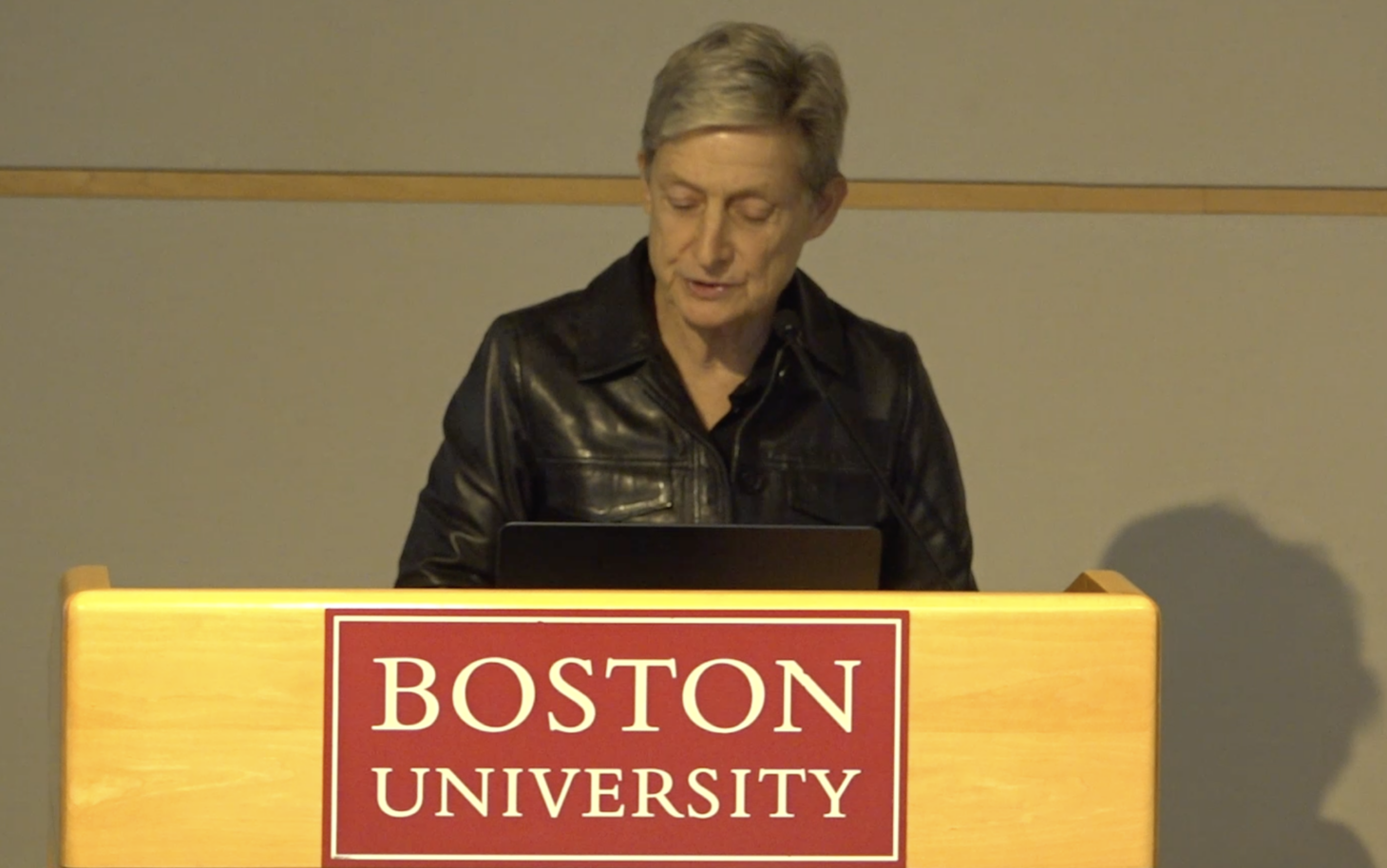
Prominent Jewish and anti-Zionist academic Judith Butler said Thursday that the overwhelming Democratic Party victories in last week’s midterms would not end what she characterized as the repression of anti-Zionist ideology.
“You may be risking your education, your job, especially if you are a precarious worker, your professional standing, your mobility, your privacy,” for supporting anti-Zionism, Butler said at a Boston University symposium.
“We cannot begin a discussion of anti-Zionism without a discussion of academic freedom, and in my view, we should not assume that the ‘blue wave,’ which includes a vast number of Zionist centrist Democrats, will quickly alter the situation,” Butler said.
“The blue wave feels good,” Butler added, but “there is reason to think that it can turn its back on electoral results.”
Butler made the comments during a keynote speech at a “Jewish Anti-Zionism” conference and book launch marking the release of “Jewish Anti-Zionism: A Historical Anthology,” a collection edited by Shaul Magid and Zev Mishell.
The Democratic Party has become increasingly hostile toward Prime Minister Benjamin Netanyahu’s government, and several anti-Zionist politicians won elections to Congress last week.
Butler portrayed anti-Zionism as a persecuted ideology, saying the US government had labeled “those who oppose fascism and Zionism” as “domestic terrorists.”

Anti-Zionist ideology is widespread in academia, according to a 2025 Columbia University report that found its Middle East studies lacked faculty who were not “explicitly anti-Zionist.”
Butler portrayed Zionism as inherently “eliminationist” and genocidal toward Palestinians, and rejected a connection between antisemitism and anti-Zionism, saying that Zionism’s “systemic racism” was opposed to “Jewish values.”
The speech accused Israelis of “sadistic and murderous exhilaration” in Gaza and perpetrating an ongoing “Nakba,” the Palestinian term meaning “catastrophe” that refers to Israel’s founding in 1948.
“The right of return for Palestinians grows stronger with every dispossession. The right of return does not just belong to Palestinians who suffered the Nakba in ’48,” Butler said. “The Nakba has never stopped happening.”
Butler rejected a Jewish anti-Zionist focus that makes “ourselves the central actors of the scene,” characterizing the view as “a Zionist effect,” and rejected a binational solution to the conflict without prior “decolonization.”
“A settled population should not be forced to accept new immigrants without their consent. Palestine should be constituted as a self-governing state with an Arab majority, but with full rights for Jewish people,” Butler said, avoiding any criticism of Palestinian leaders.
Butler is a hardline anti-Zionist and gender theorist who has called the Hamas and Hezbollah terrorist groups “social movements that are progressive.”
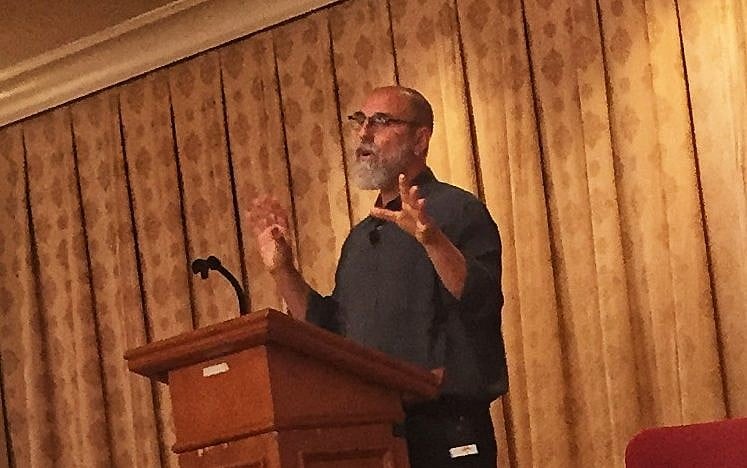
Magid, in a speech to the symposium, argued that the history of Jewish anti-Zionism has been “intentionally erased,” and that the goal of his new book was to “erase the erasure.”
He added that Hamas’s October 7, 2023, onslaught in southern Israel and ensuing war in Gaza had caused “long-buried anti-Zionist ideas” to resurface.
He said that “non-Zionism,” or not taking a stance on Israel, was not a practical position for Jews.
“I think Zionism has become so ubiquitous in the Jewish psyche that there really isn’t any way to live any kind of engaged Jewish life without somehow having an opinion about Zionism,” Magid said.









The Times of Israel Community.