

After fiery debate, Knesset sets up temporary committees amid coalition-building quagmire
Opposition bloc overrules Likud in makeup of powerful Arrangements Committee; Liberman to chair Foreign Affairs and Defense panel; parties submit dueling bills on IDF service
 Add ToI as a Preferred Source on Google
Ariela Karmel is a political correspondent at The Times of Israel. She previously reported for Calcalist and Haaretz. She holds an MA in Middle Eastern and African History from Tel Aviv University and a BA in Political Science from the University of British Columbia.
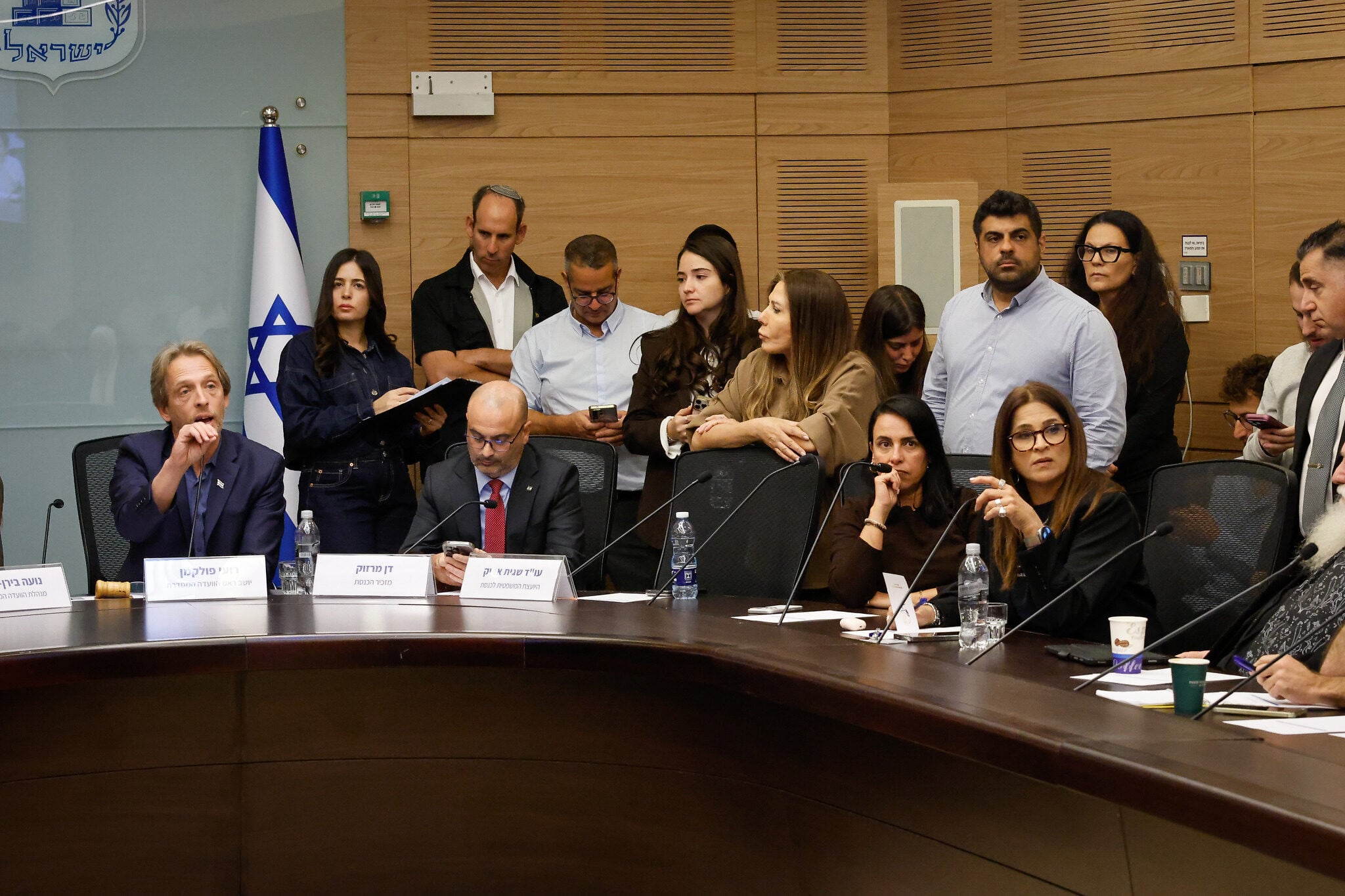
Members of the Knesset voted 63-50 on Wednesday to approve the makeup of the powerful Arrangements Committee, enabling the anti-Netanyahu bloc to take control of the parliamentary agenda, including setting up the influential Finance and Foreign Affairs and Defense committees.
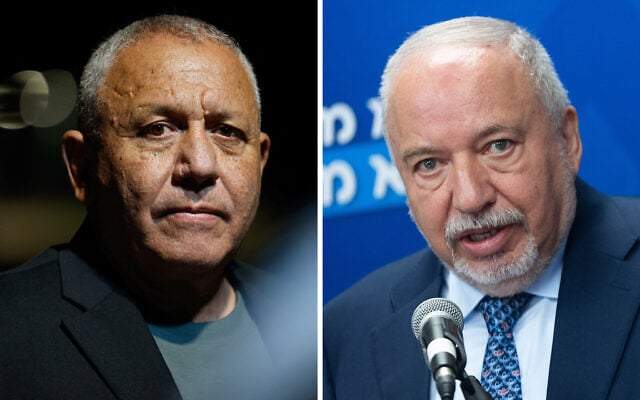
MKs approved a 22-member Arrangements Committee proposed by Yashar MK Roy Folkman, who will also chair the panel. The approved makeup gave nine seats to the bloc led by Yashar’s Gadi Eisenkot, nine to the bloc supporting Prime Minister Benjamin Netanyahu, and four to Arab-led parties the Joint List and Ra’am.
The Arrangements Committee wields considerable authority while the Knesset’s permanent committees are being formed. It determines their composition for lawmakers’ approval and can establish temporary Finance and Foreign Affairs and Defense committees. Until the House Committee is selected, it also handles parliamentary procedure and Knesset business, and can appoint temporary deputy speakers.
Following the establishment of the Arrangements Committee, the panel moved ahead with tapping Yisrael Beytenu party chief MK Avigdor Liberman to take the helm of the consequential Foreign Affairs and Defense Committee, and B’Yachad MK Liran Avisar Ben Horin as chair of the Finance Committee. Both committees will comprise 17 members, with their establishment and leadership approved 13-9 following a stormy debate.
Factions represented on the Arrangements Committee received one seat for every five MKs they have in the Knesset. As a result, Likud has five seats, Yashar four, B’Yachad, the Joint List, the Democrats and Ra’am two each, and Yisrael Beytenu, Otzma Yehudit, United Torah Judaism, Shas and Religious Zionism each get one.
Likud had attempted to allocate one seat on the committee to every four MKs, which would have handed the pro-Netanyahu bloc 15 seats, the anti-Netanyahu bloc 12 and the Arab factions four, but this was rejected.
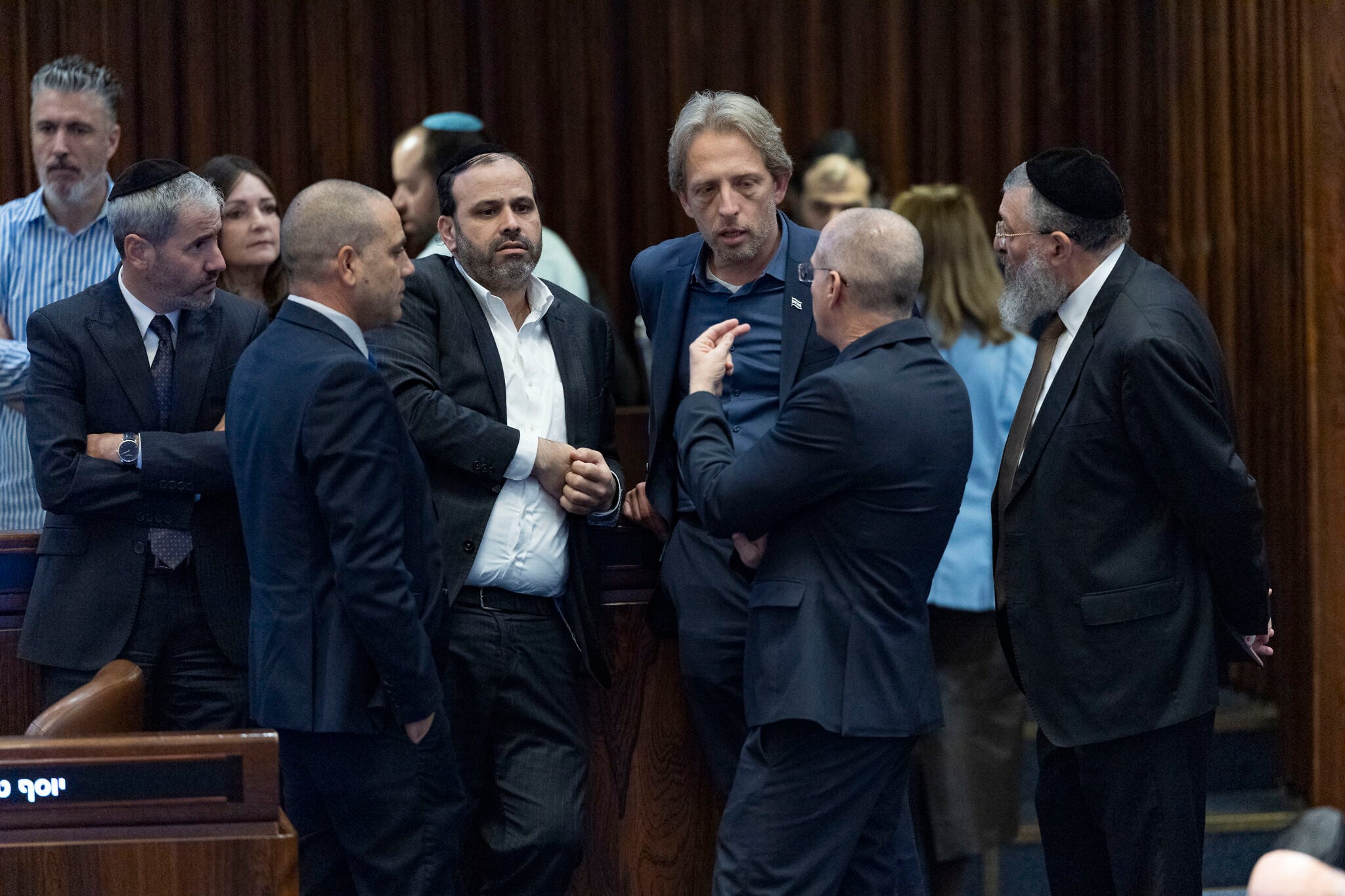
“It was a fair proposal, but they refused because they are trying to conceal their cooperation with terror supporters in the Knesset,” Likud MK Ofir Katz, who headed the effort, said in the plenum.
The Arrangements Committee’s inaugural meeting quickly descended into chaos on Wednesday afternoon, as lawmakers from Likud and its allied parties repeatedly disrupted proceedings, hurled insults at political opponents and accused Arab MKs of supporting terrorism, even as they continued to echo Netanyahu’s call for a “unity” government.
The confrontations erupted almost immediately after chairman Folkman opened the floor to lawmakers, when Democrats MK Naama Lazimi referred to Likud MK Erez Tadmor as a “weapons thief.” Tadmor was convicted of stealing weapons and military equipment during his military service and sentenced to 45 days in prison.
Tadmor then called Lazimi a “hen,” prompting accusations of misogyny, before declaring: “We are extending a hand to you in unity, and you are joining forces with supporters of terrorism.”
He also called Lazimi a “road blocker,” apparently referring to her participation in anti-government protests, prompting her to respond sarcastically: “There’s your unity.”
Otzma Yehudit MK Tally Gotliv was eventually removed from the meeting following repeated interruptions, continuing to shout as she was escorted out, with Likud MK Almog Cohen also booted.
The panel nevertheless moved ahead in setting up the makeup of committees.
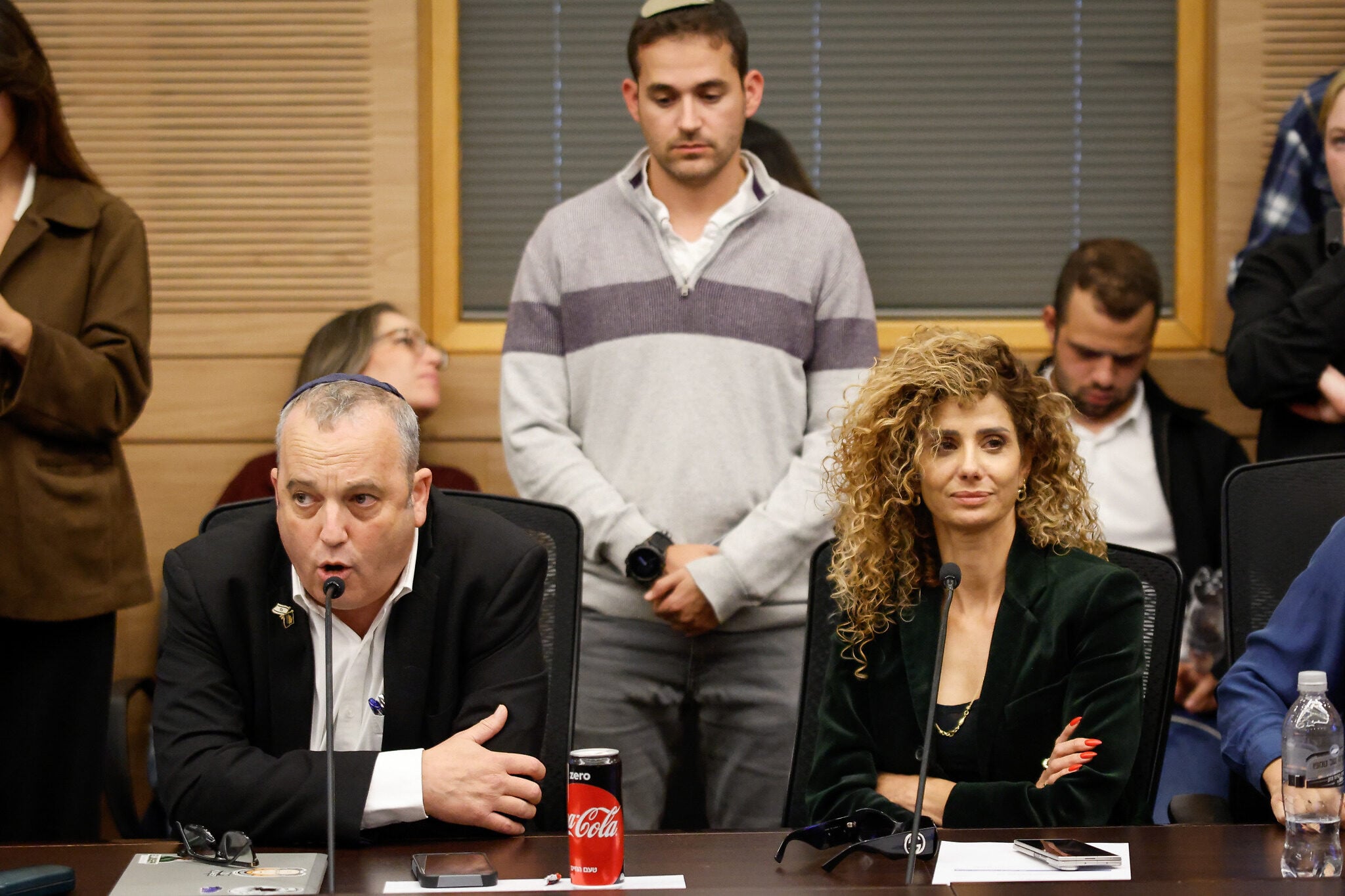
The appointment of Avisar Ben Horin to control the country’s purse strings faced criticism over potential conflicts of interest due to the identity of her husband, Itay Ben Horin, a partner in the influential public relations firm Ben Horin Alexandrovich.
Under the Knesset’s ethics rules, a lawmaker must recuse themselves from discussions in which they or their spouse has a personal interest.
Addressing the concerns during the meeting, Avisar Ben Horin said that she was willing to subject herself to “the strictest rules,” adding: “If there is a matter that I cannot deal with, I will not deal with it, and I will appoint someone else in my stead.”
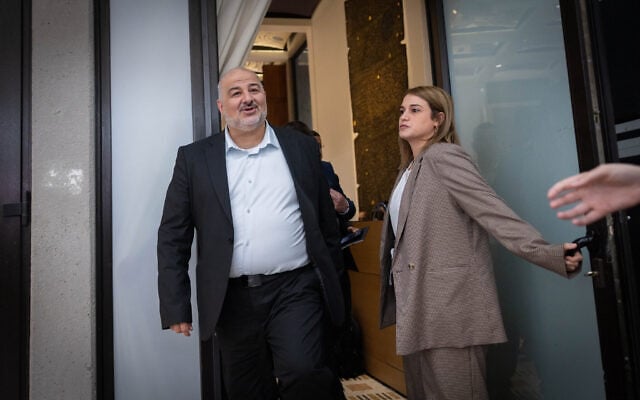
Meanwhile, Ra’am No. 2 Yoav Segalovitz appeared set to become the first representative of an Arab-majority party to serve on the Foreign Affairs and Defense Committee, according to Hebrew media reports.
Segalovitz, who is Jewish and previously was a senior police officer and a deputy public security minister for Yair Lapid’s Yesh Atid party, will serve on the powerful committee that oversees the defense and security establishment.
New B’Yachad MKs Noam Tibon and Yonatan Shalev are also reportedly representing their faction on the committee, headed by Liberman.
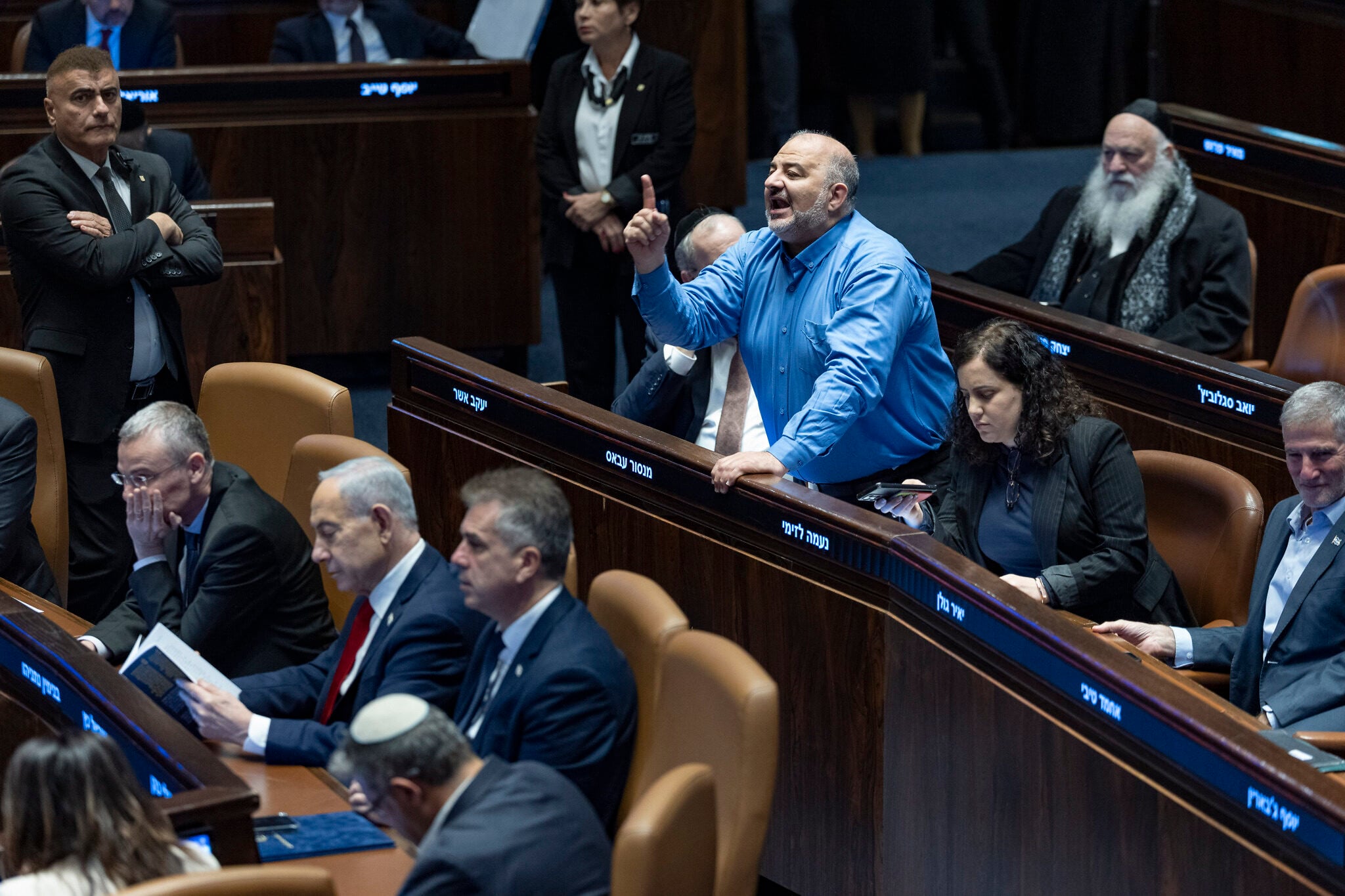
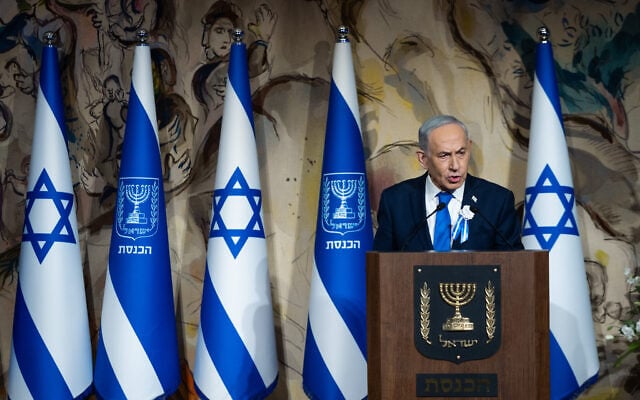
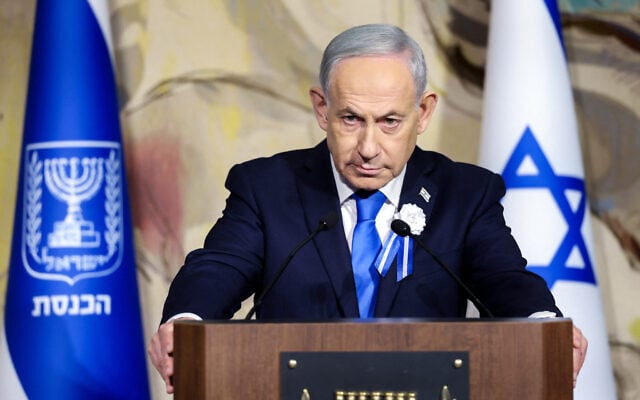
Despite the heated rhetoric and clashes between the two parliamentary blocs throughout the day, Netanyahu insisted Wednesday afternoon that unity was still possible, a day after he fulminated against attempts to form a government without him and accused Arab lawmakers of supporting terrorism and seeking Israel’s destruction.
“Yesterday I said why a national unity government is necessary,” he told reporters in the halls of the Knesset. “Today I want to say why it’s possible.”
Netanyahu adopted an affable tone, in contrast to the pique he expressed in Tuesday’s speech after the Knesset was sworn in.
“It is possible because this nation knows how to come together at moments of truth,” said Netanyahu, “and we are facing a moment of truth.”
“This is the call of the hour, this is the will of the majority of the nation,” he added. “I can’t tell you everything that I know, but there are enough people who know what massive challenges and what massive opportunities we have.”
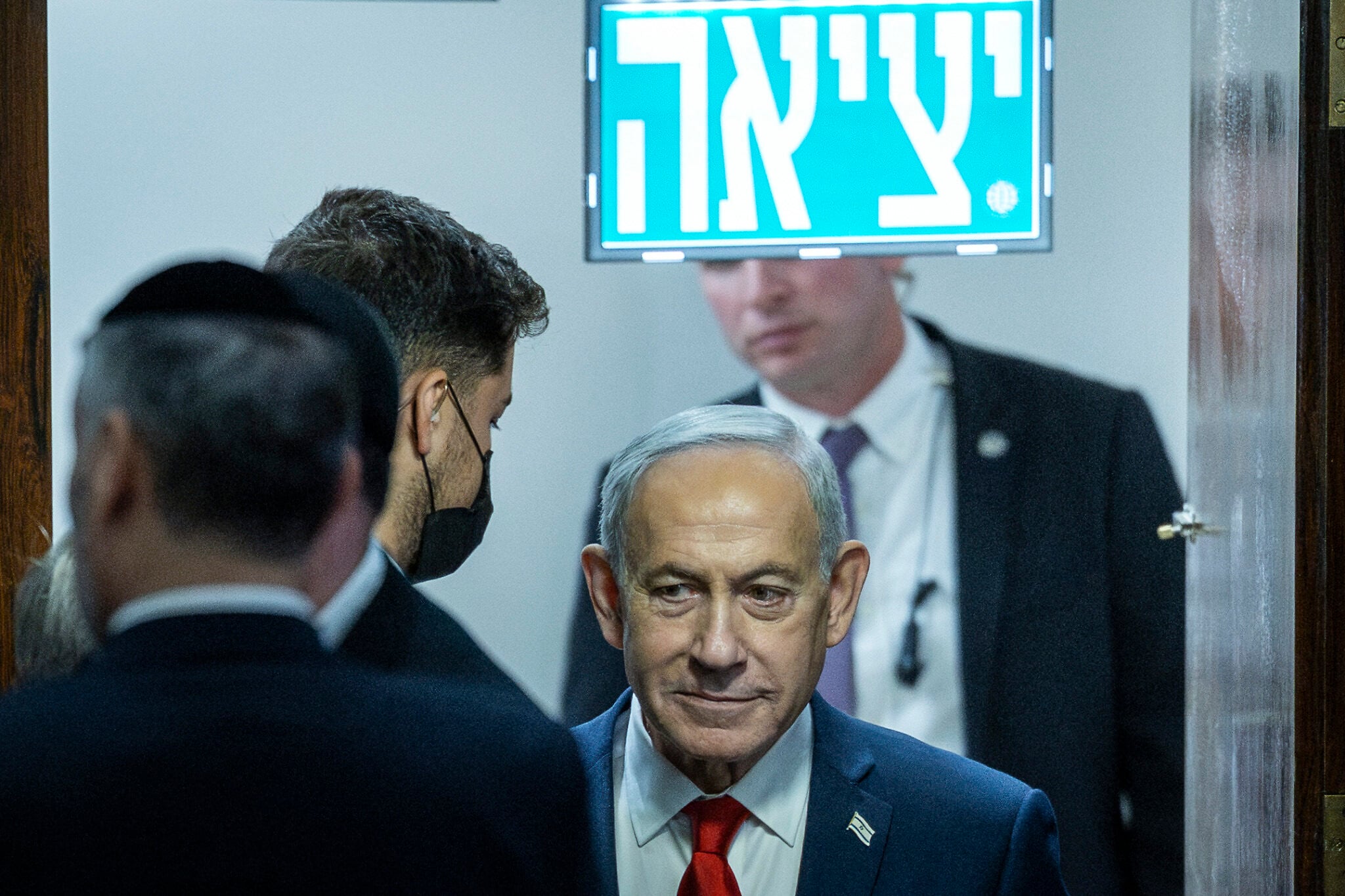
Netanyahu said that he will “continue to reach out” to potential coalition partners, despite the fact that President Isaac Herzog on Sunday handed the mandate to form a government to Eisenkot.
Amid the ongoing coalition wrangling, lawmakers are nevertheless moving ahead with legislative efforts a day after the Knesset was sworn in, although many of the bills face an uncertain path to passage.
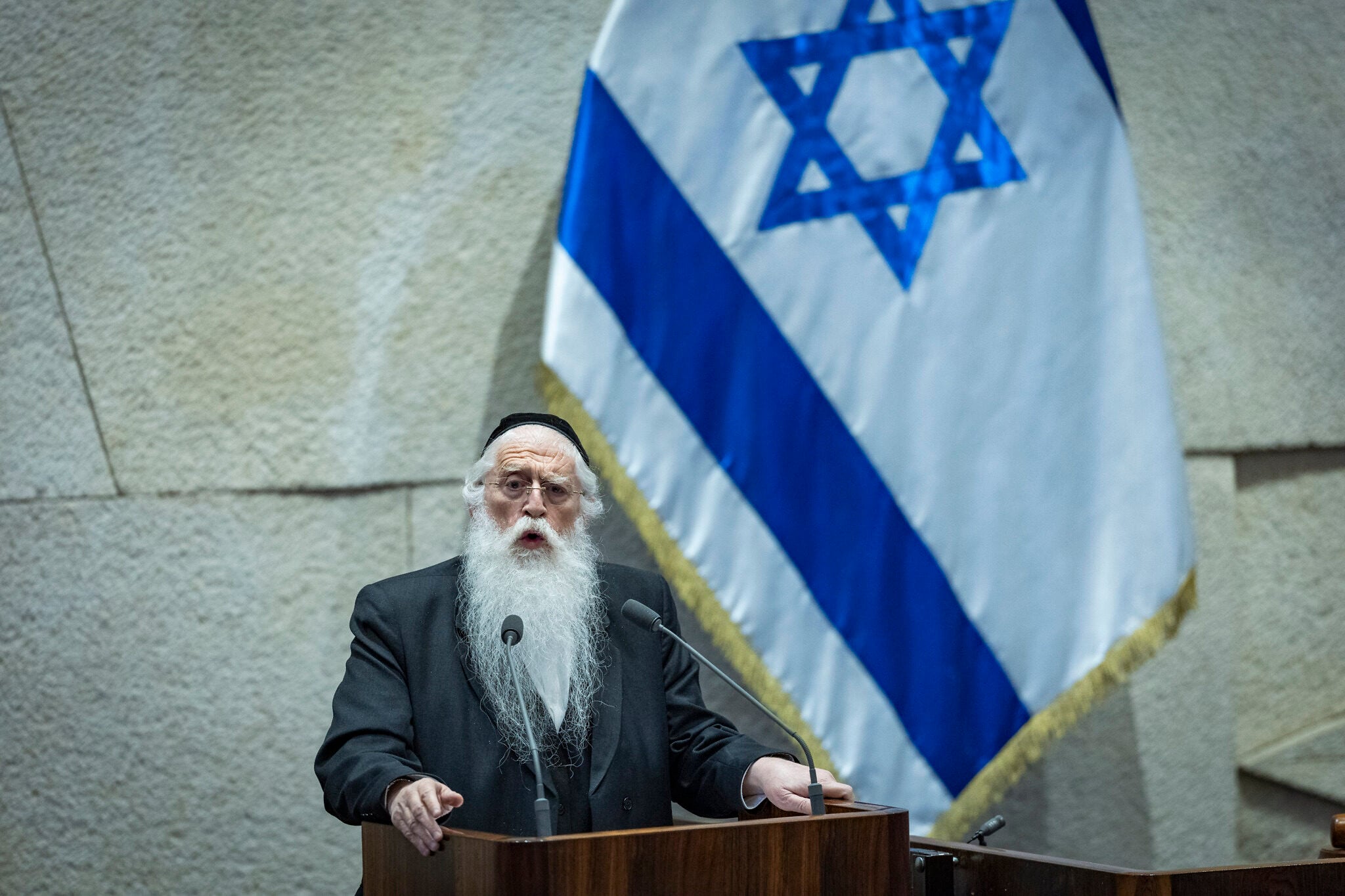
The B’Yachad party submitted a bill that would expand benefits for reservists and discharged soldiers, while United Torah Judaism simultaneously filed legislation that would permanently enshrine yeshiva students’ draft exemptions and make them immune to arrest for draft evasion.
The two bills highlight a stark contrast in priorities between parties that are reported to be prospective allies in coalition talks.
B’Yachad’s proposal would provide active reservists with NIS 4,000 ($1,260) a month toward childcare; half off utility bills, municipal taxes, public transportation and government fees; and discounts on first-home purchases. It would also extend free tuition for discharged combat soldiers and half-price tuition for other discharged soldiers.
The party said the money would come from changing eligibility criteria and halting funds currently granted to “households that do not participate in military service or the workforce,” a reference to Haredi yeshiva students.
Meanwhile, UTJ MK Meir Porush’s bill would allow yeshiva students to receive annual draft deferrals until age 26, when they would be fully exempt from service. Porush and UTJ MK Eliakim Shtark also submitted a bill that would freeze arrests, investigations and criminal enforcement against draft dodgers until legislation regulating their status is completed.
Israel Hayom and Maariv reported that the Eisenkot-led bloc has agreed to establish a series of special parliamentary committees tasked with repealing legislation passed as part of the outgoing government’s judicial overhaul.
The reports said most of the committees will be headed by lawmakers from Yair Golan’s Democrats party. The committees will seek to repeal five controversial laws passed by Netanyahu’s outgoing coalition: a law giving lawmakers greater control over judicial appointments; a law weakening the power of the attorney general to act as a check on government power; a law giving the justice minister effective control over the police’s internal investigations department; a sweeping communications overhaul criticized for threatening press freedom; and a law restricting the circumstances under which a prime minister can be declared incapacitated.
The High Court has frozen key provisions of the police investigations and communications laws, while it postponed implementation of the recusal law until the inauguration of the 26th Knesset. The judicial appointments and attorney general laws have also faced legal challenges.
Times of Israel staff contributed to this report.


The Times of Israel Community.