

US said to move planes from 2nd British base due to Iran threat; PM said lobbying Trump daily for war
Trump says new offensive unlikely due to ‘positive momentum’ in talks, which Iran’s security chief calls ‘imaginary’
 Add ToI as a Preferred Source on Google

The US diverted refueling tankers from RAF Mildenhall on Monday because of a threat from Iran, a month after US aircraft used in the Iran war were withdrawn from another English airbase, the Wall Street Journal reported, citing flight data and people familiar with the matter.
Despite claims by US President Donald Trump Monday that the Iran war was “effectively over,” the unspecified Iranian threat led the US to move two tankers from Mildenhall to Germany Monday morning, and more tankers to Germany and other places throughout the day, the Journal said.
The report said US officials were discussing whether the threat to RAF Mildenhall was general or more specific.
The US Air Force declined to detail asset movements and said aircraft change locations for a variety of reasons, according to the Journal, which said the White House referred the outlet’s query to the Pentagon.
A British defense ministry spokesperson said, “We do not routinely comment on the activity of other nations. Aircraft and other assets move regularly according to operational requirements.”
Last month, the US Air Force removed its bombers stationed at RAF Fairford in England following an investigation into an alleged planned terror attack at the base, which had been used in operations against Iran.
UK officials say proxies linked to Iran have been behind a string of arson and other attacks in Britain and other countries, many of them targeting the Jewish community and intended to sow fear. Officials have previously warned that Tehran could expand its targets in the UK if conflicts in the Middle East continue.

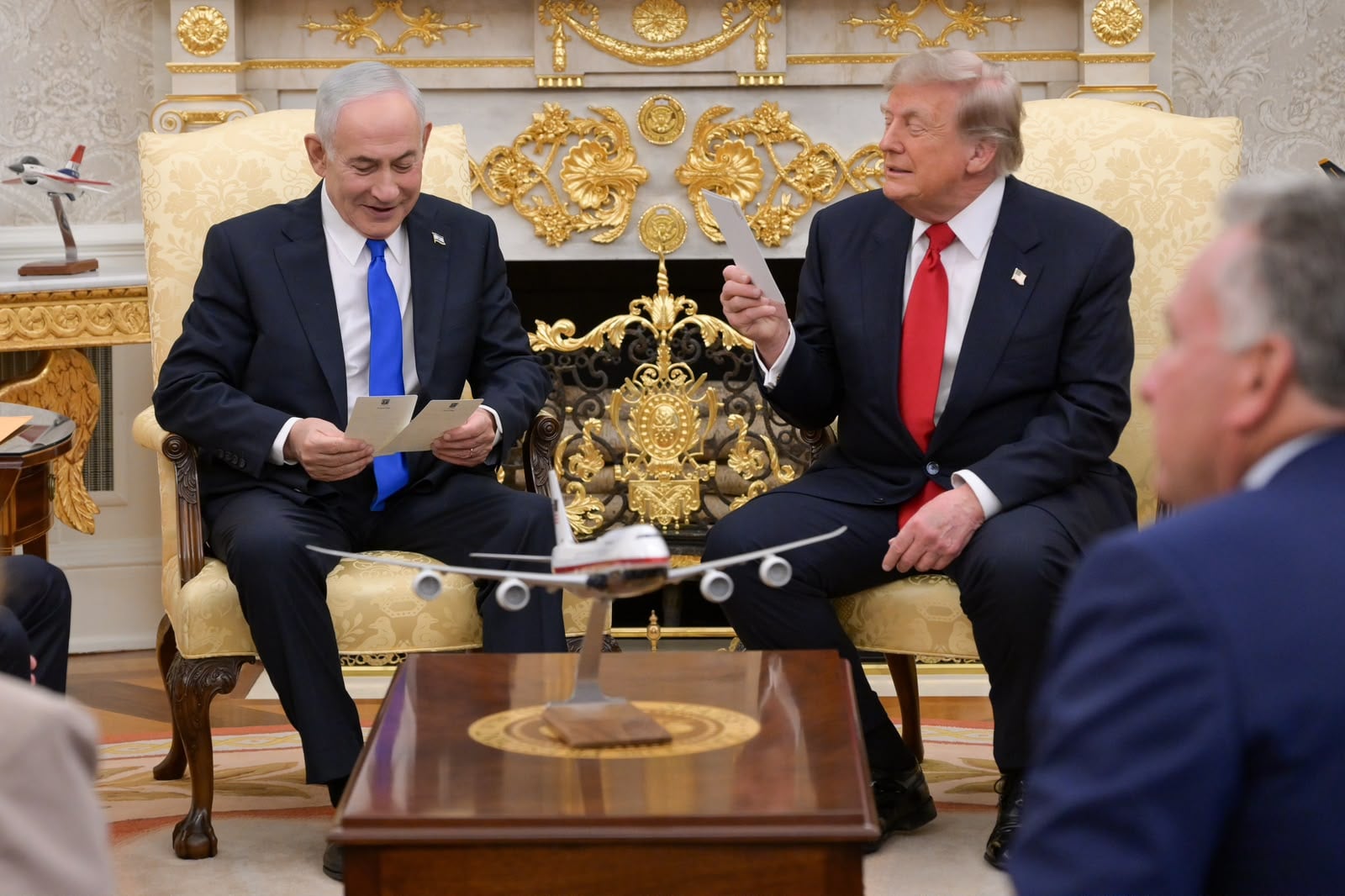
The reported evacuation of planes from Mildenhall came as Trump said “positive momentum” in Qatari-mediated peace talks made a new US offensive unlikely, even as Prime Minister Benjamin Netanyahu was said to be calling him “every day” to urge a new offensive.
As part of a readout on an “excellent” meeting Monday with Qatari Prime Minister Mohammed bin Abdulrahman Al Thani, Trump wrote on his Truth Social platform that “Qatar, Saudi Arabia, UAE, Bahrain, Kuwait, and others would prefer the status quo.”
Trump described that status quo as a “continuation” of the US efforts to disrupt Iran’s trade at sea and on land.
“Should there be any change with respect to developments in the Middle East, the United States of America is ‘locked and loaded’ and ready to go. At this point, however, that seems to be quite unlikely,” he said.
“Israel, and the entire Middle East, are protected from Iranian danger and threats,” Trump said.
“We are seeing positive momentum toward an end to this conflict, and will ensure that America’s interests are at all times protected,” he added. “At the conclusion of this military engagement, the American people and the world will be far safer and more secure.”
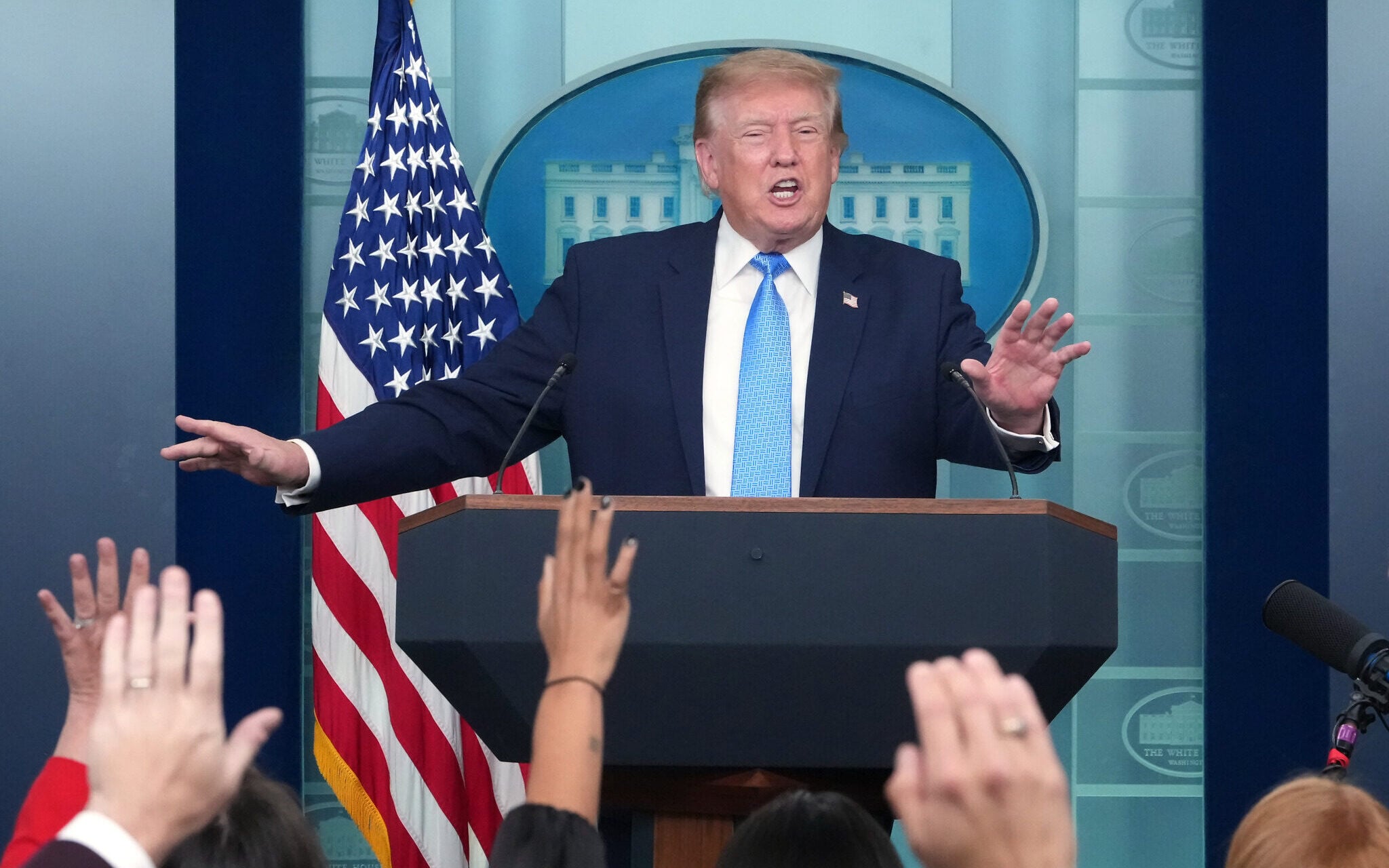
At an impromptu White House press conference, Trump said the Iran war “militarily is effectively over” and that “we’re just keeping it the status quo.”
But he also suggested Iran still poses a threat.
“They’re still the bully of the Middle East a little bit,” he said, when asked why he does not declare victory and withdraw troops given his claims that he has stopped Iran from obtaining nuclear arms.
“We have some great allies there, and we have to make sure they’re not hurt, and they would be hurt,” Trump said.
“We want to make sure it’s a long-term solution, not just a short-term. They’ll never have a nuclear weapon, but we have to make sure that’s a long-term,” he added, repeating his claim that the war was “ending quickly.”
When a reporter noted Trump has for months predicted an imminent end to the war, the president said: “I made the claim that they won’t have a nuclear weapon, and they won’t have a nuclear weapon.”
Netanyahu calls Trump ‘every day’
Meanwhile, a source quoted by the Financial Times said daily efforts by Netanyahu to get Trump to restart hostilities were putting Arab and Muslim leaders on edge.
“Netanyahu calls him every day. Those who don’t want a war within the White House and outside have been trying to combat that,” said the source, described as briefed on the discussions. “The regional leaders are telling him not to escalate and prioritize negotiations.”
Another source described as familiar with the situation in Israel told the British outlet that Netanyahu wants a resumption of military action against Iran but insisted there was no “push” to get Trump on board.
Responding to Trump’s claims of progress in peace talks, Iran’s security chief Mohsen Rezaei said on X that the US should “stop manufacturing fake news about imaginary talks” and that it was “time to surrender to the seven conditions Iran has repeatedly set out.”
The conditions, first issued in August, include committing not to threaten Iran again, compensating it for damages, unfreezing Iranian assets, lifting sanctions, ending the US naval blockade, withdrawing troops from the region and permanently ending the war with Iran and its allies, which include Lebanon’s Hezbollah, Yemen’s Houthis and several Iraqi militias.
Israel and the US jointly launched the war on Iran on February 28 in a bid to destabilize the regime and destroy its ballistic missile and nuclear programs.
Iran responded with missile and drone strikes across the region and a blockade on the Strait of Hormuz that choked off about a fifth of the world’s oil shipments.
The fighting entered a truce in April that was followed by a US blockade on Iran-linked shipping and sporadic skirmishes between the US and Iran over control of the strait.
The war and the resultant spike in energy prices led US voters to punish Trump’s Republicans in the midterm elections last week, as he and his vice president, JD Vance, have both publicly admitted.




The Times of Israel Community.