

Liberman bashed Netanyahu’s enlistment bill. The one he put on the table is weaker
Opposition party chief has floated talks on a bill he proposed in 2018, but, written pre-October 7, it lacks personal sanctions for draft evaders and has lower target numbers
 Add ToI as a Preferred Source on Google

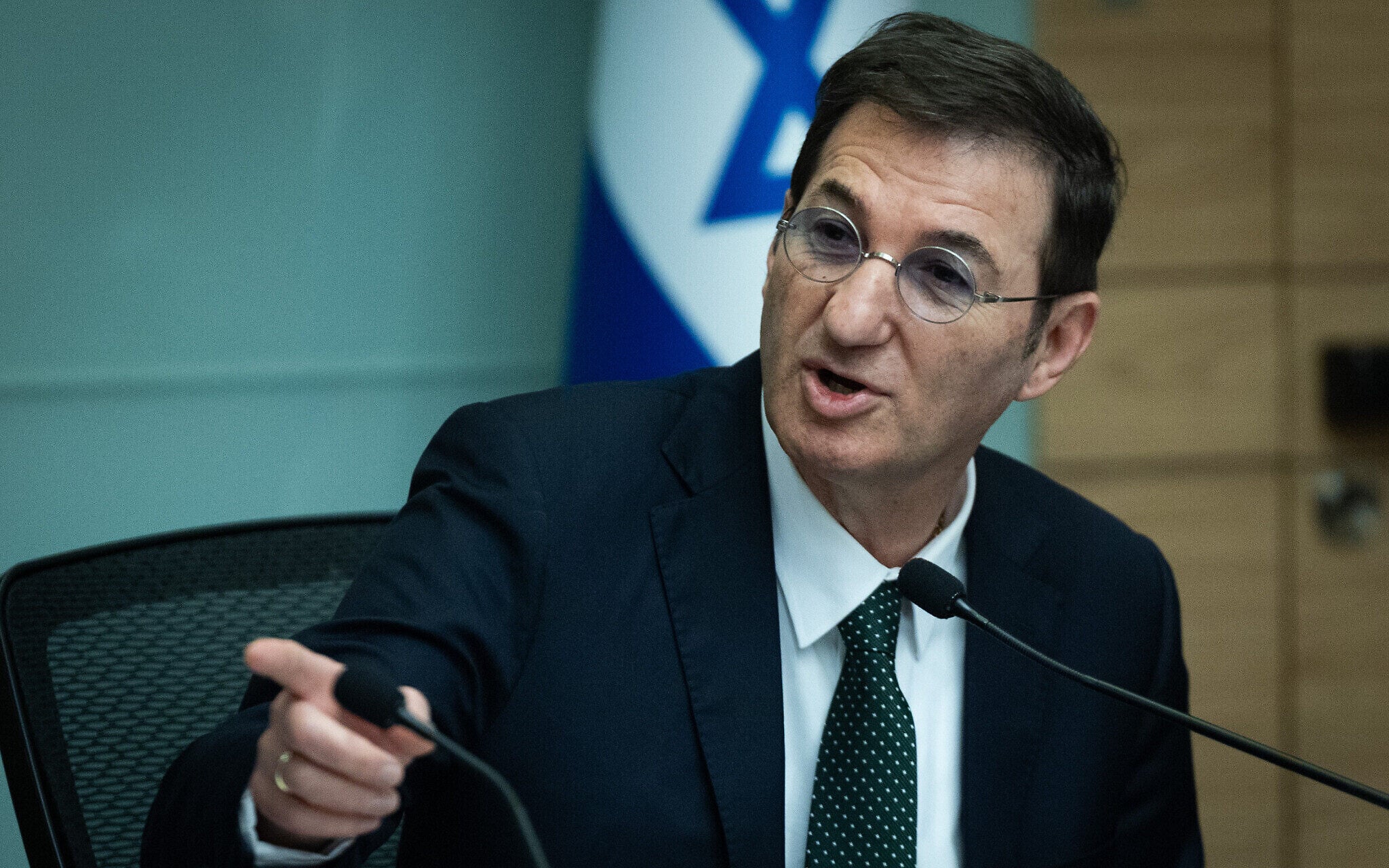
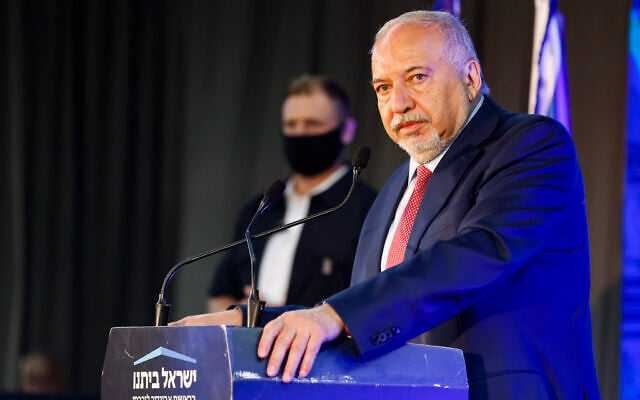
After his bombshell announcement that he would be open to a government with ultra-Orthodox parties that oppose universal military service, the hawkish opposition politician Avigdor Liberman clarified on Sunday that he still seeks mandatory enlistment for all.
He referred to a 2018 bill he put forward regulating Haredi enlistment, saying it would need to be amended in the aftermath of the Hamas-led October 7, 2023, attack, but that it was still a “worthy basis for reaching agreements.” (The bill did not pass when first proposed.)
Liberman has long been known as a secularist and a staunch advocate for Haredi enlistment. In 2019, he broke from Prime Minister Benjamin Netanyahu due to disagreements over Haredi military service, precipitating a political deadlock that has endured, in various forms, until the present.
And when the Netanyahu coalition released its own bill regulating Haredi enlistment last year, Liberman’s party savaged it, calling it an “evasion law” and saying the “real right” did not support it. It likewise did not pass.
But in key respects, Liberman’s 2018 bill — the one he is now offering as a basis for negotiations — is weaker than the 2025 bill he slammed. Unlike the 2025 bill, the 2018 bill does not penalize individual draft evaders, has lower annual Haredi enlistment targets, and operates on a longer timeline.
Liberman’s bill, of course, was drafted in a different era: years before the October 7, 2023, Hamas-led massacre and Israel’s plunge into years of a punishing multifront war that has seen thousands of men perform hundreds of days of reserve military duty. Due to that war, the IDF has said it needs 12,000 new soldiers to fill out its ranks — a figure that was not requested in 2018.
In addition, while the 2025 bill exempts full-time yeshiva students from military service, the Liberman bill does not appear to differentiate between yeshiva students and others — in theory, obligating them in equal measure.

Liberman himself acknowledged the bill would need to change in the wake of October 7. And even if talks between the opposition and Haredi parties do start, political commentators consider it unlikely that the ultra-Orthodox will sever their longstanding alliance with Netanyahu in order to deliver a government to his rivals, who campaigned on forcing Haredi enlistment.
But in the meantime, at least one opponent of Liberman has been quick to notice the differences between the 2018 and 2025 bills: Boaz Bismuth, the architect of the Netanyahu coalition’s draft legislation.
“Liberman, who sold his acolytes a tough and trustworthy image, has exposed himself as a softie who will do anything for a seat in government,” Bismuth wrote on X on Sunday. “This man’s legacy will not be a positive contribution of any kind to Israel and its security, but disturbance of Israel’s political stability.”
No personal sanctions; lower targets
The main way Liberman’s bill differs from Bismuth’s is in a total lack of personal sanctions for draft evaders.
Under Bismuth’s bill, Haredi men who do not receive an exemption from the draft, and do not report for service, would have their drivers’ licenses revoked and would not be able to travel abroad until age 23. They would also be ineligible for scholarships and tax credits, and could face further personal sanctions down the line.
Liberman’s bill, by contrast, penalizes Haredi institutions for non-compliance, rather than individual Haredim. Under its provisions, if enlistment rates do not reach 95 percent of the target figure, funds for Haredi schools would be reduced accordingly.
Bismuth’s bill also withdraws funding for yeshiva students if the targets are not met, and it operates on a shorter timeline. Liberman’s legislation, put forward in 2018, would have instituted the first withdrawals of funding in 2020, the third year of the legislation being in effect.
In addition, Liberman’s enlistment targets were lower. The bill set the enlistment target for its first year at 3,348, with targets rising by 5 to 8% every year, reaching 6,844 by year 10 (defined as 2027 in the bill).
By contrast, Bismuth’s bill would have seen 8,160 conscripts in the first year, 6,840 in the second, 7,920 in the third, and 8,500 in the fourth.
Much of the blowback around Bismuth’s bill came because it was drafted at a time of acute military need following the October 7 attack, and because it exempted yeshiva students. An earlier version of the bill, by MK Yuli Edelstein, would have drafted yeshiva students and had other, more stringent provisions.
If the 2018 bill is put back on the table, those issues will likely be up for debate again. Liberman insisted on Sunday that he remains committed to enlistment for all.
“I still believe that the right model is one enlistment law for everyone,” he wrote. “At the same time, in light of the election results, we must examine possibilities of reaching agreements, including based on outlines that were drafted in the past.”



The Times of Israel Community.