

President Herzog taps Eisenkot to form coalition, but path remains fraught
Netanyahu calls for ‘unity government,’ but with all his allies in tow, amid signs Haredi parties may ditch him; Yashar: Likud can join Eisenkot-led coalition ‘without extremists’
 Add ToI as a Preferred Source on Google
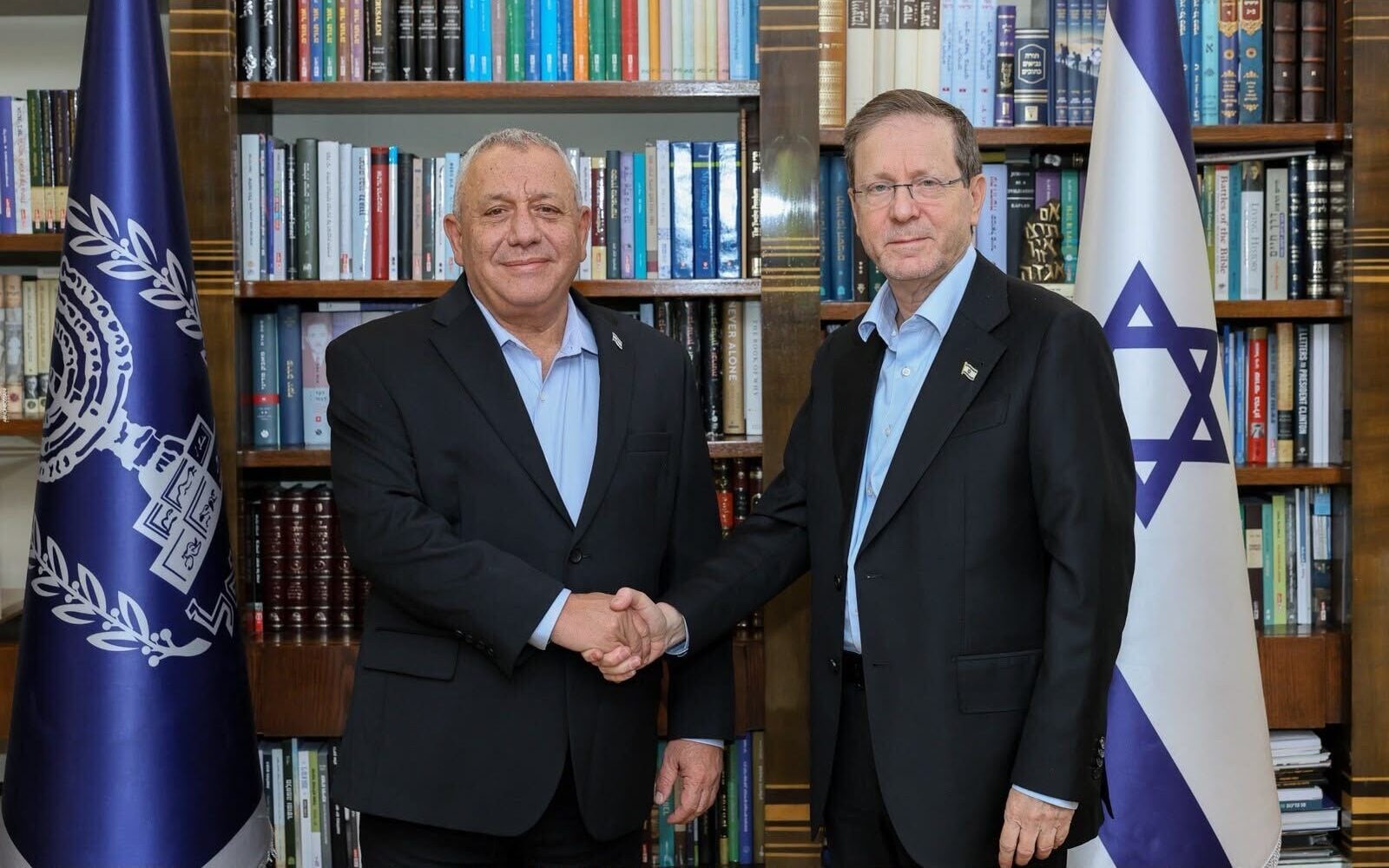
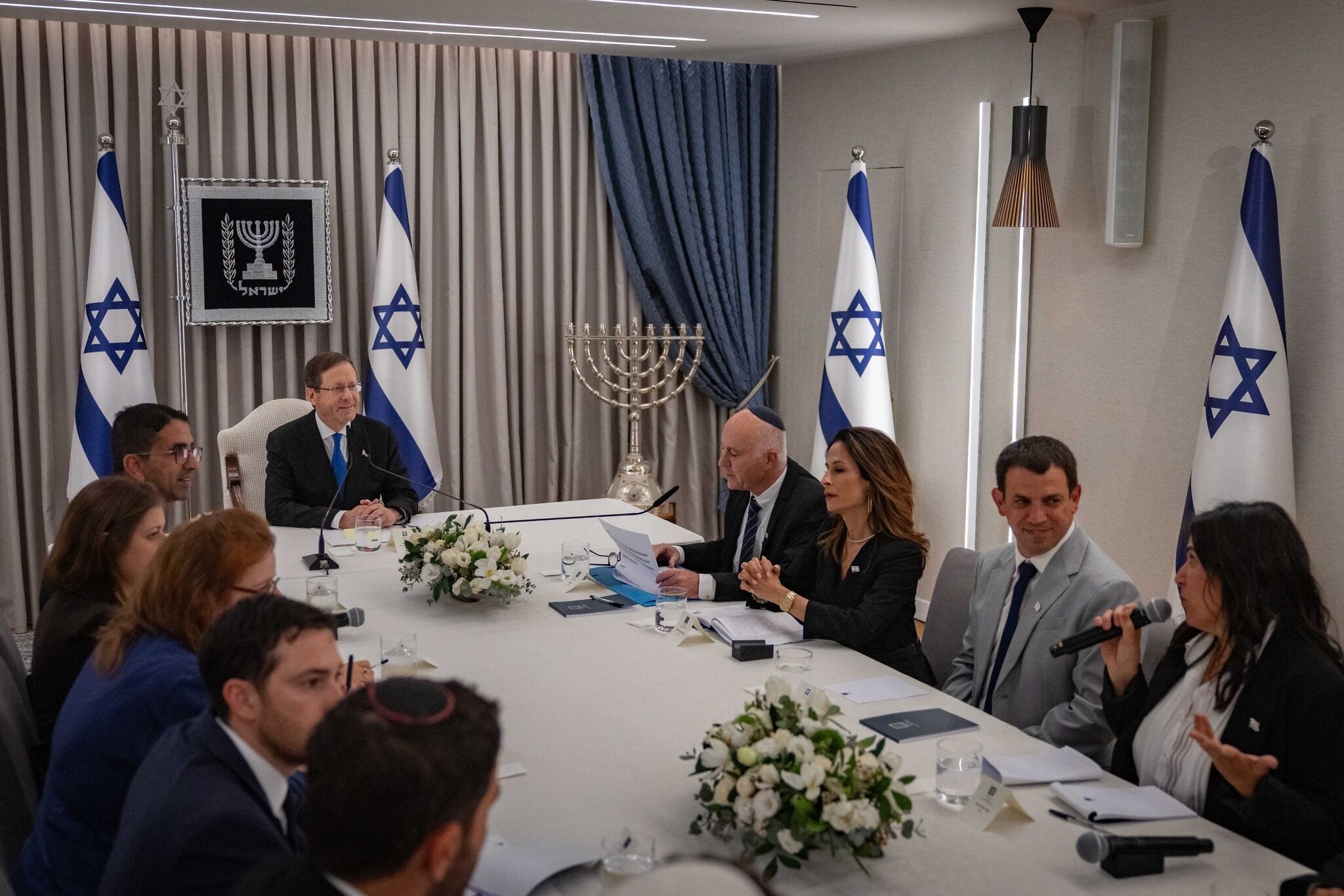
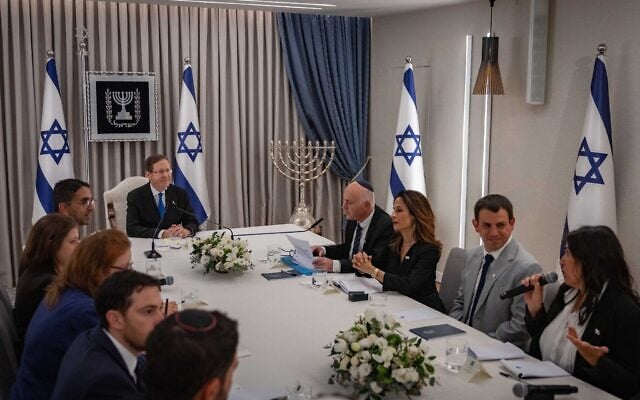
President Isaac Herzog announced Saturday evening that he would task Yashar party chairman Gadi Eisenkot with forming Israel’s next government, as the so-called change bloc Eisenkot leads continued to attempt to line up potential future coalition partners, including ultra-Orthodox parties, Arab-led parties, and even Prime Minister Benjamin Netanyahu’s Likud.
Eisenkot will formally receive the mandate at a ceremony at the President’s Residence on Sunday at 5 p.m. He will then have 28 days to form a government, with Herzog authorized to grant him an extension of up to 14 days if necessary. If he fails, Netanyahu could next be given the chance to do so.
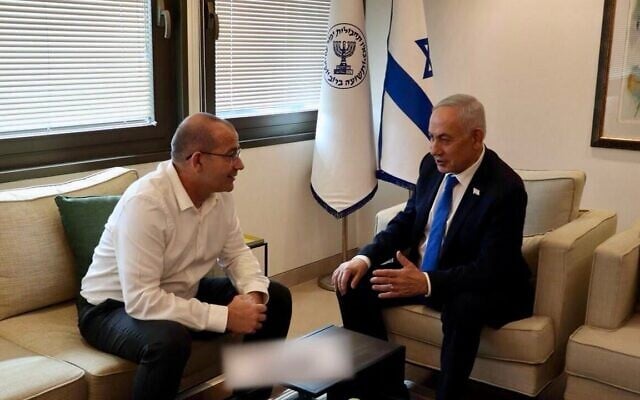
Herzog said he had informed Eisenkot and Netanyahu of his decision earlier in the evening, after holding consultations Wednesday and Thursday with all Knesset parties and further talks over the weekend with figures across the political spectrum, including the two rivals.
During Herzog’s consultations with party delegations, Eisenkot received 67 recommendations for the premiership — a majority in the 120-member parliament — while Netanyahu got 46. The seven-seat-strong United Torah Judaism made no recommendation.
Reacting to Herzog’s announcement, Eisenkot said in a post on X that “now is the time for the formation of a national emergency government,” adding: “I will do everything to make us worthy.”
However, Eisenkot’s path to a governing coalition is far from straightforward. Hawkish members of his bloc are publicly opposed to any reliance on the Arab-led Ra’am and Joint List, while many bloc members campaigned on the need to send both Netanyahu and the ultra-Orthodox parties to the opposition.
While Yashar said on Saturday night that “Likud and its friends” could potentially join an Eisenkot-led coalition, it did not extend that offer to Netanyahu. Eisenkot himself has repeatedly stressed he will not partner with Netanyahu in any coalition, and that anybody who held a major position of power when Hamas invaded on October 7, 2023, must leave public life.
Netanyahu and Eisenkot clash over ‘unity’ prospects
In a video statement on Saturday evening, Netanyahu called on the Eisenkot-led change bloc parties to form what he termed a “national unity government,” though he clarified that it would have to include all of his allies from the last coalition, meaning the ultranationalist Religious Zionism and Otzma Yehudit parties and the ultra-Orthodox parties — a likely non-starter.
The call marked another shift in Netanyahu’s post-election phraseology. Hours after the polls closed on October 27, he said he would build a “strong, national, right-wing coalition.” On November 2, he called for a “broad national government” under his leadership.
The prime minister did not say, however, who should lead such a government.
While Netanyahu hasn’t offered a power-sharing rotation agreement, the Kan public broadcaster on Saturday cited an unnamed Netanyahu associate as estimating that he would agree to discuss the possibility if negotiations for a unity government were held.
The report added that someone sent by Netanyahu to explore a unity government with Eisenkot said he was “rejected out of hand.” Eisenkot’s party said it was unfamiliar with this approach.
In his video statement, the premier once again issued dire warnings against a government formed with the Arab parties, whom he labeled “terror supporters,” claiming it would destroy the country.
“There is someone who wants, as soon as next week, to hastily swear in a government with terror supporters. To establish a government in the State of Israel with those who want to eliminate the State of Israel,” Netanyahu said, in reference to Eisenkot and the Arab parties.
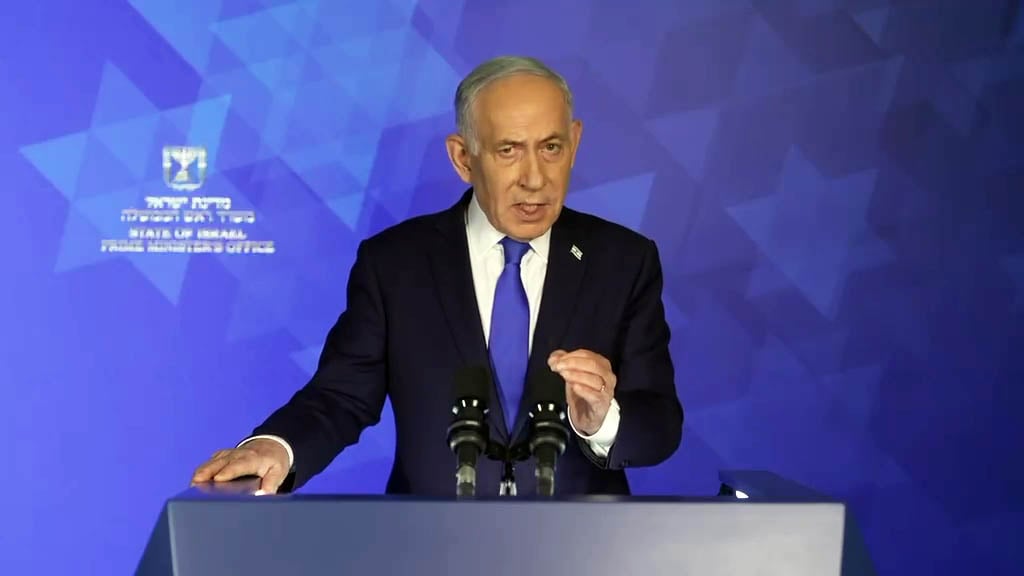
The prime minister alleged that “a government dependent on Hamas supporters won’t fight Hamas,” and won’t defend IDF soldiers operating in Gaza and Lebanon.
The prime minister warned that the severe riots witnessed in Europe in recent weeks, which Netanyahu blamed on “Islamists,” would be repeated in Israel if a government backed by the Arab parties is formed.
“With a government like that, Israel simply won’t survive,” Netanyahu claimed.
“I call for the establishment of a government of national unity which will include all the parties of the national camp, and all the Zionist parties which want to protect our country, the one and only state of the Jewish people,” he continued. The “national camp” — also translatable as the right-wing or nationalist camp — is the name by which Netanyahu and his allies refer to the pro-Netanyahu bloc of far-right and ultra-Orthodox parties.
“A national unity government will permanently remove the nuclear threat from Iran, protect Israel as a Jewish state, and bring unity among us,” he said.
Netanyahu also claimed in the video that he had called for a unity government before the election. He did issue statements backing a “broad national government,” but in multiple pre-election interviews with the right-wing Channel 14, which is staunchly supportive of him, he said he had meant a “broad right-wing government,” and on one appearance even said there would be “no unity government.”
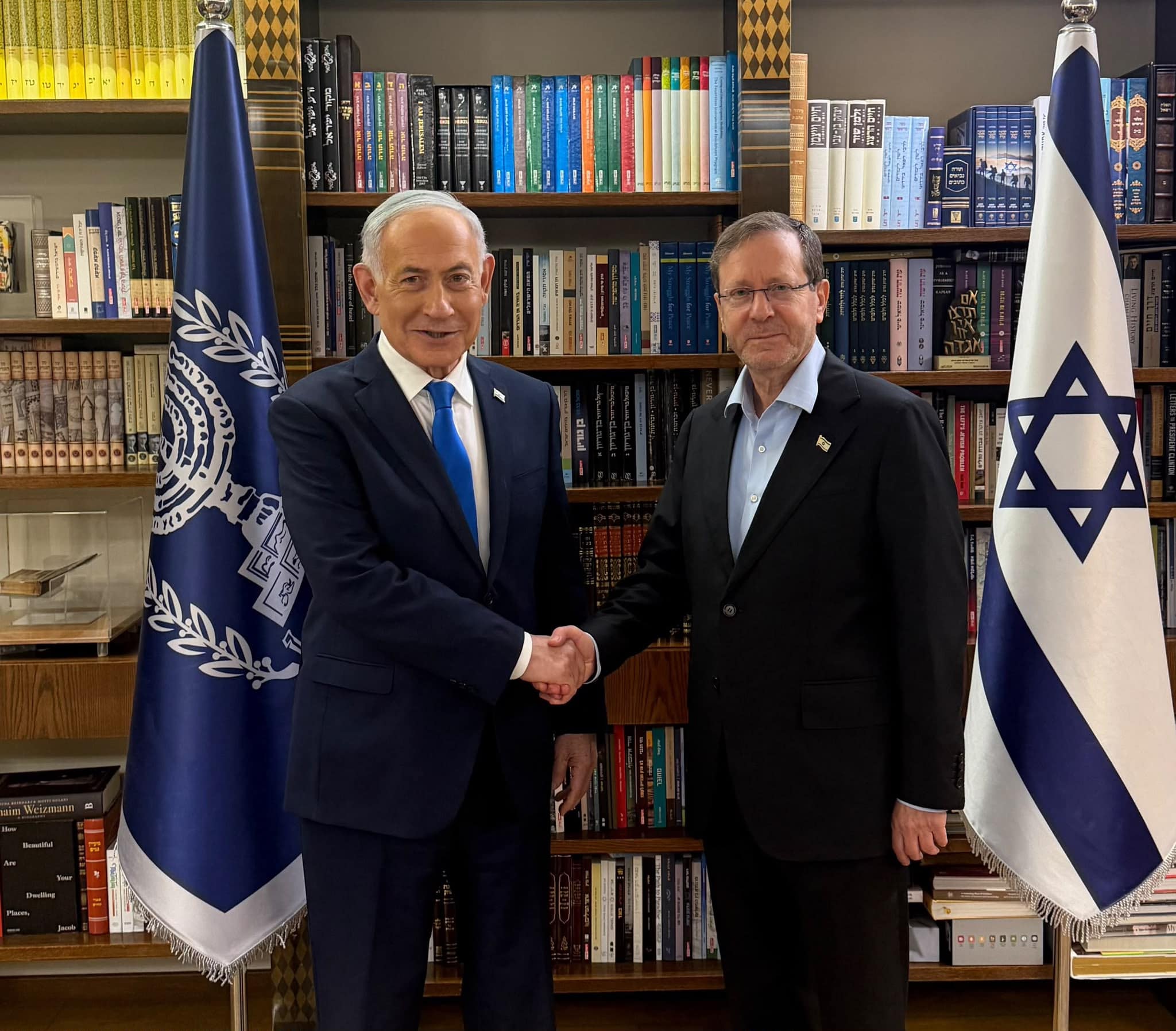
Responding to the video statement, which it called “hysterical,” Eisenkot’s Yashar party accused Netanyahu of hypocrisy, and condemned him for having “divided” Israeli society and undermined previous unity governments he established.
“If Likud and its friends are suddenly interested in ‘unity’ and in a broad government, they are more than welcome to announce publicly that they are dissolving the alliance with the extremists, that they accept Gadi Eisenkot’s four principles, and that they are willing to enter a government under prime minister Eisenkot,” Yashar said.
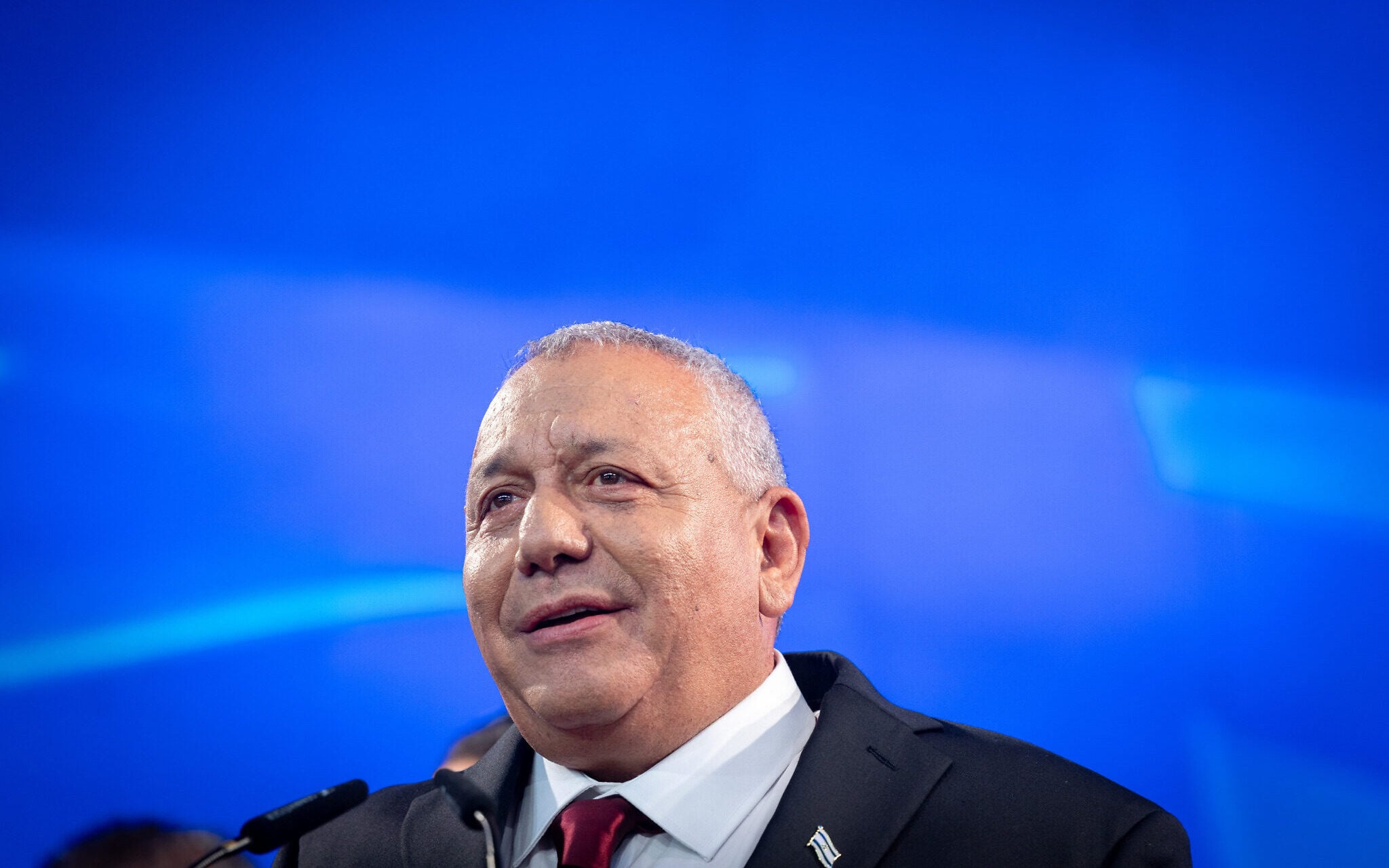
That invitation notably did not mention Netanyahu, whom Eisenkot has repeatedly said must quit public life along with all others who held major leadership roles on October 7, 2023.
“The man who divided, tore apart, and sowed discord within Israeli society is heard speaking of ‘unity’ only now that he realizes his days in office are numbered,” said Yashar. “Unity is an important value for Israel, yet Netanyahu has acted systematically and resolutely against it, even during the most difficult war in our history.”
The party went on to say that the “national emergency government which Gadi Eisenkot will establish will include only Knesset members who support the four principles Eisenkot has set out, including recognizing Hamas as a terrorist organization and a commitment to destroying its military and governing power.”
Eisenkot’s three other conditions are: Recognition of the State of Israel as a Jewish and democratic state; acceptance of the values of the Declaration of Independence; and mandatory service for all.
Reports: Shas won’t oppose Eisenkot-led government with UTJ
The developments came as some opposition members and the ultra-Orthodox United Torah Judaism (UTJ) party, long allied with Netanyahu, signaled they could team up to form a government that would replace the incumbent premier, potentially without the involvement of the Arab-led parties.
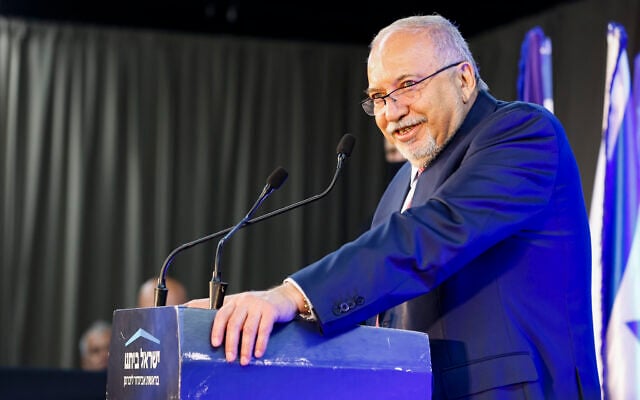
Yisrael Beytenu party leader Avigdor Liberman said on Friday that he was prepared to reverse years of opposition to sitting with ultra-Orthodox parties and accept what he called “painful compromises” on Haredi enlistment in the military to form a government without Netanyahu or the Arab parties and avoid another election. UTJ chief voiced openness to discussing such a partnership.
A source from the Council of Torah Sages, the decision-making rabbinic authority of the fellow Haredi party Shas, was quoted Saturday by Channel 12 news as saying that if the spiritual leader of UTJ were to greenlight joining a government led by Eisenkot, Shas wouldn’t oppose it or vote against it.
“There is no scenario in which Shas rabbis will act against United Torah Judaism rabbis,” the source was quoted as saying. “This would lead to a huge split in the Haredi street.”
Channel 13 news quoted an unnamed UTJ official voicing a similar sentiment: “If the rabbis approve the details of the deal being worked on, Shas won’t have any choice but to toe the line and join the move.”
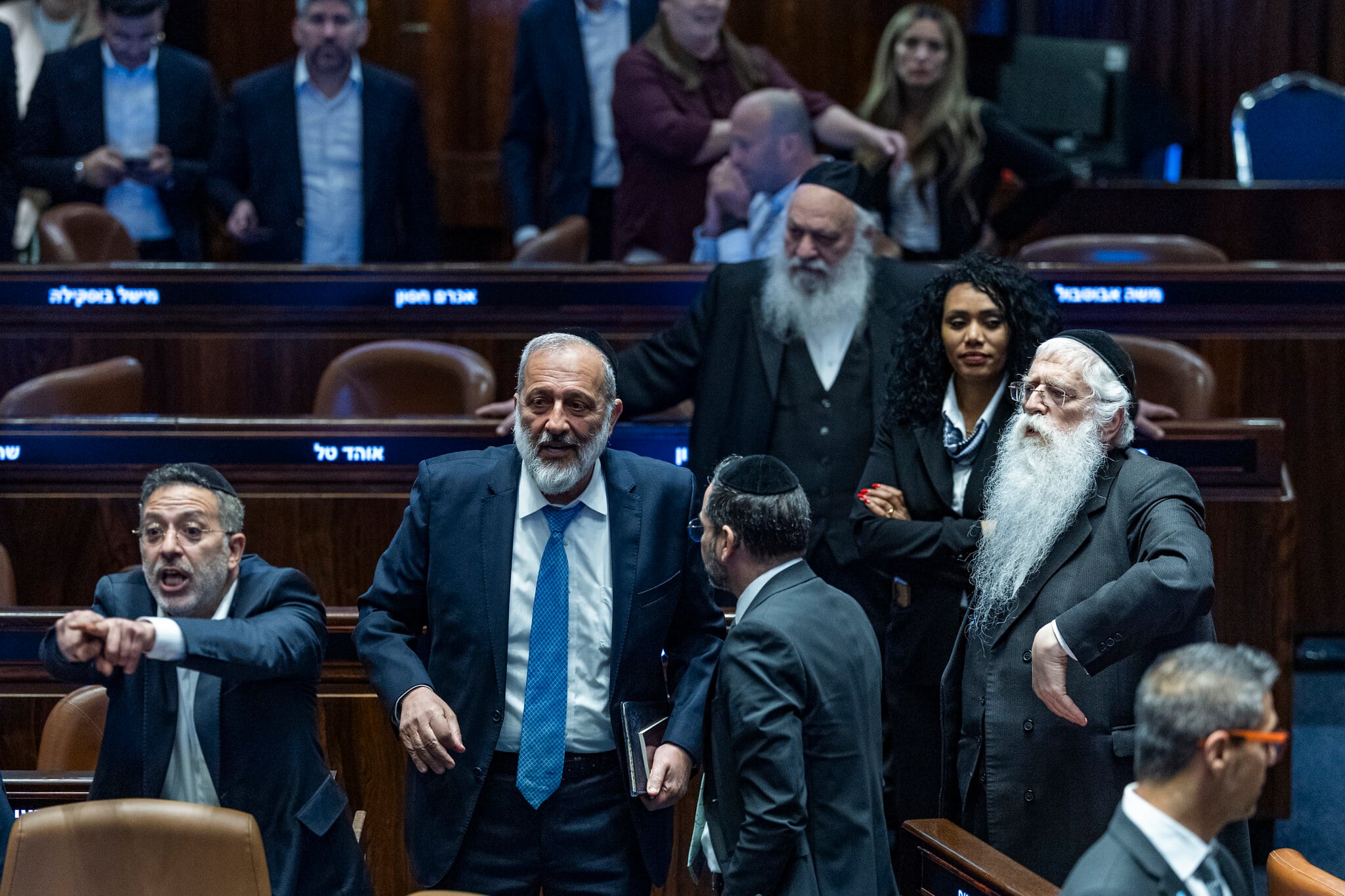
Together with the 48-strong change bloc and the 7-lawmaker UTJ, securing the non-opposition of the 6-MK Shas would potentially create a razor-thin majority of 61 out of 120 parliament members, thwarting opposition attempts to topple such a government.
In response, Shas claimed that reports that it could potentially join an Eisenkot-led government were “total fake news,” though the reports had merely said the party could avoid opposing such a government, not necessarily join it.
“As instructed by the Council of Torah Sages. Shas is part of the right-wing bloc, lovers of Torah and Jewish tradition,” the statement added.
Meanwhile, Channel 13 reported Saturday that Liberman and the Haredi parties have for months — starting long before the election, even while they were publicly campaigning aggressively against one another — maintained a secret backchannel aimed at potentially joining forces in a government.
The network said, without citing sources, that Liberman associates, including Jerusalem Mayor Moshe Lion and Haredi political adviser Avi Abuhatzeira, maintained the backchannel and kept it secret even from most Yisrael Beytenu members.
Liberman used to be a close political ally of the ultra-Orthodox parties, until he famously fell out with Netanyahu in 2019, refused to join the latter’s governments ever since, and became one of the most vocal political opponents of Haredi efforts to maintain military draft exemptions for most ultra-Orthodox males.
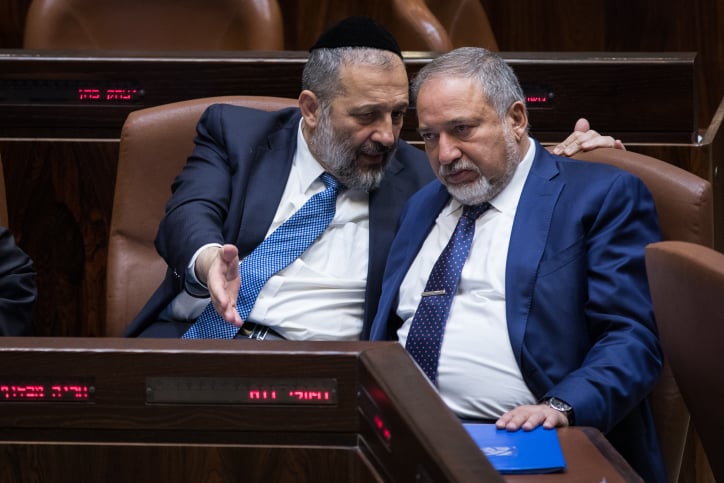
Channel 13 quoted an unnamed ultra-Orthodox official as appreciating that Liberman has now “paid upfront” and “burned himself publicly on an issue on which he built his [political] identity in recent years. This cannot be ignored.”
The outlet has reported that Netanyahu is exerting heavy pressure on UTJ to not join a government with Liberman.
A windy road ahead
Forming a change bloc government with the ultra-Orthodox parties would require significant persuasion and compromise. Besides Liberman, all the other three bloc parties — Eisenkot’s Yashar, Naftali Bennett’s B’Yachad and Yair Golan’s Democrats — also campaigned on ending the sweeping military exemptions for the community’s men and ending state benefits to families of draft evaders.
While B’Yachad has remained silent since Liberman’s announcement, the two others have indicated they are less flexible than the Yisrael Beytenu leader on the enlistment law.
Eisenkot, in a statement on Friday, reiterated his condition of backing mandatory military, national or civil service for any future coalition partner in order to strengthen the IDF and expand its ranks.
And on Saturday evening, Democrats chairman Golan said he was open to a government with the Haredim, but laid out a number of demands.
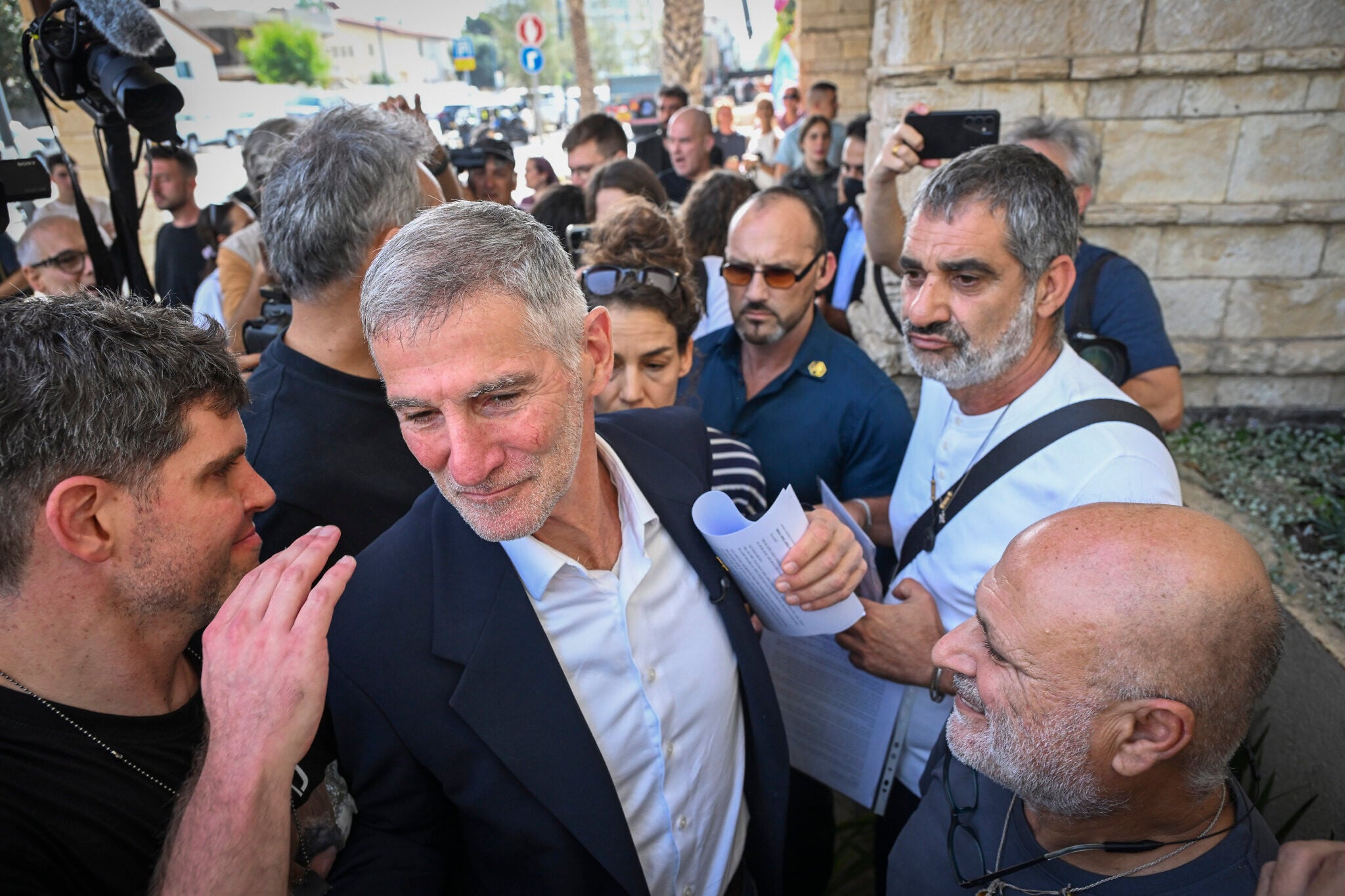
“Unlike Netanyahu, we won’t go to Bnei Brak or Mea Shearim,” Golan wrote in a statement, referring respectively to a Tel Aviv suburb and Jerusalem neighborhood that are heavily Haredi. “Whoever wants a partnership with us needs to come meet us in Ramat Gan” — a primarily secular Tel Aviv suburb.
Golan called for conscripting young Haredim, integrating them into the workforce and “ensuring that every child in Israel will receive the tools to make a living honorably,” saying that “the middle class alone can no longer continue to carry the economic and security burden.”
“And just as we respect the Haredi way of life, we expect they will also respect our way of life. In our municipalities it needs to be possible to go out on Shabbat, drink coffee, and, God forbid, get there on public transportation,” Golan added, stressing that while he is open to cooperating with the ultra-Orthodox, he opposes granting them “a blank check.”




The Times of Israel Community.