

20 years after bombshell Columbia antisemitism documentary, filmmaker turns lens back on campus
Danielle Kahane co-produced 2004 film about Ivy League’s Middle East bias. Her follow-up, ‘Inside the Gates,’ looks at the changes since then and what it means for the US
 Add ToI as a Preferred Source on Google
Luke Tress is The Times of Israel's New York correspondent.
NEW YORK — In 2004, Jewish students from Columbia University appeared in a short documentary film, alleging bias, intimidation and antisemitism in the Middle East studies department.
In “Columbia Unbecoming,” students alleged that professors had presented misleading information about Israel in class and stifled dissent from Jewish students, and that the administration had been largely unresponsive.
“Students who want an honest discussion of the Middle East on campus are being silenced, and it’s a problem that starts with professors,” an undergraduate student, Daniella Kahane, said in the film, which was produced by the pro-Israel campus group the David Project.
Nearly 20 years later, Kahane, by now a filmmaker, returned to Columbia in the aftermath of Hamas’s October 2023 terror invasion of Israel.
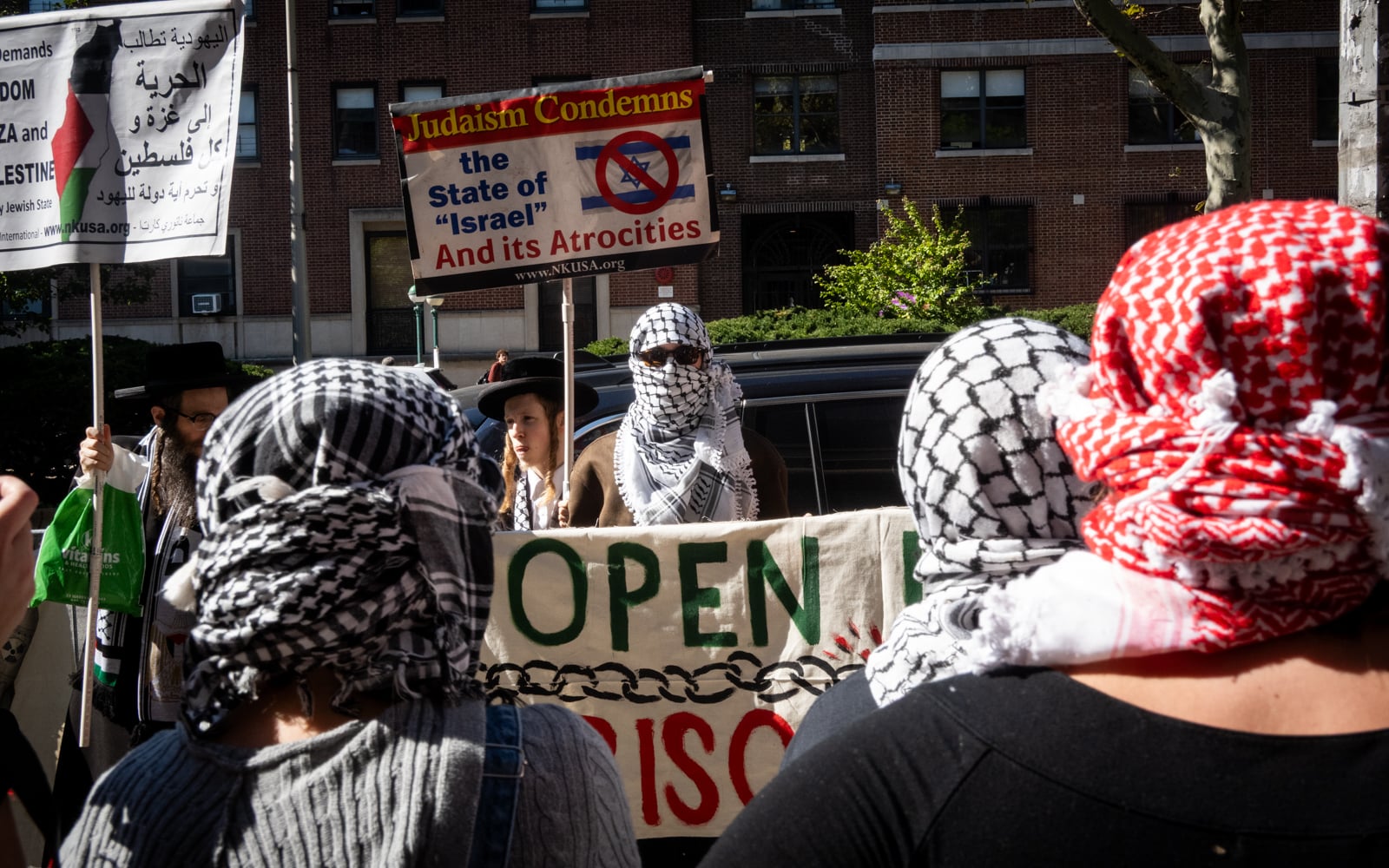
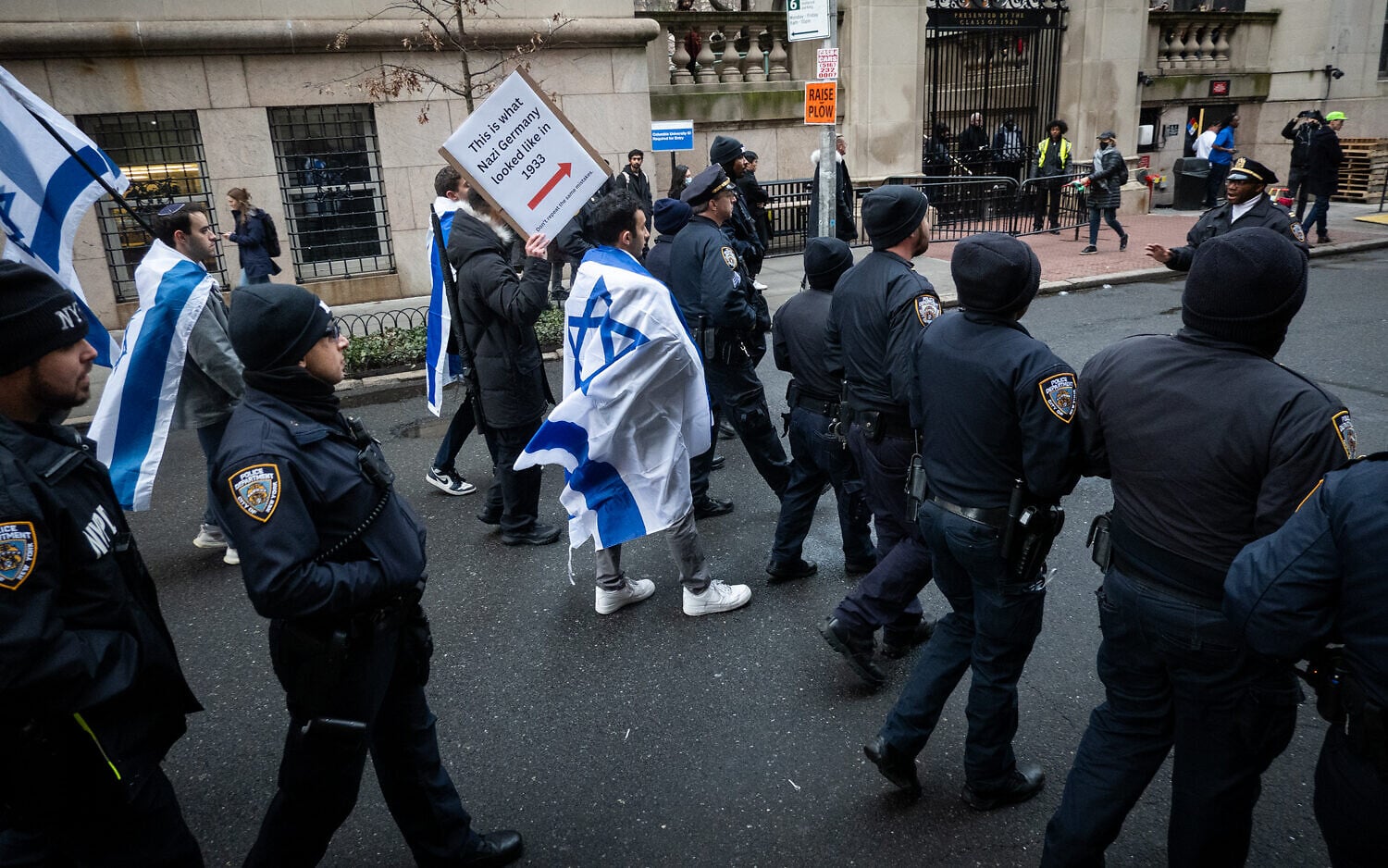
She was shocked by what she saw. Days after the massacre, hundreds of students protested, accusing Israel of “genocide” and holding signs that said, “Resistance by any means necessary.”
Kahane was shaking by the time she left campus.
“I didn’t know what I was going to see or experience that day on campus. It was not what I expected — it was way worse,” Kahane said in an interview. “From my experience as a student on Columbia’s campus, I never felt that volume of hatred.”
She decided to produce a follow-up film about how the situation had deteriorated since she left the campus.

The upcoming documentary, “Inside the Gates,” takes a wider view than the 2004 film by examining foreign funding, social trends and university structures at Columbia and other elite US universities.
She believes that universities are now teaching students “what to think, not how to think,” and her new film is “asking the question, ‘How did we get here?’”
“It’s about helping people see the wider picture here, and reminding people what is so wonderful and valuable and important about a democracy and the US that is worth preserving,” Kahane said.
‘We have to tear this down’
Kahane interviewed affiliates of Columbia, Stanford and Harvard for “Inside the Gates,” although the focus remained on Columbia.
The footage mixes the interviews with video of campus protests, some filmed by Jewish students. One sequence showed keffiyeh-clad protesters at Columbia smashing into an administrative building with a hammer, as a Jewish student described her shock watching the break-in unfold.
Other footage showed students chanting for an intifada at campuses around the US and holding signs showing Hamas spokesperson Abu Obedia and other terrorist symbols.
Taryn Thomas, a Stanford student who joined her campus anti-Zionist encampment before becoming disillusioned, gave the film an insider’s perspective of the anti-Zionist student movement.
“It’s not about reforming America to be better. No, America’s the problem and we have to tear this down,” said Thomas, who is now an advocate for Israel.
The documentary also features footage of campus lectures, such as the visiting lecturer Dr. Mohamed Abdou saying at Columbia, “I don’t pledge allegiance to no American flag, let alone to no constitution.”
A UC Berkeley lecturer says, “The project that we are engaged in is to rewrite parts of history.”
The film is in post-production as Kahane seeks funding to complete the editing and secure distribution.
A ‘palpable sense of hate’
Kahane’s family has long ties to the university. Her great-grandmother graduated from Barnard, Columbia’s women’s college, in 1915, giving her family the “longest line of legacy” at Barnard, she said.
As an undergrad, she took an elective course on film, became smitten with the medium and joined the campus film club.
The “Columbia Unbecoming” filmmakers showed the documentary to Columbia administrators, hoping they would make changes to Middle East studies, with little result. The film was not meant to go public.
A university leader mentioned the film at a press conference, though, leading to media reports and a press screening. After months of inaction, within a day of the screening, the administration contacted the filmmakers and “that’s when the ball started rolling in terms of actually having an impact,” Kahane said.
The film caused a stir, led to a faculty report on the students’ criticism and new procedures for reporting complaints.
“This was my first experience with the power of documentary specifically, and the ability to speak truth to power through the medium,” Kahane said. “It certainly was the real-world experience that cemented my desire to become a filmmaker.”
The film didn’t fix the issue, though — professors mentioned in the film are still teaching at Columbia, such as Prof. Joseph Massad, who called the October 7 invasion “awesome.”
Kahane returned to Columbia for a Master’s of Fine Arts in film, graduating in 2014. She started a film production company, Riverside Pictures, and was not involved with the university until she went to see the October 12, 2023, protest, where she felt a “palpable sense of hate that I didn’t recognize” from her time on campus.
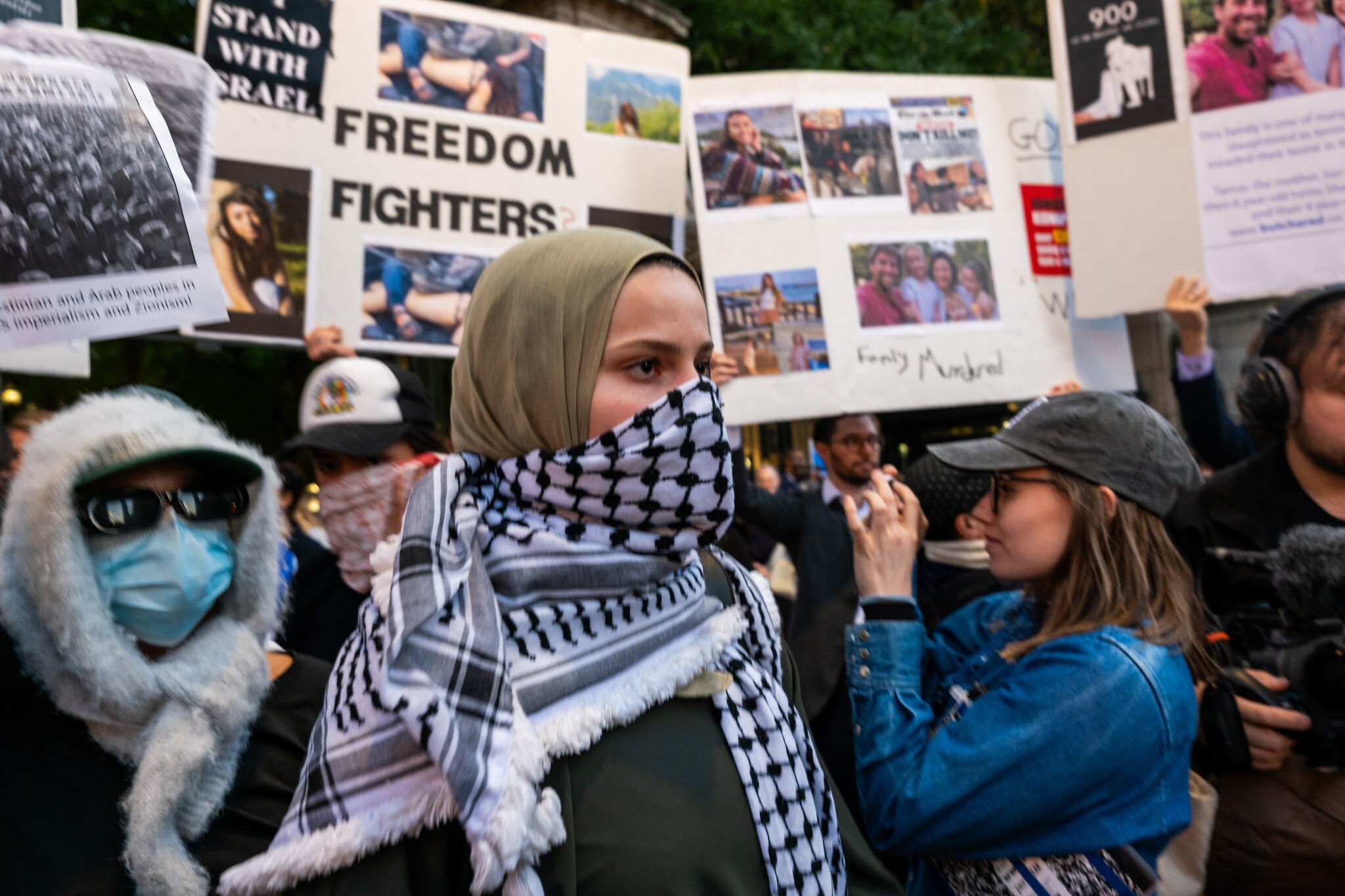
“If you weren’t masked, if you weren’t in that camp, chanting the things they were chanting, there was this real sense of separation and a sense of antagonism,” she said.
She went from the protest to a gathering for Jewish filmmakers who were mourning the Hamas massacre. When she walked in, an entertainment lawyer and Columbia alum pointed her out to the group and apologized to Kahane, saying that 20 years ago “she made a film about a lot of the issues that we’re seeing explode now on campus, and I didn’t take it seriously.”
“She said, ‘You need to do a follow-up,’” Kahane said. “If being on campus earlier that day was my wake-up call, this was my tap on the shoulder that I needed to do something, and a few weeks later, I started filming.”
Vast changes in 20 years
A non-Jewish Columbia student had told Kahane that when she posted an expression of sympathy for October 7 victims in a group chat, she was “immediately attacked” by her friends. Other students who Kahane spoke to were not empathetic to the victims. A woman on the campus attacked two students who were putting up posters of Hamas hostages.
“I remember more room for conversation when I was a student. Now, there is a sense that speaking to someone across a divide could itself be treated as a moral failure,” she said.
She believes that, when she was an undergrad, there was bias and conformity among activist professors in Middle East studies, but that two decades later, it was no longer a “top-down pedagogic issue.”

Anti-Zionism had spread through the student body and into unrelated departments, such as liberal arts, social sciences and the medical school, she said.
The film argues that the protest movement is not wholly organic, but related to the massive influx of foreign funding from states like Qatar, which has poured billions into US universities and hosts academic programs on its territory.
Other aspects of the narrative include the university tenure system and youth trends. Professors are granted tenure based on peer evaluation, and students who were isolated by the COVID pandemic were seeking a sense of belonging on campus. Both trends encouraged ideological conformity, Kahane argued.
“Inside the Gates” includes interviews with Jewish civil rights advocates, scholars and counter-terrorism experts, as well as prominent media commentators such as Bari Weiss and Van Jones.

“The first domino is to go after Israel. Once you get people on the anti-Israel bandwagon, then you can be on the anti-America, anti-Western civilization bandwagon, and now you’ve got a group of people who are going to be used against their own country,” Jones said in the film.
Masih Alinejad, a prominent Iranian dissident in the US, said in the film, “This is unbelievable — educating the teenagers here to hate their own country.”
One challenge will be showing the film to audiences who are not already sympathetic to its message. Anti-Israel activism has disrupted other documentary film screenings, including about campus antisemitism. The director of a film about antisemitism during the Gaza war said major film festivals had rejected her documentary.
Kahane said that, while her film addresses antisemitism, anti-Jewish discrimination “is not the subject matter or the framing.”
“This film is for anyone who cares about how the next generation is being educated, and whether students have the freedom to question what they are being taught,” she said.



The Times of Israel Community.