

Democrats’ sweep triggers countdown to end Iran war, and dooms US-Israel ties under Netanyahu
Trump, Vance now appear less motivated to fight anti-Israel activity, but White House can still veto bills; Congress’s leverage comes from power of purse, which could end Iran war

 Add ToI as a Preferred Source on Google

Tuesday’s Congressional midterm election results point to a brewing disaster for Israel’s ties with the United States, particularly if Jerusalem continues on its current path under Prime Minister Benjamin Netanyahu, whom many Democrats openly revile.
The signs of such an impending crisis have long been present, but just days ago the alarm could have been downplayed in light of Netanyahu’s seemingly close relationship with US President Donald Trump, who remains in control of the White House and therefore decisively in the driver’s seat on US foreign policy, with the power to veto any anti-Israel legislation advanced by Congress.
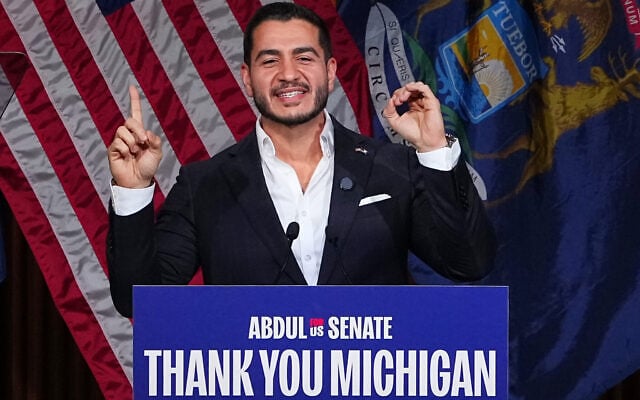
But Tuesday’s midterm election day began with Trump announcing that US aid to Israel would abruptly end at the end of the year, and it concluded with a “blue tsunami” of Democratic victories that the president quickly acknowledged were due to overwhelming domestic opposition to fallout from the Iran war he launched jointly with Israel, including the price spikes that it caused.
US Vice President JD Vance was more blunt, naming not just the Iran war but the close relationship with Israel as two of the four reasons why voters say they gave Democrats control of both the House and the Senate.
Trump indicated he agreed with Vance’s assessment, though he insisted he wouldn’t have done anything differently because the war was necessary to prevent a nuclear Iran.
Regardless, neither of the top two Republicans appears particularly motivated to block shots from a Democratic-controlled Congress that is frustrated with Israeli policy.

How to end the Iran war
Before introducing already drafted legislation to sanction Israel over its West Bank or Gaza policy, Democrats are most keen to end the war in Iran.
The presumed next Senate majority leader, Sen. Chuck Schumer, said his party would pursue that aim by leveraging the legislature’s “power of the purse.”
Democrats could adopt the playbook that Congress used to end the Vietnam War by attaching a provision to the next continuing resolution — needed to keep the federal government operating — that bars the funding of US combat operations off the shores of Iran.
Trump could refuse to sign the legislation, but that would force a government shutdown for which he would likely be blamed.
Accordingly, the Democrats’ Tuesday victories likely triggered a countdown for Trump to wind down the war on his own by the time the next Congress is sworn in on January 3.
But while Democrats want to see a diplomatic end to the conflict, the midterm results ironically may have made the price steeper, since they embolden Iran to reject compromises as it recognizes how much the American public has soured on the war.
Trump says he is weighing another major military offensive, but it’s unclear how that would be any more effective in pushing Tehran to give up its nuclear enrichment program than the six-week bombing campaign conducted by the US and Israel earlier this year.

Cutting aid to Israel… and Gaza
The House and Senate can try to pass legislation aiming to directly influence Israel, but it might meet a veto from Trump. Congress’s control over government spending may therefore prove the more influential tool.
And if it turns out that Trump intentionally or accidentally misspoke about the timeline reached with Netanyahu for ending US military aid to Israel — and the existing memorandum of understanding on such funding ends up remaining in place until the end of 2028 as scheduled — Congress still has the power to bring it to an end this year.
While the MOU envisions $3.8 billion being given to Israel annually over a decade, the money still needs to be allocated by Congress each year, and Democrats now have another excuse in 2027 not to back the unpopular allowance: The Republican president said he didn’t support it either.
Joel Braunold, who serves as managing director of the S. Daniel Abraham Center for Middle East Peace, speculated that Congress could instead use the leftover cash to fund the Office of the US Security Coordinator in Jerusalem, which helps boost cooperation between Israel and the Palestinian Authority and assists them both in combating settler violence — an issue alarming both parties.
Additional funding-related leverage at Congress’s disposal relates to the Trump-chaired Board of Peace, which is tasked with overseeing the postwar management of Gaza.
“I don’t think Congress is going to fund the Board of Peace. I think it’s going to investigate it,” Braunold said, pointing to pledges made for months by Democratic lawmakers to investigate one of the Board’s key architects, Trump’s son-in-law Jared Kushner, over his business ties to the countries involved in his diplomatic efforts.
Such investigations could imperil the US-controlled body’s funding and discourage other countries from donating to it, in what would doom one of Trump’s key Middle East initiatives before it even begins the Gaza reconstruction it was mandated to oversee.

Democrats don’t want a barnstorming tour
After the results of Tuesday’s elections came in, Opposition Leader Yair Lapid presented his plan for reviving hemorrhaging American support for Israel.
“We go back to the rule that worked for us for seventy years and was violated in 2015, when [Prime Minister Benjamin] Netanyahu went to speak before Congress against [then-US president Barack] Obama’s [Iran nuclear deal],” Lapid tweeted on Wednesday.
“Israel doesn’t choose sides in America. We work with everyone,” Lapid said, proposing that representatives of the next Israeli government go on a listening tour across the US in order to restore and expand alliances with a diverse array of politicians and community leaders.
He argued that many of Israel’s newer critics are not anti-Israel. “They are against settler violence, they are against a government they don’t understand, and they are mainly against Netanyahu. For them, everything tied to him is toxic.”
“America isn’t lost and wasn’t lost. It’s waiting for someone to come back and talk to it,” he said.
The post was spotted by Brad Lander — one of the roughly half-dozen new Jewish Democratic members of Congress — and his response to Lapid highlighted how many US lawmakers are looking for changes in Israel that extend well beyond personalities or style.

“Minister Lapid, as someone who won a seat in Congress last night, and who cares about Israel: you’re not listening to what American voters – Jewish and non-Jewish – are saying. We aren’t starving for a barnstorming tour. We’re hungry to see respect for international law and human rights,” Lander said. He proceeded to call for the release of Abed Abou Shahadeh, a prominent Arab Israeli journalist whom the Israeli police detained this week without a warrant — allegedly over an interview he conducted in Qatar with Azmi Bishara, a former Balad MK who fled Israel in 2007 amid suspicions he aided Hezbollah in the previous year’s Lebanon war.
Lapid went on to suggest that Lander, who identifies as a liberal Zionist but has accused Israel of genocide, is among those not worth engaging with because he “will hate us no matter what.”
The incoming congressman from New York traveled last month to the West Bank, where he was briefly detained by the IDF along with a group of activists who were trying to assist Palestinians struggling to harvest their olives amid repeated settler attacks.
The freshman class of Jewish Democrats of which Lander is a member is much more critical than previous generations of the party, but they still profess to care deeply about Israel’s well-being, radically differentiating themselves from a growing far-left flank of the party that rejects Israel’s existence as a Jewish state altogether.
A significant chunk of Democrats with more moderate stances on Israel also won their races on Tuesday, but the number opposed to punitive steps targeting extremist settlers can likely be counted on one hand, a Democratic congressional aide told The Times of Israel.

“Israelis wildly underestimate the degree of angst and anger among rank-and-file voters over what they see as Israel’s mistreatment of Palestinians,” said Jordan Acker, a Democratic Jewish elected official in Michigan.
“They’re in for a rude awakening when things don’t necessarily change, even if the prime minister is replaced. But when you find yourself in a hole, the first thing you do is stop digging,” said Acker.
Remove Netanyahu or bust
That means removing Netanyahu from power if Israel wants any chance to turn a new page with Democrats, argued former US ambassador to Israel Dan Shapiro.
Shapiro pushed back on the idea of a unity government as a solution to Israel’s troubles in Washington, amid the inconclusive results of the October 27 Knesset election.
“A unity government keeps Netanyahu at the center. He is poison, not just to Democrats but to many Republicans. Much actual policy will need to change to achieve a reset, but the first, important step is a new face of Israel,” Shapiro said.
Yashar chairman Gadi Eisenkot forming a minority government with Mansour Abbas’s Ra’am party could be an effective first step to winning over the support of Democrats, some of whom were disturbed by campaign pledges from Jewish Israeli lawmakers across the political spectrum not to partner with Arab-led parties.
However, Eisenkot has previously said this is not a path he is willing to take, preferring instead to pursue a coalition with at least one of the ultra-Orthodox parties even though they oppose drafting yeshiva students, an issue at the core of Yashar’s campaign.

Democrats want to know what Israel’s for; Vance doesn’t want to be bothered
But if Israel’s leaders are unable to take far-reaching steps to appease progressive Democrats, they may find some silver lining in the overwhelming nature of the party’s success on Tuesday.
A narrow takeover of either the House or the Senate would have given either flank of the party the ability to hold the legislative agenda hostage.
But with Democrats currently expected to hold roughly 250 seats in the House — well above a simple majority of 218 — progressives will have a harder time pushing all the way to the left on Israel, and the party will likely have to meet somewhere closer to its centrist wing, even if the latter also has become more critical of Israel.

Regardless, Israel will still need to shift its approach in order to appeal to either US party.
“The general worldview — not just of the Democrats, but also of the vice president and presumptive next leader of the Republican Party — is that Israel was on the ballot, and that things there have to change pretty radically,” Braunold said.
Vance has told aides that he partially blames Netanyahu for the predicament that the US currently faces with Iran because the Israeli premier encouraged Trump to launch the war in February using predictions of how smoothly it would go that have not materialized, according to a former US official.
“Democrats are saying to Israel, ‘Tell us what you’re for, and show us that you can be with our values,'” Braunold said.
The Middle East analyst argued that Vance is less interested in those questions but wants to see an Israel that isn’t acting as an “irritant” to US policy in the region — be it in Iran or Lebanon, or Syria, or Gaza, or the West Bank.








- Israel & the Region
- 2026 US-Israel war with Iran
- US aid to Israel
- Israel-US relations
- Benjamin Netanyahu
- Donald Trump
- JD Vance
- 2026 US midterm elections
- Yair Lapid
- Brad Lander
- Gadi Eisenkot
- Dan Shapiro
- Board of Peace
- Gaza reconstruction
- Republican Party
- Jewish Democrats
- progressive Democrats
- settler violence
The Times of Israel Community.