

To replace Netanyahu, Eisenkot must learn from his rival’s playbook
The 67-strong anti-Netanyahu majority is gearing up to act effectively in the Knesset against the caretaker government, but to oust the incumbent and become PM, Eisenkot must forge his fractious alliance into a cohesive force

 Add ToI as a Preferred Source on Google
Tal Schneider is a Political Correspondent at The Times of Israel
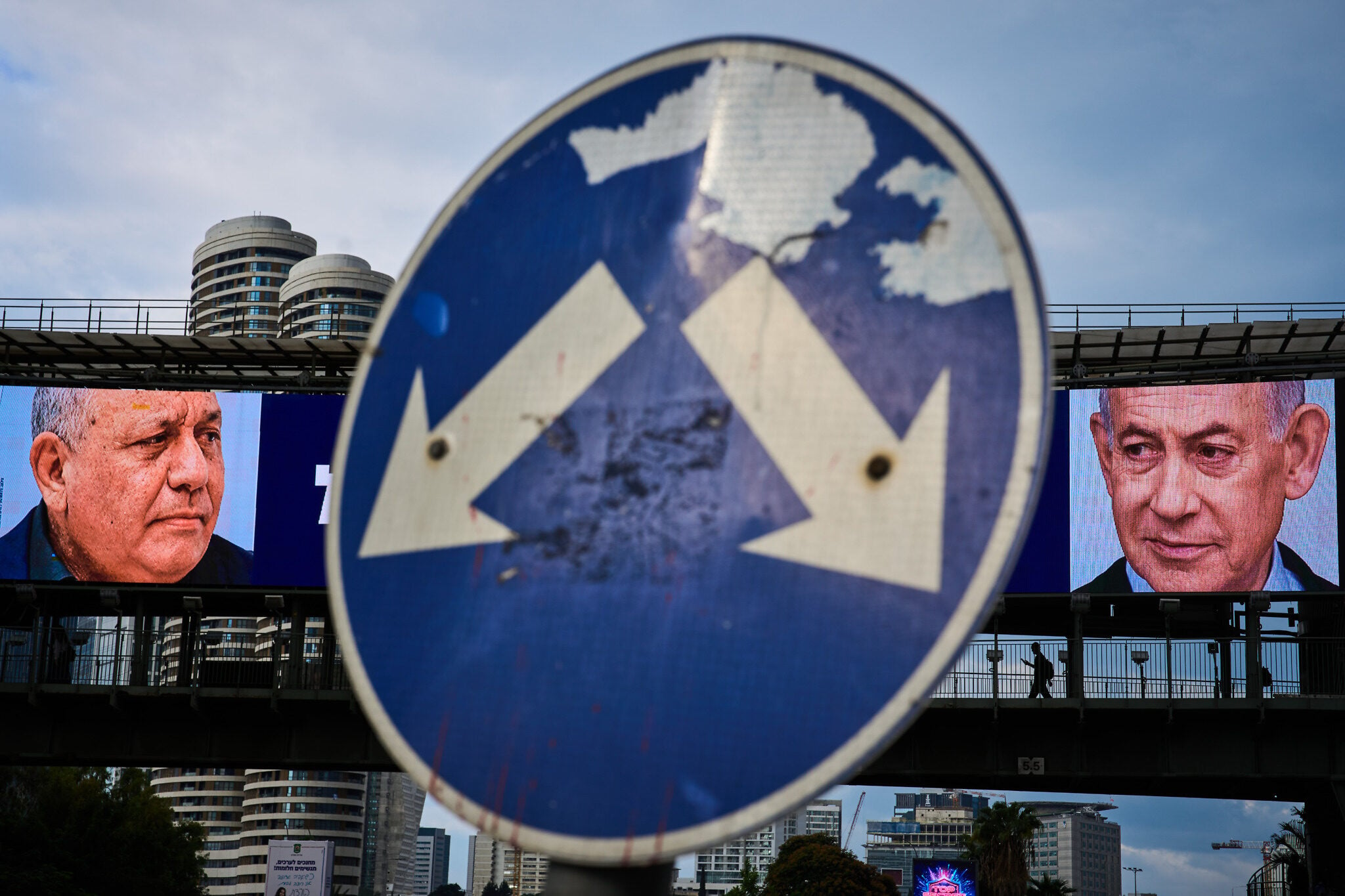
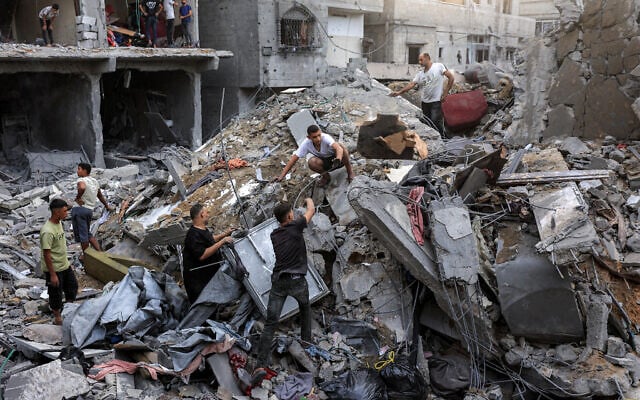
The Yashar party, the new centrist faction led by former IDF chief Gadi Eisenkot, has already begun working on an amendment to the Commissions of Inquiry Law that would allow a formal state commission of inquiry to be established by a simple majority vote of the Knesset plenum.
Under the proposed amendment, once the 120-member plenum approves the establishment of a commission to investigate the catastrophic systemic and military failures that led to the October 7, 2023, Hamas massacre, its mandate would be immediately transferred to the president of the Supreme Court, who would then independently appoint the commission’s chair and members.
Prime Minister Benjamin Netanyahu has steadfastly refused to establish such a state commission — the highest level of inquiry in Israel — fearing it would hold his government directly responsible for the disaster.
The legislative amendment is necessary because, under existing Israeli law, there are currently only two ways to establish a state commission of inquiry: by a direct government cabinet decision, or by a decision of the Knesset’s State Control Committee.
The second route presents several acute parliamentary difficulties. First, advancing such a move naturally requires securing the necessary voting majority on the committee, preferably with a member of the anti-Netanyahu “change bloc” serving as its chair.
Second, establishing a commission through this specific parliamentary route must be legally based on a formal report by the state comptroller. But State Comptroller Matanyahu Englman has yet to publish a comprehensive, final report on the failures that led to the October 7 invasion and massacre.

In addition, under current Knesset regulations, the State Control Committee must be chaired by an opposition lawmaker. If a new government is eventually formed without Netanyahu’s Likud party, a member of Likud could end up being appointed to the position in the coming months, thereby gaining the power to block the probe.
Given these structural parliamentary obstacles, Yashar is considering the alternate route, advancing a legislative amendment that would allow the full Knesset plenum to bypass the government and decide whether to establish a state commission of inquiry.
The Knesset vs. the government
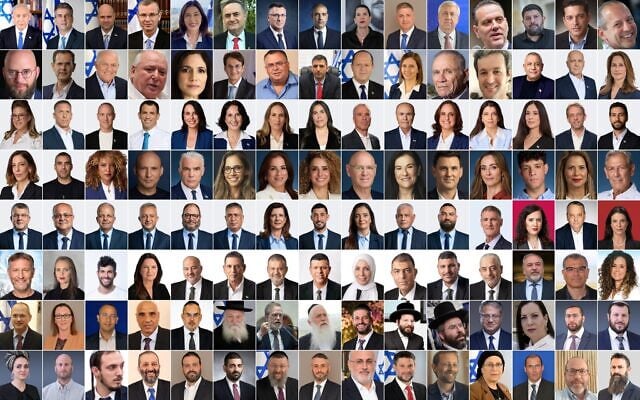
This legislative initiative offers a fascinating preview of how the incoming 26th Knesset may operate, once it is sworn in on November 10, at least during the chaotic initial period of its term.
Negotiations to form a new government could drag on for months, and it remains unclear whether the ultimate result will be a majority government, a minority government, or a fragile coalition with an unconventional political composition.
In the meantime, Netanyahu’s incumbent government will remain in office as a caretaker administration, but the fundamental balance of power in the Knesset has shifted dramatically in the wake of the October 27 election.
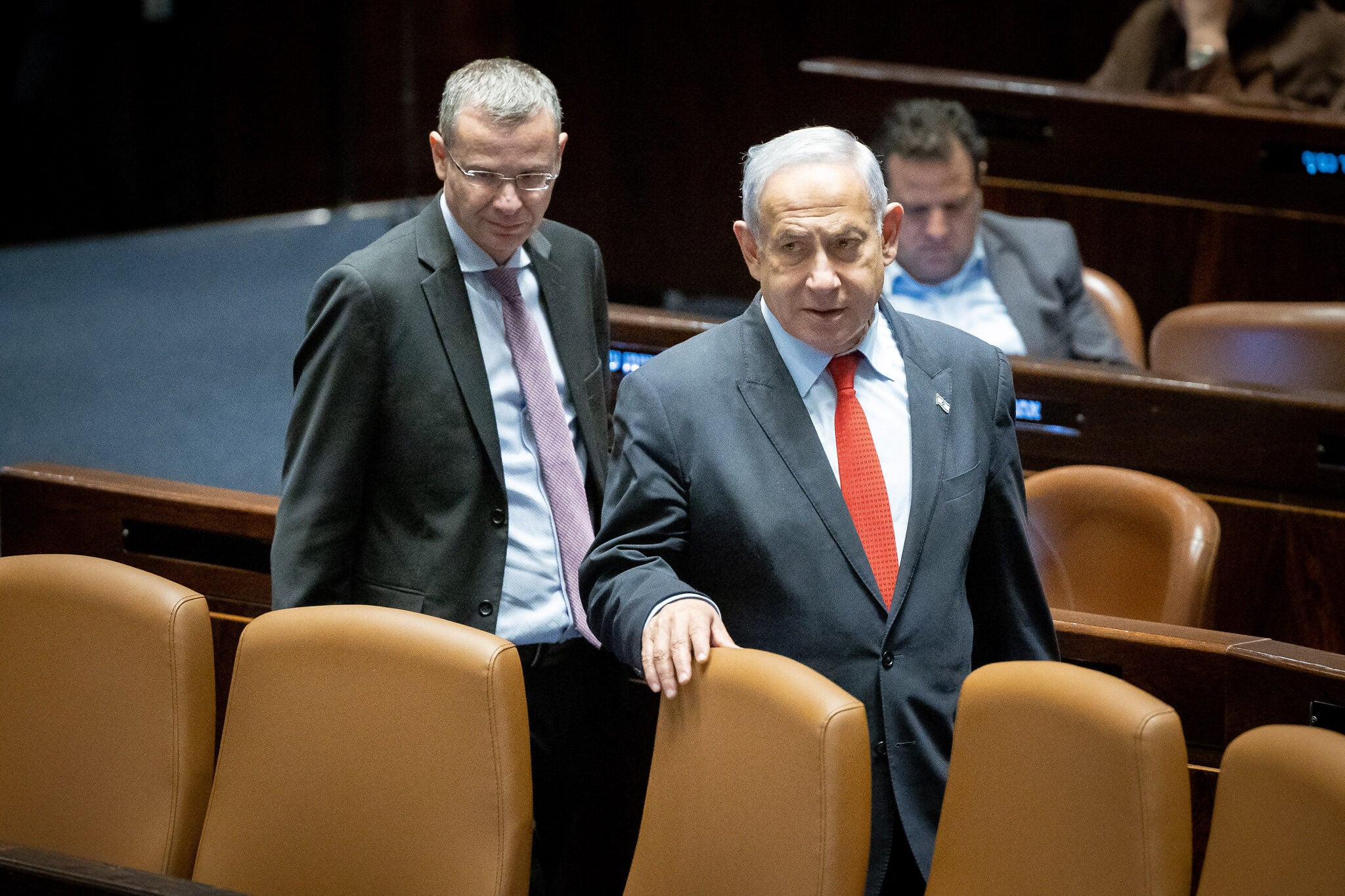
The right-wing coalition led by Netanyahu is left with only 53 Knesset members out of 120, and even its constituent parties’ collective, loyal commitment to the alliance is in serious doubt.
This follows recent declarations by leaders of the ultra-Orthodox United Torah Judaism (UTJ) party that they are no longer part of the right-wing bloc, largely due to explosive disagreements over military draft exemptions for ultra-Orthodox yeshiva students.
On the other side of the aisle, 67 lawmakers were elected from parties vehemently opposed to Netanyahu, including the 48 members of the so-called “change bloc” led by Eisenkot and the 19 members of the Arab-majority parties.
Those 67 lawmakers are currently unable to form a government together, but according to their public statements, they are determined to cooperate aggressively against Netanyahu’s caretaker coalition on every possible parliamentary front.
The result is that, for the first time in years, Israel may have a legislature that is actively opposed to the sitting government — a Knesset in which a clear majority of lawmakers oppose the prime minister and can legally act against his policies.
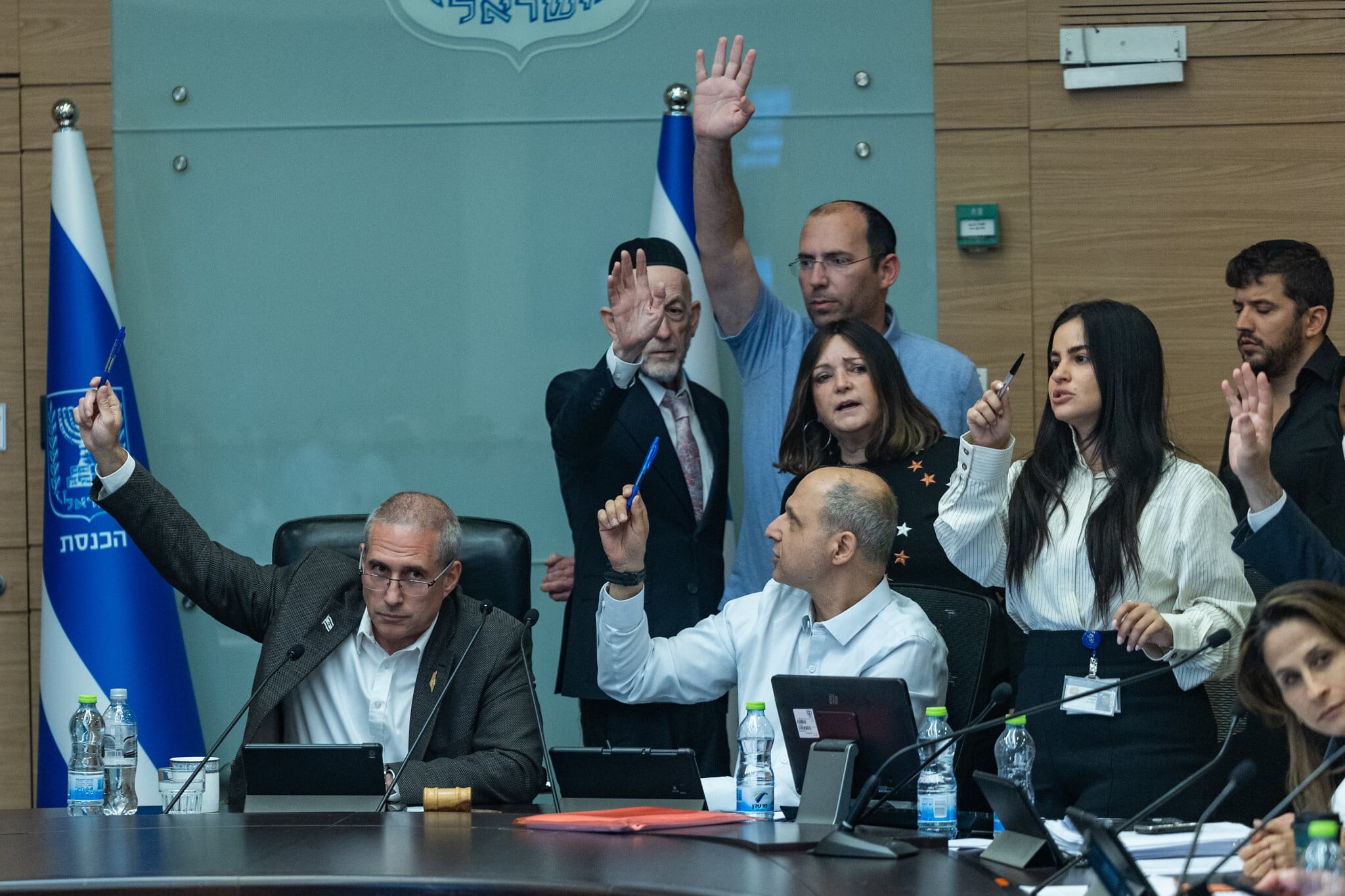
Israel experienced a very similar situation for several weeks in 2020, at the height of the COVID-19 pandemic. Back then, MK Benny Gantz was elected Knesset speaker by a hostile parliamentary majority in place of Likud MK Yuli Edelstein.
Edelstein had controversially refused to hold a vote on his replacement, so as to protect Netanyahu’s control of the legislative agenda, and was ultimately ordered to step down by the High Court of Justice.
Israel has previously seen governments lose their parliamentary majorities during their terms, usually following the departure of factions and the collapse of coalitions. But a hostile parliamentary majority actively operating over an extended period against a caretaker government controlled by the rival bloc would be an entirely new constitutional situation.
What would this look like in practice? If this 67-seat majority holds, the powerful Knesset speaker could be elected directly from among the members of Eisenkot’s bloc. Outgoing opposition chairman Yair Lapid has been widely mentioned as a candidate for the position, although nothing has been decided.
The chairmanships of the Knesset’s crucial standing committees could then be filled by members of the change bloc, starting with the House Committee, which dictates the parliament’s internal affairs and legislative agenda. This would be followed by the Foreign Affairs and Defense Committee, the Finance Committee, and the Constitution, Law, and Justice Committee.

Likud lawmakers would no longer be able to rely on the absolute majority previously held by Netanyahu’s bloc to thwart hostile legislation, including the pressing legislation to establish a state commission of inquiry into October 7.
How to form a government?
While Eisenkot’s disparate bloc may find it relatively easy to reach common ground on exercising the Knesset’s legislative powers against Netanyahu, forming an alternative government is an entirely different challenge.
The path to replacing Netanyahu remains strewn with immense political obstacles, conflicting election promises, and potential coalition partners who are not necessarily willing to sit alongside one another in a cabinet.
Nevertheless, several scenarios are available to Eisenkot, his partners and potential partners.
The first crucial step is to turn the 48-seat change bloc into a disciplined, coordinated political force. If there was one strategy that helped Netanyahu consolidate his iron grip on power over the years, it was his meticulous construction of a stable, intensely loyal political bloc.

Netanyahu would consistently agree on the terms of the next coalition with his partners even before elections, carefully safeguarding the sectoral interests of the ultra-Orthodox Shas and UTJ parties, the far-right Religious Zionism, and later the far-right Otzma Yehudit as well. The message was simple: We run together, we stay together, and we do not split up.
But in recent years, that formidable bloc has begun to fracture. Since June 2025, UTJ has been signaling that it is no longer blindly committed to its partnership with Netanyahu. In the week before the election, its lawmakers made the rounds of television studios, declaring explicitly that they were no longer part of Netanyahu’s bloc.
At the same time, President Donald Trump’s administration fiercely opposes the inclusion of National Security Minister Itamar Ben Gvir’s Otzma Yehudit in any future government — and possibly Finance Minister Bezalel Smotrich’s Religious Zionism as well.
Washington desperately wants diplomatic progress toward regional normalization with Saudi Arabia, and American officials understand that a government in which far-right provocateurs like Ben Gvir and Smotrich hold key positions of power would struggle to move in that direction, with the Saudis demanding progress toward establishing a Palestinian state.
That leaves Netanyahu’s core political alliance with just 33 reliable seats: 27 for Likud and six for Shas. This does not mean the other right-wing parties will not ultimately support him, but the alliance that once seemed unbreakable can no longer be taken for granted.

By contrast, the 48-member change bloc needs to adopt precisely the method Netanyahu perfected over the years: making it clear that all its factions either enter the government together or remain in the opposition together. No defections, no separate sectoral deals, and no independent negotiations with Likud.
Such unity obviously comes at a price. Yisrael Beytenu leader Avigdor Liberman, for example, would be able to veto political moves that his partners support. But it also offers a tactical advantage: It would turn the 48-seat bloc into a political force that cannot easily be bypassed or dismantled by Netanyahu.
From 48 seats to a coalition
From there, we arrive at the first coalition scenario, which currently sounds almost absurd: Eisenkot receives the mandate to form a government from the president, stands at the head of a united bloc of 48 lawmakers, and offers Likud — with its 27 seats — a place in a government under his leadership.
This would not be a Netanyahu government with Eisenkot serving as a moderate spare tire, but rather a government in which Likud joins the change bloc and relinquishes the premiership, at least initially. The chances of this happening appear exceedingly slim.
There is also no chance of Eisenkot joining a so-called “unity” government in which Netanyahu serves first as prime minister and immediately afterward sets about deceiving all his partners — as he did to Benny Gantz in 2020. That option is doomed to fail, and the change bloc leaders know it.
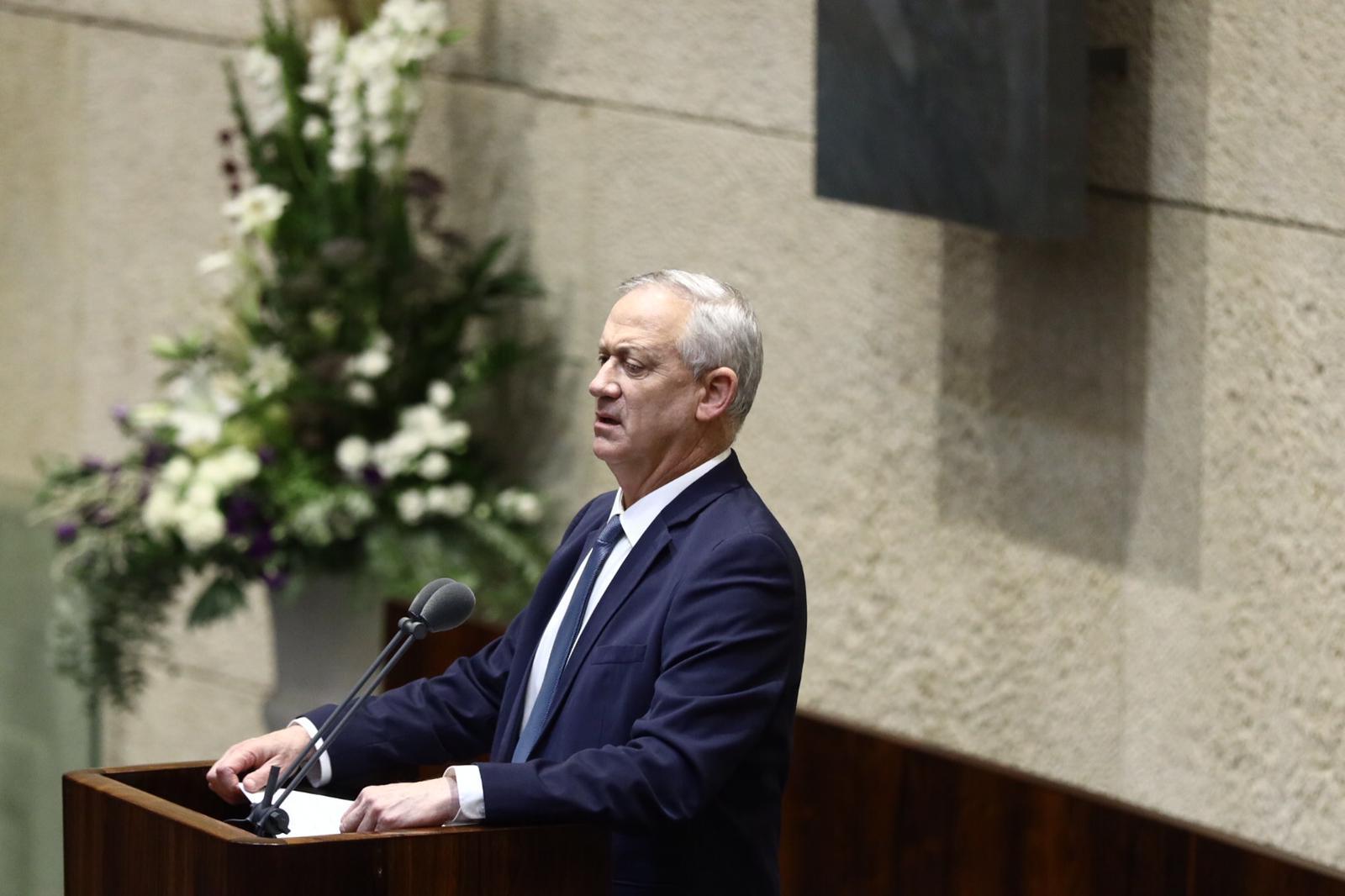
If Likud agrees to join a government, it will have to accept that Eisenkot is its leader. In addition, Netanyahu would have to finally find a resolution to his ongoing criminal corruption trials — whether through a plea bargain or a genuine pardon request that meets the strict requirements of the law, rather than a political pardon that effectively amounts to a corrupt cancellation of his trial.
The resulting government could be impressively broad, with a stable majority, allowing it to finally turn its attention to critical strategic objectives such as determining the post-war future of the Gaza Strip and advancing normalization with Saudi Arabia.
But Netanyahu cannot conceive of giving up the premiership, certainly not to a political rival.
It is much more likely that Netanyahu will try to drag out the negotiations, exhaust Eisenkot until his presidential mandate to form a government expires, and break up the change bloc by attempting to lure vulnerable parts of it to his side.
For Netanyahu, another election would be the preferred scenario, certainly compared to stepping down for a government headed by Eisenkot.
Reneging on campaign promises
The second scenario would require members of the change bloc to cross major red lines they have set for themselves.
This would involve forming a 56-member minority government that includes the eight-seat Ra’am, with members of the Arab-majority Joint List remaining outside the coalition but abstaining from the vote against it when the government is sworn in.
Under this scenario, there would be 56 supporters against 53 opponents, allowing an Eisenkot government to take office even without a 61-seat majority.
But to make that happen, several partners within the change bloc would have to renege on explicit, repeated campaign promises.
Eisenkot would demand that Ra’am meet the fourth condition he set for joining his government: formal acceptance of the military goal of eliminating Hamas.

Right-wingers like Liberman and Bennett would have to explain to their hawkish voters why they are suddenly willing to serve in a government that relies on an Arab Islamist faction.
Even after being sworn in, such a fragile government would depend entirely on daily agreements with factions outside the coalition. One possibility would be for UTJ to abstain in crucial votes. In that case, the number of opposition opponents could fall from 53 to 46, giving the government greater parliamentary room to maneuver.
The major stumbling blocks for such an arrangement would be the military conscription law and state budgets earmarked for the ultra-Orthodox community. It is difficult to imagine the secularist Liberman and the other partners in the change bloc reaching agreements with UTJ without violently clashing over these core issues. And that brings us to the next source of political leverage: the state budget.
Under Israel’s Basic Law, following an election and the establishment of a new government, the deadline for approving a state budget is the later of two dates: March 31 or 145 days after the government is formed. Therefore, if a new government is sworn in, the deadline for passing the budget could be pushed well beyond March 31. (Failure to pass a budget automatically dissolves the Knesset and triggers snap elections).
This extended timetable would give the new government significant leverage in negotiations with the ultra-Orthodox parties.
Whether UTJ joins the coalition or supports it from the outside, passage of the budget would be a critical test: The ultra-Orthodox parties would have to decide whether they prefer to remain outside the centers of financial decision-making or negotiate with a government that is not headed by Netanyahu.
It may therefore turn out that the crucial question is not merely who can cobble together a government, but who can keep it alive.
Eisenkot could theoretically arrive at the President’s Residence with the recommendations of 67 lawmakers, and perhaps even swear in a minority government. But to survive his first budget, he would have to transform the tactical alliance against Netanyahu into a strategic alliance truly capable of governing.




- Israel Inside
- Gadi Eisenkot
- Benjamin Netanyahu
- The Knesset
- Minority government
- Avigdor Liberman
- Itamar Ben Gvir
- Bezalel Smotrich
- Change Bloc
- State Commission of Inquiry
- Likud party
- ultra-Orthodox parties
- United Torah Judaism
- Yisrael Beytenu
- Joint List
- Knesset Speaker
- right-wing bloc
- military draft
- Otzma Yehudit
The Times of Israel Community.