

Eisenkot vows to swiftly utilize Knesset majority ‘against Oct. 7 government’
Yashar party chief says willing to work with any MK who accepts his conditions for a Zionist government, which includes military draft for all, accepting Israel as Jewish state
 Add ToI as a Preferred Source on Google
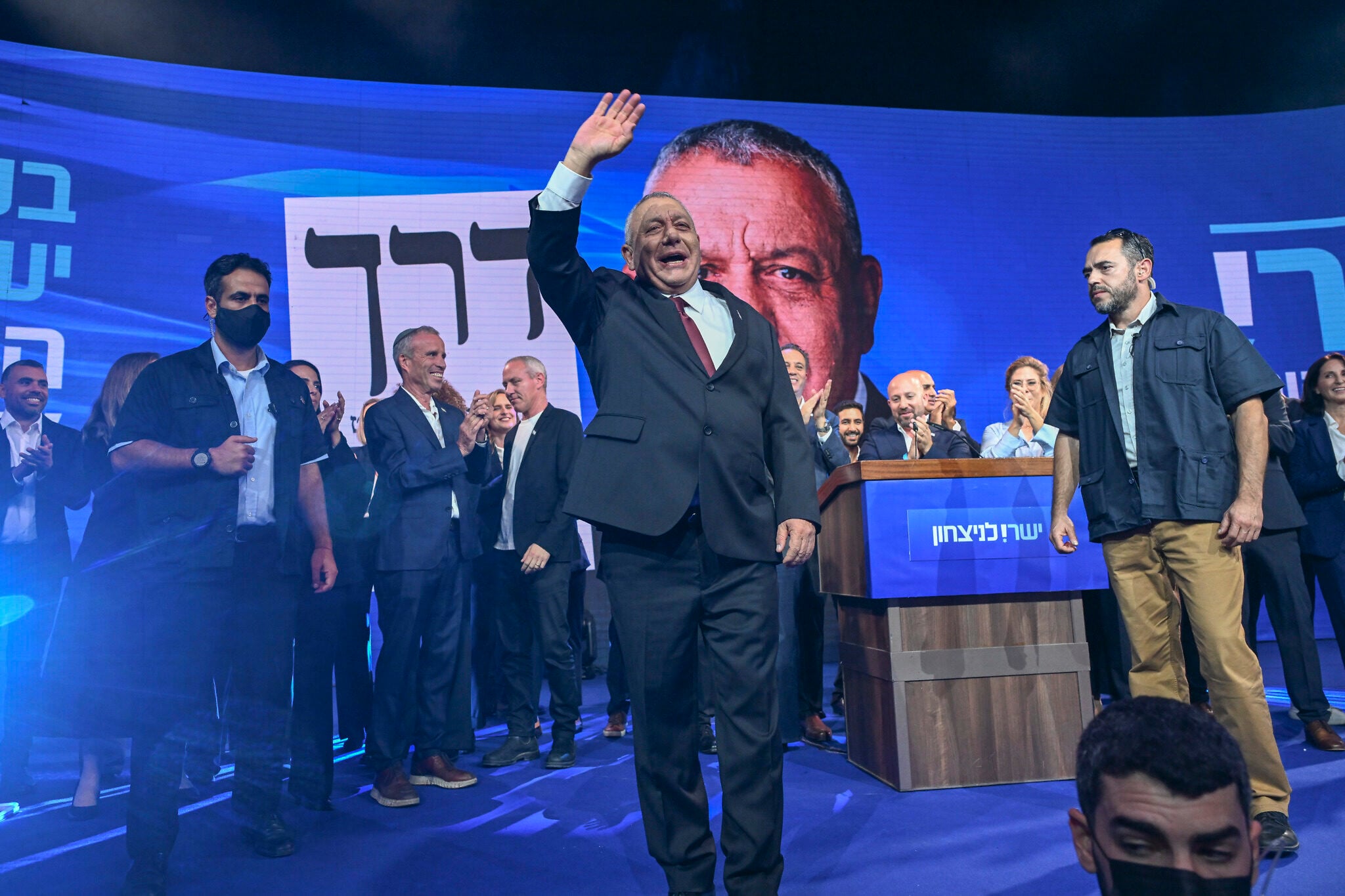
Yashar leader Gadi Eisenkot vowed Saturday to swiftly exercise the new Knesset’s parliamentary majority, declaring that Israelis voted decisively against Prime Minister Benjamin Netanyahu’s government in last week’s election, which ended with inconclusive results.
“No matter how you look at the numbers, a majority of Israeli citizens, by a margin of more than half a million votes, voted against the government of October 7 and draft evasion, and in favor of change,” Eisenkot said in a statement, pledging to immediately advance legislation establishing a state commission of inquiry into the failures that led to the October 7, 2023, Hamas-led onslaught, introduce mandatory service for all Israelis and repeal the controversial judicial overhaul laws passed by the outgoing government.
“Do not let anyone mislead you: In the State of Israel, it is the Knesset that gives its confidence to the government, not the other way around,” he stressed, asserting that the election results are clear, “even as some are working to cast doubt on them.”
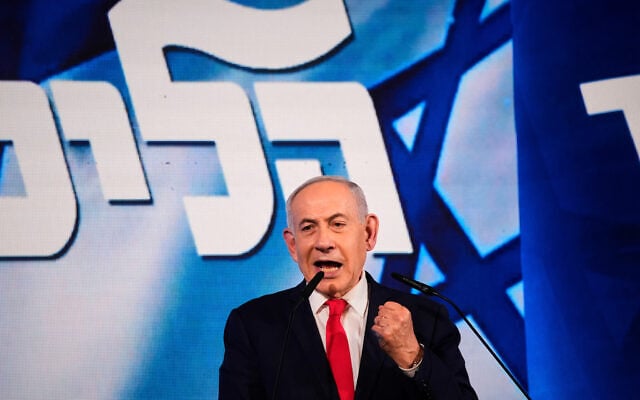
His remarks came as Netanyahu and his allies have called into question Tuesday’s election results by citing unsubstantiated allegations of foreign interference, after losing their parliamentary majority.
Amid reports that Netanyahu could launch a war with Iran to prolong his hold on power, Eisenkot warned that until a new government is sworn in, he will support military operations “only in cases involving direct and immediate threats against Israel that cannot wait.”
Another round of fighting with Iran would be expected to draw retaliatory missile fire at Israel, which would hamper attempts to form a new coalition or hand over power to a new government.
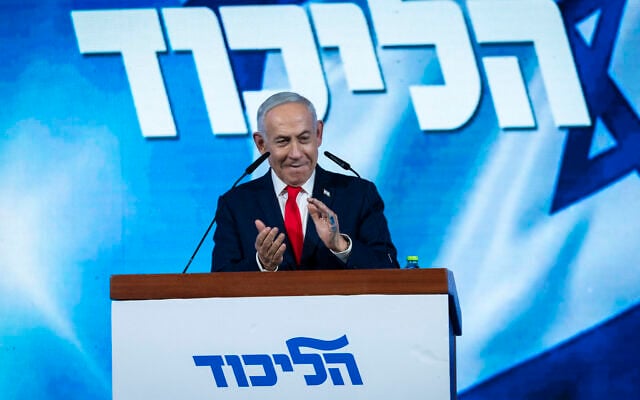
Eisenkot also reiterated his goal of forming a broad “Zionist and statesmanlike government,” saying any lawmaker willing to accept his longstanding conditions “is a potential partner,” while stressing the need for an “extraordinary effort” to avoid another election and “yet another prolonged political crisis.” — apparently indicating willingness to cooperate with Arab parties and any possible breakaway MKs from current coalition members.
Eisenkot listed those conditions as: recognizing Israel as a Jewish, democratic, liberal and egalitarian state; commitment to the values laid out in the country’s Declaration of Independence; compulsory national service for all citizens, either in the military or a civilian framework; and recognizing Hamas as a terror organization along with the need to destroy its military and governance capabilities in the Gaza Strip.
“The door to the government we will establish is open to every elected official who accepts these principles,” he said.
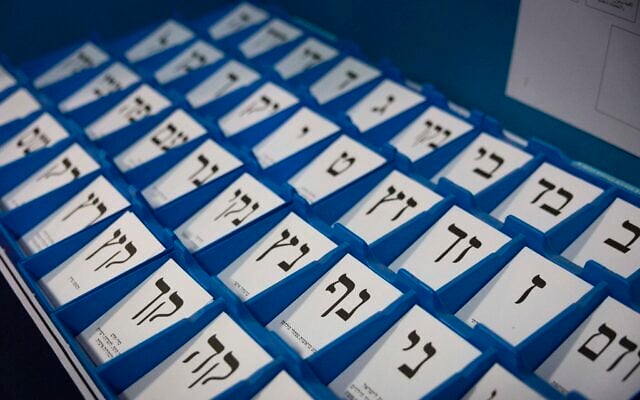
The election saw the opposition win 67 seats to the coalition’s 53.
However, those 67 are made up of 48 seats for Zionist parties and 19 seats for Arab non-Zionist parties, with whom most leaders of the Jewish opposition parties have previously said they would not cooperate. Netanyahu’s Likud won 27 seats, while Eisenkot’s Yashar was second largest with 21 seats, leaving neither bloc with a clear path to a 61-seat majority.
Eisenkot’s Yashar said in a statement that party members received phone calls during the day from ministers and lawmakers in Netanyahu’s Likud, and listed among those it claimed to have sought contact Education Minister Yoav Kisch and Deputy Minister in the Prime Minister’s Office Almog Cohen.
“There is evidently hysteria in the Likud,” the statement said, apparently referring to efforts by the ruling party to muster enough support for a majority.
Cohen swiftly rejected the claim, insisting in a statement that he has spoken with no Yashar members and that the claims are “fake news.”
Earlier, B’Yachad No. 2 Yair Lapid said he met with Eisenkot, their first publicly acknowledged meeting since last week’s elections.
Lapid said the two discussed the election results “and coordinating moves out of a shared commitment to realize the will of the voter.”
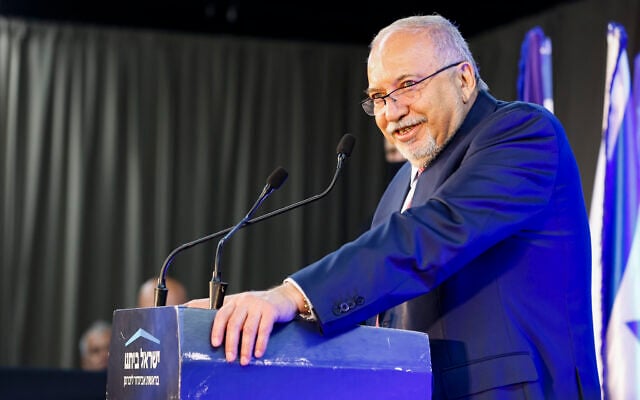
Meanwhile, opposition Yisrael Beytenu party leader Avigdor Liberman claimed that he has received a number of requests to serve as Knesset speaker, without specifying from whom.
“The evildoers don’t rest for a moment,” Liberman wrote on X. “I received quite a few inquiries about demanding the role of Knesset speaker. I have no desire or intention to be Knesset speaker.”
Liberman’s post came after Israeli television reported on Friday that opposition figures are planning to oust Knesset Speaker Amir Ohana of Likud when parliament is sworn in.
Veteran Arab MK Ahmad Tibi, No. 2 on the Joint List alliance, said his party is ready to support the anti-Netanyahu Zionist parties in establishing a government to replace the outgoing coalition, but stressed that it does not want to be part of the government itself.
Tibi’s party won 11 seats; the other Arab party in the elections, Ra’am, won eight seats. Between them, they have enough seats to give either bloc a clear majority.
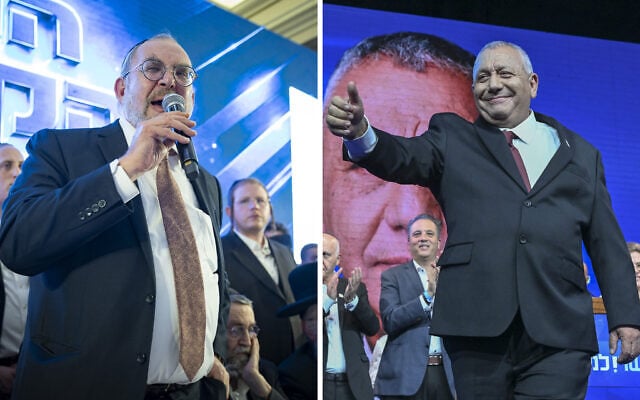
On the current coalition side of the house, lawmakers from the ultra-Orthodox Degel Hatorah faction within the United Torah Judaism party were to meet with their spiritual leaders, Rabbi Dov Lando and Rabbi Moshe Hillel Hirsch, on Saturday night, according to Hebrew media reports.
While the meeting was said to officially be a meet-and-greet, it comes after Friday reports said that figures in the ultra-Orthodox United Torah Judaism party are reportedly considering offering support to a minority government led by Eisenkot without formally joining his coalition.
Together with its other member faction, Agudath Hatorah, the UTJ party won seven seats in the election.
Herzog consultations on Wednesday
President Isaac Herzog will begin meeting with party representatives on Wednesday for talks during which they will tell him which candidate they back to try forming a government.
The meetings will take place at the President’s Residence in Jerusalem, and will be broadcast live, Haaretz reported. Depending on how long the process takes, the candidate that Herzog taps to have first try will already begin efforts next weekend or at the start of the following week, the report estimated.
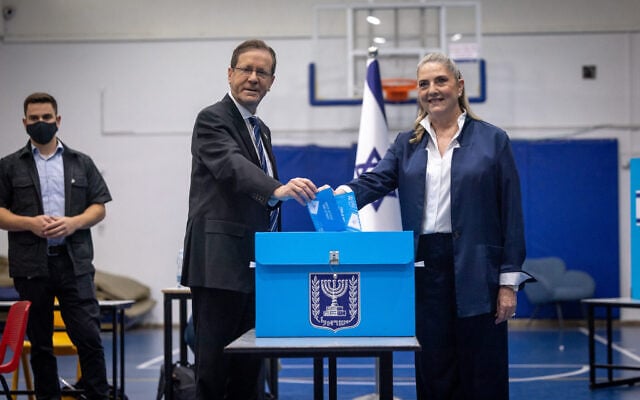
The talks with Herzog will begin after Central Elections Committee Chairman Supreme Court Justice Noam Sohlberg formally presents Herzog with the results of the elections, also on Wednesday.
As president, Herzog is empowered to choose who gets the first chance to form a government. Both Netanyahu and Eisenkot have vowed that they will try to form the next government.
Though by law he must consult with the heads of all Knesset parties before deciding, historically, presidents have often chosen the head of the largest faction to go first, in this case the Likud party. However, the most important test is which lawmaker secures the most recommendations as premier from fellow MKs.
Whomever the president chooses, that party leader would have 28 days to cobble together a government, and could request another 14 days if he said he needed more time to finalize a coalition.
If those efforts failed, Herzog could give the mandate to form a coalition to another candidate, and that person would then have 28 days to form a government, with no potential extension.
Failing that, there is one last opportunity for a government to be formed: A 61-MK majority could recommend to the president yet another candidate to try to form a government, with a maximum of 14 days for such an effort. If that didn’t work, new elections would be called.
The election on Tuesday happened four years after the end of a three-year period in which Israel repeatedly went to the polls five times, with the first four failing to produce stable governments.


The Times of Israel Community.