

Election panel director rejects claims of widespread voter fraud; Shin Bet: Foreign interference probe is ‘limited’
Shin Bet, whose chief had praised vote on election day, stresses suspicions remain unproven and do not implicate Arab voters as a whole; police say no basis for Likud’s claims of stolen election
 Add ToI as a Preferred Source on Google
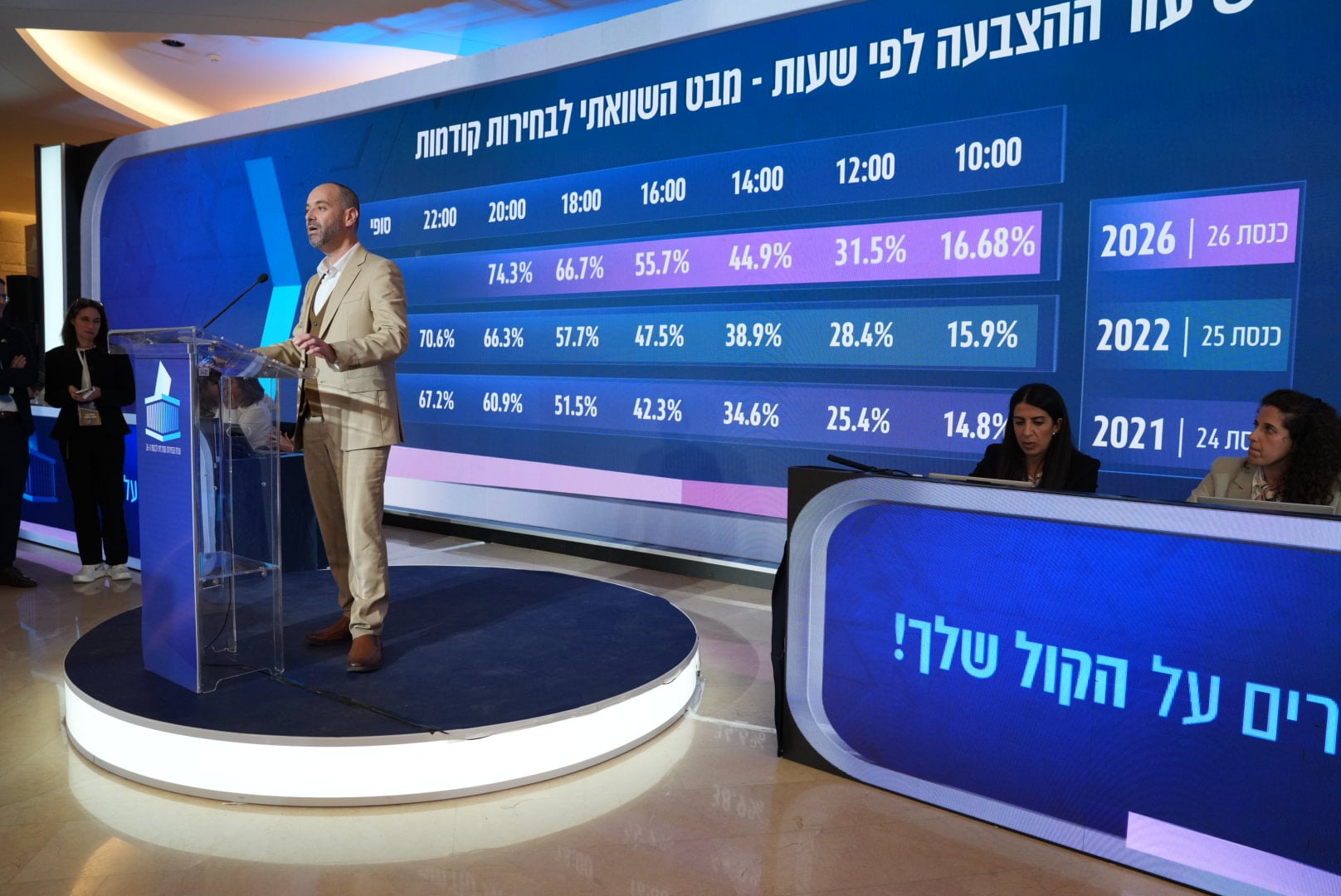
Acting Central Elections Committee Director General Dean Livne on Thursday rejected allegations of widespread fraud in Tuesday’s election as baseless, despite claims from Prime Minister Benjamin Netanyahu and his allies that the election was “stolen.”
The Shin Bet likewise clarified that its probe of foreign interference in the vote was “limited in scope” and was not based on information supplied by any political actor.
“The Knesset elections were conducted lawfully. The integrity of the elections at polling stations was rigorously safeguarded, and to the best of our knowledge, there is no basis for allegations of systematic violations of election integrity,” Livne wrote in a letter to Yesh Atid MK Vladimir Beliak, who sits on the committee.
Livne’s letter comes amid a political firestorm that has flared since Justice Noam Sohlberg, the chair of the election panel, asked Shin Bet Chief David Zini on Thursday morning to investigate suspicions of foreign interference, writing that “serious suspicions” had been brought to his attention regarding improper influence through funding provided by foreign entities acting against Israeli interests.
The allegations reportedly concern Qatar providing funding to drive Arab turnout, which the Gulf state has denied.
Sohlberg stressed that he could not attest to the substance of the suspicions and asked the Shin Bet to determine whether evidence substantiated or refuted them. Livne said that Sohlberg’s request concerned classified intelligence that warranted further examination, and that the information had not yet been verified.
Despite the uncertainty, Netanyahu and his allies have seized on the allegations to claim Tuesday’s vote — in which the coalition lost its majority in the Knesset while Arab parties gained a record number of seats — was illegitimate.
Arab party chiefs shot back that those claims were racist, while Gadi Eisenkot, the leading opposition candidate, warned that Netanyahu could use the allegations to delay the swearing-in of the new Knesset.
The Shin Bet downplayed the scope of the allegations in a statement later on Thursday, pushed back on reports that it had not informed election authorities of the intelligence it held, and rejected the claim that the allegations delegitimized the Arab vote.
It said the information underlying the suspected election interference originated from intelligence it had collected concerning foreign influence, and not from “any political party or political actor on either side of the political map.”
The agency said that it informed Sohlberg of the information it had before election day, the only figure outside the Shin Bet who had access to it before the vote concluded.
The domestic security service also stressed that the investigation was “focused and limited in scope, and does not cast aspersions on or accuse an entire sector that went out to vote democratically and legally.”
“Only those who acted in violation of the law will be dealt with,” the agency said.

The Shin Bet added that the investigation had not yet been completed and cautioned that “any statements concerning the content or nature of the suspicions do not reflect the agency’s position.” It said the findings would be presented to Sohlberg upon completion of the probe, describing him as “the authorized decision-maker on this matter.”
The agency also confirmed that Zini had met over the previous day with Netanyahu, Yashar leader Eisenkot and opposition leader Yair Lapid to personally brief them on the main suspicions being investigated. It said the meetings were held with Sohlberg’s approval and at his request.
Earlier, Likud had said it was providing police, the Shin Bet and the CEC with “hundreds of testimonies” and other evidence, including allegations of cash being distributed alongside Ra’am ballot slips, double voting and discrepancies between the number of voters and ballot envelopes.

Hebrew media reported Thursday that Likud believed Qatar and Turkey were the sources of money allegedly transferred to organizations working to increase Arab voter turnout.
Shin Bet chief said on election day that vote was ‘proper’
The Shin Bet statement came after Channel 12 had reported earlier that the security agency possessed intelligence about possible electoral interference before Tuesday’s vote but did not inform the wider Central Elections Committee before or during election day.
The outlet noted that the two bodies held an assessment on Tuesday, as voting was underway, and that Zini made no mention of the alleged concerns to the wider committee. The broadcaster said unnamed legal sources had expressed puzzlement over why, if there were serious concerns, they had not been raised on election day.
On Tuesday, Zini toured the CEC’s central command center and said that the elections were going well.
“Voter turnout is high, and we can confidently tell the citizens of Israel that the elections are being monitored and conducted in a proper and inspiring manner,” he said after touring the facility.

Channel 13 reported Thursday that two official sources connected to the affair had confirmed that the Shin Bet possessed intelligence concerning the possibility of unlawful transfers of money before the election.
Officials in the Central Elections Committee said the Shin Bet had participated in all situation assessments in the days before the vote but had not informed the committee as a body of such suspicions or intelligence, according to the report.
Had such information been passed on, according to the report, the Shin Bet would have been asked to act in real time to prevent any interference and an investigation would have been authorized before the election.
“The obvious question is how it is possible that the service had solid, supposedly earth-shattering intelligence before the election, yet did not ask to act or open an investigation before the election took place,” one official said.

Police say no basis for claims election was stolen
Police separately pushed back against Likud’s broader fraud allegations, with a police source telling Hebrew media that election day had passed with “very few irregular incidents” concerning election integrity and that there was “no investigative or intelligence-based substantiation” for claims that the election had been stolen.
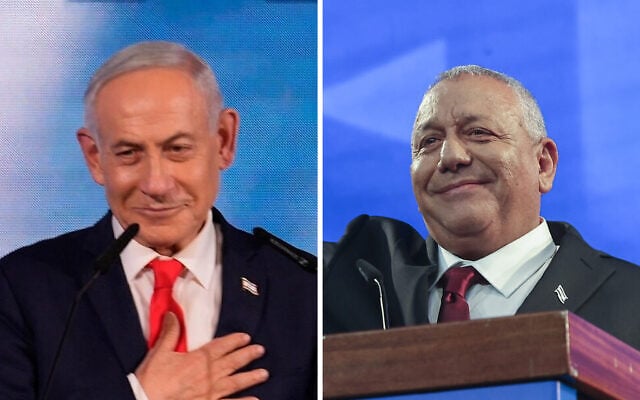
Eisenkot accused Netanyahu of trying to delegitimize the election and warned against using the foreign-interference probe to delay the publication of the results or the swearing-in of the next Knesset.
He called for an “impartial, thorough, and immediate” investigation into any foreign involvement, while saying it was unacceptable to use an unfinished probe “to undermine the official election results.”

Netanyahu’s bloc is expected to win with 53 seats, and Eisenkot’s opposition bloc 48, both short of a 61-seat majority in the 120-seat Knesset. The Arab-led Ra’am and the Joint List together hold a record 19 seats.






The Times of Israel Community.