

Election leaves Israel’s political future uncertain, but Netanyahu still clearly controls its present
Like Shimon Peres 30 years ago, Gadi Eisenkot thought the exit polls meant he’d defeated the Likud leader. Not so fast

 Add ToI as a Preferred Source on Google
David Horovitz is the founding editor of The Times of Israel. He is the author of "Still Life with Bombers" (2004) and "A Little Too Close to God" (2000), and co-author of "Shalom Friend: The Life and Legacy of Yitzhak Rabin" (1996). He previously edited The Jerusalem Post (2004-2011) and The Jerusalem Report (1998-2004).
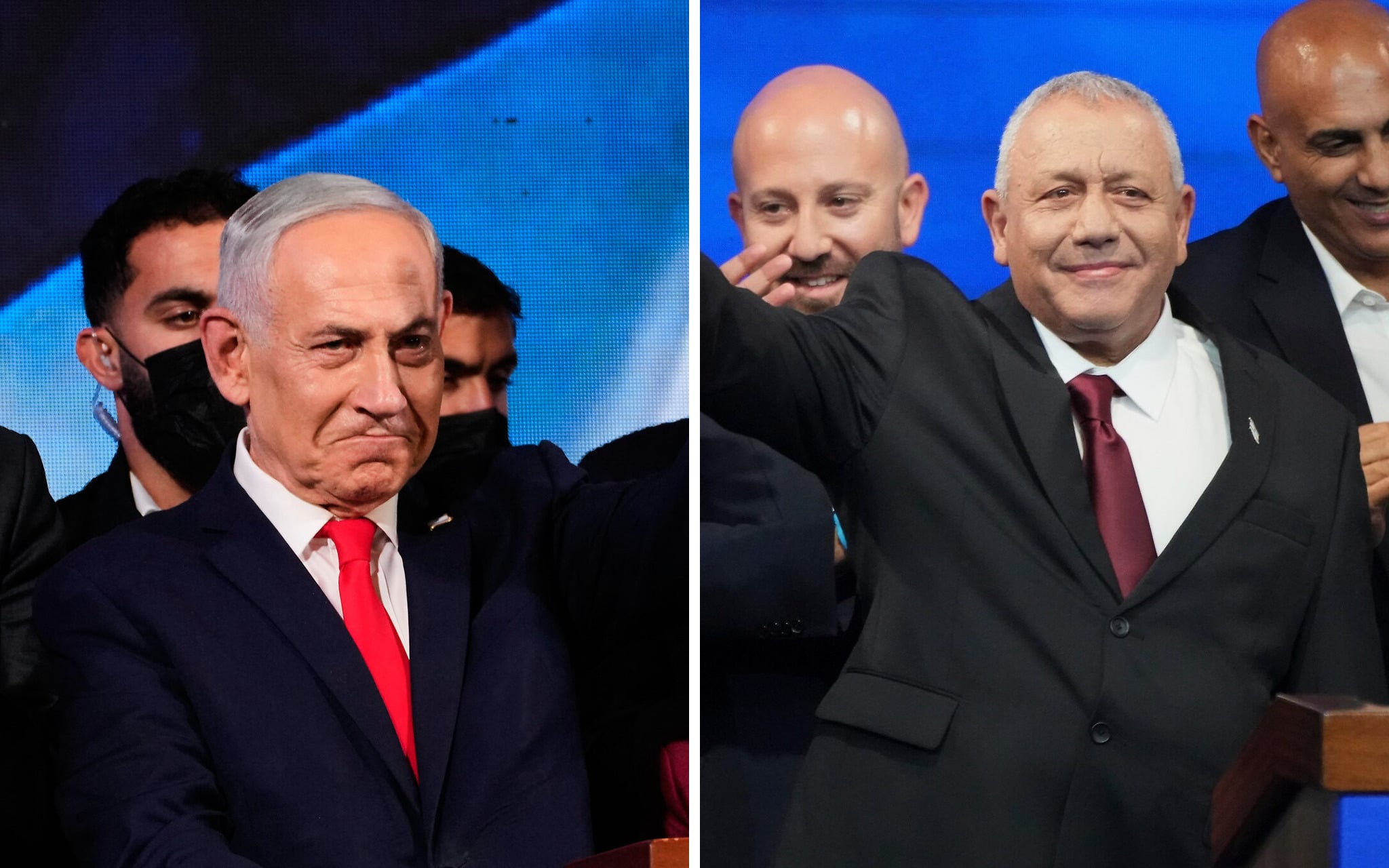
In the elections of May 1996, Shimon Peres, who had taken over the prime ministership following the assassination of Yitzhak Rabin, went to bed convinced by the exit polls that he had retained power. He woke up to find that he had been defeated, by less than 30,000 votes, by Benjamin Netanyahu.
Tuesday’s count is still unfolding as I write — and it may be heading the same way.
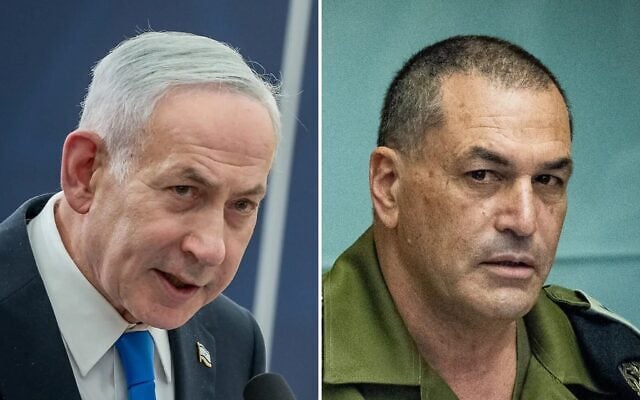
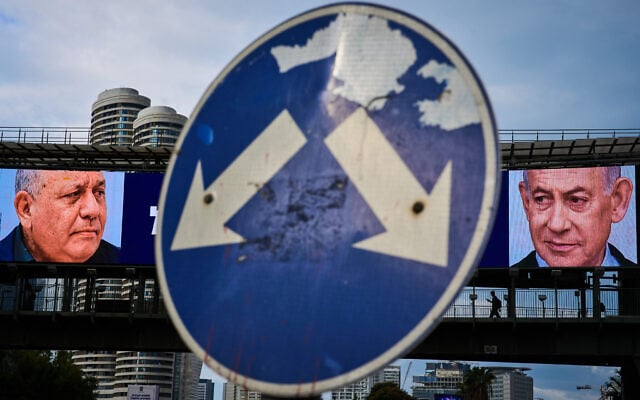
The 10 p.m. exit polls, after an election with an unusually high turnout, had allowed the opposition frontrunner, Gadi Eisenkot, to quickly declare, if not victory, then a determination to carry out what he said was “the will of the people” and send Netanyahu home.
At that early stage of the long, long night, Netanyahu’s Likud was looking like the biggest party. But the anti-Netanyahu Zionist bloc headed by Eisenkot was a little ahead of the parties that make up Netanyahu’s coalition. And the two Arab-led parties taking the rest of the seats are no allies of Netanyahu. Eisenkot may not have claimed a win, but he reasonably figured he was not going to lose.
But as so often, the initial exit polls understated the right, and were revised repeatedly through the night in Netanyahu’s favor. By 3 a.m., the Netanyahu bloc was ahead or level with Eisenkot’s, and it was the incumbent who, while also not using that “victory” word, was promising to form a government of his own — of the “strong, national, right-wing” variety.
How does any of this make sense, and where will Israel’s governance wind up?
Eisenkot may still have justification for claiming that the will of the people, as reflected in their vote, is for a change of government. The five outgoing coalition parties won 64 seats between them in 2022; as things stand, they’re heading for the low 50s. The other almost 70 of the 120 incoming Knesset members are firmly in the anti-Netanyahu camp.
But Netanyahu also has justification for arguing, as he did in his elated speech, that “the right-wing bloc has a clear, decisive majority among the Zionist public, among the Jewish public and all those who support the Jewish state.” Bring together Netanyahu’s outgoing coalition parties with Avigdor Liberman’s opposition Yisrael Beytenu, the right-wingers in Naftali Bennett’s opposition B’Yachad party, and some members of Eisenkot’s own center-right Yashar, and you can end up with a figure of around 70, as well.
The problem is that neither of these 70-strong groupings can govern Israel. Eisenkot and most of his Zionist anti-Netanyahu allies are adamant that they will not partner with the Arab parties. And the “right-wing bloc” that Netanyahu said had won a decisive majority is not a “bloc” at all — including, as it does, leaders such as Bennett, Liberman and Eisenkot who want nothing to do with him.
How might this deadlock be resolved? That job will fall to President Isaac Herzog. Once the final Knesset picture is clear, he will consult with the representatives of all the parties that have won seats in parliament, hear their suggestions for who should be prime minister, and try to figure out who has the best chance of cobbling together a viable government.
Ideally, Herzog would want to try to broker some kind of “unity” partnership between the mainstream Zionist parties. He would also not want to be seen as excluding the Arab parties, legitimate representatives of Israeli citizens, from his calculations. But Israel’s political reality is a considerable distance from ideal.
There is no way, to mention just one major obstacle to any “unity” alliance, that Gadi Eisenkot, whose son was killed fighting in Gaza, would sit in a government that does not establish a state commission of inquiry into the failures surrounding the October 7, 2023, Hamas invasion and massacre. And there is no way that Netanyahu, who has resisted such an inquiry for three long years, is going to change course.
As I said, the election story is still unfolding. The distribution of seats may well change more, and maybe much more when large numbers of soldiers’ votes are tallied toward the end of the count. Netanyahu might understandably assess that those votes will strengthen his position.
But in any case, he made abundantly clear in the early hours of Wednesday morning that he’s not about to heed Eisenkot’s urgings and vacate the political arena.
Eisenkot, plainly referring to Netanyahu’s recent reported efforts to initiate a fresh conflict with Iran, reserved a passage in his speech to urge Israel’s security chiefs not to be pressured by the “caretaker” prime minister into actions that serve Netanyahu’s personal needs rather than Israel’s.
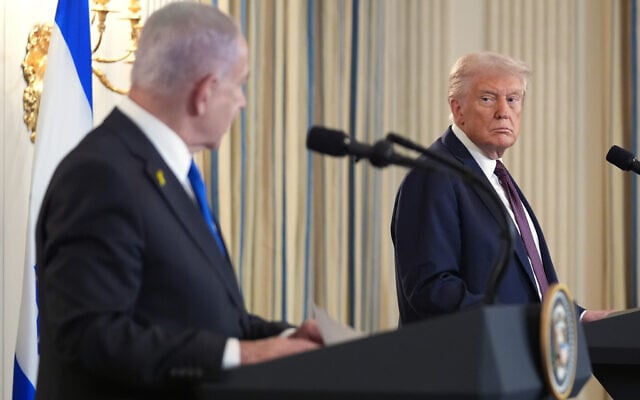
Speaking a few hours later, Netanyahu declared that Israel has a “a historic, once-in-a-lifetime opportunity, with our partner President Trump, to remove the existential threat from Iran once and for all.” And he added: “We must not let any extraneous considerations divert us from this sacred mission.”
While confusion and uncertainty surround the question of Israel’s next government, the incumbent appears determined to maximize his control of this one.



The Times of Israel Community.