

Activist Sheffi Paz, who fought presence of migrants in south Tel Aviv, dies at 74
Paz’s activism drew sharp criticism from some south Tel Aviv residents and strong support from right-wing politicians; she acknowledged the toll it took on her supportive family
 Add ToI as a Preferred Source on Google
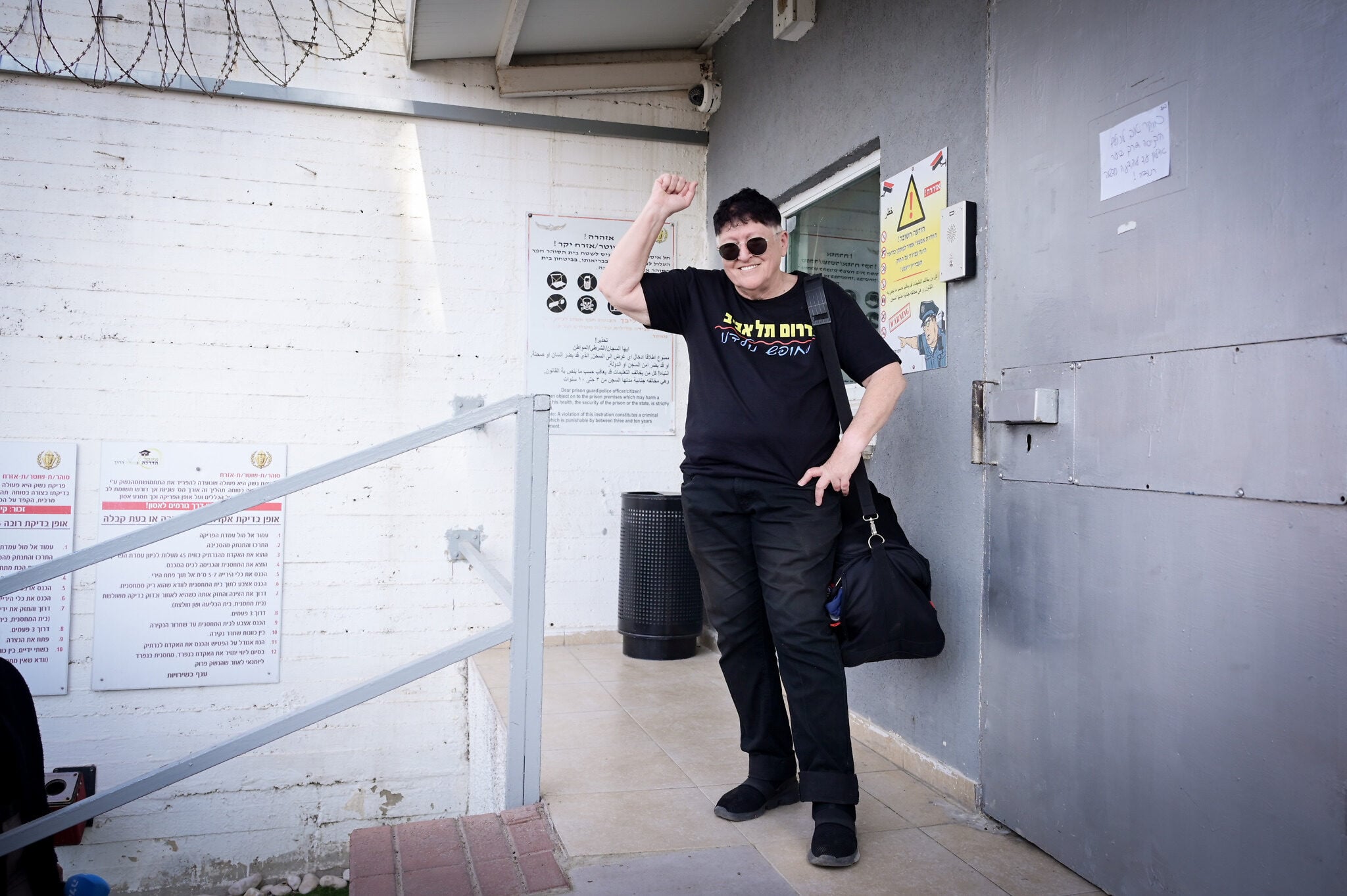
Right-wing activist Sheffi Paz, a prominent and longtime advocate for deporting migrants and asylum seekers in her south Tel Aviv neighborhood, has died at the age of 74, the Otef Tachana Merkazit group announced.
Paz was recently diagnosed with cancer for the fourth time, after recovering three times previously, according to the civil-society organization, which says it fights illegal immigration and crime rates around Tel Aviv’s partly abandoned central bus station, an area where many thousands of migrants — mainly Eritrean and Sudanese men — are concentrated.
The daughter of Holocaust survivors who immigrated from Poland as a child, Paz started leading a local battle in 2013 against the growing migrant presence in her neighborhood, arguing that the migrants were a source of violent crime, including rape, and that it was being tolerated only because south Tel Aviv is a socio-economically disadvantaged area.
Paz came out as gay at age 22. She raised a son, Yotam, with her longtime partner Tali Rachlin-Paz. She said she had been a left-wing activist until living in south Tel Aviv changed her views.
Over the years, she orchestrated protests that included vandalism and trespassing.
In November 2024, Paz began serving a 45-day prison sentence at the Neve Tirtza women’s prison in Ramle for offenses committed in 2020, including vandalism against the European Union diplomatic mission in Tel Aviv and trespassing at a preschool for children of asylum seekers.

She refused to convert her sentence to community service, claiming she was the victim of “selective enforcement.” Far-right ministers who supported her said her offenses paled in comparison with the activities of some anti-government protesters.
“I’ve been arrested enough times in my life. Handcuffs don’t scare me, and that’s the price I’m willing to pay,” she said to Channel 12 before beginning her sentence.
She eventually served half of the sentence before being released because of prison overcrowding.
She was banned in 2021 from the Knesset after she called for the execution of a lawmaker who backed offering asylum to Afghan refugees.
In 2020, Paz broke into a preschool for children of asylum seekers in south Tel Aviv during the school day. Paz later told Channel 12: “In hindsight, perhaps we shouldn’t have gone in… We didn’t raise a hand, we didn’t hurt the children, we didn’t touch them.”
Also in 2020, Paz was detained on suspicion of spray-painting slogans outside the home of then-president of the Supreme Court Esther Hayut.
The graffiti included slogans that read: “Esther Hayut, you buried Zionism,” “Thanks for burying the right of return in Tel Aviv,” and “The High Court destroyed south Tel Aviv.”
In 2018, she was among activists who campaigned against an agreement between Prime Minister Benjamin Netanyahu’s government and the UN refugee agency that would have seen thousands of African migrants given temporary status in Israel. Netanyahu walked back the agreement shortly after reaching it following right-wing blowback.

Other south Tel Aviv residents challenged Paz’s approach. They argued that the neighborhood’s problems came from longstanding neglect and the central bus station, rather than the asylum seekers alone.
In recent years, tens of thousands of African migrants in Israel have been detained, threatened with deportation, and faced hostility from lawmakers and residents. The High Court has pushed back against government plans to jail or deport the migrants, saying a solution in line with international norms must be found.
While many of the migrants say they are refugees fleeing conflict or persecution, Israel views them as job-seekers who threaten the Jewish character of the state.
The Africans, mainly from war-torn Sudan and dictatorial Eritrea, began arriving in Israel in 2005 through its porous border with Egypt, after Egyptian forces violently quashed a refugee demonstration in Cairo and word spread of safety and job opportunities in Israel. Tens of thousands crossed the desert border, often after enduring dangerous journeys, before Israel completed a barrier in 2012 that stopped the influx.
“Sheffi dedicated her life to the residents of south Tel Aviv,” Otef Tachana Merkazit said in a statement. “She was a voice for the silenced, forgotten people, and proved time after time that even a single person, armed with a truth and self-belief, is capable of shaking an entire country.
“Sheffi sought justice for the neighborhood residents, and wasn’t willing to be silent in the face of the injustice. Even when she was persecuted, arrested and sent to jail, she continued to stand tall.
“You fought like a lioness for the residents and drew many admirers to your side – and naturally, many fierce enemies as well,” Knesset Speaker Amir Ohana, a member of the Likud party, said in tribute.
In a 2025 interview she gave to Arutz 7, Paz said her activism took a toll on her family, despite their support for her.
She said her son wanted the family to move away from south Tel Aviv, but she could not imagine leaving.
“He knows that I would die, or really wither away, if I left south Tel Aviv,” Paz told the right-wing outlet. “It’s a very strong sense of mission.”






The Times of Israel Community.