

Lizards have been shedding tails to stay safe for 99 million years, Israeli research finds
Tel Aviv University student finds evidence locked in tiny piece of amber; lizard tails keep wriggling long after detachment, distracting predators while the animal escapes
 Add ToI as a Preferred Source on Google
Sue Surkes is The Times of Israel's environment reporter

A tiny piece of amber from Myanmar, spotted in the archives of Tel Aviv University’s Steinhardt Museum of Natural History, reveals that lizards’ extraordinary ability to shed their tails to escape danger has existed for 99 million years.
After detachment, lizard tails can keep moving for up to an hour, distracting a predator while the tailless reptile scuttles to safety.
Previous research has shown pre-formed fracture surfaces at intervals along a lizard’s tail.
But this is the first time scientists have confirmed that lizard autotomy — voluntary self-amputation of a body part — stretches back to the Late Cretaceous, when dinosaurs still roamed the planet.
Tel Aviv researchers had long assumed the dark residue in the 18-millimeter-long (0.7-inch) piece of amber to be a small twig or insect part, until PhD candidate Dolev Fabrikant held it up under magnification and spotted tiny, overlapping scales.
To examine the opaque amber without risking damage to the unique specimen, Fabrikant and his supervisor, Leonidas-Romanos Davranoglou of the university’s Zoology School, recruited Ahmed Nasser from the Agriculture Ministry’s Volcani Institute to perform advanced micro-CT scanning.
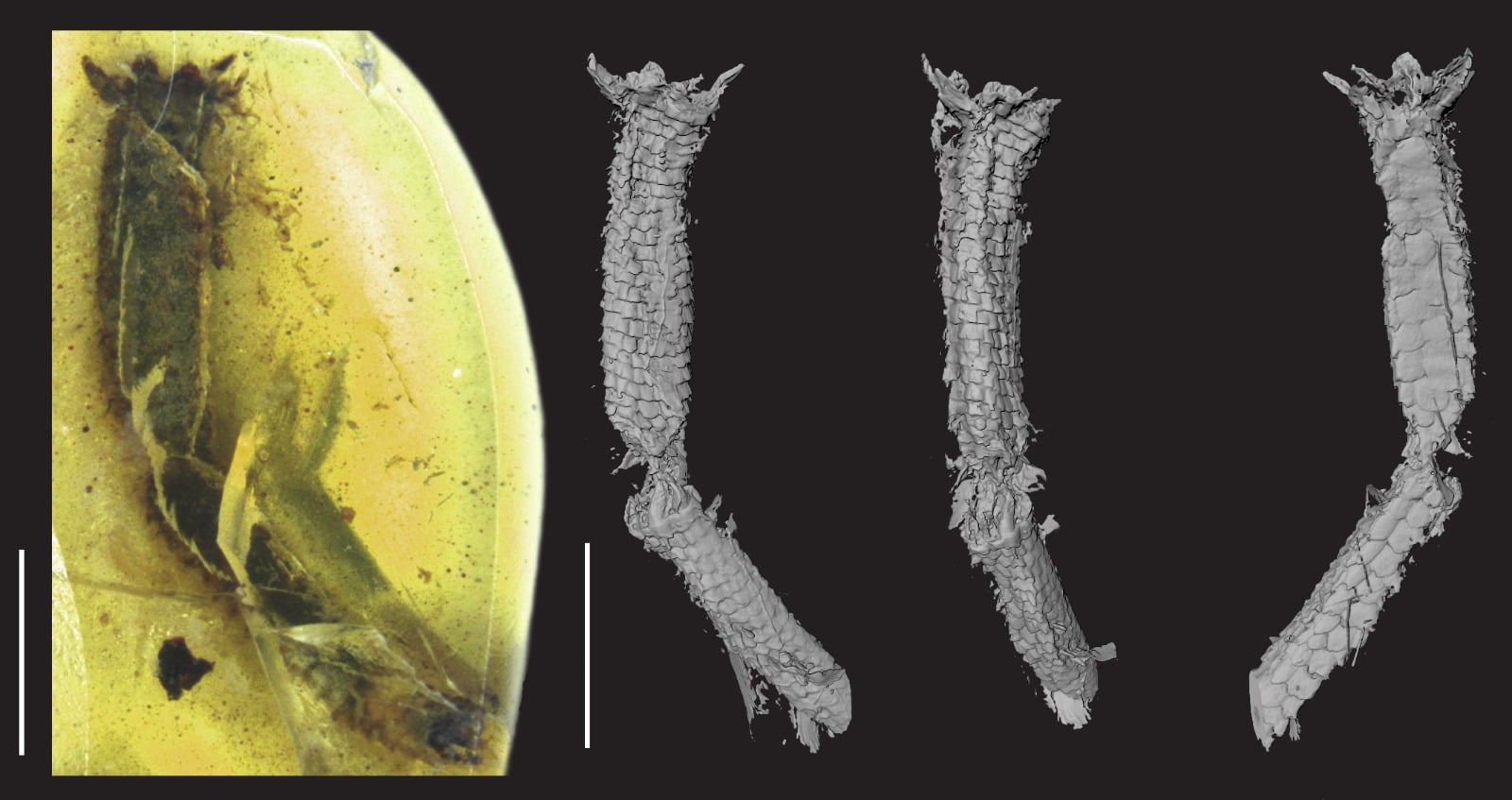
The resulting 3D X-ray reconstructions revealed a perfectly preserved, symmetrical ring of tissue at the detachment point, mirroring the exact muscle rosettes seen in living lizards that deliberately sever their tails.
The clean break lacked the crushing patterns typical of accidental injuries, confirming a deliberate release.

The findings have been published in the peer-reviewed journal Palaeontologia Electronica.
Co-author Apostolos Christopoulos of the National and Kapodistrian University of Athens noted that while the isolated tail cannot confirm the exact lizard species with candidates ranging from wall lizards to ancestors of monitor lizards — the behavioral evidence is unequivocal. Whether the creature dropped its tail to free itself from sticky tree resin or to distract a hungry predator, the fossil confirms that this brilliant escape tactic has remained virtually unchanged for nearly 100 million years.









The Times of Israel Community.