

The conference was never the point
What more than a decade of Z3® has taught us about Jewish agency, institutional change, and the future of Jewish Peoplehood.
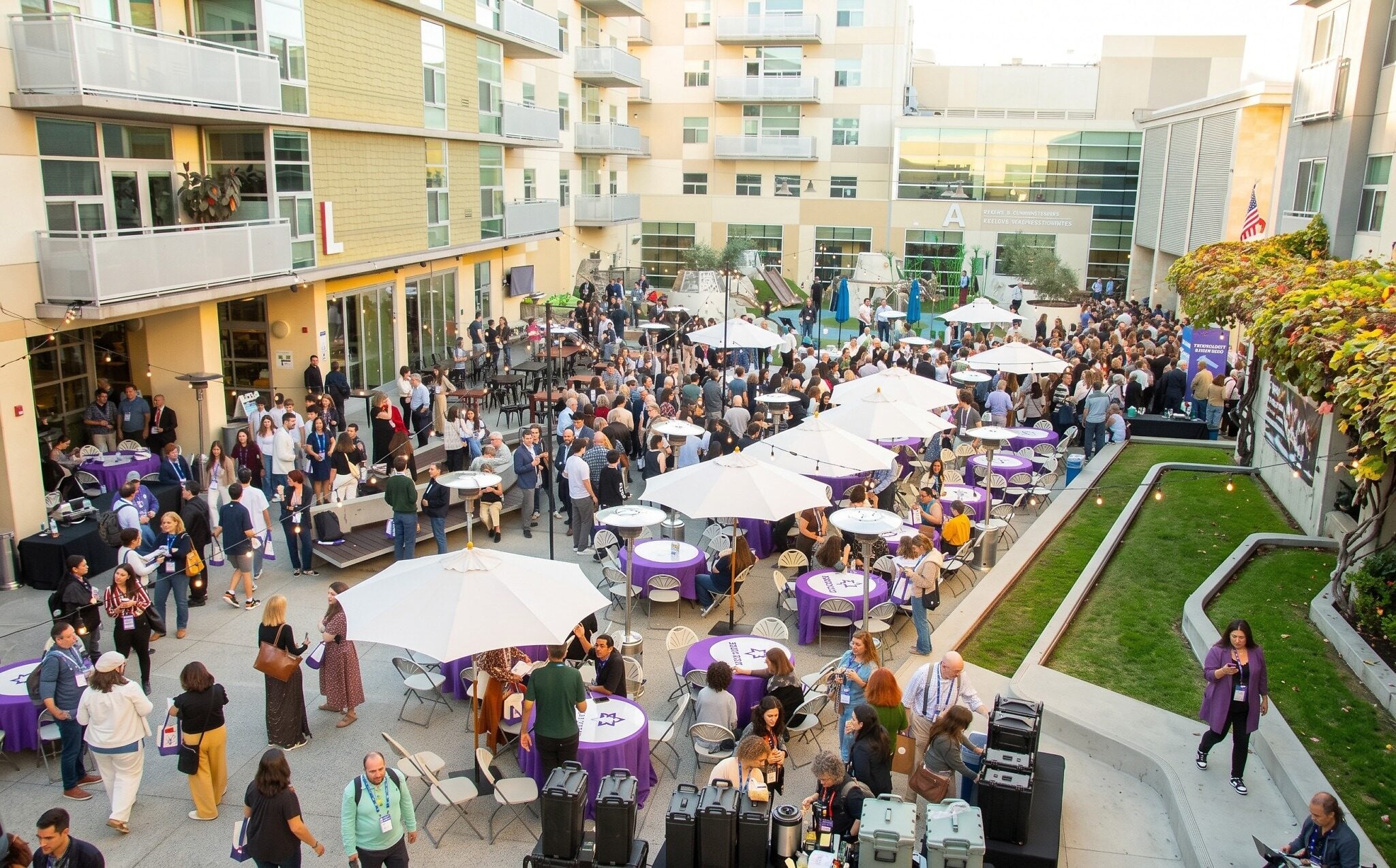
Angie Arnold’s Hebrew-language preschool classroom at the Minnesota JCC was already taking shape when she came to Palo Alto. What she did not yet have was a clear path for how to make it work.
Shortly before participating in the Z3® Early Childhood Education Leadership Lab, Arnold’s center had opened a classroom modeled on the OFJCC’s Ulpanon program. In Palo Alto, she observed classrooms, connected with educators doing the work, and began to see more clearly what the program could become back home.
But Minnesota did not have all the same resources. Without a full-time Israeli educator, Arnold and her team found another way. They brought in community volunteers and integrated Hebrew language, Israeli culture, books, visual materials, and everyday learning experiences into the classroom. The program grew into a thriving space where children were learning Hebrew and about Israel, families were excited by what their children were experiencing, and Arnold began helping teachers bring Israeli materials into classrooms beyond the original program.
Minnesota did not reproduce Palo Alto. It took an idea, assumed responsibility for it, and made it its own.
That kind of local authorship, rather than the two days in Palo Alto, is what we are actually trying to produce.
What happens on Monday morning?
Z3 began in 2015, when the debate over the Iran nuclear agreement was tearing through American Jewish communities. At the Oshman Family JCC, Zack Bodner and Ronit Jacobs, who still leads the JCC’s Israeli Cultural Connection, along with lay leaders including Orli Rinat, wrestled with a question: What should a JCC do when its own members disagree profoundly about Israel?
If the JCC was to be the living room of the Jewish people, and we know people disagree in the living room, we needed to create a place where we could disagree. So we invited the argument in and created the first Zionism 3.0® conference.
The name’s rationale was straightforward. This was the third era of modern Zionism, in which there was both a strong sovereign Jewish state and a strong Jewish Diaspora for the first time in Jewish history. The first era, Zionism 1.0, predated the establishment of the modern State of Israel and was defined by Herzl’s vision for an autonomous country for the Jewish People. Zionism 2.0 reflected the first half century of modern Israel, framed by Israeli negation of the diaspora, when world Jewry was meant to have a stake but no say in the life of Israel.
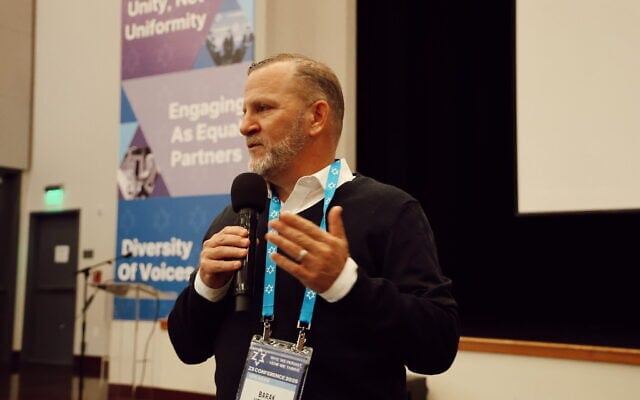
Today, with two enduring centers of Jewish life, the relationship cannot remain one in which Israel acts while Diaspora Jews only support, defend, fund, or even criticize. That idea became the foundation for Z3’s three guiding principles: Unity, Not Uniformity. Engaging as Equal Partners. Including a Diversity of Voices.
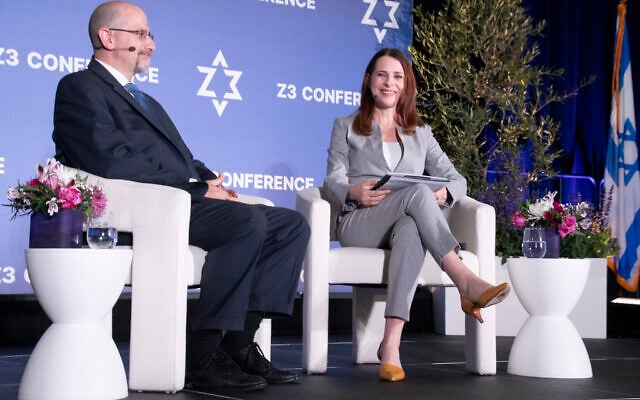
The big conference could make those principles real for a day. It could put Jews who disagree in the same room and expose them to ideas they would not otherwise hear. And it could provoke truly brave conversations. Indeed, it did just that. But then everyone would go home to preschools and camps, budgets and staff meetings, boardrooms and echo chambers. The institutions they returned to still had to decide what, if anything, would change.
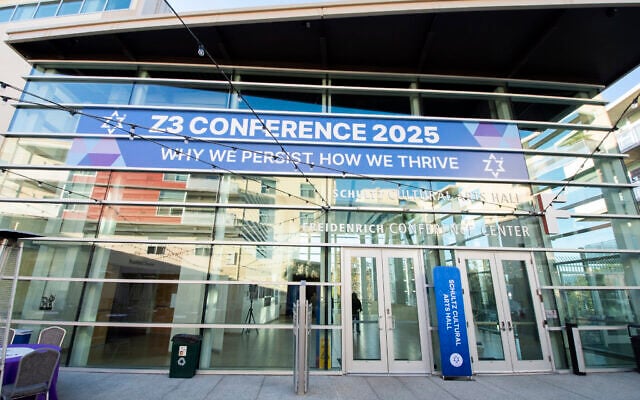
We recognized that if Israel, Zionism, and Jewish Peoplehood matter only while the Z3 banner is hanging, we have not changed Jewish life at home. And that’s really the goal.
So, we began wondering how we might help institutions guide their communities to develop the judgment, relationships, and responsibility to act together. We asked how we might help the people who run those institutions bring these big ideas back home. And the answers we received led us to build something transformative.
From audience to authorship
Jewish agency did not begin with Zionism. What Zionism restored was a particular and enormously consequential form of agency: political sovereignty. Jews once again became collectively responsible for territory, citizenship, public institutions, military power, political decisions, and their consequences.
American Jews do not possess state sovereignty, but we do possess extraordinary communal, cultural, philanthropic, and political capacity. As Jewish collective power expanded, American communal life became increasingly voluntary and professionalized, and Jewish organizations became very good at delivering programs, services, education, and experiences.
That professionalism is a strength. The tension comes when delivery becomes the dominant relationship between an institution and the people inside it. We have become very good at asking Jews to attend, register, donate, learn, receive, and support. Less often do we ask what happens next: What do you carry forward? What are you expected to help build?
A community designed primarily to provide Jewish life differs from one that also asks people to help create and sustain it. The consumer asks, “What does this community offer me?” A participant with real standing must also be able to ask, “What is my responsibility for this community?”
We have identified that transformative shift as moving from audience to authorship.
This is why Z3 lives inside a JCC and not off on its own. This is not incidental. JCCs are our primary institutional bet because they are intergenerational, broadly communal, and not organized around a single denomination or political ideology. Preschoolers and grandparents, Israelis and Americans, religious and secular Jews, serious learners and people who came to swim all pass through the same institution. Jewish and non-Jewish neighbors share its classrooms, camps, and public life.
That breadth creates something increasingly rare: proximity. People who might otherwise sort themselves into separate religious, political, generational, or social worlds repeatedly encounter one another inside a Jewish institution. They do not have to agree, but they do have to share some space. At its best, a JCC can turn that proximity into a Jewish public square where disagreement happens inside an ongoing relationship and a community decides what it will value, fund, teach, celebrate, and build together.
We have called that aspiration an “island of sovereignty.” A JCC is obviously not a state. But outside Israel, it can approximate something essential about Jewish civic life: a community inhabiting a shared public world and accepting responsibility for what happens within it.
JCCs are especially well positioned to create that kind of space because their breadth brings different kinds of Jews, and the non-Jews who share communal life with them, into repeated proximity. The point is not simply to gather them under one roof, but to create a place where a community makes consequential choices about what it will value, fund, teach, celebrate, and build together.
The ambition is not to add a patina of Israel programming, produce better advocacy, or organize the community around the latest crisis. It is to help the JCC become a center of gravity for Jewish communal life, where Israel and Jewish Peoplehood are woven into institutional identity, and people acquire real standing in shaping the Jewish future around them.
Jews do not become sovereign by being consulted. They become sovereign by being responsible.
What four years can look like
In October 2022, six months after the first Leadership Lab cohort, evaluators Shlomi Ravid and Ezra Kopelowitz went back to the participating JCCs. They interviewed ten of the fifteen JCCs. Two others had already lost the staff members who attended, a reminder of how fragile professional development can be when the institution doesn’t carry the work.
At the time, San Diego was still tentative, as Israel and Peoplehood were not a current institutional priority, and a planned project had been postponed. Austin had made Israel and Peoplehood one of four pillars in its strategic plan.The JCCs in Tucson and North Miami Beach were beginning staffing and structural investments. The evaluators saw this data and estimated that meaningful institutional change would take three to five years.
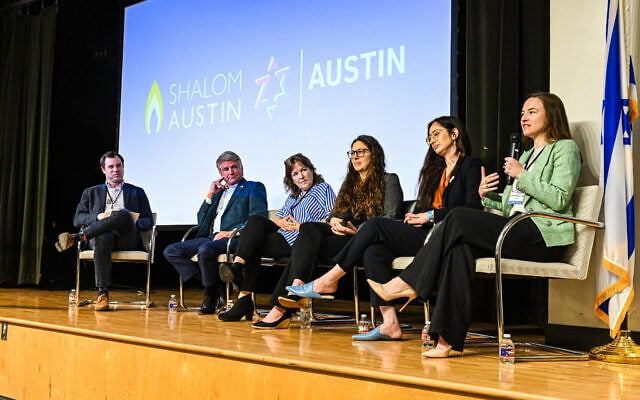 Four years later, that work is taking shape in communities across the country. San Diego has hosted a locally developed Z3@ gathering and is planning another. Shalom Austin has hosted two, as has the Michael-Ann Russell JCC in North Miami Beach. Tucson hosted its first in 2025 and is preparing for its second on November 15. Cincinnati has also joined the effort. These are not reproductions of the Palo Alto conference. They are communities taking the ideas, adapting them to their own circumstances, and making the work their own.
None of this is ours alone. Those boards and executives made the decisions, raised the money, carried the risk, and built the work. What we can say now is: the work did not end when people came home.
What we got wrong
We have also learned that sending a strong professional to a great program is not enough.
Our 2025 Leadership Lab evaluation found a striking difference. Among participants from JCCs where colleagues were already talking across departments about Israel and Peoplehood, 67 percent left able to identify concrete opportunities in their own work. Among those who did not know where their institution stood, 25 percent did.
We had treated the professional as the primary unit of change. We learned that the institution has to come into the room. That is why the Lab is increasingly being built around delegations: colleagues arrive together and internal conversations begin before Palo Alto and continue after they leave. Inspiration matters, but an inspired professional who returns to an institution that has not asked the same questions can end up alone.
How the work travels
This evolution is why Z3 now looks like more than a conference. The conference creates an experience of Jewish public life. The Leadership Lab carries the question into institutional practice. Z3@ conferences help communities build their own local expression rather than reproduce Palo Alto. The Z3 Institute gives the questions generated by practice somewhere to deepen.
Those are not separate products looking for a common brand. They are parts of one theory of change: experience can open a question; institutions have to carry it; communities have to author it; ideas have to return to practice.
Success should eventually mean less dependence on our JCC in Palo Alto and the Z3 Project. JCC Association of North America has been a central part of the work from the beginning: Leah Garber helped build the partnership through its Center for Israel Engagement; Rabbi Daniel Septimus, now leading its Center for Jewish Peoplehood, came through the first Lab cohort while leading Shalom Austin; and Barak Hermann, now JCC Association’s president and CEO, sent his team from the Baltimore JCC when he was its CEO.
The more the field develops its own capacity to carry, adapt, and improve the work, the closer we are to the outcome we actually want.
The future we are walking into
The years since October 7 have made the asymmetries between Israel and the Diaspora impossible to treat as abstractions. Israelis live with the immediate consequences of Israeli political decisions in ways American Jews do not. American Jews exercise different forms of power and live with different forms of freedom, vulnerability, and responsibility. And the explosion of antisemitism raises the stakes considerably.
Equal partnership still does not mean equivalence. It means that neither center can understand itself only as the subject of the other’s decisions. For Israel, Jewish agency requires wrestling with the obligations that accompany actual political power. For Diaspora communities, it requires refusing to define our role in Jewish history only through minority status or through support for Israel. The institutions we build here are themselves part of the Jewish future.
Z3 began with a conference about the relationship between two centers of Jewish life. More than a decade later, we have come to believe that the quality of that relationship depends in part on the kinds of Jews and institutions those centers produce.
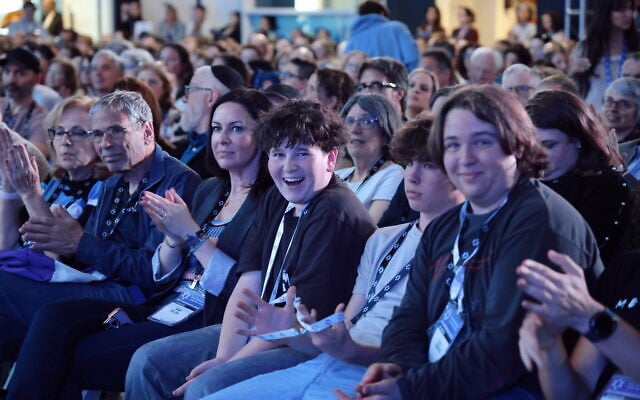
So, yes, this November we will gather again in Palo Alto for our twelfth conference, and we want it to be extraordinary. But the conference was never the point.
If Z3 succeeds, the result will not be a network of identical conferences or institutions dependent on us for their Jewish content. The result will be communities capable of taking responsibility for the Jewish life in front of them, more JCCs that can serve as centers of gravity for their communities, and more people willing to take an idea, adapt it to the place they actually live, and build something they can call their own.
The twelfth Z3 Conference will take place November 1, 2026, at the Oshman Family JCC in Palo Alto. The 2026 Leadership Lab continues through November 3. Learn more about the Conference, Leadership Lab, and the wider Z3 Project at www.z3project.org.
Z3 Project is an initiative of the Oshman Family JCC. Z3 is a registered trademark.