

Netanyahu blames French unrest on ‘invasion of extremist Islam’; France set to deploy troops
As relative calm returns amid targeted curfews, PM claims he told Macron after Oct. 7 that ‘if we don’t eliminate them here, you will have them in Paris — and that is exactly what is happening’
 Add ToI as a Preferred Source on Google
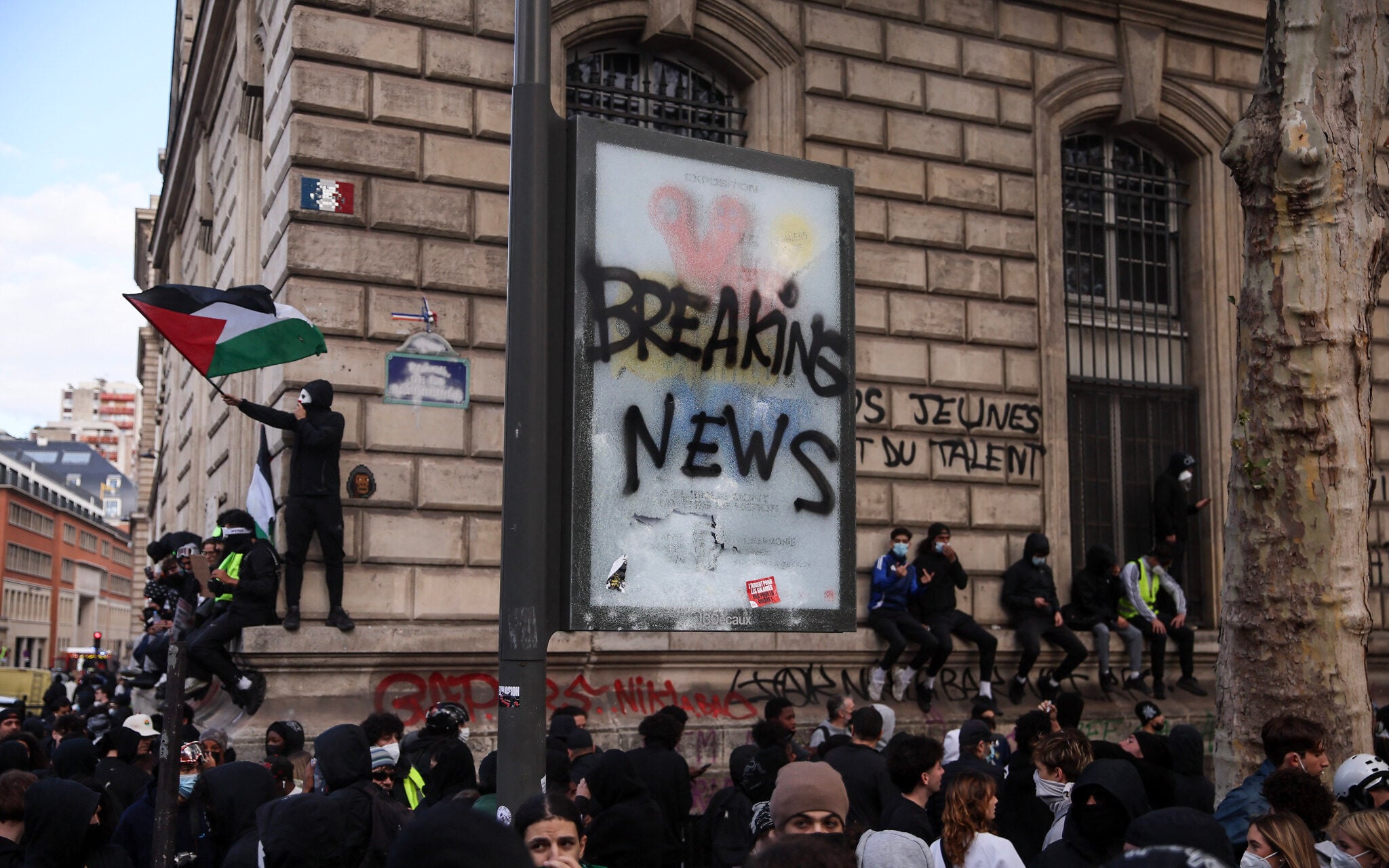
Prime Minister Benjamin Netanyahu on Tuesday said France has been hit by an “invasion of extremist Islam,” after weekend protests over economic conditions degenerated into riots.
In an interview, the prime minister said French leaders failed to prepare for the unrest, claiming it was fueled by extremist Muslims despite the diverse mix of French society that took to the streets in major cities, including the capital Paris.
“They did not prepare in time; they simply gave up. They succumbed to the invasion of extremist Islam,” Netanyahu said, according to the interpreter’s French translation on French-language channel i24News.
Asked what advice he would give to France, Netanyahu said: “Fight back, do not pursue a policy of appeasement — fight against the extremists.”
“They will devour France, they will devour Europe,” he continued. I told my friend, President [Donald] Trump, ‘Western civilization that is ready to fight — and that is Israel.’ We of course protect and defend ourselves but in doing we are protecting you all.”
He also said he told French President Emmanuel Macron after Hamas’s October 7, 2023 attack that “if we do not eliminate them here, you will have them in Paris — and that is exactly what is happening.”

Trump also seized on the French protests to blame immigration, urging Europe and Macron to tighten borders.
“What’s happening in France has to do with immigration, not schools, not anything,” Trump told reporters in Washington on Monday. “It’s immigration, and I told President Emmanuel Macron, close up your borders.”
Trump made combating illegal immigration a central pledge of his 2024 campaign, at times relying on false claims that played on racial fears.
Netanyahu in August derisively called Britain an “Islamic republic,” drawing condemnation from London which called the remarks “completely unacceptable.”
His remarks on France came as the the French government announced it would reinforce police with troops and mount a huge security operation for more protests planned on Saturday, acknowledging failures in its response to last weekend’s violence.
“The deployment next Saturday will be massive,” Prime Minister Sebastien Lecornu said, adding that the immediate priority was to restore order after rioting and looting swept Paris, Marseille, Lyon and other cities on October 17.
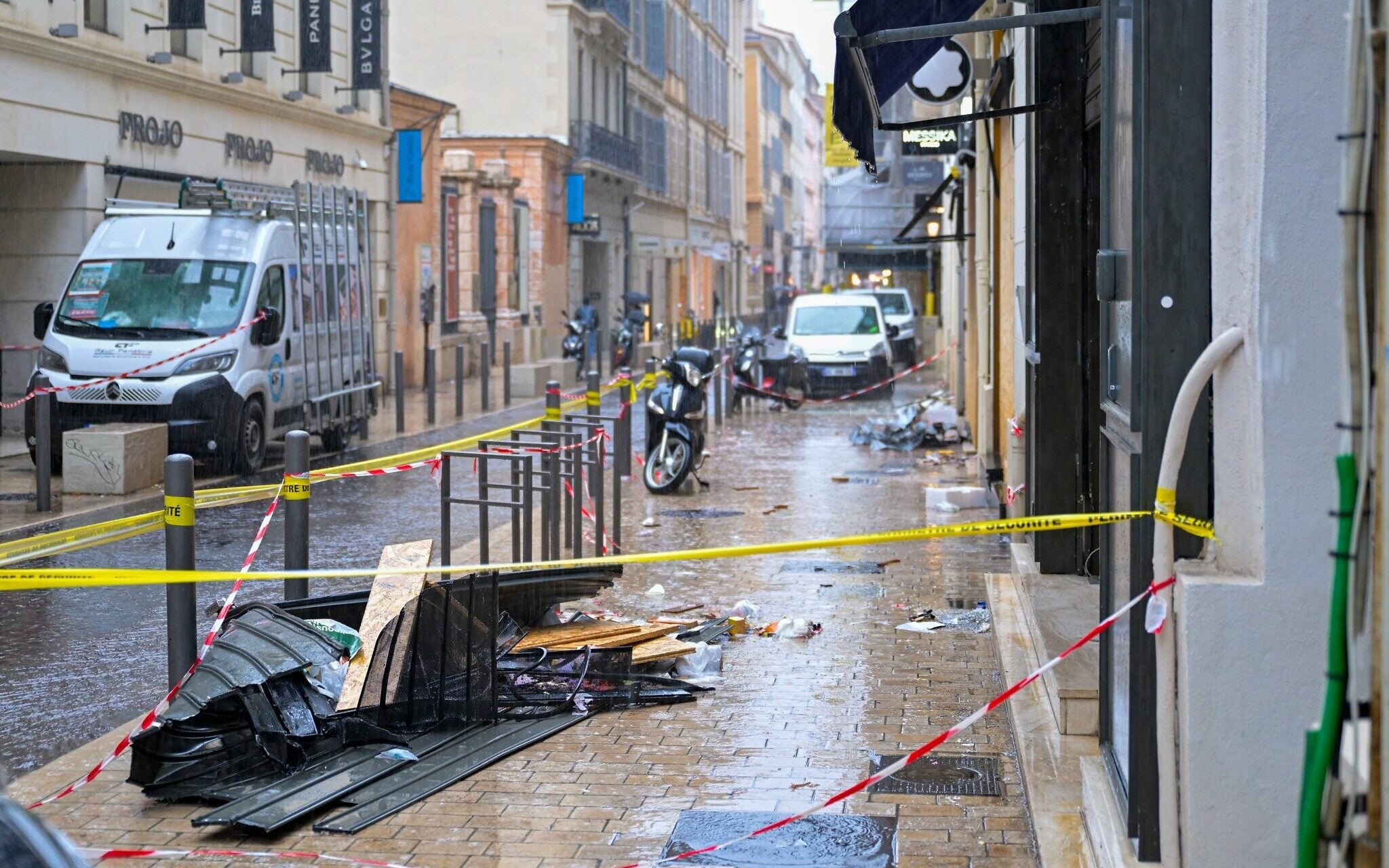
In a sometimes rowdy debate, Interior Minister Laurent Nunez said the military would be deployed alongside police, while the government pledged to overhaul tactics after widespread criticism that city centers had been left vulnerable.
Targeted curfews help restore calm
Framing the crisis as a choice “between violence and the republic,” Lecornu blamed the unrest on far-left groups, who in turn have accused the government of underestimating public anger over high living costs and declining public services.
The turmoil shocked France because of both its scale and the apparent inability of police to contain it, inflaming tensions ahead of presidential elections next year with candidates from the far right and hard left performing strongly in polls.
Protests in other European countries, including Italy and Albania, have added to concerns that anger over living standards risks spreading around the continent at a time when many nations, including France, are struggling with budget woes.
A night of relative calm in France followed targeted curfews imposed in several areas affected by the chaos, which the government said had helped reassert control. The localized curfews, some directed at children and teenagers under age 18, were extended to Tuesday night, police said.
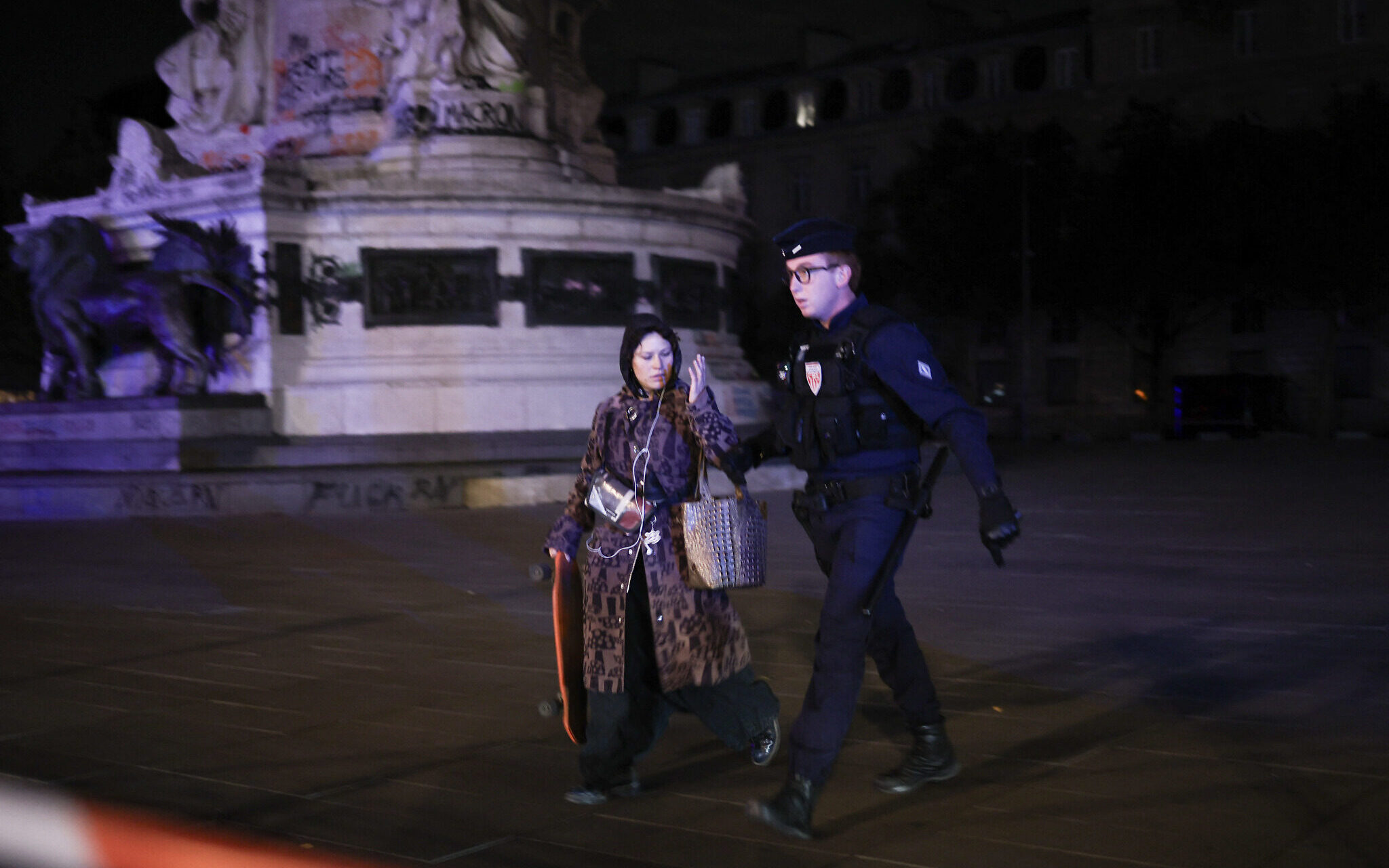
Lecornu acknowledged shortcomings in the state’s response at the weekend, saying there had been intelligence failures, while police deployments had been too static and authorities had erred by not cancelling planned police leave.
Nunez apologized for the mistakes. “I deeply regret what happened. I accept my share of responsibility,” he said.
Suspect arrested or Limoges town hall destruction
Parliament is setting up a commission of inquiry to establish the causes of the unrest, while authorities have assigned 200 investigators to identify and track down those involved in the street violence.
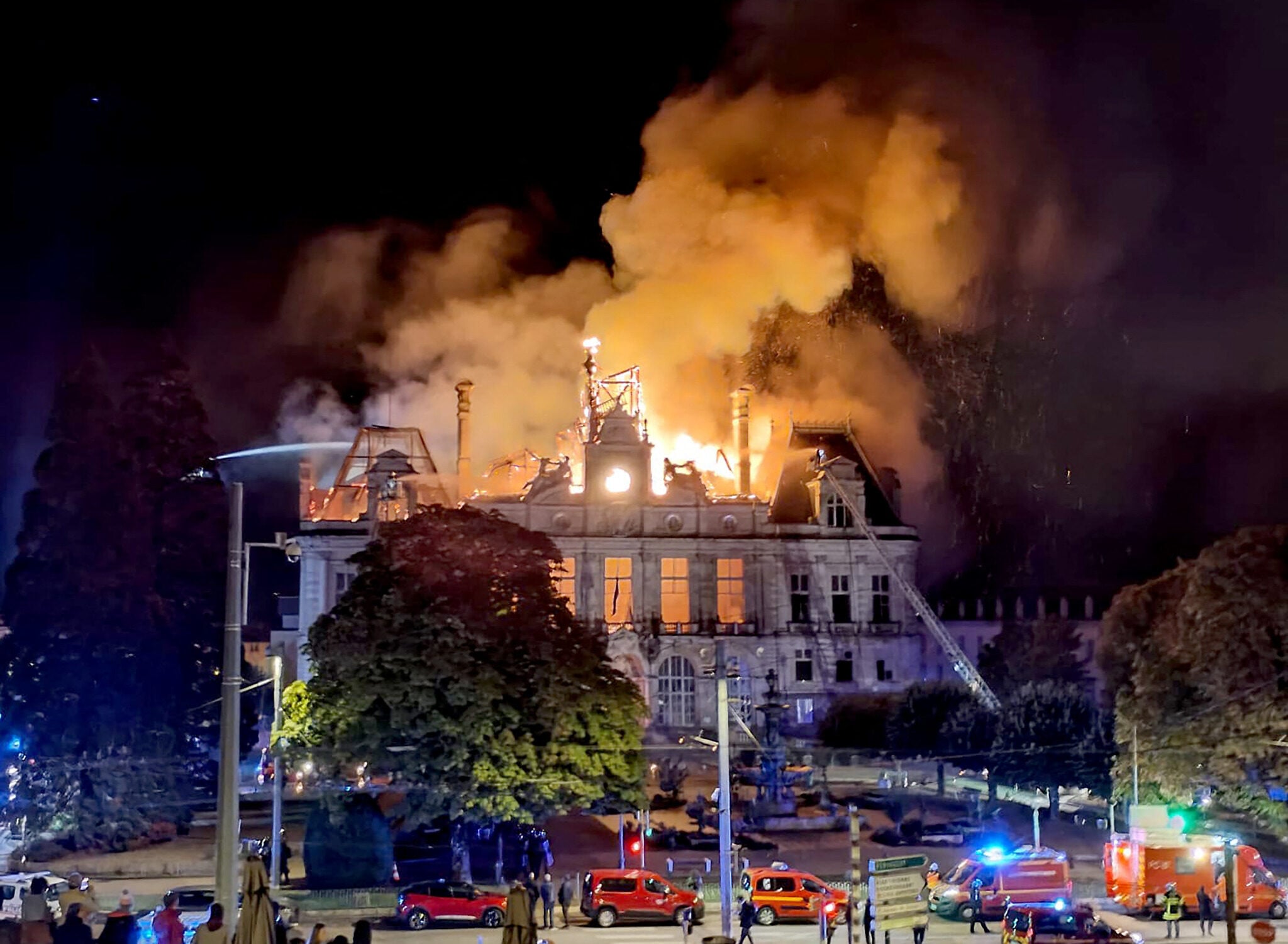
Police arrested on Tuesday a man suspected of starting a blaze that destroyed a historic town hall in the central city of Limoges during the rioting. Officials said he had been on a security watch list and belonged to an ultra-left group.
Sylvain Maillard, a Renaissance deputy for Paris, told Reuters some apps had become “a walkie-talkie system for rioters and looters.”
Underscoring the broad impact of the crisis, French borrowing costs rose further on Tuesday as investors fretted about the prospect of more unrest, with the yield on benchmark 10-year government bonds touching its highest level in 24 years.
Supermarket chain Carrefour said it had lost tens of millions of euros through theft and damage, warning that it faced an “unprecedented situation” because of the disorder.
France’s main student union UNEF has called for further protests on Saturday, pledging to maintain pressure on Macron’s government over what it says is a deteriorating and underfunded education system. “We carry on,” it said on social media.
Separately, groups identifying themselves as “Gilets Jaunes” (Yellow Vests) called for protest actions over rising fuel costs.
The yellow vest movement, largely inactive in recent years, sprang up in 2018 during Macron’s first term over plans to raise petrol taxes. Traffic blockades continued for months until the government made costly concessions it can ill afford now.
Italy faces new form of unrest, minister says
Northern Italian cities, including the financial capital Milan, were also hit by riots last weekend.
Though not on the scale seen in France, the unrest nonetheless jolted Prime Minister Giorgia Meloni’s government, which was expected to introduce new security measures at a cabinet meeting on Tuesday.
Defense Minister Guido Crosetto described the disturbances as a form of “hybrid warfare” conducted through social media platforms such as TikTok, YouTube and other online networks.
“The events in Milan and elsewhere in Italy are fundamentally different from those seen in other eras,” Crosetto wrote on X. “The West has yet to realize this or take any meaningful action in response.”
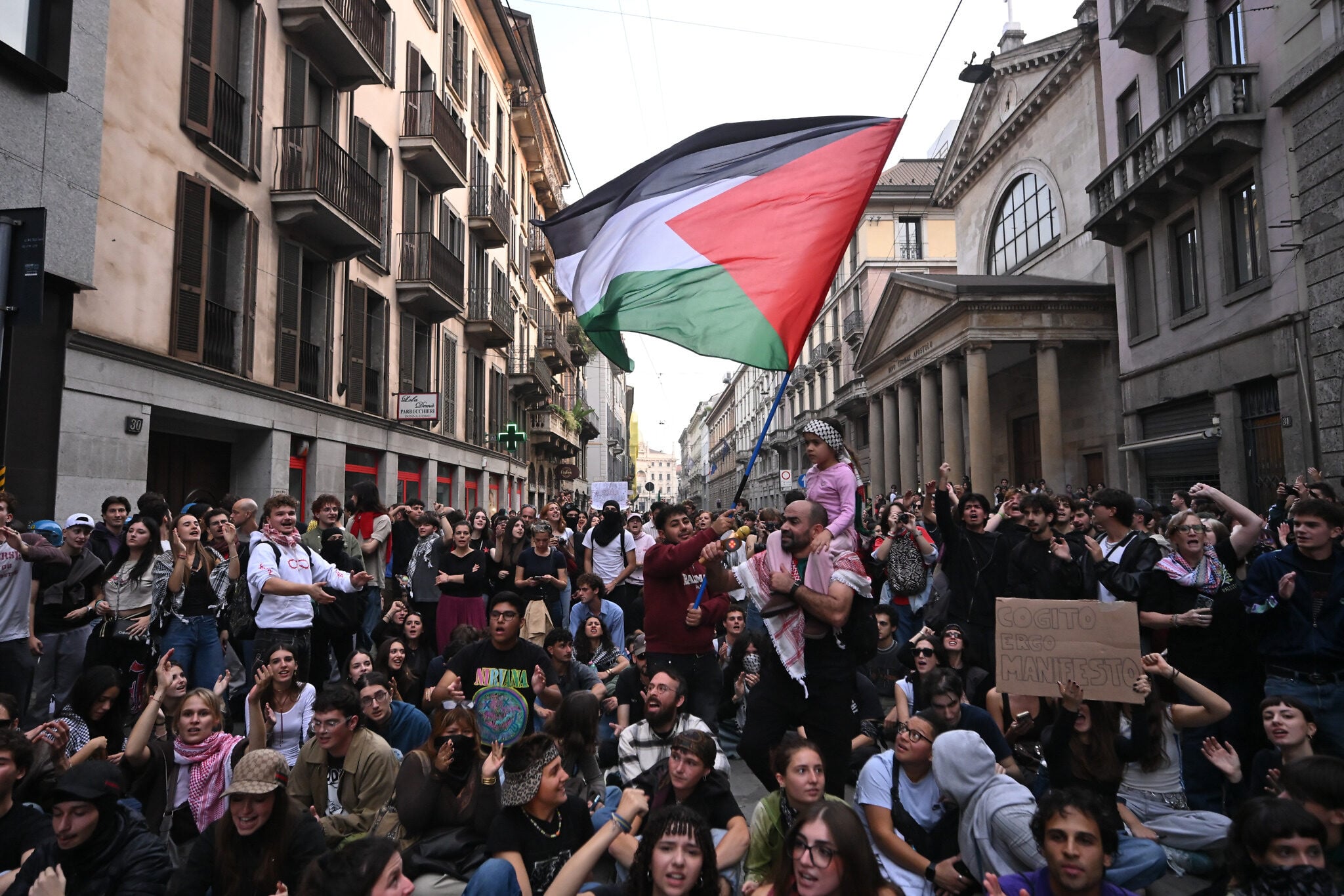
In Milan’s central Corso Vittorio Emanuele II, sportswear retailer On and a Levi’s store that were targeted during the unrest had reopened on Tuesday but remained boarded up. Luxury stores had restored merchandise to window displays after temporarily removing it for security reasons.
In Albania, protesters were expected to take to the streets of Tirana for a seventh consecutive day against the government of Prime Minister Edi Rama.



The Times of Israel Community.