

Settler violence harms Israel’s interests. But for PM, halting it could hurt him politically
Netanyahu cast doubt on accounts of Jewish attacks on diplomats, priests and journalists over the weekend. With the election a week away, coalition calculations are taking precedence

 Add ToI as a Preferred Source on Google
Lazar Berman is The Times of Israel's diplomatic reporter

Saturday’s attack by extremist Jewish Israeli settlers in the West Bank went beyond even the frequent incidents of vigilante violence that have occurred since the current government headed by Prime Minister Benjamin Netanyahu came to power.
It left members of a European diplomatic delegation injured and their cars damaged. The day before, a Washington Post photojournalist, Heidi Levine, was badly beaten and almost lost a finger in a similar attack, after which she was hospitalized.
Beyond the moral outrage and the implications for the rule of law, the wave of settler violence in the West Bank is bad for Israeli interests. It undermines Jerusalem’s diplomatic relations, image and legitimacy abroad — even among its best friends — precisely when its global standing is at a nadir. Most Israelis also disapprove of settler violence, surveys show.
Yet instead of coming out unequivocally against the attacks, and using Israel’s world-class security services to identify and arrest the estimated few hundred core perpetrators, Netanyahu has chosen a different path.
He has downplayed the attacks and cast doubt on reports of them, even going so far as to contradict the IDF. He points at what he calls the far more extensive phenomenon of Palestinian violence against Jews in the West Bank, insists settler violence is the work of a tiny group of outliers, and refuses to decisively put a halt to the activities of the perpetrators. His defense minister, who outlawed the use of administrative detention — preventive detention without trial — against Jewish extremists almost two years ago, has refused to reinstate it even as settler violence has spiraled.
Why is the prime minister refusing to aggressively tackle the problem? As in so many other areas, Netanyahu’s calculus appears to be political. While most of Israel and the world oppose settler violence, the premier’s own coalition partners, and some of his base, look more positively upon it. With a week to go before a closely fought election, it seems Netanyahu is treading lightly on the settler attacks in order to avoid alienating political allies whose support he will need after the ballots are counted.
‘Disturbing images’
On Saturday, representatives from the French, Belgian and Polish embassies visited olive groves near Taybeh in the West Bank to observe the harvest. A French consulate delegation was also in the area.
According to members of the delegation, after the harvest had ended, masked Jewish youths armed with clubs began harassing the farmers, then moved on to the foreign officials.
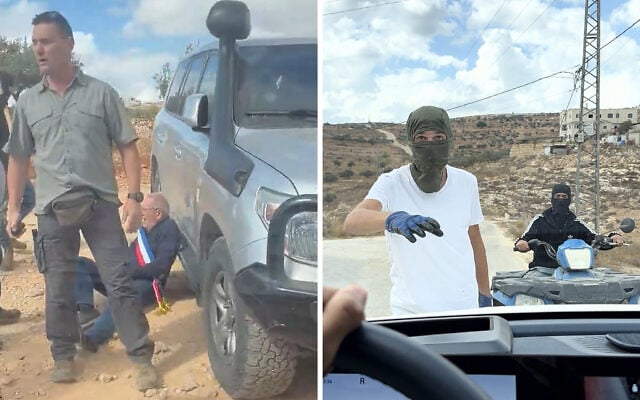
Piecemeal footage from the area shows the masked men walking aggressively toward the delegation, a French mayor lying on the ground in pain, and a broken window in one of the diplomatic vehicles.
Many of the attackers were religious, with their ritual fringes visible. The fact that it was the Jewish Sabbath — when even touching tools or weapons is forbidden — didn’t prevent them from smashing windows of diplomatic vehicles. Nor did it stop them from violating a range of other Jewish commandments, including a prohibition on striking another person.
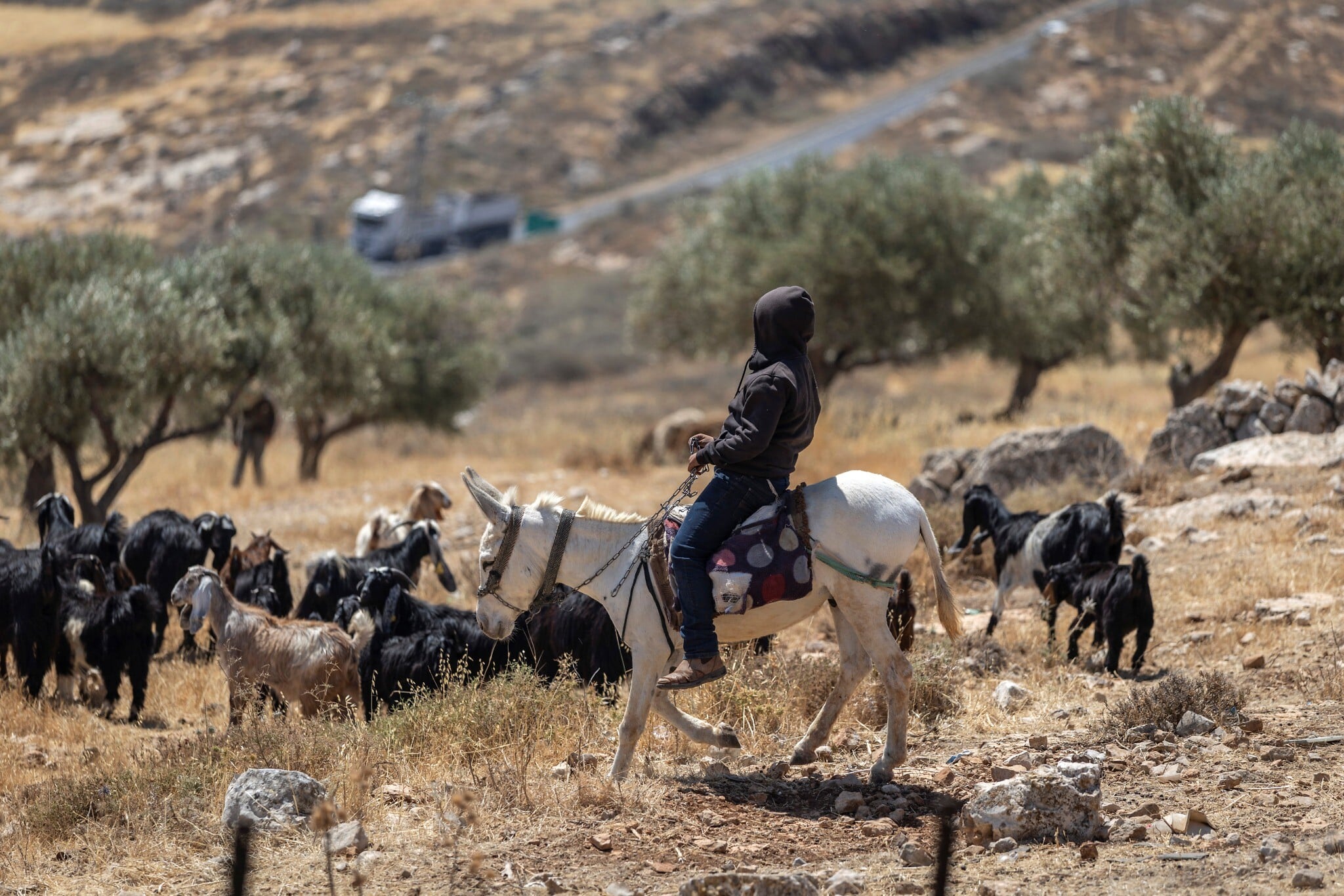
The attack, predictably, led to immediate and furious condemnation from European countries.
Belgian Foreign Minister Maxime Prevot condemned the attack “in the strongest terms,” and vowed to press the European Union to impose sanctions on those responsible for the violence.
France’s Foreign Ministry called on Israel “to take all necessary measures to put an end to these acts of terrorism.”
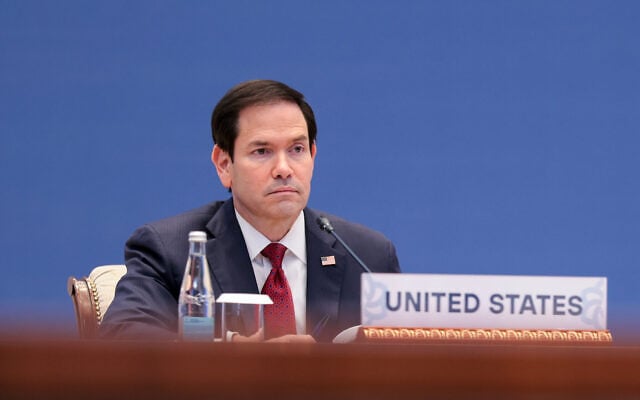
Even Israel’s most vocal supporters in the administration of US President Donald Trump expressed their disgust. “We’re very disturbed by those images and what we’re seeing,” said US Secretary of State Marco Rubio. “We’ve asked the Israelis and continue to ask them to crack down on that stuff.”
To make matters even worse for Israel diplomatically, Taybeh is the main Christian village in the West Bank. Catholic priests were among those in the delegation that came under attack, and the town has seen regular violence.
Attacks have taken place in recent days against other Christian sites in the West Bank as well.
According to Bishop Imad Haddad of the Evangelical Lutheran Church, the Star Mountain center for children with intellectual disabilities near Ramallah came under attack by Jewish extremists twice this month, suffering property damage.
A brutal attack on an American photographer
Saturday’s violence came on the heels of a brutal attack the day before that left Levine, the Washington Post photographer, injured.
That assault occurred near the village of Abu Falah, north of Ramallah, where some 80 settlers, many of them masked and some of them carrying gas canisters, descended from a hill to the terraced olive grove and began throwing rocks and beating Palestinians and accompanying activists, as well as Levine.

Levine said the perpetrators — armed with bottles and slingshots — “were kicking me for like 10 minutes and I was trying to hold onto my cameras and my bag.” She said her helmet and her protective vest, which was marked “PRESS,” likely saved her from more serious injuries.
Levine said the attack ended when her Palestinian colleagues intervened, after which medics rushed her in an ambulance to a clinic in Abu Falah and then to a hospital in Ramallah. She was later moved to Rabin Medical Center in central Israel.
US Ambassador to Israel Mike Huckabee, an outspoken Christian Zionist and defender of Israel’s West Bank settlements, was so appalled that he condemned on X the “despicable act of terror” and declared that those responsible should spend years in prison.
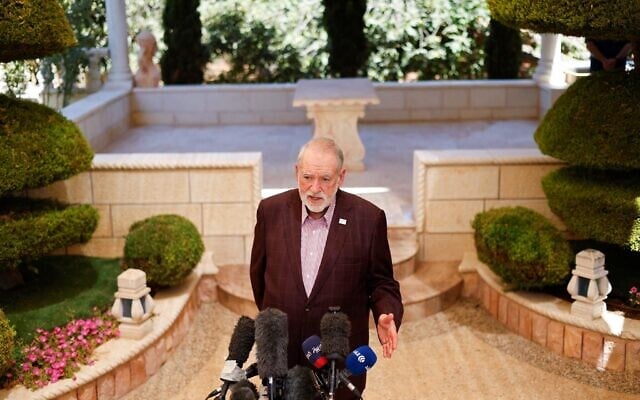
Without specifically blaming Jewish extremists, Huckabee said the details of the incident are under investigation. “Attacking a female photographer is [a] despicable act of terror carried out by masked cowards. Dishonorable act of senseless violence,” he wrote.
Israeli officials condemn attacks, but PM takes different tone
While President Isaac Herzog condemned the violence in the strongest terms, and even called Levine, Netanyahu took a markedly different approach, casting doubt on the details of Levine’s account and saying settlers were being unfairly demonized.
In a statement early Friday evening, Netanyahu’s office said the “facts surrounding the confrontation near Abu Falah, during which Washington Post photojournalist Heidi Levine was allegedly assaulted, remain unclear and are under investigation.”
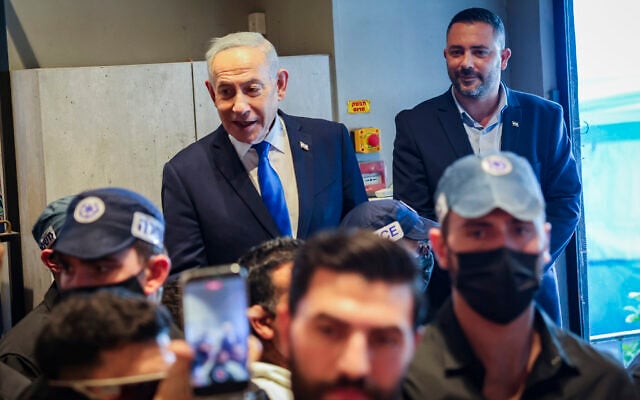
It went on to say that “reports indicate some 200 Arabs and far-left activists confronted approximately 40 Israeli youths. Footage shows masked individuals on both sides hurling objects, amid reports of fireworks fired at Jewish youths. Other footage appears to show Levine knocked down and immediately helped to her feet by the same unidentified individual. The investigation must establish the facts, including who initiated the violence.”
“We will not allow disputed incidents to be exploited to demonize the hundreds of thousands of law-abiding Jewish residents of Judea and Samaria,” the statement concluded. “The facts must determine the conclusions. Not the headlines.”

Netanyahu’s response to Saturday’s attack took the same approach. While calling violence against diplomats unacceptable, Netanyahu’s office — in English only — urged caution “before drawing conclusions from today’s reports that European diplomats were attacked by masked Israelis in Judea and Samaria,” using the biblical name of the West Bank.
It pointed out that the diplomatic convoy entered a sensitive area without coordinating with the IDF, that the French mayor is a communist who raised the Palestinian flag over his city hall, and that the “images alone do not establish the complete sequence of events or individual responsibility.”
Netanyahu’s office also expressed concern about “a coordinated campaign to smear Israel and the Jewish residents of Judea and Samaria.”
Netanyahu does the electoral math
With Israel’s international standing at what feels like an all-time low, it would seem to be low-hanging fruit for Netanyahu to aggressively condemn, if not outright quash, the mounting settler violence.
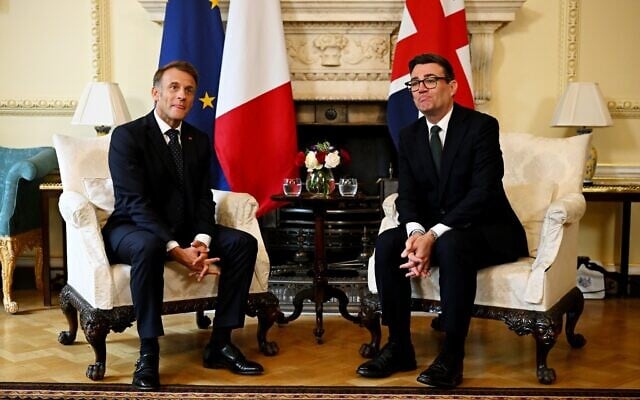
The attacks come as a series of Western countries ramp up coordinated measures against Israel. Last month, the UK announced wide-ranging sanctions against West Bank settlements, and 11 other countries joined in.
The leaders of the UK, France and Canada — which all recognized a Palestinian state last year — went further, pledging to target those who facilitate or profit from settlements.
Support for Israel in the US, its greatest ally, is also plummeting, with a recent Pew poll showing 60 percent of Americans holding an unfavorable view of Israel, including the vast majority of Democrats. That sentiment is growing among Republicans as well, with the majority of Republicans under 50 holding an unfavorable view of Israel. In that demographic is Vice President JD Vance, who is noticeably chiller toward Israel than Trump.

Netanyahu recognizes the importance of the issue. In his presentation of his national security approach on Sunday, the premier identified “delegitimization and isolation from allies” as one of the five major threats Israel must confront.
His foreign minister, Gideon Sa’ar, has placed a particular emphasis on improving ties with the Christian world, appointing a special envoy and highlighting Israel’s Christian community.

Attacks by Jewish extremists and a mealy-mouthed response from Netanyahu undermine Israel’s ability to prevent new sanctions against settlements, to restore relations with key partners, and to show Israel cares about Christians. Instead of denouncing and combating the attacks, he has consistently downplayed them, even before last weekend.
He took that approach during his UN speech last month, saying a “handful of juvenile delinquents” cause “maybe two or three dead” every year, while Israelis in the West Bank face thousands of terrorist attacks.
What could he be thinking?
The Prime Minister’s Office declined to comment on the reason for his stance, but it is clearly political.
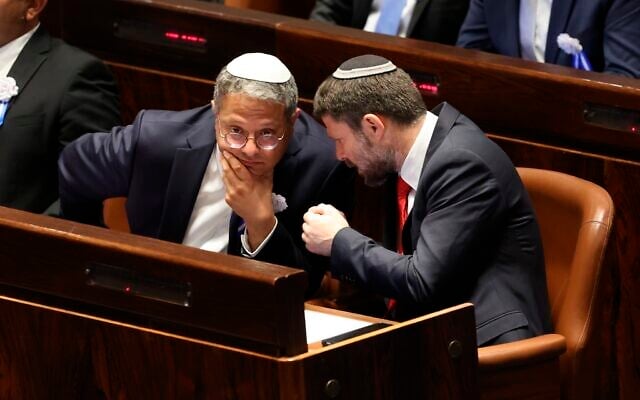
Netanyahu’s outgoing coalition depends on his far-right partners, ministers Bezalel Smotrich and Itamar Ben Gvir.
Over the past four years, Smotrich has prioritized new settlements and farms across the West Bank, and has been effective in that pursuit. He also wants to abolish the Palestinian Authority and annex most of the West Bank. Ben Gvir also favors annexing the West Bank and resettling the Gaza Strip.
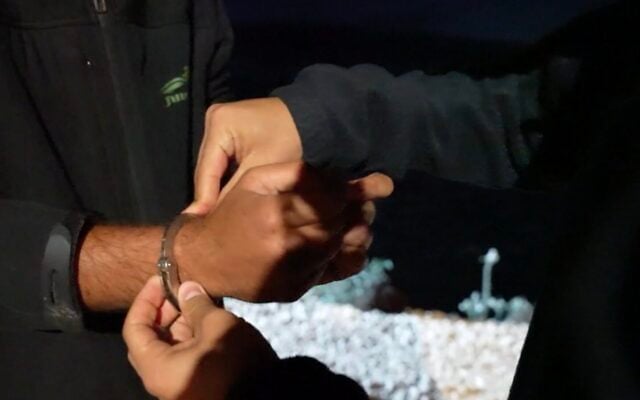
Both ministers have slammed Israel’s security chiefs for calling Jewish attacks on Palestinians “terror.”
Though it’s not as if their two far-right parties are about to join the anti-Netanyahu opposition, the premier acted throughout his latest term as if they could bring down his government.
This has restrained Netanyahu on a number of issues, including curbing his willingness to allow a new Palestinian government in Gaza to replace Hamas. That would definitely shut the door on the far-right fantasy of resettling Gaza. In the meantime, Hamas still rules almost every Gazan.
He seems to be taking the same approach to settler violence. With the election just around the corner, Netanyahu is not prepared to pick a fight with his most reliable partners. A major round-up of violent settlers would spark anger among settlement activists, and if some stayed home on election day, that could cost his coalition the elections. The images of such mass arrests could also anger his right-wing base, which, a survey last year showed, did not favor a more aggressive law enforcement crackdown on the issue.
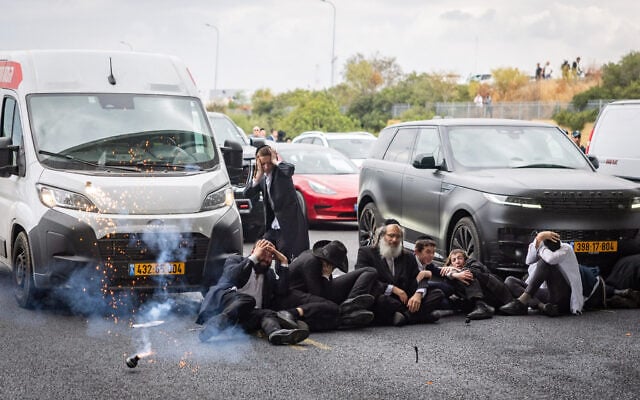
Netanyahu has taken a similar approach with his other coalition partners. The vast majority of the country opposes draft exemptions for ultra-Orthodox men, and wants Haredi schools that don’t teach math and English to lose government funding.
Here, too, Netanyahu has prioritized the narrow demands of coalition stability over what most Israelis want. On Tuesday, after Military Police detained more than 40 ultra-Orthodox men at Ben Gurion Airport for evading the draft, Netanyahu told a Haredi radio station that he opposes the arrest of draft dodgers.
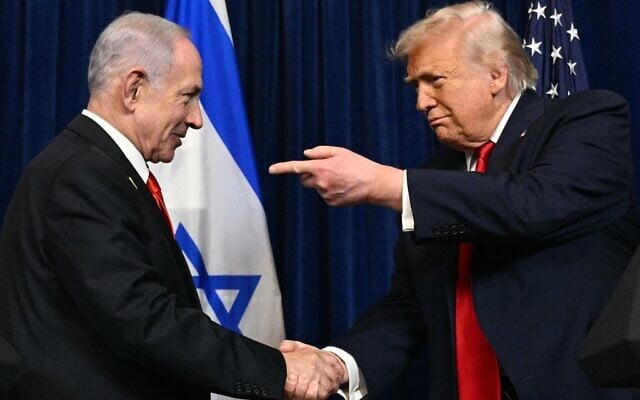
To his defenders, Netanyahu is right to keep his eye on the most pressing issue, the Iranian threat and Israel’s other geopolitical concerns. Trump himself said this week that Netanyahu is the only Israeli leader he would ask to join in an attack on Iran.
If Netanyahu has to avoid confronting other issues in the meantime, in their telling, so that Iran is confronted most effectively, that is a trade-off that makes strategic sense for Israel.
In one week, Israel’s voters will get to say whether they agree.


The Times of Israel Community.