

Blue and White’s Benny Gantz pulls out of race, sealing precipitous political fall
Opposition leaders hail ‘responsible’ decision by former IDF chief with sagging poll numbers, who was once Netanyahu’s top rival and alternate PM; coalition members call for small right-wing parties to follow suit
 Add ToI as a Preferred Source on Google
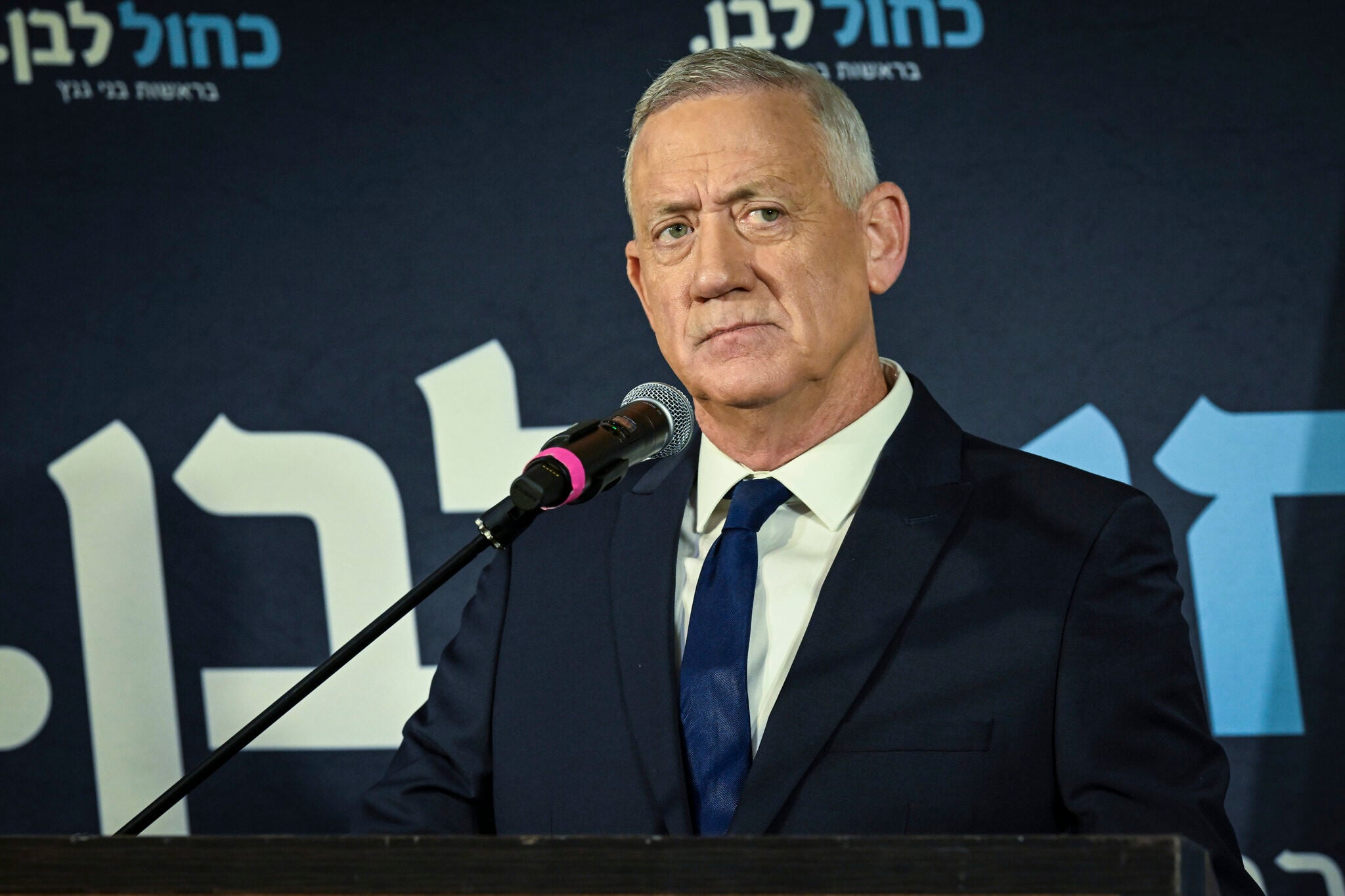
Benny Gantz, the former IDF chief who was once in line to become prime minister, and whose Blue and White party previously topped polls, announced Monday that the party would not stand in the October 27 election, after surveys in recent months consistently showed it falling far short of winning enough votes to enter the Knesset.
Politicians who oppose Prime Minister Benjamin Netanyahu praised Gantz, as members of the premier’s coalition called for the withdrawal of other parties at risk of missing the electoral threshold. Those parties, meanwhile, began seeking to attract Blue and White’s few remaining supporters.
Gantz, 67, sought to distinguish himself in this campaign by refusing to align with either the pro- or anti-Netanyahu blocs. Instead, he pushed insistently for a broad Zionist government without Arab parties that would span Israel’s political chasm, something neither bloc was inclined to accept.
At a press conference on Monday evening, he took responsibility for his party’s failure to garner sufficient public support, while continuing to implore political leaders across the spectrum to put aside their differences and form a broad unity government.
“I still believe with all my heart in the path I followed from my first day in politics, a path of statehood and unity that puts Israel above all else,” Gantz told reporters. “Unfortunately, at this time, I have not been able to convince enough of the people, and the responsibility is mine.”
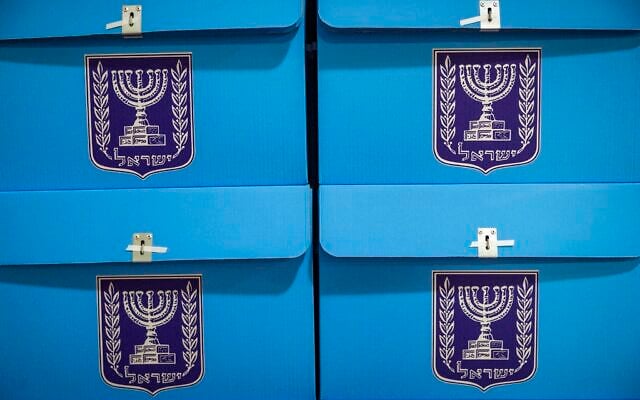
Because Gantz is dropping out so close to the vote, Blue and White will still appear on the ballot next week, but any votes cast for it will be wasted. Gantz was expected to deliver further remarks to the press on Monday evening.
The announcement seals a precipitous political downfall for the man who was once seen as the anti-Netanyahu camp’s best hope. Gantz went toe-to-toe with Netanyahu in a series of inconclusive elections from 2019 to 2020.
But ultimately, his decisions to partner with the premier twice — which helped keep Netanyahu in power at critical junctures — ended up contributing to Gantz’s decline.
In 2020, he joined a government with Netanyahu in order to address the COVID-19 pandemic and took the newly created position of alternate prime minister, but the coalition collapsed before the premier had to hand over the reins of power. Gantz partnered with Netanyahu again days after the Hamas onslaught of October 7, 2023, but quit the government the following year amid disagreements with Netanyahu over the Gaza war. His political base fell apart after that, and lawmakers later began dropping out of the party.
In an interview with The Times of Israel last month, Gantz said he would halt his election campaign if polls in the last week of the race showed Blue and White short of entering the Knesset. But in later statements, including as recently as last week, he insisted Blue and White would run till the end.
Opposition parties praise decision; small factions lobby for votes
In response to Gantz’s announcement, Gadi Eisenkot — who was once Gantz’s No. 2 and is now the opposition’s leading candidate at the head of his own Yashar party — hailed his former partner on X for his “right and responsible decision to pull out of the running in the most fateful election since the country was founded.”
“I thank him for his contribution to the security of Israel over the course of many years, and am certain he’ll continue contributing to Israeli society in the future as well,” said Eisenkot, who succeeded Gantz as IDF chief.
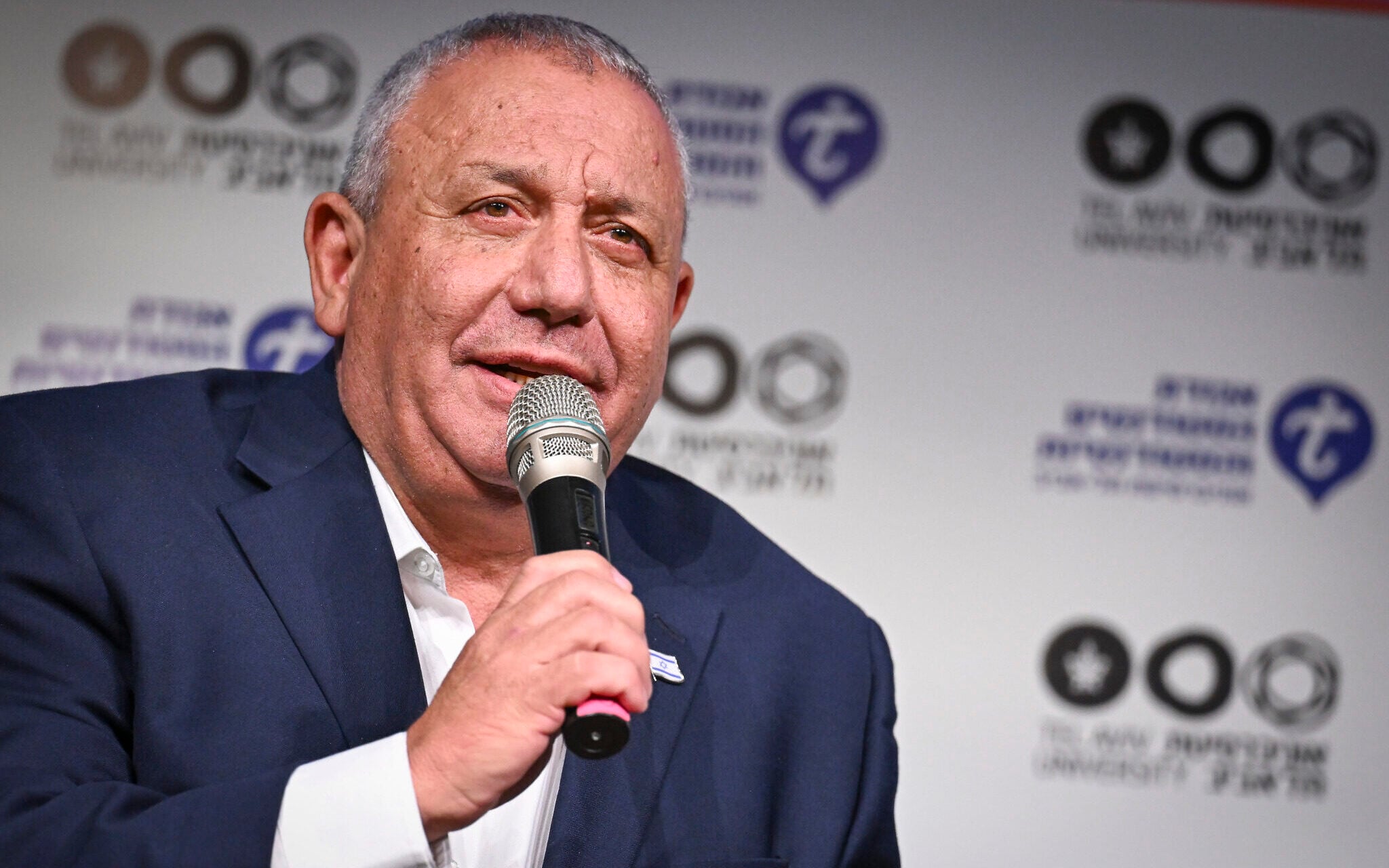
Yair Golan, head of the left-wing Democrats who served as deputy IDF chief under both Gantz and Eisenkot, also praised Gantz’s decision on X, saying that “at a fateful hour for Israel’s future, the collective duty is to ensure the victory of the [anti-Netanyahu] change bloc.”
The Reservists-Economic Party and People of Israel, both of which are struggling to win enough votes to enter the Knesset, sought to capitalize on Gantz’s departure.
Both parties, like Blue and White, campaign on drafting Haredi men into the military and advocate for a broad Zionist government. People of Israel has vowed to join only a Netanyahu-led government, while the Reservists-Economic Party refuses to strictly align itself with the premier.
Writing on X, Reservists-Economic Party chief Yoaz Hendel thanked Gantz for his years of service, said the Blue and White chief’s withdrawal was “what is right and necessary for the country,” and urged nonaligned voters to rally to his own party.
“It’s now clearer than ever that the only way to form a Zionist government is to vote for the Reservists-Economic Party,” Hendel said.
People of Israel, led by right-wing former general Ofer Winter, similarly thanked Gantz for his service and pitched itself to would-be Blue and White voters.
“Gantz’s withdrawal illustrates the importance of the People of Israel party in Israeli public life. Anyone who wants a right wing that serves in the military, acts decisively and is not dependent on Goldknopf’s 61st vote has only one political home — the People of Israel party,” Winter’s party said in a statement, referring to United Torah Judaism MK Yitzhak Goldknopf, a fierce opponent of Haredi military service.
Winter has faced pressure from Netanyahu’s bloc to also drop out of the race out of fear that People of Israel will fall short of the Knesset and waste tens of thousands of right-wing votes that would otherwise support Netanyahu.
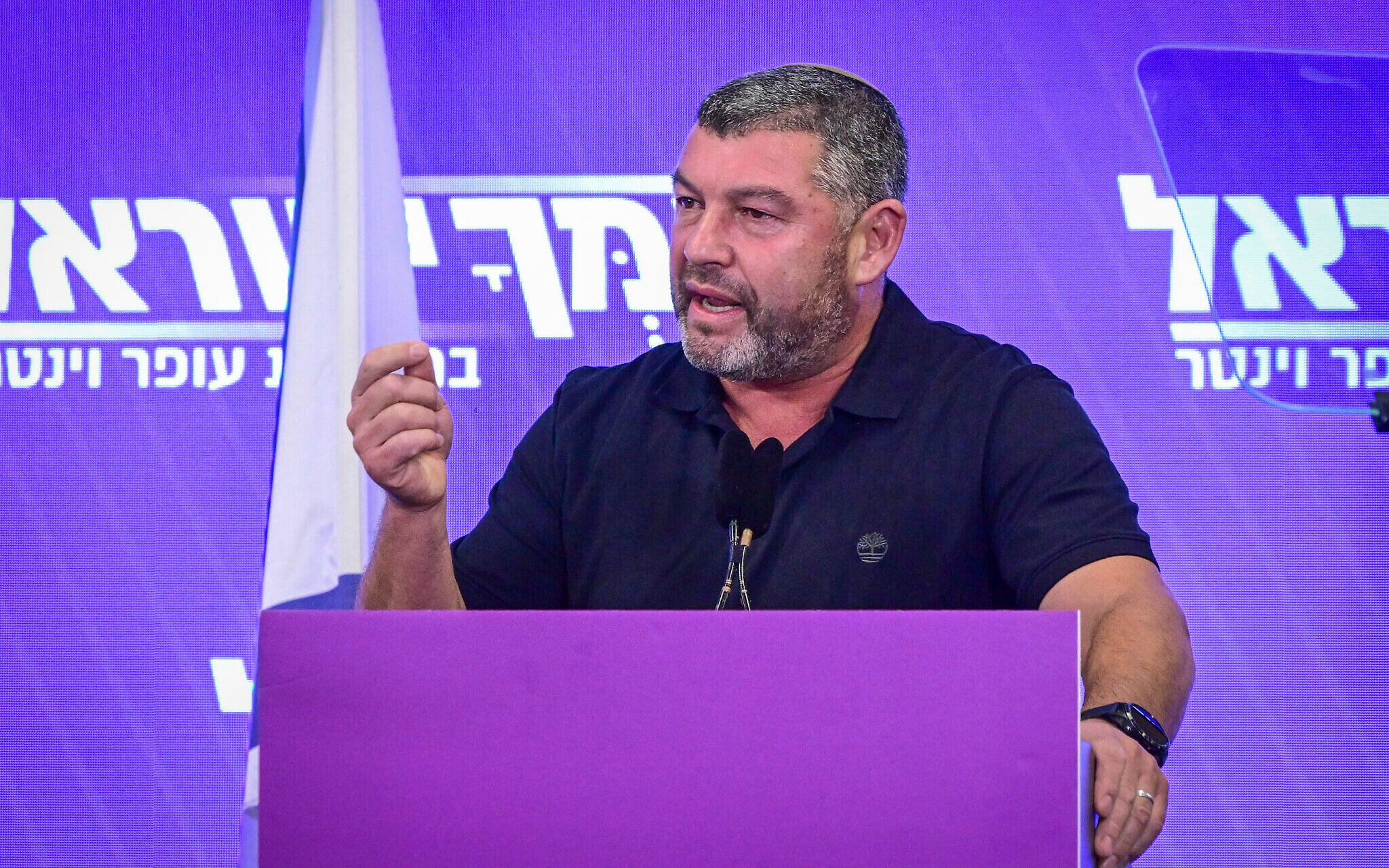
Foreign Minister Gideon Sa’ar, whose defunct New Hope faction ran with Gantz in the last election but later merged with Netanyahu’s Likud, called on X for “right-wing votes that are beneath or adjacent to the electoral threshold” to follow Blue and White’s example.
“Show responsibility for the nation of Israel and for the land of Israel,” Sa’ar said, without naming Winter, whom Likud has repeatedly attacked.
In a statement, Finance Minister Bezalel Smotrich’s Religious Zionism did name Winter, and accused his faction and other small right-wing parties of endangering Netanyahu’s continued rule.
“Gantz’s withdrawal stems from his responsibility not to waste votes for the left-wing bloc,” the statement said, although Gantz did not identify with the left or anti-Netanyahu parties. “By contrast, on the right, there is a complete lack of responsibility on the part of Ofer Winter and the other splinter parties that are nowhere near the electoral threshold, yet insist on throwing votes in the trash and risk bringing to power a left-wing government with supporters of terrorism that will bring disaster upon the State of Israel.”
Premiership eluded Gantz since 2019
Gantz served as IDF chief of staff from 2011 to 2015, and announced his entry into politics with the new centrist Israel Resilience Party in 2018, after the mandatory three-year “cooling period” in which former IDF chiefs are barred from running for parliament.
Israel Resilience soon joined up with current Opposition Leader Yair Lapid’s Yesh Atid and with former IDF chief Moshe Ya’alon’s Telem to form Blue and White, with Gantz at the helm and his own predecessor as IDF chief, Gabi Ashkenazi, at No. 4 on the slate.
The merger ran as the main opposition to Netanyahu in April 2019, and again in snap elections held in September 2019 and in March 2020, following successive failures by both Netanyahu and his opponents to form a government.

After the March 2020 election, citing the political deadlock and the nascent COVID pandemic, Gantz split with Lapid and Ya’alon and entered a government with Netanyahu, with Gantz as defense minister and in the newly formed position of alternate prime minister. He was joined by two members of Ya’alon’s party, including Hendel, who became communications minister.
Gantz was supposed to replace Netanyahu as prime minister mid-term, but the government fell before the planned rotation, triggering a new election in March 2021.
In the 2021 election, Gantz ran separately from Lapid, but retained the Blue and White brand. Following the 2021 election, Gantz joined as defense minister in the opposition-led government that briefly unseated Netanyahu with an eclectic coalition that included the traditionalist Arab party Ra’am.
The uneasy coalition fell apart in 2022, leading to another election in November that year, in which Gantz was joined by Eisenkot — fresh off his own three-year “cooling period” from the military — and by Sa’ar, who had left Likud after a failed leadership race against Netanyahu. The Gantz-Sa’ar merger party was called National Unity.
The 2022 election gave rise to Netanyahu’s current right-wing coalition. Despite opposing the government’s policies, Gantz joined the coalition and an emergency war cabinet after the Hamas attack. His party saw a massive spike in opinion polls for his perceived statesmanship, and was the most popular party in the country for a time.
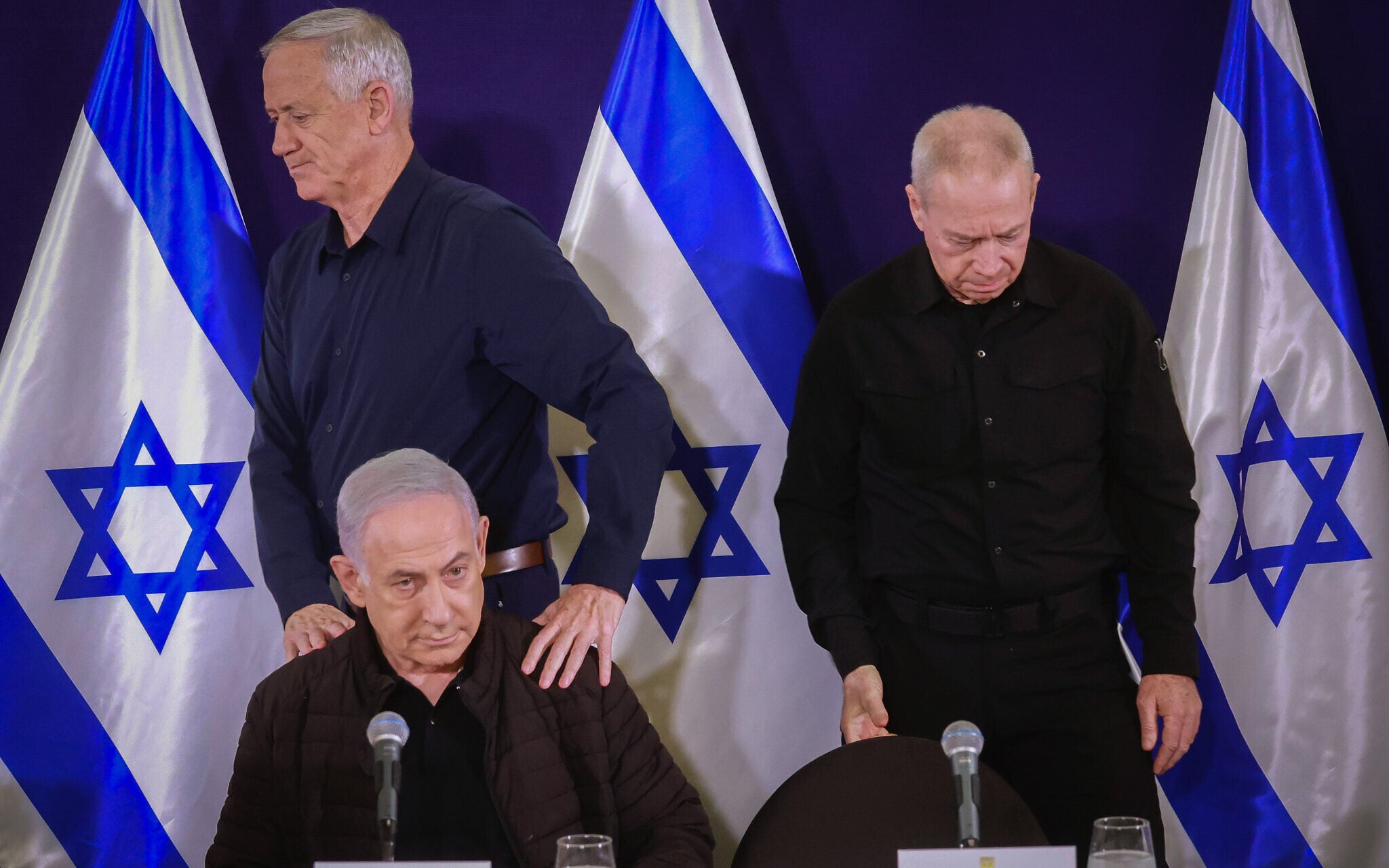
In June 2024, Gantz and Eisenkot also pulled out of the government, with Gantz citing disagreements with Netanyahu over the conduct of the war.
Sa’ar returned to the government in September that year and later returned to the Likud.
Eisenkot resigned from National Unity and from the Knesset last year, and the party resumed the name Blue and White. He proved to be the first of many allies who would leave Gantz for other political frameworks ahead of the October 27 election, as Gantz’s standing in the polls began to tank.
At his press conference, he issued a final plea to his former partners and rivals.
“Do not take us back to October 6,” Gantz urged, referring to the day before the Hamas-led massacre. “Be brave enough to bring about real and correct change. Put the old perceptions aside.”
He added, “If this does not happen, the people will continue to be torn apart and we will end up in repeat elections or, God forbid, disaster.”





The Times of Israel Community.