

Hebrew-labeled Kinder chocolates in Lebanon prompt Israeli export questions
Product, made in Italy, appears intended for Israeli market, lists Israeli importer; online commentary jokes Lebanese army can seize chocolates but not Hezbollah arms
 Add ToI as a Preferred Source on Google
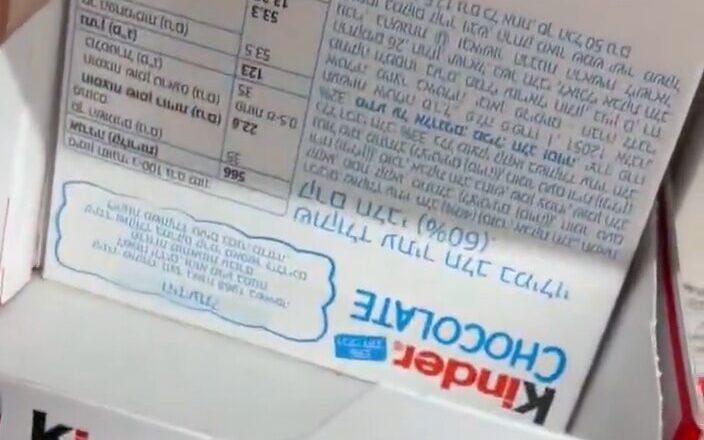
Images of Kinder chocolates bearing Hebrew inscriptions on their packaging, shared online this week, have sparked controversy in Lebanon, where the import and sale of Israeli products are prohibited, Lebanese media reported on Friday.
The products, reportedly seen at a Charcutier Aoun supermarket east of Beirut, were made in Italy by Ferrero and intended for the Israeli market, according to their labels. The packaging also lists an Israeli importer. However, their route into Lebanon has not been established.
A source at the Economy Ministry on Friday told Lebanon’s L’Orient Today news outlet that Hebrew writing alone does not constitute a violation if the product is not Israeli-made.
The Lebanese daily An-Nahar reports that the chocolates were brought into Lebanon by a merchant in the country’s north, rather than through the brand’s authorized distributor.
Some, such as X user Rula al-Halabi, called for an investigation into the Hebrew-marked chocolates.
Another user on X mocked the controversy, poking fun at Lebanon’s so far unsuccessful efforts to disarm Hezbollah: “The Lebanese Army didn’t confiscate a single weapon from Hezbollah, but managed to seize large quantities of Kinder chocolates bearing Hebrew inscriptions.”
مواطن يوثّق كتابات بالعبرية على منتجات «Kinder» داخل أحد السوبرماركت في سنّ الفيل. pic.twitter.com/2l68Pn9zNJ
— bintjbeil.org (@bintjbeilnews) November 27, 2026
Lebanon is officially at war with Israel. A 1955 Israel Boycott Law, which was enacted as part of broader Arab efforts to block normalization with Jerusalem, bans Israeli products and bars Lebanese citizens from traveling to Israel or having contact with Israelis.
Hezbollah, whose arsenal has long outstripped that of Lebanon’s national army, pulled Lebanon into the war with Iran on March 2 in support of its Iranian patrons, prompting massive Israeli airstrikes and a subsequent ground invasion of southern Lebanon before an agreement between Jerusalem and Beirut to end the conflict was reached in June, though sporadic fighting has continued.
The negotiations have been hampered by the Shiite group’s refusal to comply with the deal, which calls for the IDF to withdraw from areas of southern Lebanon it held in parallel with the deployment of the Lebanese army, starting with so-called pilot zones, under the condition that Hezbollah disarms. But the Iran-backed terror organization has refused to do so despite heavy pressure from the country’s non-Shiite leaders and international actors.


The Times of Israel Community.