

Iran said racing to build underground facility between key nuclear sites
US-based institute says construction for underground site is moving unusually fast; Gulf tensions rise with deadly Kuwait drone strike, killing 2 Italians as Hormuz and Saudi fronts remain active
 Add ToI as a Preferred Source on Google
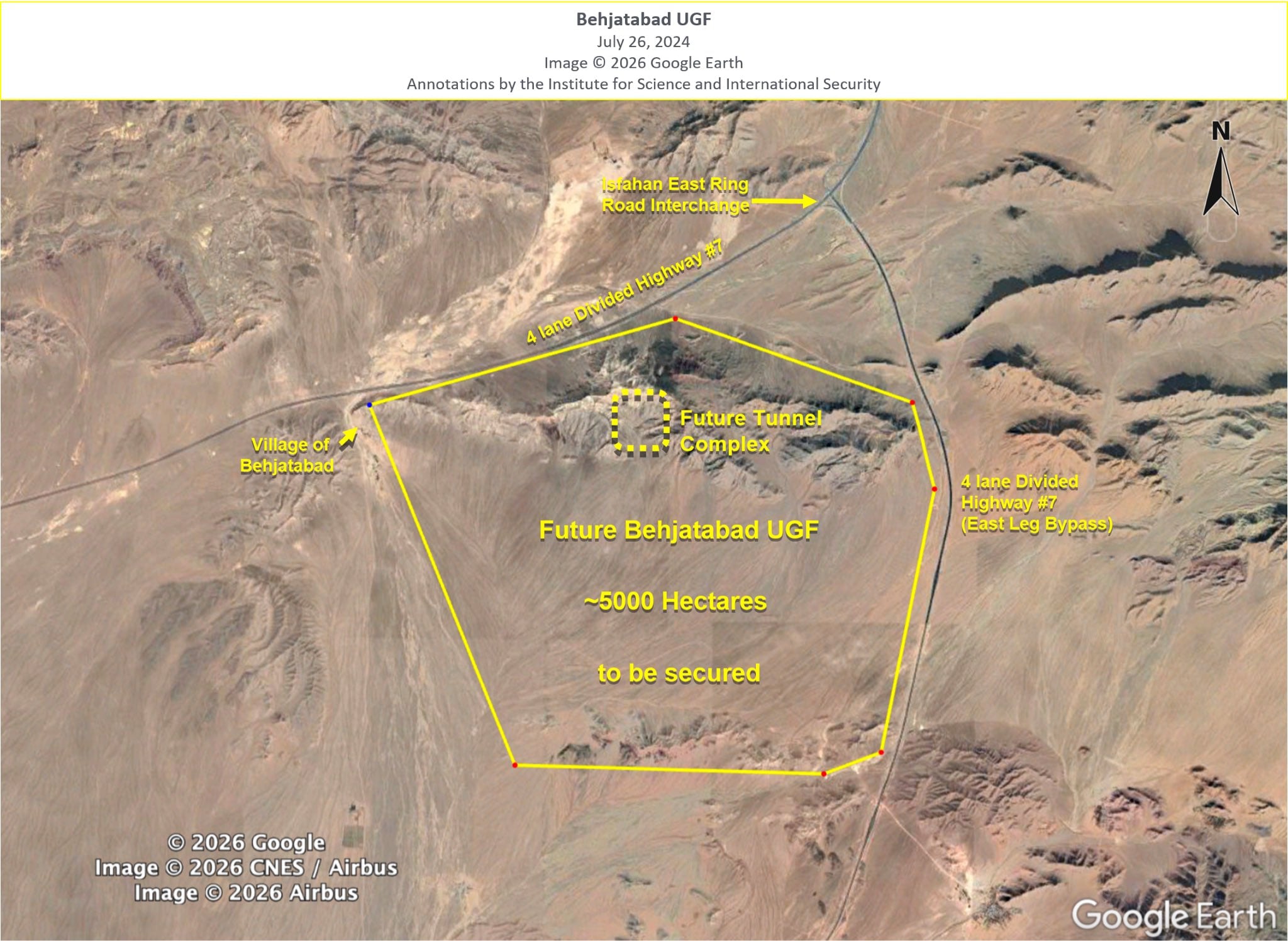
Iran is rapidly constructing a new underground facility between two of its main nuclear sites, a US-based research institute said Thursday, as the widening regional conflict continues to spill across the Gulf, with an Iranian drone strike killing two Italians in Kuwait and Tehran-backed Houthis targeting Saudi oil infrastructure.
The developments come as Iranian and US officials continue indirect contacts through Qatari and Pakistani mediators over reopening the Strait of Hormuz, even as Tehran said it remained in control of the strategic waterway and reported fresh explosions involving tankers attempting to cross it.
The Institute for Science and International Security published a report based on satellite imagery from Vantor Technologies that it said revealed a new facility “exactly midway” between Pickaxe Mountain and the Isfahan nuclear site.
According to the institute, the facility in question “is unusual for its speed of construction,” noting the first signs in mid-December 2025, a new road in January 2026 toward a tunnel system, and signs of a second tunnel emerging in June 2026.
The institute said the facility’s function “is not clear at this time,” but added that “a nuclear purpose cannot be ruled out.”
It said Iran had also recently begun constructing a security barrier around the outer perimeter of the site.
The Behjatabad Underground Facility (first identified by @BenTzionMacales) is a buried hardened facility built into a mountain that is undergoing rapid construction. Iran is known to have established a multitude of dispersed facilities of this type, but this facility is unusual… pic.twitter.com/AtDTjs7ojq
— Inst for Science (@TheGoodISIS) November 25, 2026
Iranian drone strike kills 2 Italians in Kuwait
Beyond concerns over Iran’s nuclear activities, the conflict continued to reverberate across the Gulf on Thursday, with an Iranian drone attack in Kuwait killing two Italian technicians.
Italy’s foreign minister said that the victims were technicians working for the Italian unit of German defense group Rheinmetall.
Thursday’s attack marked the second reported Iranian attack on the US-allied Gulf state this month.
Italian Foreign Minister Antonio Tajani told the Senate that the two Rheinmetall Italia technicians were working at an air-defense surveillance station in Kuwait when it was targeted by Iranian drones.
⚡????BREAKING: Iran has struck a vital site inside Kuwait with multiple drones, injuring four people, including two Italian military personnel, after Kuwaiti air defenses attempted to engage the incoming drones, per Kuwait’s Defense Ministry.
The attack caused injuries and… pic.twitter.com/GfdqiE8Ttk
— Iran Flash News (@FlashWireNews) November 26, 2026
“Following a powerful explosion, both of our compatriots, according to information coming from Kuwait, have died. Two other people were injured: a Pakistani national and a captain in the Kuwaiti army,” Tajani said.
Kuwait’s Defense Ministry also confirmed that the two Italians had died of their injuries after initially reporting that four people had been wounded by falling debris when a “vital facility” was targeted in what it said was an Iranian attack.
It confirmed that the other two people injured were a Kuwaiti and a Pakistani national.
The ministry said the country’s military had detected and dealt with several drones in Kuwaiti airspace, adding that the attack also caused material damage.
“I would like to express my deepest sympathy and solidarity to the families of the Italian victims at this time of profound grief,” Tajani said.
Iran’s military denied that it was responsible for the drone attack, with state media saying armed forces spokesperson Abolfazl Shekarchi claimed that “no military or offensive operations have been conducted by the Armed Forces of the Islamic Republic of Iran” in the Kuwait area.
Rheinmetall declined to comment.
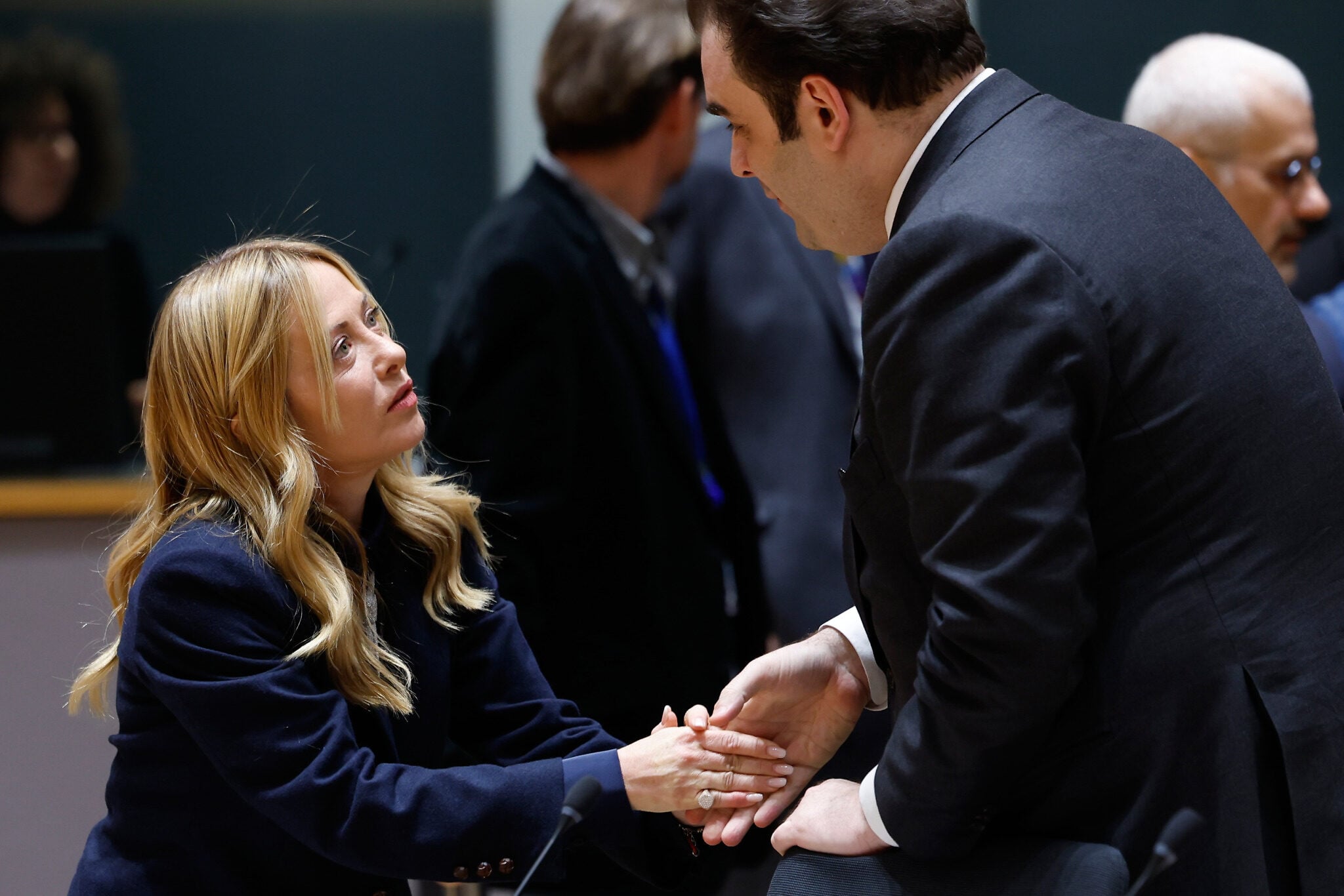
Italian Prime Minister Giorgia Meloni offered her condolences on social media.
“My thoughts are with all those affected by the attack and their families,” she wrote on X.
In response, European Commission President Ursula von der Leyen called for increased pressure on Tehran following the deaths.
“We must step up pressure on Iran to put an end to these unacceptable attacks against its neighbors and our partners in the Gulf,” she wrote on social media.
Saddened by the news of two Italian nationals killed in yet another Iranian drone attack in Kuwait.
Il mio pensiero va ai loro cari e al popolo italiano
We must step up pressure on Iran to put an end to these unacceptable attacks against its neighbours and our partners in the… https://t.co/9AXxOW7Y9M
— Ursula von der Leyen (@vonderleyen) November 26, 2026
Khamenei said to call for expansion of Basij model
Inside Iran, Supreme Leader Mojtaba Khamenei reportedly called on the Basij volunteer paramilitary force to work toward realizing the slogan “every Iranian, a Basiji,” saying the organization should develop more advanced versions of its existing model by drawing on what he described as a nationwide resurgence of Basij spirit.
In a written statement marking Basij Week, Khamenei said the organization should also make use of people who were not formal members but admired its ideology, including members of the armed forces, government officials, and people who had taken part in rallies and street gatherings, according to state media on Thursday.
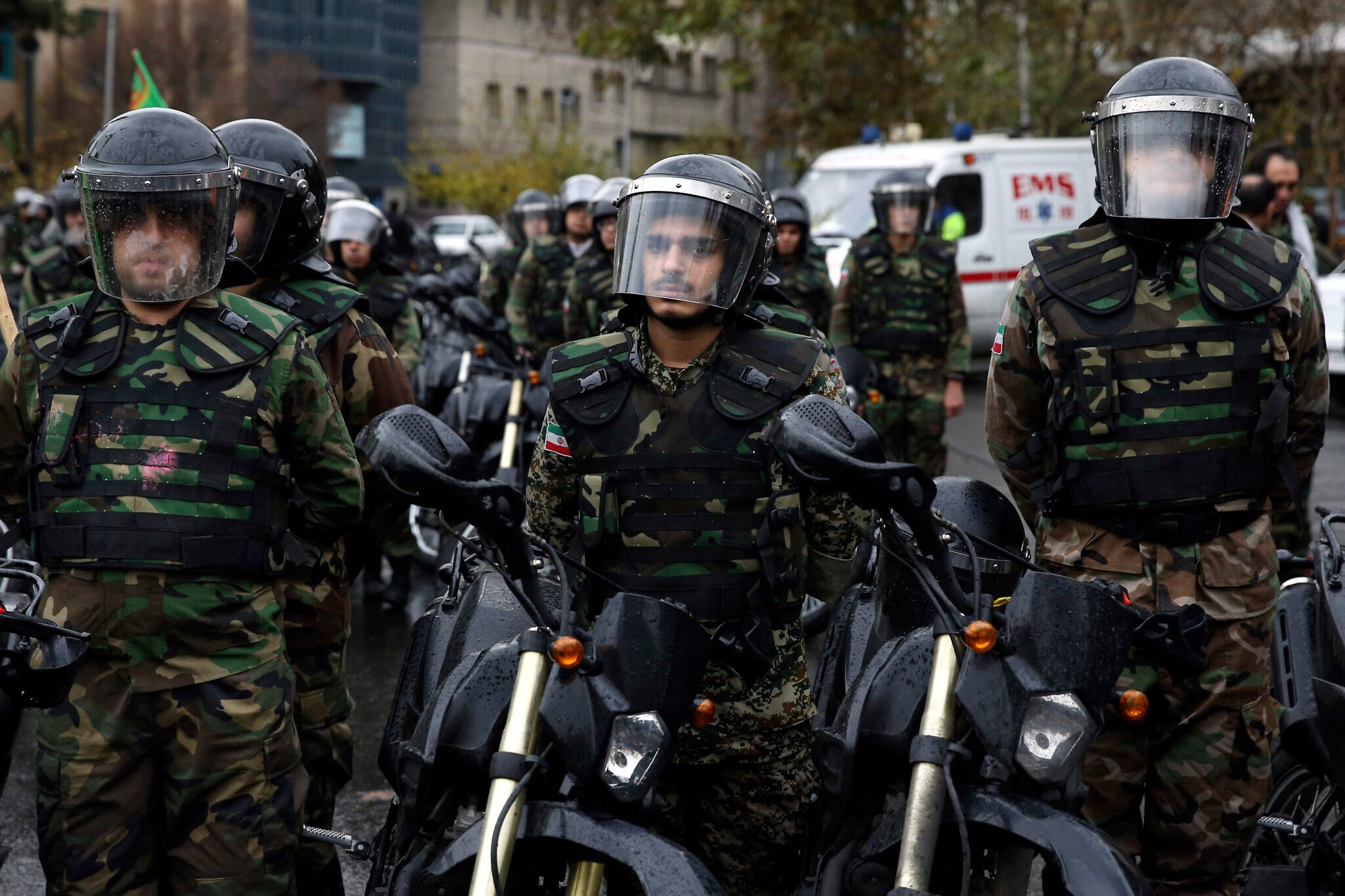
The Basij played a major role in crushing January’s nationwide protests, when thousands were killed.
Khamenei has not been publicly seen since he became supreme leader, following his father Ali Khamenei’s killing in the opening strikes of the joint US-Israel war on February 28. The younger Khamenei is believed to have been injured in a US-Israeli strike the same day his father was killed.
The war has drawn in other countries and disrupted the flow of oil after Iran declared the closure of the vital Strait of Hormuz. The US responded by blockading Iran’s ports.
Houthis target Saudi oil facilities
The regional fallout also extended to Saudi Arabia, where the Iran-backed Houthis stepped up attacks on the kingdom’s oil infrastructure.
The Saudi-led military coalition fighting the Iran-aligned group said Thursday that the Houthis attacked Saudi Aramco’s Jazan refinery, a day after hitting the largest oil refinery in the kingdom.
The refinery in the southwestern city of Jazan, near the Yemeni border, is designed to process up to 400,000 barrels of crude oil per day.
The coalition said it had later destroyed a ballistic missile launch platform in the Yemeni port city of Hodeidah, which it said the Houthis had used in Thursday’s attack on the refinery.
Earlier, it said that targeting civilians and civilian infrastructure would be met with a firm military response.
???? BREAKING: ????????????????Reports of powerful explosions at the Saudi Aramco refinery in Jizan, Saudi Arabia following an attack attributed to Yemeni Houthis. pic.twitter.com/0dkAxLndVV
— Jamal Amin (@JamalibnAmin) November 26, 2026
On Wednesday, the Houthis claimed attacks on Ras Tanura, Saudi Arabia’s largest refinery and a major crude export hub, and the Red Sea ports of Jeddah and Jazan.
The Saudi-led coalition said it had intercepted four drones over Ras Tanura and air defenses had destroyed a drone near Jeddah Islamic Port.
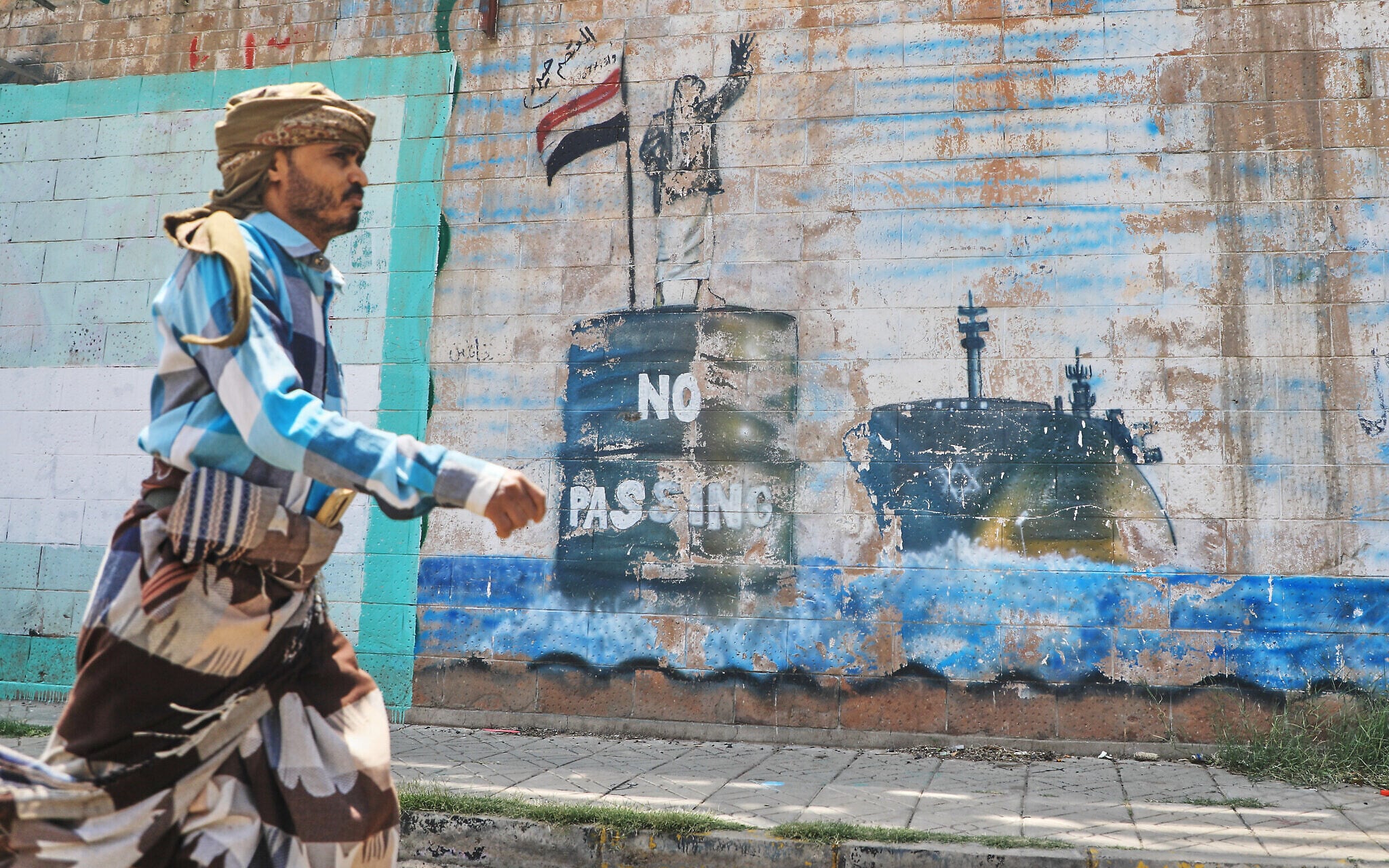
The Houthis, who control the most populous areas of Yemen including the capital Sanaa, have launched missiles and drones at Saudi airports, oil facilities and office buildings since Yemen’s civil war reignited in July, in a spillover from the US-Iran war.
The attacks have previously temporarily disrupted some of Aramco’s operations and caused the cancellation of most international flights to Riyadh. They also forced Saudi Arabia to postpone or cancel major international events, including soccer’s AFC Asian Cup and the flagship FII investment conference.
Fighting has intensified since the Houthis seized strategic territory along Yemen’s Red Sea coast in September and advanced toward the Bab el-Mandeb Strait, a vital shipping route for Gulf oil producers seeking access to the Red Sea.
Mediators shuttle proposals as Hormuz tensions continue
Even as fighting continued across the Gulf, Qatari and Pakistani mediators are continuing their efforts and transmitting ideas and suggestions between Iran and the US, Iran’s Foreign Minister Abbas Araghchi said in a video published on his Telegram channel on Thursday.
“Ideas have been put forward, I think paths can be opened, these ideas are being reviewed, however our main position has not changed. We have certain requests that have to be met and then the Strait of Hormuz can be opened,” Araghchi said.
Iran’s Revolutionary Guards said on Thursday that two tankers had exploded and caught fire after hitting sea mines north of Oman’s Khasab port while attempting to cross the Strait of Hormuz through an unauthorized route.
One of the vessels was a supertanker carrying more than 2 million barrels of crude oil, the Guards said in a statement carried by the semi-official Tasnim news agency.
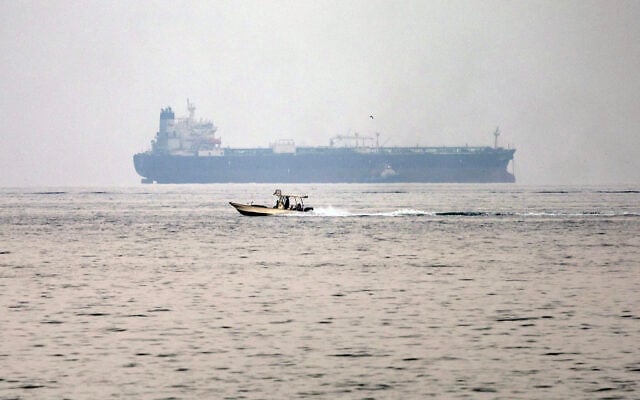
Iran has long said that vessels cannot safely transit the Strait of Hormuz without coordinating with Tehran, citing the threat of sea mines among other risks.
Maritime security agencies, however, have frequently reported incidents involving ships in the region as strikes by unknown projectiles, although they tend to cover fewer incidents than the number reported by the Guards and do not always align.
The United Kingdom Maritime Trade Operations agency reported an explosion caused by an unknown projectile near a tanker about 50 nautical miles (80 kilometers) west of Dubai on Thursday.
Revolutionary Guards spokesman Hossein Mohebbi said the force was using heavy firepower to keep the strait closed to put pressure on the US economy and defend Iran, according to state media on Thursday.
Since October, Iran has deployed new offensive tactics against shipping through the Strait of Hormuz to try to stop a recovery in Gulf oil flows through the strategic waterway, helped by US Navy support and greater risk-taking by Gulf tanker operators.
Revolutionary Guards Navy commander Rear Admiral Ali Azmaei also said that Iran had full operational control of the Strait of Hormuz and that safe passage depended on respect for Iran’s legitimate sovereign rights.
The widening conflict has increasingly caught Gulf states in the crossfire, with US military facilities and energy installations on their territory repeatedly targeted.




The Times of Israel Community.