

Is today’s antisemitism comparable to Europe in the 1930s? Historians weigh in
Jewish leaders in the Diaspora increasingly invoke the Holocaust despite key differences, as rising hostility toward their communities fuels fears over political inaction

 Add ToI as a Preferred Source on Google
Zev Stub is the Times of Israel's reporter on diaspora affairs and Israeli real estate.
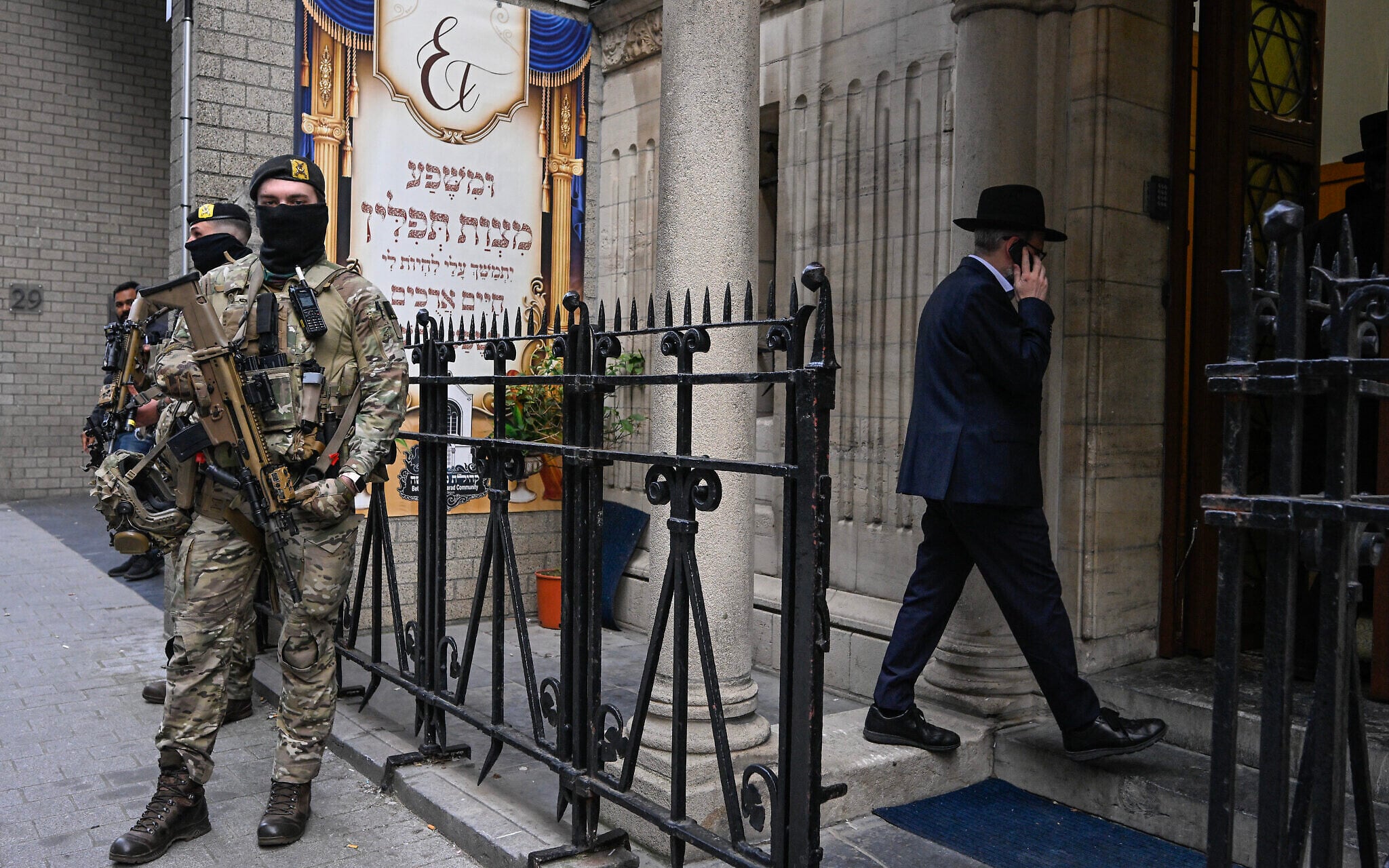
At a recent European Jewish Association conference, EJA chairman Rabbi Menachem Margolin asked a room of approximately 200 European Jewish leaders how many were optimistic about the future of Jews on the continent. Not a single person raised their hand.
In many ways, Margolin said, the situation for Jews is starting to look like 1930s Germany, just before the Holocaust. And, he added in a later conversation with The Times of Israel, “some things seem even worse now.”
It’s a comparison that seems to be made with increasing frequency in recent months. US President Donald Trump raised a number of eyebrows recently when he said in a podcast interview that antisemitism has reached levels “like Germany in 1938.”
Other prominent figures across the political spectrum have also recently invoked Nazi Germany to describe the resurgence of global antisemitism, including Pennsylvania Governor Josh Shapiro, US Senate Republican Leader John Thune and British Housing Secretary Steve Reed.
The warnings come as Jewish communities around the world report growing intimidation, harassment and violence since the Hamas-led onslaught of October 7, 2023, and the subsequent Gaza war. Twenty Jews in the Diaspora were murdered last year in antisemitic attacks, the highest number in decades, and leaders warn that Jew hatred is becoming increasingly normalized.
But comparing the situation in 2026 to the circumstances that led to the murder of 6 million Jews is, to many, sensationalist, if not insulting.
“While there’s a great deal of antisemitism and inciting language in some places, it’s not anywhere near what happened in Nazi Germany,” said David Silberklang, senior historian at the International Institute for Holocaust Research at Yad Vashem. “There are similarities in terms of growing hostility against Jews, but there are also many very significant differences. We need to keep that in mind.”
Government-sponsored violence against Jews was rife throughout Europe in the 1930s, and the Nazi persecution of Jews was a state-directed, systematic process, Silberklang explained. Jews at the time had no legal rights, scarce economic levers, and few allies they could call on for help.
“Things are very different now,” Silberklang said. “Many countries in the world actually have laws prohibiting antisemitism, even if they don’t always work.”
But some Jewish leaders say the comparisons serve as a warning, highlighting the difficult realities their communities face and the very real dangers that may lie ahead. The situation is more precarious in Europe than in the United States, they note.
“At almost every Shabbat table in Belgium now, the conversation comes back to the same question: Is it finally time to go?” said Ralph Pais, who serves as vice president of the country’s antisemitism watchdog, the Jewish Information and Documentation Centre.
To some, there is a growing fear that rising hate levels are fast approaching a point of no return.
“Many people here feel like we are in the same situation once again today,” said Margolin. “Antisemitism has become completely normalized in Europe, and government leaders aren’t doing enough to stop it. There is a growing sense that things can quickly get worse at any time.”
Fair comparisons?
Comparing contemporary crises to the Holocaust has always been taboo, but invoking the Nazi genocide remains a guaranteed way to grab attention. Provocateurs have likened Israel’s military actions in Gaza, COVID-19 lockdown regimes, industrial meat farming and government inaction on climate change to the actions of the Third Reich in recent years. In popular culture, the word “Nazi” has been applied to everyone from a temperamental sitcom soup restaurateur to people who are pedantic about grammar.
Now, three years of skyrocketing antisemitic activity across the world are being compared to the ultimate antisemitic crime against humanity. Even some Holocaust survivors have suggested the two periods are virtually the same.
Jews in the United States, Europe, Australia, and elsewhere say they are increasingly targeted by violence, harassed verbally and online, excluded from professional and social circles, boycotted in cultural and academic spaces, and compelled to conceal visible signs of their identity. For some, the situation seems increasingly desperate.
In Belgium, for example, Pais said the country’s approximately 40,000 Jews live in a state of constant fear and worry.
“Verbal abuse, intimidation, and vandalism have become a weekly reality, leaving people afraid to visibly identify as Jewish in public,” said Pais. Many Jewish Belgians have purchased second homes abroad as safe havens if the situation in Belgium spirals out of control, he said.
His family enjoys a comfortable life and a nice community, so they have no current plans to leave, but they have set a red line for themselves, he said: “Right now, we still feel that police are working to protect us. If that changes, we’re out of here.”
‘A real shock to the system’
Nevertheless, historians say there are fundamental differences between the situation facing contemporary Jews and that seen by Europe’s Jews before WWII.
“In Nazi Germany, you had a government that was dedicated to pushing Jews out of society and culture, restricting their participation in the economy, their right to earn a living, and their rights to movement,” said John Efron, a professor of Jewish history at the University of California, Berkeley, specializing in the history of German Jewry. “There’s nothing comparable to that today.”

During the 1930s, antisemitic sentiment was rampant throughout Europe, not just Germany, Silberklang said. Countries such as Austria, Poland and Romania passed antisemitic laws stripping Jews of their rights and property even before they were invaded by Germany, he said, as did Hungary, Italy, Slovakia, and Bulgaria.
“Jews had no rights, no allies, and no way to try to hold on to what they had,” Silberklang said. “Things were very different then.”
The existence today of the State of Israel as a central focal point for the Jewish people is also a game changer, he added.
“It’s not only a place where Jews can seek refuge,” Silberklang said. “The very fact that there is a Jewish country that has diplomatic relations and trade relations with other countries changes how you talk about these things.”
But Efron is not surprised that the comparison with the 1930s keeps coming up.
“Most Jews today have never experienced antisemitism, especially young Jews,” he said. “This has been a real shock to the system, and I understand the impulse to make that jump.”
Efron noted that, during the beginning of the “golden era” of American Jewry in the 1960s, many Jews were restricted from certain jobs, schools, social clubs, and residential areas. But, perhaps counterintuitively, life was more comfortable than it had been for Jews in recent memory.
“You can have prosperity and antisemitism at the same time,” Efron said. “Despite everything, in many ways, now is still one of the best periods in history for the Jewish people.”
A bleak outlook in Europe
American Jews today, for the most part, still have faith in the American dream, Efron said, and many feel optimistic about their future there. That’s not necessarily the case in Europe.
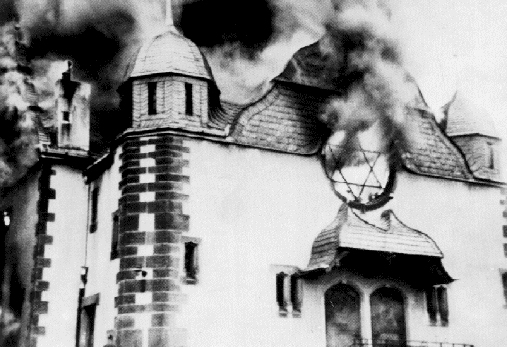
Drawing parallels between Europe today and the 1930s does not mean equating the two eras, says Margolin, whose organization recently led a delegation to Auschwitz on the eve of the November 9-10 anniversary of the 1938 Kristallnacht pogrom. Rather, it reflects a growing frustration that, while antisemitism grows increasingly visible, political leaders are not doing what they can to stop it.

“When people complain to police and nothing happens, or politicians fail to respond, that shows that something deep is occurring,” Margolin said. “We don’t feel any sense of security, and there is an awareness that whatever goodwill we have among political leaders can quickly change, as we’ve seen in places like the Netherlands, Belgium, and the UK. The moment voters elect the extreme left or extreme right into power, everything can change.”
Virtually every Jewish school, synagogue and communal institution today requires extensive security precautions, reinforcing a sense of danger among Jewish communities, Margolin said. There was not such a need for security in the years before 1938, when dozens of Jews were murdered and hundreds of synagogues were set ablaze on Kristallnacht, he noted.
Many European Jews lack hope that things are going to change anytime soon. However, Margolin insists, the message is not that Europe’s 1.3 million Jews should give up. Many cities still have thriving Jewish communities where old synagogues are being rededicated and new kosher restaurants are continuing to open and attract crowds.

Among the EJA’s initiatives is a push to get Judaism recognized as a protected minority in Europe, a legal status that could help safeguard religious freedom, institutional security and the handling of antisemitic complaints across changes in government. That project, first launched this summer, is still being pursued slowly and quietly, on a “country by country, case by case basis,” he said.
To Margolin, the comparison of modern antisemitism to 1930s Germany has a point: to prompt leaders to take significant action quickly. The historical circumstances may be different, but a failure to confront growing hatred could have sharp consequences for the future.
“We cannot just be calm and think that it will never happen again,” he said. “As long as there is light left for Jews in Europe, we have to try to fix this.”










The Times of Israel Community.