

Hungary’s abandoned synagogues are finding new life — and attracting new congregants
After decades of secular use, two historic Budapest synagogues have reopened as part of a Chabad-led effort to reconnect Hungarian Jews with their heritage
 Add ToI as a Preferred Source on Google
Zev Stub is the Times of Israel's reporter on diaspora affairs and Israeli real estate.
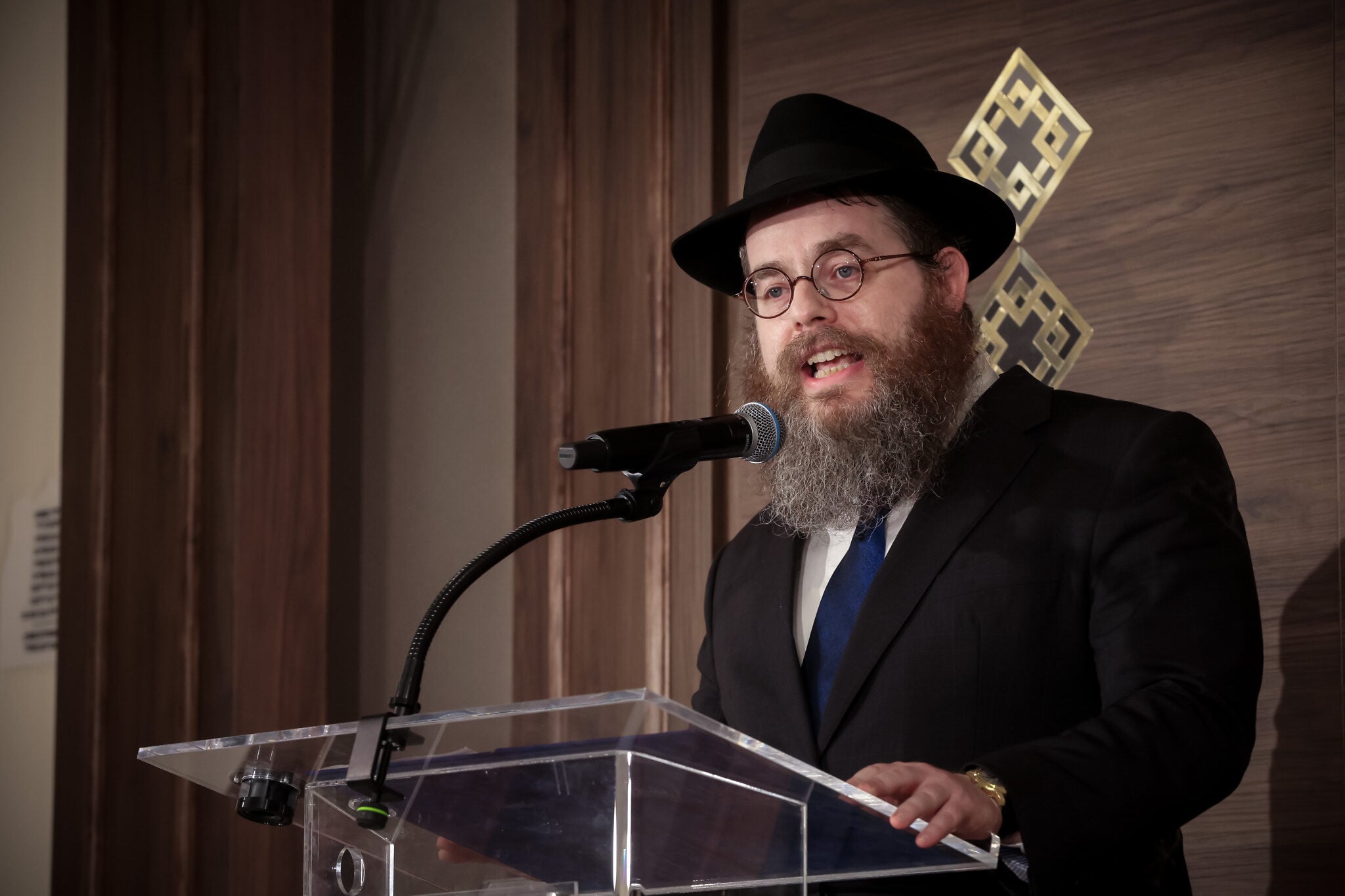
While the Hungarian Jewish community was celebrating the reopening of its 100-year-old Rákospalota Synagogue last month, a local woman approached Rabbi Shlomo Köves.
“She saw the crowd around the synagogue and came over to me and said, ‘I don’t know what’s going on here, but can I join?'” recalled Köves, the head of EMIH, a Hungarian Jewish organization affiliated with the Chabad-Lubavitch movement. “I brought her inside, and then she told me she’s Jewish. It turns out she lives there with her children, and she hadn’t been to synagogue before. Now, she comes every Friday night.”
That story reflects the mission of Köves, whose organization says it has helped reopen eight synagogues in Hungary over the past 15 years.
During Synagogue Week in September, an annual Budapest festival held around the High Holidays, two historic synagogues were rededicated after being stripped of their sacred functions for decades.
The massive Rákospalota Synagogue, designed in neoclassical and Art Deco styles, was reconsecrated after being used as a National Library storage warehouse for 60 years. A second synagogue, dating back to 1870, was reopened as a prayer center exclusively for Jewish teens.
“There are many old synagogues around Hungary, including many that still look like shuls from the outside,” Köves told The Times of Israel on a video call. “We have a historical responsibility to reclaim them. Most of the Jews here don’t have an active affiliation to religion, but this is what connects them to their roots.”
A community shattered by the Holocaust
Before World War II, Budapest was home to more than 200,000 Jews, who comprised roughly a quarter of the city’s population. It was a wealthy and culturally active community that financed the building of dozens of grand and ambitious synagogues in neighborhoods across the city, some of the finest in Europe, Köves said.
But about half of the city’s Jews were murdered in the Holocaust, and the communist regime that took hold after the war further weakened religious life. From 1948, the state nationalized some synagogue buildings and bought others from Jewish communities for “symbolic” prices, Köves said. Houses of worship were transformed into studios, warehouses and other public facilities, even as many still looked like synagogues from the street.
Under communism, Jewish citizens hid their Jewish identities, often from their own children, and assimilation was widespread. Even today, at a Jewish high school associated with his organization, fewer than 5% of students have two Jewish parents, Köves said. Tales of people discovering a hidden Jewish background through a parent or grandparent are common.

Demographers disagree about how many Jews live in Hungary today, with estimates ranging from 45,000 to as high as 120,000, depending in part on differing definitions of Jewish ancestry. The vast majority, as much as 95%, live in Budapest, with a small community in the country’s second-largest city, Debrecen, bolstered by about 400 Israeli students studying at the university there, Köves said.
“What’s unique about the Jewish community here is that it’s one of the few places in Europe with deep roots in the country,” said Köves, who tracks his family’s history in Hungary back 250 years. “That is to say, most of the Jews in France are from North Africa, and most of the Jews in Germany immigrated from Soviet states, but this is a population that has remained here for more than two centuries.”
A complicated revival
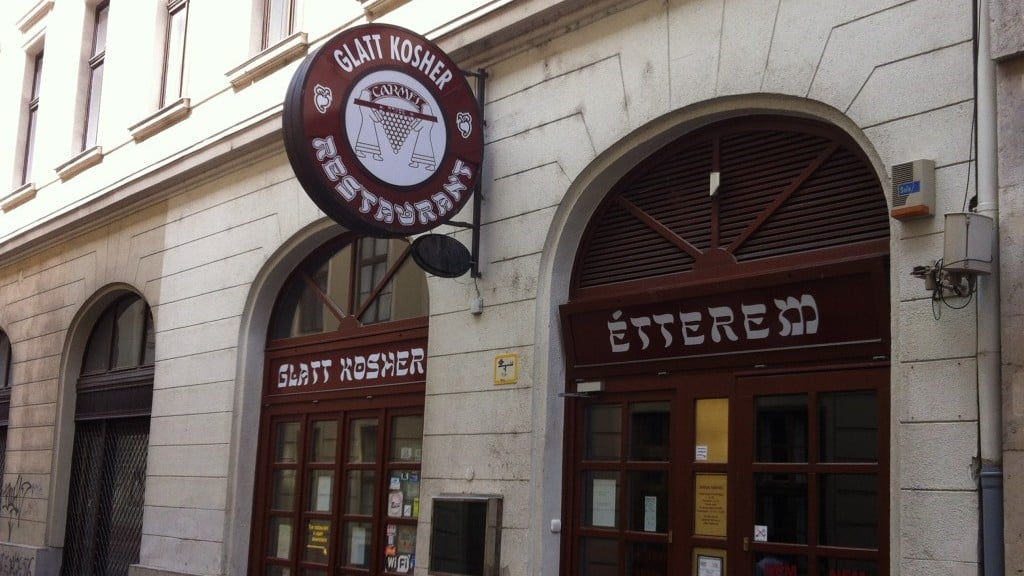
In recent years, Hungary has seen a resurgence of Jewish life, thanks in part to the arrival of the Chabad Hasidic group after the fall of Communism in 1989, Köves said. Hungary currently has 25 active synagogues, split between the Chabad community, which focuses on Jewish outreach, and the country’s Neolog movement, a modern religious denomination unique to Hungary and similar in philosophy to the Conservative movement. The country also has 10 kosher restaurants, including one in Debrecen.
Infighting has grown within the community, driven primarily by a high-stakes rivalry between Chabad and the longstanding Neolog establishment, represented by the Mazsihisz organization. While Chabad says it is needed to revitalize Jewish life, Neolog leaders view Chabad as a foreign-backed entity that undermines their authority and competes with it for state funding and historic assets. This rivalry has effectively divided much of Budapest’s Jewish life into two competing ecosystems.
In recent years, Jewish and Israeli tourism to Hungary has jumped, largely due to a sense of public safety, Köves noted. Hungarian data show that a record 362,000 Israeli visitors traveled to Hungary in 2025, generating approximately 1.15 million guest nights.
“Since October 7, this is one of the only places where you can comfortably walk around wearing Jewish symbols,” Köves said. The gravesite of a Hasidic “wonder rabbi” from the past century in the remote village of Bodrogkeresztur has also become a popular ultra-Orthodox pilgrimage spot in recent years, with more than 50,000 people visiting the site annually, he said.
Repopulating old synagogues
Meanwhile, interest in reclaiming abandoned synagogues has grown as EMIH seeks to strengthen Jewish life among native Hungarian Jews, Köves said.
“Actually, there are about the same number of shuls as when I was a kid, but the only ones who went were Holocaust survivors, not the kids,” he recalled, using the Yiddish word for synagogue. “Most people either moved away or avoided religion, and many of the synagogues closed down. What we’ve been doing over the past two decades is reopening them.”
EMIH does this with an “if you build it, they will come” approach to Jewish revival, Köves said.
“Most people would say you should wait and see where there is demand, and then open a shul,” he said. “We take the opposite approach: we open the shuls and create the demand. Most of the people that come to synagogue don’t define themselves as religious, but they want to be part of what is happening.”
The two synagogues that were reopened in September each have unique stories, Köves said.
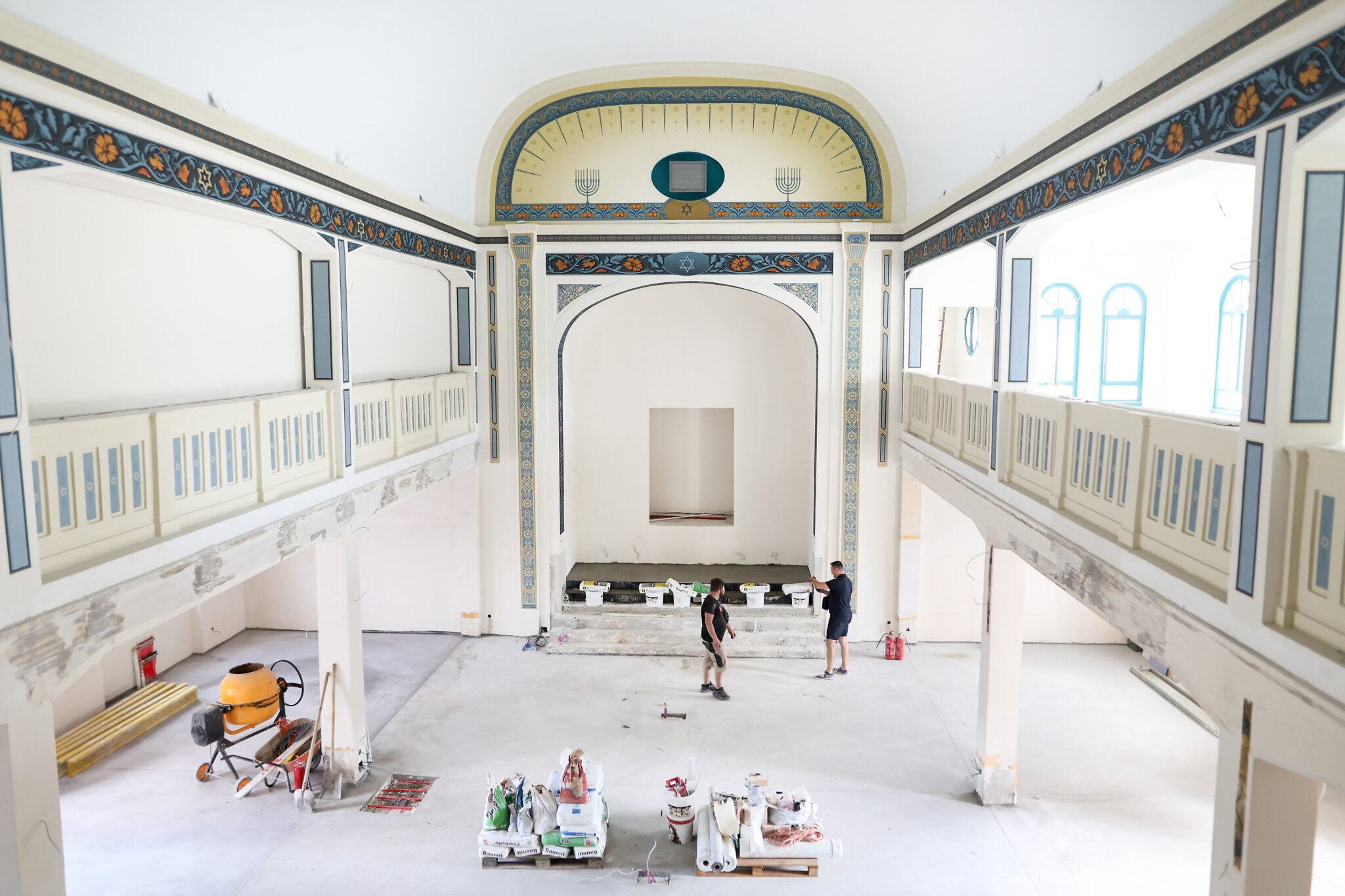
The Rákospalota Synagogue in Budapest, with its distinctive triangular facade and prominent Star of David in the center window, was first consecrated in 1926, when the city’s Jewish community was thriving. It served the local community for 18 years until the Holocaust and deportations devastated Jewish life in the area.
After communist authorities nationalized the property, its interior was divided by a concrete floor, and for more than 60 years it was used as a storage warehouse for books and maps belonging to Hungary’s National Széchényi Library. Almost all traces of its original religious function disappeared, except for a wall recess marking the position of the original Holy Ark, and its distinctive blue, yellow and white stained-glass windows.
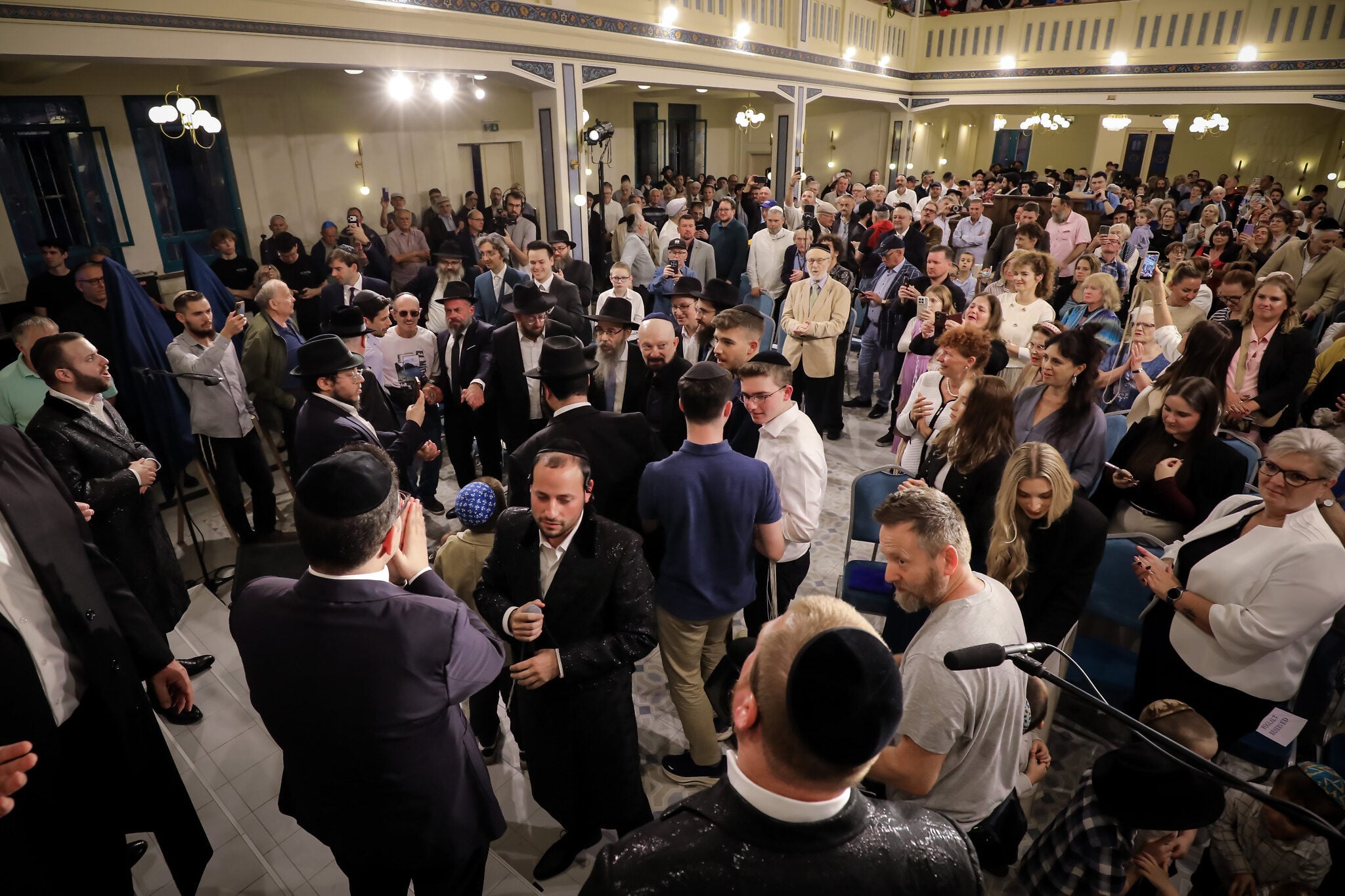
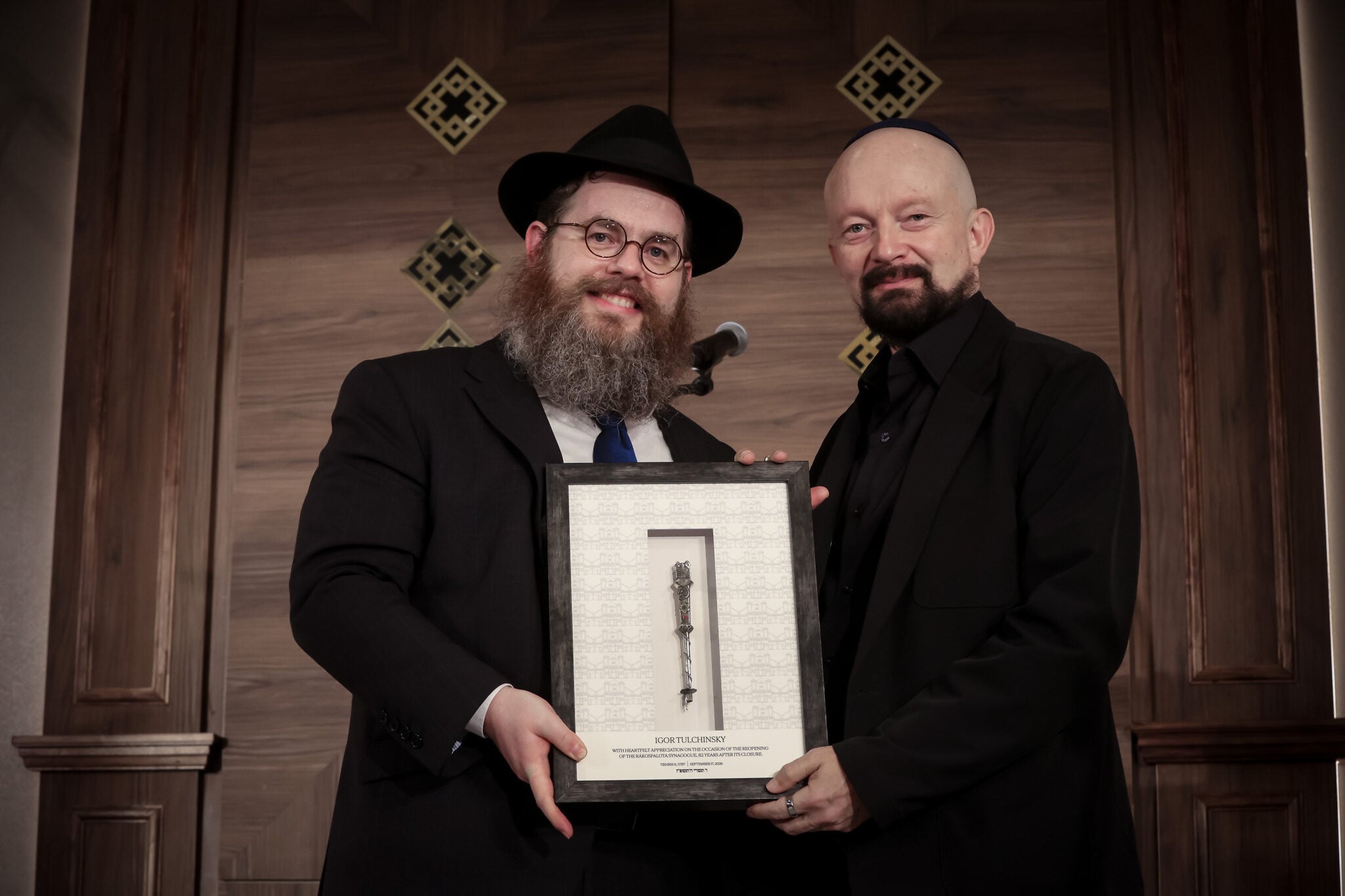
Acquiring the synagogue and rehabilitating it was a four-year process that involved intense negotiations with the library and about $2 million in renovation costs, Köves said. It was rededicated on September 17 following a restoration facilitated by EMIH, funded by private donors led by philanthropist Igor Tulchinsky. About two dozen Jews from the neighborhood, most of whom had never attended synagogue, joined for prayers during the High Holidays, Köves said.
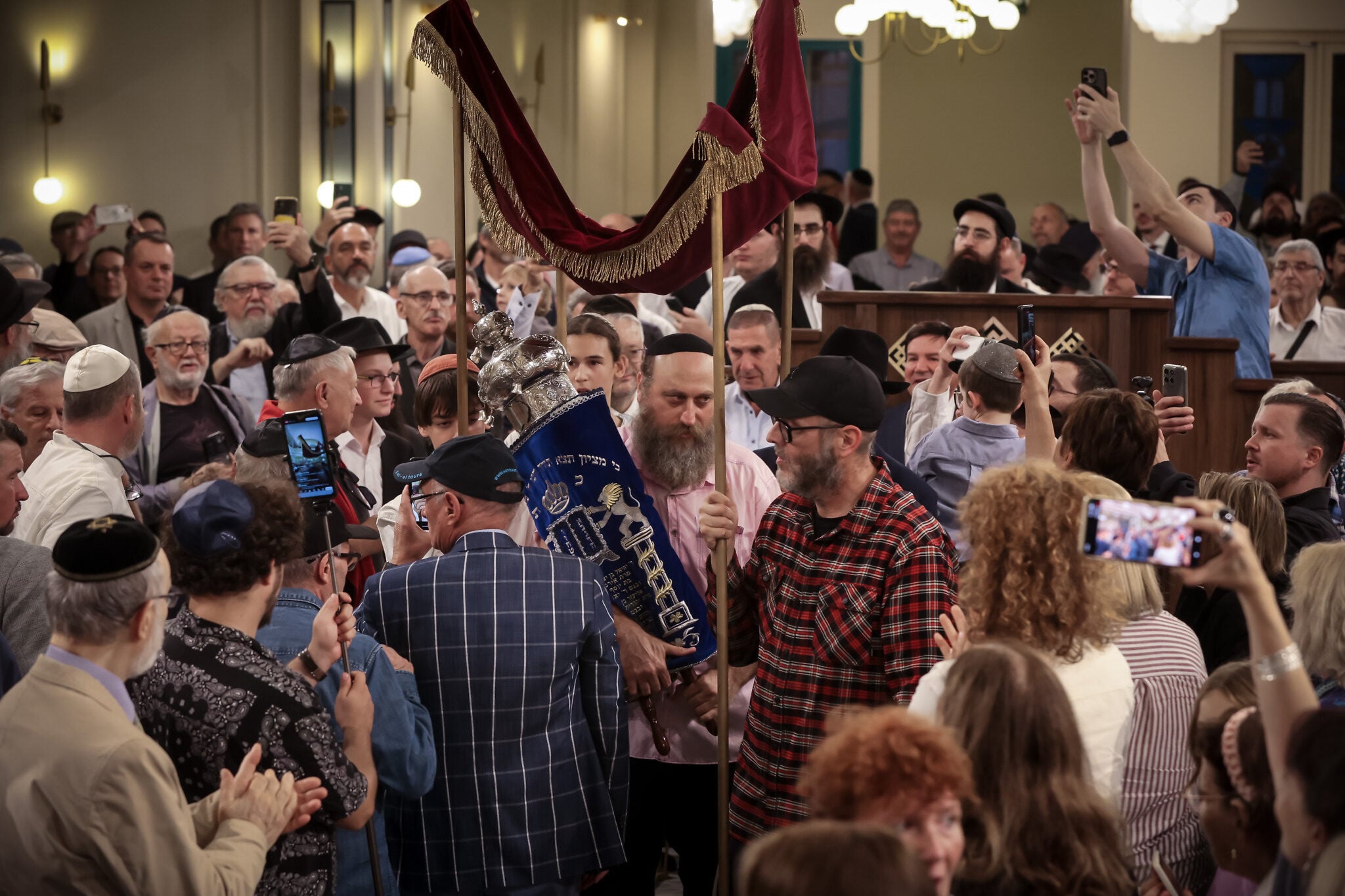
The second synagogue, on Dessewffy Street in Budapest’s sixth district, dates to 1870, when local Jewish coachmen and porters from the nearby Nyugati Railway Station converted a barn into a place of worship. The courtyard synagogue later became associated with the Bikur Cholim medical aid society and also housed a cheder, a traditional Jewish elementary school. A community leader helped sustain religious life and youth programs in the building for decades after the war, but the synagogue closed more than a decade ago as the congregation dwindled.
The Dessewffy Street Synagogue was reopened on September 7 after being restored by the Autonomous Orthodox Jewish Community of Hungary, with support from EMIH and funding from Tulchinsky. It now serves as Europe’s first “teen synagogue,” with 40-50 teens attending each week, as part of Chabad’s CTeen Jewish youth movement, EMIH said.
The CTeen program, with 200-300 members in Hungary, is open only to members under the age of 20 and is designed to give a new generation of Hungarian Jews a place to pray, study and build a community of their own, Köves said.
Not everyone is convinced the efforts will bear fruit. Mazsihisz President Andor Grosz told The Times of Israel that while the opening of the synagogues was a joyous occasion, he maintains “serious doubts” that new congregations such as these will be sustainable for the long term.
But for Köves and EMIH, these efforts to rebuild Jewish life in Hungary come from a place of deep belief and commitment.
“This is not just a Jewish architecture project, although that in itself is also important,” Köves said. “I see this as a body and a soul. Usually, the soul comes down, and then a body is created for it, but we’re going in the opposite direction. Here, the shul is the body, and the community is the soul, and we are reviving the body so the soul can come back in.”









The Times of Israel Community.